Baseus Inspire XC1
Beats Powerbeats Pro 2

Baseus Inspire XC1 Beats Powerbeats Pro 2

Overview

Welcome to our in-depth spec comparison between the Baseus Inspire XC1 and the Beats Powerbeats Pro 2. These two wireless earbuds take notably different approaches to fit, audio technology, and connectivity, making the choice between them far from straightforward. From open-ear versus in-ear design to codec support and noise cancellation capabilities, each product targets a distinct type of listener. Read on to see how they stack up across every major category.

Common Features

  • Both products are wireless with no wires or cables.
  • Neither product is a neckband earbud design.
  • Neither product features RGB lighting.
  • Both products have stereo speakers.
  • Neither product includes a UV light.
  • Neither product has a display.
  • Both products share the same frequency range of 20 Hz to 20000 Hz.
  • Neither product supports Dolby Atmos.
  • Neither product supports Dirac Virtuo.
  • Neither product uses a neodymium magnet.
  • Both products have a charge time of 1.5 hours.
  • Neither product has a solar power battery.
  • Both products have a battery level indicator.
  • Both products have a rechargeable battery.
  • Neither product supports fast pairing.
  • Both products have USB Type-C connectivity.
  • Neither product supports LDHC, Bluetooth LE Audio, aptX Adaptive, aptX Low Latency, aptX HD, or aptX.
  • Both products support fast charging.
  • Both products have a mute function and can be used as a headset.
  • Both products have a control panel on the device, voice prompts, and a travel bag included.
  • Neither product has an in-line control panel or a temperature sensor.
  • Both products have a noise-canceling microphone.

Main Differences

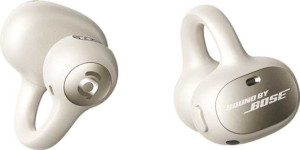
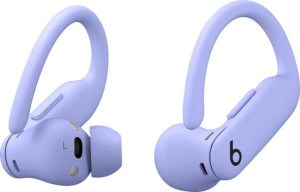
  • The fit is open-ear on the Baseus Inspire XC1 and in-ear on the Beats Powerbeats Pro 2.
  • The Ingress Protection rating is IP66 on the Baseus Inspire XC1 and IPX4 on the Beats Powerbeats Pro 2.
  • The Baseus Inspire XC1 is water resistant, while the Beats Powerbeats Pro 2 is sweat resistant.
  • Wingtips are not included with the Baseus Inspire XC1 but are included with the Beats Powerbeats Pro 2.
  • Active noise cancellation is not available on the Baseus Inspire XC1 but is present on the Beats Powerbeats Pro 2.
  • Passive noise reduction is not available on the Baseus Inspire XC1 but is present on the Beats Powerbeats Pro 2.
  • Spatial audio is not supported on the Baseus Inspire XC1 but is supported on the Beats Powerbeats Pro 2.
  • Battery life is 8 hours on the Baseus Inspire XC1 and 10 hours on the Beats Powerbeats Pro 2.
  • The battery life of the charging case is 32 hours on the Baseus Inspire XC1 and 35 hours on the Beats Powerbeats Pro 2.
  • Wireless charging is not available on the Baseus Inspire XC1 but is present on the Beats Powerbeats Pro 2.
  • The Bluetooth version is 6.1 on the Baseus Inspire XC1 and 5.3 on the Beats Powerbeats Pro 2.
  • LDAC support is present on the Baseus Inspire XC1 but not available on the Beats Powerbeats Pro 2.
  • AAC support is present on the Baseus Inspire XC1 but not available on the Beats Powerbeats Pro 2.
  • Ambient sound mode is not available on the Baseus Inspire XC1 but is present on the Beats Powerbeats Pro 2.
  • A find device feature is not available on the Baseus Inspire XC1 but is present on the Beats Powerbeats Pro 2.
  • The number of microphones is 4 on the Baseus Inspire XC1 and 6 on the Beats Powerbeats Pro 2.
Specs Comparison
Baseus Inspire XC1

Baseus Inspire XC1

Beats Powerbeats Pro 2

Beats Powerbeats Pro 2

Design:
Fit Open-ear In-ear
Ingress Protection (IP) rating IP66 IPX4
water resistance Water resistant Sweat resistant
has no wires or cables
are neckband earbuds
wingtips included
has RGB lighting
has stereo speakers
has UV light
Has a display

The most fundamental design divide between these two earbuds is their fit philosophy. The Baseus Inspire XC1 uses an open-ear design, meaning the drivers rest against or around the ear rather than inside the ear canal. This preserves situational awareness — ideal for outdoor runners or commuters — but typically sacrifices passive noise isolation. The Beats Powerbeats Pro 2, by contrast, goes in-ear and adds wingtips to anchor the buds securely during intense activity. This combination creates a more stable, noise-isolating fit better suited to vigorous workouts where bud retention and immersion matter more than ambient sound awareness.

On weather protection, the Baseus holds a meaningful edge. Its IP66 rating signifies full dust-tightness and resistance to powerful water jets — a significantly higher bar than the Powerbeats Pro 2's IPX4, which only certifies resistance to sweat and light splashing from any direction. In practical terms, the Baseus can handle rain or a post-run rinse; the Beats should stay dry and is not rated for dust ingress at all. Both are fully wireless and neither is a neckband design, so they share the same cable-free convenience.

Overall, the Baseus Inspire XC1 has a clear edge in environmental durability thanks to its superior IP66 rating. However, the Powerbeats Pro 2 has the advantage in secure athletic fit, combining in-ear placement with wingtips for users who prioritize stability and passive isolation during high-intensity training. The right choice depends on whether the user values protection from the elements or a locked-in, sport-optimized fit.

Sound quality:
has active noise cancellation (ANC)
has passive noise reduction
lowest frequency 20 Hz 20 Hz
highest frequency 20000 Hz 20000 Hz
supports spatial audio
has Dolby Atmos
has Dirac Virtuo
has a neodymium magnet

Both earbuds share an identical frequency range of 20 Hz to 20,000 Hz, covering the full spectrum of human hearing on paper. However, raw frequency range alone says little about actual sound quality — what separates these two products in this category is everything layered on top of that baseline. The Beats Powerbeats Pro 2 brings active noise cancellation (ANC) and passive noise reduction to the table, a combination that meaningfully shapes the listening experience. ANC uses microphones to electronically cancel ambient sound, while passive reduction relies on the physical in-ear seal — together, they create a significantly quieter sonic environment that lets music come through with greater perceived clarity and detail, especially in noisy settings.

The Powerbeats Pro 2 also supports spatial audio, which adds a simulated three-dimensional soundstage to compatible content. For users who consume a lot of streamed music, movies, or games from platforms that support spatial formats, this translates to a notably more immersive, ″around you″ listening experience rather than sound that feels locked inside the head. The Baseus Inspire XC1 offers none of these features — no ANC, no passive isolation, and no spatial audio — which is consistent with its open-ear design but leaves it at a distinct disadvantage for pure sound immersion.

The Powerbeats Pro 2 holds a clear and significant edge in sound quality as defined by these specs. The absence of any noise management or spatial processing on the Baseus means it is better suited for users who want ambient awareness rather than an enveloping audio experience. For anyone prioritizing sound immersion, focus listening, or richer content playback, the Beats is the stronger choice based strictly on the provided data.
Power:
Battery life 8 hours 10 hours
Battery life of charging case 32 hours 35 hours
charge time 1.5 hours 1.5 hours
has wireless charging
Has a solar power battery
has a battery level indicator
has a rechargeable battery

Battery endurance is close but consistently favors the Beats Powerbeats Pro 2 across every metric. Its earbuds last 10 hours per charge versus 8 hours for the Baseus Inspire XC1 — a 25% gap that becomes meaningful during long travel days, extended work sessions, or back-to-back workouts where reaching for the case is inconvenient. Add the case into the equation and the totals are 35 hours versus 32 hours, maintaining that consistent lead. Both charge in an identical 1.5 hours, so neither has an advantage in how quickly they recover from a depleted state.

Where the Powerbeats Pro 2 pulls further ahead is with wireless charging, a feature absent on the Baseus. The practical value here is in daily friction: being able to drop the case on a Qi pad overnight — without fumbling for a cable — is a convenience that compounds over time. For users already in a wireless charging ecosystem, this removes one more cable from the equation entirely.

The Powerbeats Pro 2 has a clear advantage in this category, offering more playback time, greater total battery capacity with the case, and the added convenience of wireless charging. The Baseus is not far behind on raw endurance, but it lacks the charging flexibility that increasingly defines a premium wireless audio experience.

Connectivity:
has fast pairing
Has USB Type-C
Bluetooth version 6.1 5.3
has LDAC
has LDHC
has Bluetooth LE Audio
has aptX Adaptive
has aptX Low Latency
has aptX HD
has aptX
has aptX Lossless
has aptX Voice
has Auracast
maximum Bluetooth range 10 m 10 m
supports Bluetooth pairing using NFC
Can be used wirelessly
has AAC

Bluetooth version is where these two products diverge most structurally. The Baseus Inspire XC1 runs on Bluetooth 6.1, a notably newer standard than the 5.3 found in the Beats Powerbeats Pro 2. A higher Bluetooth version generally translates to improved connection stability, more efficient power consumption, and better handling of interference in crowded wireless environments. Both earbuds share an identical 10 m maximum range, so the practical difference shows up more in reliability than in reach.

Codec support is the other significant differentiator. The Baseus supports both LDAC and AAC, while the Powerbeats Pro 2 supports neither. LDAC is Sony's high-resolution audio codec capable of transmitting significantly more data per second than standard Bluetooth audio — for Android users with compatible source devices, this can result in noticeably higher audio fidelity during wireless playback. AAC, meanwhile, is the preferred codec for Apple devices, making the Baseus a stronger wireless performer across both major mobile ecosystems. The Beats, lacking both, is limited to the default SBC codec in most scenarios, which carries the least audio data of common wireless formats.

Despite being the more premium product in other areas, the Baseus Inspire XC1 holds a clear connectivity advantage here — combining a newer Bluetooth version with broader, higher-quality codec support. For users who prioritize wireless audio fidelity and connection resilience, the Baseus delivers meaningfully more capable connectivity based strictly on these specs.

Features:
release date September 2025 February 2025
has ambient sound mode
has find device feature
Supports fast charging
has a mute function
can be used as a headset
control panel placed on a device
Has voice prompts
travel bag is included
Has an in-line control panel
Has a temperature sensor

Across most of this feature set, the two earbuds are evenly matched. Both support fast charging, include a travel bag, offer on-device controls, voice prompts, a mute function, and can function as a headset for calls. For everyday usability, this shared foundation means neither product leaves the user short on essential conveniences.

The meaningful separation comes down to just two features, both exclusive to the Beats Powerbeats Pro 2. Its ambient sound mode allows the user to let in external audio on demand — a practical tool for staying aware of surroundings without removing the earbuds, particularly useful in gyms, on busy streets, or during commutes. The find device feature adds the ability to locate a misplaced earbud or case, a small but genuinely useful safeguard for a product likely to be carried across multiple locations daily. The Baseus Inspire XC1 offers neither.

Given that the shared features are numerous and the Beats-exclusive additions are both practically valuable, the Powerbeats Pro 2 has a clear edge in this category. The gap is not enormous, but ambient mode and device tracking address real, recurring user needs that the Baseus simply does not cover.

Microphone:
number of microphones 4 6
has a noise-canceling microphone

Microphone hardware is straightforward to compare here: both earbuds feature noise-canceling microphones, but the Beats Powerbeats Pro 2 deploys 6 microphones versus 4 on the Baseus Inspire XC1. In call and voice pickup systems, microphone count matters because more mics enable more sophisticated beamforming — the process of isolating the speaker's voice while suppressing surrounding noise. With two additional microphones to work with, the Powerbeats Pro 2 has more raw input for its noise-canceling algorithms to analyze and filter, which generally supports cleaner voice transmission in challenging acoustic environments like windy outdoor settings or noisy public spaces.

The Powerbeats Pro 2 holds the advantage in this category. While both products bring noise-canceling mic capability to the table, the higher microphone count on the Beats gives it a structural edge in call quality potential, particularly in noisy conditions where additional pickup points make a tangible difference in voice isolation.

Comparison Summary & Verdict

After a thorough comparison, it is clear that both products serve different audiences well. The Baseus Inspire XC1 stands out with its open-ear fit, higher IP66 water resistance rating, and support for LDAC and AAC codecs alongside the newer Bluetooth 6.1 standard, making it a strong pick for audiophiles who value codec flexibility and situational awareness. The Beats Powerbeats Pro 2, on the other hand, excels with active noise cancellation, spatial audio, an ambient sound mode, a longer battery life of 10 hours, wireless charging, and a find device feature, positioning it as the more feature-rich option for focused listeners and athletes. Both share fast charging, USB-C, and a noise-canceling microphone, so the decision ultimately comes down to your priorities in fit, audio isolation, and smart features.

Baseus Inspire XC1
Buy Baseus Inspire XC1 if...

Buy the Baseus Inspire XC1 if you prefer an open-ear fit with stronger water resistance and want LDAC and AAC codec support for higher-quality audio streaming.

Beats Powerbeats Pro 2
Buy Beats Powerbeats Pro 2 if...

Buy the Beats Powerbeats Pro 2 if you need active noise cancellation, spatial audio, wireless charging, and a longer battery life in a secure in-ear design.