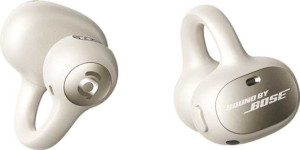
Baseus Inspire XC1
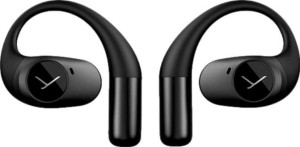
Beyerdynamic Amiron 200

Baseus Inspire XC1 Beyerdynamic Amiron 200

Overview

When choosing between the Baseus Inspire XC1 and the Beyerdynamic Amiron 200, two open-ear wireless earbuds sharing a strong common foundation, the finer details are what truly set them apart. This head-to-head comparison explores the key battlegrounds: battery performance, water resistance, connectivity standards, and durability ratings — all areas where these two earbuds diverge in ways that could meaningfully influence your buying decision depending on your lifestyle and listening habits.

Common Features

  • Both products have an open-ear fit.
  • Neither product has wires or cables.
  • Neither product is a neckband earbud.
  • Neither product has RGB lighting.
  • Both products have stereo speakers.
  • Neither product has a UV light.
  • Neither product has a display.
  • Neither product has active noise cancellation (ANC).
  • Neither product has passive noise reduction.
  • Both products have a lowest frequency of 20 Hz.
  • Both products have a highest frequency of 20000 Hz.
  • Neither product supports spatial audio.
  • Neither product has Dolby Atmos.
  • Neither product has Dirac Virtuo.
  • Neither product has a neodymium magnet.
  • Both products have a charge time of 1.5 hours.
  • Neither product supports wireless charging.
  • Neither product has a solar power battery.
  • Both products have a battery level indicator.
  • Both products have a rechargeable battery.
  • Neither product has fast pairing.
  • Both products have USB Type-C.
  • Neither product has LDHC.
  • Neither product has Bluetooth LE Audio.
  • Neither product has aptX Adaptive.
  • Neither product has aptX Low Latency.
  • Neither product has aptX HD.
  • Neither product has aptX.
  • Neither product has an ambient sound mode.
  • Both products support fast charging.
  • Neither product can read notifications.
  • Neither product has a built-in translator.
  • Both products have a mute function.
  • Both products can be used as a headset.
  • Both products have a control panel placed on the device.
  • Both products have voice prompts.
  • Both products have 4 microphones.
  • Both products have a noise-canceling microphone.

Main Differences

  • The Ingress Protection rating is IP66 on the Baseus Inspire XC1 and IP54 on the Beyerdynamic Amiron 200.
  • The Baseus Inspire XC1 is water resistant, while the Beyerdynamic Amiron 200 is sweat resistant.
  • Wingtips are included with the Beyerdynamic Amiron 200 but not with the Baseus Inspire XC1.
  • Battery life is 8 hours on the Baseus Inspire XC1 and 11 hours on the Beyerdynamic Amiron 200.
  • Battery life of the charging case is 32 hours on the Baseus Inspire XC1 and 25 hours on the Beyerdynamic Amiron 200.
  • The Bluetooth version is 6.1 on the Baseus Inspire XC1 and 5.3 on the Beyerdynamic Amiron 200.
  • LDAC support is present on the Baseus Inspire XC1 but not available on the Beyerdynamic Amiron 200.
  • The maximum Bluetooth range is 10 m on the Baseus Inspire XC1 and 15 m on the Beyerdynamic Amiron 200.
Specs Comparison
Baseus Inspire XC1

Baseus Inspire XC1

Beyerdynamic Amiron 200

Beyerdynamic Amiron 200

Design:
Fit Open-ear Open-ear
Ingress Protection (IP) rating IP66 IP54
water resistance Water resistant Sweat resistant
has no wires or cables
are neckband earbuds
wingtips included
has RGB lighting
has stereo speakers
has UV light
Has a display

Both the Baseus Inspire XC1 and the Beyerdynamic Amiron 200 share the same fundamental design philosophy: open-ear, fully wireless form factors with stereo speakers and no RGB lighting or displays to add bulk. This makes them conceptually similar on the surface, but a closer look at the specs reveals meaningful differences in how each is built for real-world use.

The most significant differentiator is environmental protection. The Baseus carries an IP66 rating, meaning it is fully dust-tight and can withstand powerful water jets — a substantial step above the Amiron 200's IP54, which only guards against limited dust ingress and water splashes. In practical terms, the Baseus is the more resilient choice for outdoor workouts, rain, or sweaty sessions, while the Amiron 200 is rated only as sweat resistant and would be more vulnerable in wet conditions. The Baseus also comes with no wingtips, relying entirely on its fit design to stay in place, whereas the Amiron 200 includes wingtips — a notable advantage for users who need extra ear security during high-movement activities.

On balance, the Baseus Inspire XC1 holds a clear edge in this group. Its superior IP66 protection offers meaningfully broader durability across environments, making it the stronger choice for active or outdoor use. The Amiron 200's inclusion of wingtips is a useful fit advantage, but it does not compensate for its lower weather resistance ceiling.
Sound quality:
has active noise cancellation (ANC)
has passive noise reduction
lowest frequency 20 Hz 20 Hz
highest frequency 20000 Hz 20000 Hz
supports spatial audio
has Dolby Atmos
has Dirac Virtuo
has a neodymium magnet

Across every sound quality specification provided, the Baseus Inspire XC1 and the Beyerdynamic Amiron 200 are an exact match. Both cover the standard 20 Hz – 20,000 Hz frequency range, which spans the full extent of human hearing — from deep bass to the upper limits of high-frequency detail. Neither unit offers active noise cancellation, passive noise reduction, spatial audio, Dolby Atmos, Dirac Virtuo, or a neodymium magnet driver.

The absence of ANC and passive isolation is worth noting in context: as open-ear designs, both headphones are inherently not built for noise blocking, so this is an expected trade-off of the form factor rather than a shortcoming unique to either product. The lack of spatial audio or premium audio processing formats like Dolby Atmos means neither device targets an immersive or cinema-grade listening experience — the focus is clearly on straightforward stereo playback.

This group is a complete tie. The provided specs give no basis to differentiate the two products on sound quality, and neither holds any measurable advantage over the other based on the available data.

Power:
Battery life 8 hours 11 hours
Battery life of charging case 32 hours 25 hours
charge time 1.5 hours 1.5 hours
has wireless charging
Has a solar power battery
has a battery level indicator
has a rechargeable battery

Battery life is where these two products diverge most clearly. The Beyerdynamic Amiron 200 delivers 11 hours of continuous playback per charge, compared to 8 hours for the Baseus Inspire XC1 — a 37% advantage that translates to real-world differences for long commutes, travel days, or extended workout sessions where reaching for the case is inconvenient.

The Baseus does close part of that gap at the system level, however. Its charging case extends total combined battery life to 32 hours, versus 25 hours for the Amiron 200. This means the Baseus users who charge more frequently still end up with a larger overall reserve when on the go. The trade-off is a dependency on the case to stay ahead, while the Amiron 200 simply lasts longer in a single wear session. Both share an identical 1.5-hour charge time, so neither has a refueling speed advantage.

The verdict here depends on usage pattern. For users who prioritize long uninterrupted wear, the Amiron 200 has the edge with its superior per-session endurance. For those who do not mind topping up via the case and want the largest total battery reserve across a full day, the Baseus Inspire XC1 edges ahead on cumulative capacity. On balance, the Amiron 200's single-session advantage is more practically impactful for most users.

Connectivity:
has fast pairing
Has USB Type-C
Bluetooth version 6.1 5.3
has LDAC
has LDHC
has Bluetooth LE Audio
has aptX Adaptive
has aptX Low Latency
has aptX HD
has aptX
has aptX Lossless
has aptX Voice
has Auracast
maximum Bluetooth range 10 m 15 m
supports Bluetooth pairing using NFC
Can be used wirelessly
has AAC

Two specs stand out immediately in this group and pull in opposite directions. The Baseus Inspire XC1 runs on Bluetooth 6.1 — a notably newer version than the Bluetooth 5.3 found in the Beyerdynamic Amiron 200. A higher Bluetooth version generally means improved connection stability, more efficient power consumption, and better handling of interference in crowded wireless environments. On the other hand, the Amiron 200 claims a wider 15-meter maximum Bluetooth range versus the Baseus's 10 meters, which can matter when leaving a phone on a desk and moving around a room or office.

The more consequential differentiator for audio quality is codec support. The Baseus adds LDAC to its repertoire alongside AAC, while the Amiron 200 is limited to AAC only. LDAC transmits audio at up to three times the bitrate of standard Bluetooth codecs, enabling near-lossless wireless audio on compatible source devices — a meaningful advantage for users streaming high-resolution audio from Android or dedicated players. Both share AAC as a baseline, which benefits Apple device users, but the Baseus simply offers more headroom for higher-fidelity playback.

Weighing these trade-offs, the Baseus Inspire XC1 holds the stronger position in this group. Its newer Bluetooth version and LDAC support represent more impactful real-world advantages than the Amiron 200's 5-meter range extension, making it the better-equipped option for users who prioritize connection quality and audio fidelity over raw wireless reach.

Features:
release date September 2025 September 2025
has ambient sound mode
Supports fast charging
can read notifications
Has a built-in translator
has a mute function
can be used as a headset
control panel placed on a device
Has voice prompts
travel bag is included
Has an in-line control panel
Has a temperature sensor
Has a built-in camera remote control function

Unlike some of the other spec groups in this comparison, Features yields no differentiation whatsoever. The Baseus Inspire XC1 and the Beyerdynamic Amiron 200 are identical across every single data point provided — both support fast charging, include on-device controls, offer a mute function, can operate as a headset for calls, deliver voice prompts, and come packaged with a travel bag.

The shared feature set is reasonably practical for everyday use. Fast charging is a genuinely useful convenience, on-device controls keep interactions simple without requiring a phone, and the included travel bag adds portability value out of the box. Neither product reaches for more advanced functionality — there is no ambient sound mode, notification readout, or temperature sensing on either side.

This group is a complete tie. The specs provide no basis to favor one product over the other, and any decision between them must rest on the differences identified in other specification groups.

Microphone:
number of microphones 4 4
has a noise-canceling microphone

Microphone hardware is another area where the Baseus Inspire XC1 and the Beyerdynamic Amiron 200 land in exactly the same place. Both are equipped with 4 microphones and noise-canceling mic technology — a configuration that, in practice, allows the device to use multiple pickup points to isolate the speaker's voice and filter out background noise during calls.

A quad-mic setup with noise cancellation is a solid standard for wireless earbuds, particularly for open-ear designs where environmental sound bleeds in freely. The noise-canceling microphone processing helps compensate for that inherent openness, making calls more intelligible in noisy environments than a single mic alone would allow.

With no differences to speak of, this group is a complete tie. Both products offer the same microphone count and the same noise-canceling capability, giving neither a measurable advantage for call quality or voice pickup based on the available data.

Comparison Summary & Verdict

Both the Baseus Inspire XC1 and the Beyerdynamic Amiron 200 deliver a capable open-ear, cable-free experience with shared strengths including a 20 Hz–20,000 Hz frequency range, fast charging, USB-C, and a 4-microphone noise-canceling setup. Where they differ, however, is telling. The Baseus Inspire XC1 earns its place as the more rugged, audiophile-leaning option thanks to its IP66 water resistance, LDAC codec support, newer Bluetooth 6.1, and a longer 32-hour charging case battery. The Beyerdynamic Amiron 200 counters with an impressive 11-hour earbud battery life, a broader 15-meter Bluetooth range, and included wingtips for a more secure fit — making it the better companion for long listening sessions and active movement.

Baseus Inspire XC1
Buy Baseus Inspire XC1 if...

Buy the Baseus Inspire XC1 if you want stronger water protection with an IP66 rating, LDAC audio codec support, and a longer 32-hour charging case battery.

Beyerdynamic Amiron 200
Buy Beyerdynamic Amiron 200 if...

Buy the Beyerdynamic Amiron 200 if you prioritize a longer 11-hour earbud battery life, a wider 15-meter Bluetooth range, and the added security of included wingtips.