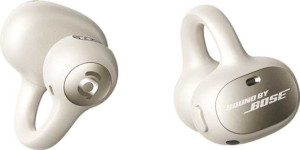
Baseus Inspire XC1
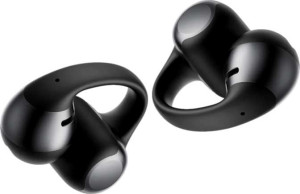
Shokz OpenDots One

Baseus Inspire XC1 Shokz OpenDots One

Overview

Welcome to our in-depth specification comparison between the Baseus Inspire XC1 and the Shokz OpenDots One, two open-ear true wireless earbuds competing for the same audience. While both share a solid foundation of shared features, key battlegrounds emerge around battery performance, water resistance ratings, and codec support. Read on to discover which of these earbuds better matches your lifestyle and listening needs.

Common Features

  • Both products have an open-ear fit.
  • Both products are wireless with no cables.
  • Neither product is a neckband earbud design.
  • Neither product includes wingtips.
  • Neither product features RGB lighting.
  • Both products have stereo speakers.
  • Neither product has a UV light.
  • Neither product has a display.
  • Neither product has active noise cancellation.
  • Neither product has passive noise reduction.
  • Both products have a lowest frequency of 20 Hz and a highest frequency of 20000 Hz.
  • Neither product supports spatial audio, Dolby Atmos, or Dirac Virtuo.
  • Neither product uses a neodymium magnet.
  • Neither product has a solar power battery.
  • Both products have a battery level indicator.
  • Both products have a rechargeable battery.
  • Neither product supports fast pairing.
  • Both products have USB Type-C charging.
  • Neither product supports LDHC, Bluetooth LE Audio, aptX Adaptive, aptX Low Latency, aptX HD, or aptX.
  • Neither product has an ambient sound mode.
  • Neither product has in/on-ear detection.
  • Both products support fast charging.
  • Neither product can read notifications.
  • Both products have a mute function.
  • Both products can be used as a headset.
  • Both products have a control panel placed on the device.
  • Both products have voice prompts.
  • Both products have 4 microphones.
  • Both products have a noise-canceling microphone.
  • Both products support Dolby Audio.

Main Differences

  • The Ingress Protection rating is IP66 on the Baseus Inspire XC1 and IP54 on the Shokz OpenDots One.
  • The Baseus Inspire XC1 is water resistant, while the Shokz OpenDots One is sweat resistant.
  • Battery life is 8 hours on the Baseus Inspire XC1 and 10 hours on the Shokz OpenDots One.
  • Battery life of the charging case is 32 hours on the Baseus Inspire XC1 and 30 hours on the Shokz OpenDots One.
  • Charge time is 1.5 hours on the Baseus Inspire XC1 and 1 hour on the Shokz OpenDots One.
  • Wireless charging is available on the Shokz OpenDots One but not on the Baseus Inspire XC1.
  • LDAC support is present on the Baseus Inspire XC1 but not available on the Shokz OpenDots One.
  • AAC support is present on the Baseus Inspire XC1 but not available on the Shokz OpenDots One.
  • A find device feature is available on the Shokz OpenDots One but not on the Baseus Inspire XC1.
Specs Comparison
Baseus Inspire XC1

Baseus Inspire XC1

Shokz OpenDots One

Shokz OpenDots One

Design:
Fit Open-ear Open-ear
Ingress Protection (IP) rating IP66 IP54
water resistance Water resistant Sweat resistant
has no wires or cables
are neckband earbuds
wingtips included
has RGB lighting
has stereo speakers
has UV light
Has a display

Both the Baseus Inspire XC1 and the Shokz OpenDots One share the same fundamental design philosophy: open-ear, fully wireless, no-neckband earbuds with stereo output and no gimmicks like RGB lighting or displays. For users choosing between them, the shared form factor means comfort and situational awareness are equally prioritized by both products.

Where they diverge meaningfully is in weather and moisture protection. The Baseus carries an IP66 rating, meaning it is fully protected against dust ingress and can withstand powerful water jets — a level of resilience suitable for heavy rain or intense outdoor workouts. The Shokz, rated at IP54, offers only partial dust resistance and protection from water splashes from any direction. In practical terms, the Baseus handles significantly harsher conditions; the Shokz is adequate for light sweat and unexpected drizzle, but should not be exposed to heavy rain or high-pressure water.

Overall, the Baseus Inspire XC1 holds a clear edge in the Design category, specifically due to its substantially stronger ingress protection. For users who exercise outdoors in variable weather or want peace of mind during sweaty sessions, the IP66 rating is a meaningful real-world advantage over the Shokz OpenDots One's more modest IP54 spec.

Sound quality:
has active noise cancellation (ANC)
has passive noise reduction
lowest frequency 20 Hz 20 Hz
highest frequency 20000 Hz 20000 Hz
supports spatial audio
has Dolby Atmos
has Dirac Virtuo
has a neodymium magnet

On paper, the sound quality specs for these two earbuds are identical across every measured dimension. Both cover the standard 20 Hz – 20,000 Hz frequency range, which spans the full extent of human hearing, and neither product offers ANC, passive noise reduction, spatial audio, Dolby Atmos, or a neodymium magnet driver.

The absence of noise isolation features is worth contextualizing: as open-ear designs, neither earbud is engineered to block ambient sound, so the lack of ANC or passive reduction is expected rather than a shortcoming. However, the missing neodymium magnet notation on both products is notable — neodymium drivers are the standard in quality audio earbuds due to their efficiency and ability to produce stronger, more precise magnetic fields. Without this confirmed, neither product signals a premium driver configuration based on available data.

This group is a dead tie. Every spec provided is identical, and no differentiating feature exists on either side. Buyers should look to other specification groups — such as connectivity or battery — to break the tie between these two products.

Power:
Battery life 8 hours 10 hours
Battery life of charging case 32 hours 30 hours
charge time 1.5 hours 1 hours
has wireless charging
Has a solar power battery
has a battery level indicator
has a rechargeable battery

The per-charge battery life is where the first meaningful gap emerges: the Shokz OpenDots One lasts 10 hours on a single charge versus 8 hours for the Baseus Inspire XC1. That two-hour difference is tangible for anyone using these during long workdays, travel, or extended outdoor sessions without access to their case. The Baseus partially compensates with a slightly higher combined case capacity — 32 total hours versus the Shokz's 30 — but this is a slim margin that rarely changes real-world behavior.

More significant is how each product handles recharging. The Shokz charges in just 1 hour compared to the Baseus's 1.5 hours, and critically, the Shokz also supports wireless charging — a genuine convenience advantage for users already invested in a Qi ecosystem. The Baseus requires a wired connection every time. Both include a battery level indicator, so neither leaves users guessing about remaining charge.

The Shokz OpenDots One takes a clear edge in this category. It runs longer per charge, refuels faster, and adds wireless charging — three compounding advantages that make it the more practical choice for power-conscious users.

Connectivity:
has fast pairing
Has USB Type-C
has LDAC
has LDHC
has Bluetooth LE Audio
has aptX Adaptive
has aptX Low Latency
has aptX HD
has aptX
has aptX Lossless
has aptX Voice
has Auracast
maximum Bluetooth range 10 m 10 m
supports Bluetooth pairing using NFC
Can be used wirelessly
has AAC

Stripped of the noise, the connectivity specs between these two earbuds are largely identical — same 10 m Bluetooth range, USB-C charging on both, no fast pairing or NFC. The real story here is codec support, and it tells a lopsided tale.

The Baseus Inspire XC1 supports both LDAC and AAC, while the Shokz OpenDots One supports neither. LDAC, developed by Sony, transmits audio at up to three times the bitrate of standard Bluetooth SBC, making it the highest-quality wireless audio codec available in consumer earbuds. AAC, meanwhile, is the preferred codec for Apple devices and delivers noticeably cleaner audio than SBC on compatible hardware. For listeners streaming lossless or high-res audio from an Android device or Apple ecosystem, the Baseus is capable of actually delivering that quality to the ear — the Shokz is not, as it will fall back to the baseline SBC codec regardless of source quality.

The Baseus Inspire XC1 wins this category outright. Its dual-codec advantage is not a marginal spec difference — it represents a fundamentally higher ceiling for wireless audio transmission quality, and is particularly relevant for audiophile-leaning users or those invested in high-res streaming services.

Features:
release date September 2025 March 2025
has ambient sound mode
has in/on-ear detection
has find device feature
Supports fast charging
can read notifications
has a mute function
can be used as a headset
control panel placed on a device
Has voice prompts
travel bag is included
Has an in-line control panel
Has a temperature sensor
Has a built-in camera remote control function

Functionally, these two earbuds are nearly identical in this category. Both support fast charging, include a mute function, work as headsets for calls, feature on-device controls, offer voice prompts, and come bundled with a travel bag — a practical inclusion that budget-tier earbuds often omit.

The single differentiator is the find device feature exclusive to the Shokz OpenDots One. For users who frequently misplace their earbuds or case, this is a genuinely useful safeguard — the ability to trigger a locating sound or track via a companion app can save real frustration. It is a small but meaningful quality-of-life advantage that the Baseus simply does not offer.

The Shokz OpenDots One edges ahead here, but only narrowly. Every other feature in this group is matched identically, so the find device function is the sole deciding factor. For users who are not prone to losing their gear, this distinction may carry little weight — but for everyone else, it is a practical reason to favor the Shokz.

Microphone:
number of microphones 4 4
has a noise-canceling microphone

Microphone hardware is a complete match between these two earbuds. Both pack 4 microphones and both feature noise-canceling mic technology — a configuration typically associated with mid-to-upper tier wireless earbuds rather than entry-level products.

A quad-mic array matters in practice because it enables beamforming: the firmware can triangulate the direction of the speaker's voice and actively suppress sound arriving from other angles. Paired with noise-canceling processing, this setup is well-suited for calls in noisy environments like commutes, gyms, or open offices — environments these open-ear earbuds are likely to be used in.

This group is a complete tie. Neither product holds any advantage over the other based on the available data, and buyers should weigh microphone performance alongside other differentiating categories when making their decision.

Miscellaneous:
has Dolby Audio

The only data point in this group is Dolby Audio support, and both the Baseus Inspire XC1 and the Shokz OpenDots One have it. Dolby Audio is a signal processing technology that applies tuning and virtualization to enhance perceived soundstage and tonal balance — a meaningful addition for casual listening and media consumption, even on open-ear hardware where physical acoustics are inherently more limited than sealed designs.

Since both products share this feature equally, there is no differentiation to draw here. This group is a complete tie, and should not factor into a purchasing decision between the two.

Comparison Summary & Verdict

After a thorough look at the specs, both earbuds deliver a comparable open-ear experience, but each carves out a distinct advantage. The Baseus Inspire XC1 stands out with its superior IP66 water resistance and support for LDAC and AAC codecs, making it a compelling pick for audiophiles and outdoor users who need robust protection from the elements. On the other hand, the Shokz OpenDots One pulls ahead with a longer 10-hour battery life, wireless charging, a faster 1-hour charge time, and a handy find device feature, appealing to users who prioritize daily convenience and connected features. Neither product is a clear-cut winner; your choice should come down to whether audio fidelity and ruggedness or smart convenience features matter most to you.

Baseus Inspire XC1
Buy Baseus Inspire XC1 if...

Buy the Baseus Inspire XC1 if you want stronger water resistance with an IP66 rating and higher-quality audio codec support via LDAC and AAC.

Shokz OpenDots One
Buy Shokz OpenDots One if...

Buy the Shokz OpenDots One if you value a longer battery life, the convenience of wireless charging, and a built-in find device feature.