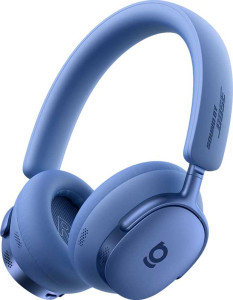
Baseus Inspire XH1
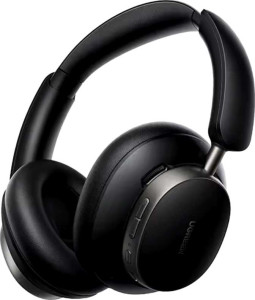
Ugreen Studio Pro

Baseus Inspire XH1 Ugreen Studio Pro

Overview

Welcome to our in-depth specification comparison between the Baseus Inspire XH1 and the Ugreen Studio Pro. Both are over-ear, foldable wireless headphones sharing a strong feature foundation — including ANC, LDAC support, and USB-C charging — yet they diverge in meaningful ways across sound performance, battery endurance, and microphone configuration. Read on to discover which headphone best matches your listening priorities.

Common Features

  • Both headphones have an over-ear fit.
  • Both products come with a detachable cable.
  • Both products can be folded.
  • Neither product is designed for kids.
  • Both products feature a tangle-free cable.
  • Neither product has an open-back design.
  • Both products have stereo speakers.
  • Both products support active noise cancellation (ANC).
  • Both products share a lowest frequency of 20 Hz.
  • Both products offer passive noise reduction.
  • Both products charge via USB Type-C.
  • Both products include a battery level indicator.
  • Wireless charging is not available on either product.
  • Neither product has a solar power battery.
  • Both products have a rechargeable battery.
  • Neither product has a removable battery.
  • Both products support wireless and wired connectivity.
  • Neither product supports aptX Adaptive.
  • Neither product supports aptX.
  • Both products support LDAC.
  • Neither product supports LDHC.
  • Neither product supports Bluetooth LE Audio.
  • Neither product supports aptX Low Latency.
  • Neither product supports aptX HD.
  • Both products feature a noise-canceling microphone.
  • Both products include an ambient sound mode.
  • Neither product has in/on-ear detection.
  • Neither product has a mute function.
  • Both products have a control panel placed on the device.
  • Both products can be used as a headset.
  • Neither product has an in-line control panel.

Main Differences

  • Weight is 275 g on Baseus Inspire XH1 and 315 g on Ugreen Studio Pro.
  • Highest frequency reaches 20000 Hz on Baseus Inspire XH1 and 40000 Hz on Ugreen Studio Pro.
  • Spatial audio support is present on Ugreen Studio Pro but not available on Baseus Inspire XH1.
  • Battery life is 100 hours on Baseus Inspire XH1 and 120 hours on Ugreen Studio Pro.
  • Bluetooth version is 6.1 on Baseus Inspire XH1 and 6 on Ugreen Studio Pro.
  • Maximum Bluetooth range is 10 m on Baseus Inspire XH1 and 15 m on Ugreen Studio Pro.
  • Number of microphones is 10 on Baseus Inspire XH1 and 4 on Ugreen Studio Pro.
Specs Comparison
Baseus Inspire XH1

Baseus Inspire XH1

Ugreen Studio Pro

Ugreen Studio Pro

Design:
Fit Over-ear Over-ear
weight 275 g 315 g
has a detachable cable
can be folded
is designed for kids
has a tangle free cable
has an open-back design
has stereo speakers

Both the Baseus Inspire XH1 and the Ugreen Studio Pro share the same fundamental design DNA: over-ear fit, closed-back construction, foldable form factor, detachable tangle-free cable, and stereo speakers. For users evaluating either headphone, these shared traits mean comparable portability and the convenience of cable replacement without any meaningful distinction between the two.

The only measurable design differentiator is weight. The Inspire XH1 comes in at 275 g, while the Studio Pro is noticeably heavier at 315 g — a difference of 40 g, which is roughly the weight of a large egg. While that may sound minor on paper, over extended listening sessions this gap can translate into real fatigue, as heavier headphones exert more sustained pressure on the head and neck. For users who wear headphones for hours at a stretch, the lighter Inspire XH1 has a tangible comfort advantage.

On design, the Baseus Inspire XH1 holds a clear edge solely due to its lower weight. Every other design specification is identical, making weight the single deciding factor in this category. If long-wear comfort is a priority, the Inspire XH1 is the more practical choice.

Sound quality:
has active noise cancellation (ANC)
lowest frequency 20 Hz 20 Hz
highest frequency 20000 Hz 40000 Hz
supports spatial audio
has passive noise reduction

Both headphones arrive with a solid shared foundation for sound quality: active noise cancellation, passive noise reduction, and a low-end floor of 20 Hz, covering the full range of human hearing from the bottom up. Where they diverge, however, is significant. The Ugreen Studio Pro extends its frequency response all the way to 40,000 Hz, doubling the Inspire XH1's ceiling of 20,000 Hz. While humans cannot consciously hear above roughly 20 kHz, a higher upper limit is associated with better reproduction of harmonic overtones and micro-detail — qualities that can contribute to a more natural, airy sound even within the audible range.

The more practical differentiator is spatial audio support, which the Studio Pro offers and the Inspire XH1 does not. Spatial audio processes sound to simulate a three-dimensional listening environment, making it especially impactful for film, gaming, and immersive music formats. Its absence on the Inspire XH1 is a meaningful omission for users who consume content designed to leverage that technology.

The Ugreen Studio Pro holds a clear advantage in this category. Its wider frequency response and spatial audio support represent genuine, real-world upgrades over the Inspire XH1, particularly for listeners who prioritize sonic depth and compatibility with modern audio formats.

Power:
Battery life 100 hours 120 hours
Has USB Type-C
has a battery level indicator
has wireless charging
Has a solar power battery
has a rechargeable battery
has a removable battery

Strip away the noise and this category comes down to a single number: battery life. The Ugreen Studio Pro is rated at 120 hours, while the Baseus Inspire XH1 trails at 100 hours. Both figures are exceptionally high by any standard — even the Inspire XH1 could run continuously for over four days — but the Studio Pro's 20-hour advantage means meaningfully fewer charging cycles over weeks of regular use.

Everything else in this category is identical. Both headphones charge via USB Type-C, include a battery level indicator, and feature a non-removable rechargeable battery with no wireless charging. For day-to-day use, these shared traits ensure a consistent, modern charging experience on either device.

The Ugreen Studio Pro edges ahead here, but the margin is modest in practical terms. Unless you regularly go extended periods without access to a charger, the real-world difference between 100 and 120 hours is unlikely to be a decisive factor for most users.

Connectivity:
connectivity Wireless & wired Wireless & wired
Bluetooth version 6.1 6
has aptX Adaptive
has aptX
has LDAC
has LDHC
has Bluetooth LE Audio
has aptX Low Latency
has aptX HD
has aptX Lossless
has AAC
has Auracast
maximum Bluetooth range 10 m 15 m
has fast pairing
supports Bluetooth pairing using NFC

Codec support is where connectivity comparisons often diverge most sharply — but not here. Both headphones offer an identical wireless audio codec lineup: LDAC and AAC, with no aptX variants on either side. LDAC is the more significant of the two, supporting high-resolution audio transmission up to 990 kbps over Bluetooth, which is a genuine advantage for listeners streaming lossless or hi-res content from compatible sources.

The two real differentiators are Bluetooth version and range. The Inspire XH1 runs on the marginally newer Bluetooth 6.1 versus the Studio Pro's Bluetooth 6.0, which could offer incremental improvements in connection stability or power efficiency. The Studio Pro, however, compensates with a notably larger maximum wireless range of 15 m compared to the Inspire XH1's 10 m — a 50% advantage that matters in larger rooms or open spaces where maintaining a clean signal from a distance is important.

This category is genuinely close, with each product holding one card. The Inspire XH1 has a fractionally newer Bluetooth revision; the Studio Pro counters with meaningfully greater range. For most users, range is the more tangible day-to-day benefit, giving the Ugreen Studio Pro a slight practical edge in connectivity overall.

Features:
release date September 2025 May 2025
has a noise-canceling microphone
has ambient sound mode
has in/on-ear detection
number of microphones 10 4
has a mute function
control panel placed on a device
can be used as a headset
Has an in-line control panel

Functionally, these two headphones are nearly identical on paper: both offer noise-canceling microphones, ambient sound mode, on-device controls, and headset capability. For the vast majority of use cases — calls, voice assistants, passive environment monitoring — either headphone delivers the same feature set.

The one standout difference is the microphone array. The Baseus Inspire XH1 packs 10 microphones compared to the Ugreen Studio Pro's 4 microphones. More microphones generally allow for more sophisticated beamforming and noise isolation algorithms, meaning the headset can better isolate a user's voice from background noise during calls and more accurately sample the surrounding environment for ANC and ambient mode processing. That said, microphone count alone does not guarantee superior call quality — implementation and signal processing matter equally — but a 10-mic array does indicate a more ambitious hardware approach to voice pickup and noise handling.

Based strictly on the provided specs, the Baseus Inspire XH1 holds an edge in this category. Its significantly larger microphone array is the sole differentiator and points to a potentially stronger performance in call clarity and noise filtering scenarios, making it the more compelling choice for users who prioritize voice communication quality.

Comparison Summary & Verdict

After examining all available specifications, both headphones prove to be capable, well-rounded over-ear options. The Baseus Inspire XH1 stands out with its lighter 275 g build, a newer Bluetooth 6.1 connection, and an impressive array of 10 microphones for call clarity. The Ugreen Studio Pro, on the other hand, pushes ahead with a wider 40000 Hz frequency range, spatial audio support, a longer 120-hour battery life, and a greater Bluetooth range of 15 m. If voice communication and portability matter most to you, the Baseus Inspire XH1 is the stronger pick. If you prioritize immersive audio quality and endurance, the Ugreen Studio Pro is the more compelling choice.

Baseus Inspire XH1
Buy Baseus Inspire XH1 if...

Buy the Baseus Inspire XH1 if you want a lighter headphone with a newer Bluetooth version and a significantly higher microphone count for clearer calls.

Ugreen Studio Pro
Buy Ugreen Studio Pro if...

Buy the Ugreen Studio Pro if you prioritize a wider frequency range, spatial audio support, longer battery life, and greater Bluetooth range for immersive listening sessions.