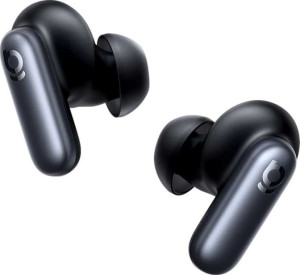
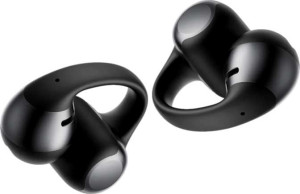
The standout differentiator in this group is noise isolation. The Baseus Inspire XP1 offers both active noise cancellation (ANC) and passive noise reduction — a meaningful combination. ANC uses microphones to electronically neutralize ambient sound, while passive reduction comes from the physical seal of the in-ear fit. Together, they provide a layered barrier against environmental noise that can meaningfully improve focus and audio clarity in loud settings. The Shokz OpenDots One, by contrast, has neither — a direct consequence of its open-ear design, which by nature allows ambient sound to pass through freely.
On frequency response, both products are evenly matched, covering the full standard audible range from 20 Hz to 20,000 Hz. This spans the theoretical limits of human hearing, from deep bass to the highest treble, so neither product has a specified advantage in raw frequency coverage. Neither supports spatial audio, Dolby Atmos, or Dirac Virtuo, so there are no immersive or enhanced audio processing features to distinguish them on that front.
The Baseus Inspire XP1 holds a clear edge in this category for listeners who prioritize sound isolation — commuters, open-plan office workers, or anyone in high-noise environments will find the ANC and passive reduction genuinely useful. The Shokz OpenDots One's lack of any noise management is not a flaw per se, but rather an inherent trade-off of its open-ear philosophy, making it better suited for environments where hearing the outside world is intentional or required.