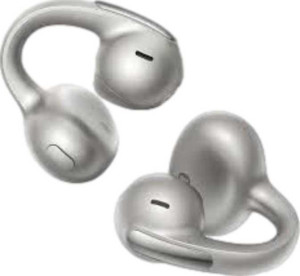
Baseus MC1 Pro
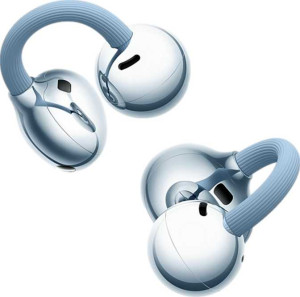
Huawei FreeClip 2

Baseus MC1 Pro Huawei FreeClip 2

Overview

Welcome to our in-depth comparison of the Baseus MC1 Pro and the Huawei FreeClip 2, two open-ear wireless earbuds competing for your attention. Both share a solid foundation of features, yet key battlegrounds emerge around audio codec support, water resistance ratings, and charging case endurance. Whether you are chasing richer sound fidelity or smarter device management, this spec-by-spec breakdown will help you find the right fit for your lifestyle.

Common Features

  • Both products have an open-ear fit.
  • Neither product uses wires or cables.
  • Neither product is a neckband earbud design.
  • Neither product includes wingtips.
  • Neither product features RGB lighting.
  • Both products have stereo speakers.
  • Neither product has a UV light.
  • Neither product has a display.
  • Neither product has active noise cancellation (ANC).
  • Neither product has passive noise reduction.
  • Both products have a lowest frequency of 20 Hz.
  • Neither product supports spatial audio.
  • Neither product has Dolby Atmos.
  • Neither product has a neodymium magnet.
  • Both products offer 8 hours of battery life.
  • Neither product supports wireless charging.
  • Neither product has a solar power battery.
  • Both products have a battery level indicator.
  • Both products have a rechargeable battery.
  • Neither product supports fast pairing.
  • Both products have USB Type-C connectivity.
  • Both products use Bluetooth version 6.
  • Neither product supports LDHC.
  • Neither product supports Bluetooth LE Audio.
  • Neither product supports aptX Adaptive.
  • Neither product supports aptX Low Latency.
  • Neither product supports aptX HD.
  • Neither product has an ambient sound mode.
  • Both products support fast charging.
  • Neither product can read notifications.
  • Both products have a mute function.
  • Both products can be used as a headset.
  • Both products have a control panel placed on the device.
  • Both products have voice prompts.
  • Both products include a travel bag.
  • Both products have a noise-canceling microphone.

Main Differences

  • Ingress Protection rating is IP67 on Baseus MC1 Pro and IP57 on Huawei FreeClip 2.
  • The Baseus MC1 Pro is fully waterproof, while the Huawei FreeClip 2 is only sweat resistant.
  • Weight is 10 g on Baseus MC1 Pro and 10.2 g on Huawei FreeClip 2.
  • Highest frequency reaches 40000 Hz on Baseus MC1 Pro and 20000 Hz on Huawei FreeClip 2.
  • Battery life of the charging case is 32 hours on Baseus MC1 Pro and 30 hours on Huawei FreeClip 2.
  • Charge time is 1.5 hours on Baseus MC1 Pro and 1 hour on Huawei FreeClip 2.
  • LDAC support is present on Baseus MC1 Pro but not available on Huawei FreeClip 2.
  • AAC support is present on Baseus MC1 Pro but not available on Huawei FreeClip 2.
  • A find device feature is available on Huawei FreeClip 2 but not present on Baseus MC1 Pro.
Specs Comparison
Baseus MC1 Pro

Baseus MC1 Pro

Huawei FreeClip 2

Huawei FreeClip 2

Design:
Fit Open-ear Open-ear
Ingress Protection (IP) rating IP67 IP57
water resistance Waterproof Sweat resistant
weight 10 g 10.2 g
has no wires or cables
are neckband earbuds
wingtips included
has RGB lighting
has stereo speakers
has UV light
Has a display

Both the Baseus MC1 Pro and the Huawei FreeClip 2 share the same open-ear, fully wireless form factor — no neckband, no wingtips, no wires of any kind. At 10 g and 10.2 g respectively, the weight difference is negligible in practice; both sit at the lighter end of the open-ear earbud spectrum, which matters for all-day comfort.

The most meaningful differentiator in this group is water resistance. The Baseus MC1 Pro carries an IP67 rating, meaning it can withstand full submersion in up to 1 meter of water for 30 minutes — making it genuinely waterproof. The Huawei FreeClip 2 is rated IP57, which still offers submersion protection but with a slightly lower dust-resistance threshold. In practical terms, both can handle rain, splashes, and sweaty workouts, but the MC1 Pro's IP67 rating gives it a concrete edge for more demanding conditions such as poolside use or heavy rain exposure.

Overall, the two earbuds are nearly identical in design philosophy and physical profile. The Baseus MC1 Pro holds a clear, if narrow, advantage in this group solely due to its superior ingress protection rating.

Sound quality:
has active noise cancellation (ANC)
has passive noise reduction
lowest frequency 20 Hz 20 Hz
highest frequency 40000 Hz 20000 Hz
supports spatial audio
has Dolby Atmos
has Dirac Virtuo
has a neodymium magnet

Neither the Baseus MC1 Pro nor the Huawei FreeClip 2 offers active or passive noise cancellation — an expected trade-off for open-ear designs, which by nature prioritize ambient awareness over isolation. Both share a 20 Hz lower frequency floor, covering the full audible bass range a typical listener would expect.

Where they diverge is at the top end. The MC1 Pro extends to 40,000 Hz, double the FreeClip 2's ceiling of 20,000 Hz. While human hearing generally tops out around 20 kHz, a higher frequency ceiling can benefit listeners using high-resolution audio formats, where some engineers argue ultrasonic content influences perceived sound texture — though this remains debated. For the vast majority of use cases, the difference will be inaudible. Neither earbud supports spatial audio, Dolby Atmos, or any virtual surround processing, so the listening experience on both is straightforward stereo.

On paper, the Baseus MC1 Pro has a technical edge with its wider frequency range, but given the limits of human hearing and the absence of hi-res audio ecosystem features on either device, this group is effectively a near-tie for real-world listeners. Only those specifically targeting hi-res audio playback would find the MC1 Pro's extended range meaningful.

Power:
Battery life 8 hours 8 hours
Battery life of charging case 32 hours 30 hours
charge time 1.5 hours 1 hours
has wireless charging
Has a solar power battery
has a battery level indicator
has a rechargeable battery

Earbud battery life is identical across both devices at 8 hours per charge — a solid figure for open-ear earbuds that comfortably covers a full workday or long travel segment without reaching for the case. The combined total endurance also lands close together: the Baseus MC1 Pro offers 32 hours with its case versus 30 hours for the Huawei FreeClip 2, a difference too small to be a deciding factor in practice.

The more tangible split comes down to charge time. The FreeClip 2 refills in 1 hour, while the MC1 Pro requires 1.5 hours — a 30-minute gap that adds up if you frequently top up mid-day. Neither model supports wireless charging, so both rely on a wired connection to the case. Both include a battery level indicator, which helps avoid surprise shutdowns.

This group is closely contested, but the Huawei FreeClip 2 earns a slight practical edge thanks to its faster charge time. For users who regularly need a quick top-up, shaving 30 minutes off each charge cycle is a genuine convenience advantage, even if the raw endurance numbers are essentially equivalent.

Connectivity:
has fast pairing
Has USB Type-C
Bluetooth version 6 6
has LDAC
has LDHC
has Bluetooth LE Audio
has aptX Adaptive
has aptX Low Latency
has aptX HD
has aptX
has aptX Lossless
has aptX Voice
has Auracast
maximum Bluetooth range 10 m 10 m
supports Bluetooth pairing using NFC
Can be used wirelessly
has AAC

The foundation is identical: both earbuds run on Bluetooth 6 with a 10 m wireless range and charge via USB-C. Bluetooth 6 is among the most current versions available, offering improved connection stability and efficiency over older standards — so neither product is at a disadvantage on the core wireless backbone.

The codec support, however, tells a different story. The Baseus MC1 Pro supports both LDAC and AAC, while the Huawei FreeClip 2 lists neither. LDAC is Sony's high-resolution audio codec, capable of transmitting up to three times more data than standard Bluetooth audio — a meaningful advantage for Android users pairing with LDAC-compatible sources who want the highest possible wireless audio quality. AAC, meanwhile, is the preferred codec for Apple devices, ensuring efficient, higher-quality streaming on iPhones and iPads. The FreeClip 2's absence of both codecs means it falls back to SBC by default, which is lossier and less efficient.

The Baseus MC1 Pro holds a clear advantage in this group. Its dual codec support makes it more versatile across both Android and Apple ecosystems, and the inclusion of LDAC specifically caters to listeners who prioritize audio fidelity over a wireless connection.

Features:
release date May 2025 September 2025
has ambient sound mode
has find device feature
Supports fast charging
can read notifications
has a mute function
can be used as a headset
control panel placed on a device
Has voice prompts
travel bag is included
Has an in-line control panel
Has a temperature sensor
Has a built-in camera remote control function

Across most practical features, these two earbuds are in lockstep. Both support fast charging, include on-device controls, offer voice prompts, ship with a travel bag, and can function as a headset with a mute function — a well-rounded shared baseline that covers the essentials for daily use.

The sole differentiator in this group is the find device feature on the Huawei FreeClip 2, which the Baseus MC1 Pro lacks. For users who frequently misplace their earbuds, this is a genuinely useful safeguard — the ability to trigger a locating sound or track a last-known position can save real frustration. It's a small but practical quality-of-life advantage.

The Huawei FreeClip 2 takes a narrow edge in this group purely on the strength of its find device capability. For most users the feature sets will feel equivalent day-to-day, but the FreeClip 2 offers a meaningful fallback that the MC1 Pro simply does not.

Microphone:
has a noise-canceling microphone

Microphone data for this comparison is straightforward: both the Baseus MC1 Pro and the Huawei FreeClip 2 feature a noise-canceling microphone. For open-ear earbuds — which are inherently more exposed to ambient sound than in-ear designs — this is a particularly relevant capability, as it helps isolate the caller's voice during calls in noisy environments.

This group is a complete tie. With only a single shared spec provided, there is no differentiator to analyze between the two products here. Both are equally equipped on the microphone front based on the available data.

Comparison Summary & Verdict

After reviewing all the evidence, both the Baseus MC1 Pro and the Huawei FreeClip 2 deliver a strong open-ear experience with identical 8-hour battery life, fast charging, and a shared Bluetooth 6 foundation. However, they diverge in meaningful ways. The Baseus MC1 Pro pulls ahead with a superior IP67 waterproof rating, a wider frequency range reaching 40000 Hz, and exclusive support for LDAC and AAC codecs, making it the stronger pick for audio enthusiasts. The Huawei FreeClip 2, on the other hand, charges faster and offers a practical find device feature, appealing to users who prioritize convenience and everyday usability. Choose according to what matters most to your daily routine.

Baseus MC1 Pro
Buy Baseus MC1 Pro if...

Buy the Baseus MC1 Pro if you want superior waterproofing, a broader frequency range, and support for high-quality LDAC and AAC audio codecs.

Huawei FreeClip 2
Buy Huawei FreeClip 2 if...

Buy the Huawei FreeClip 2 if you value faster charging and want a built-in find device feature for added everyday convenience.