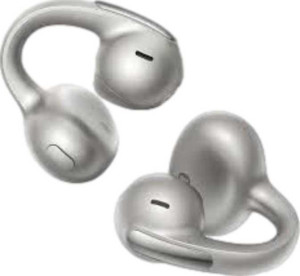
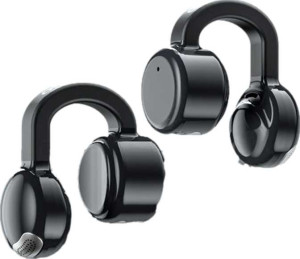
Baseus MC1 Pro
Roseselsa OpenFree

Baseus MC1 Pro Roseselsa OpenFree

Overview

Welcome to our in-depth specification comparison between the Baseus MC1 Pro and the Roseselsa OpenFree, two open-ear wireless earbuds vying for your attention in a competitive market. Both models share a solid foundation of features, yet they diverge in meaningful ways across water resistance, audio frequency range, and battery endurance. Whether you prioritize rugged durability or longer listening sessions, this side-by-side breakdown will help you identify which earbud is the right fit for your lifestyle.

Common Features

  • Both products have an open-ear fit.
  • Neither product has wires or cables.
  • Neither product is a neckband earbud design.
  • Neither product includes wingtips.
  • Neither product has RGB lighting.
  • Both products feature stereo speakers.
  • Neither product has a UV light.
  • Neither product has a display.
  • Neither product has active noise cancellation.
  • Neither product has passive noise reduction.
  • Both products have a lowest frequency of 20 Hz.
  • Neither product supports spatial audio.
  • Neither product has Dolby Atmos.
  • Neither product has Dirac Virtuo.
  • Neither product has a neodymium magnet.
  • Neither product supports wireless charging.
  • Neither product has a solar power battery.
  • Both products have a battery level indicator.
  • Both products have a rechargeable battery.
  • Neither product supports fast pairing.
  • Both products have USB Type-C charging.
  • Both products support LDAC.
  • Neither product supports Bluetooth LE Audio.
  • Neither product supports aptX Adaptive, aptX Low Latency, aptX HD, or aptX.
  • Neither product has an ambient sound mode.
  • Neither product has in/on-ear detection.
  • Neither product has a find device feature.
  • Both products support fast charging.
  • Neither product can read notifications.
  • Both products have a mute function.
  • Both products can be used as a headset.
  • Both products have a control panel placed on the device.
  • Both products have a noise-canceling microphone.

Main Differences

  • The ingress protection rating is IP67 on Baseus MC1 Pro and IPX4 on Roseselsa OpenFree.
  • The Baseus MC1 Pro is fully waterproof, while the Roseselsa OpenFree is only sweat resistant.
  • The highest frequency reaches 40000 Hz on Baseus MC1 Pro and 20000 Hz on Roseselsa OpenFree.
  • Battery life is 8 hours on Baseus MC1 Pro and 10 hours on Roseselsa OpenFree.
  • Battery life of the charging case is 32 hours on Baseus MC1 Pro and 42 hours on Roseselsa OpenFree.
  • Charge time is 1.5 hours on Baseus MC1 Pro and 2 hours on Roseselsa OpenFree.
  • The Bluetooth version is 6 on Baseus MC1 Pro and 5.4 on Roseselsa OpenFree.
  • LDHC support is present on Roseselsa OpenFree but not available on Baseus MC1 Pro.
Specs Comparison
Baseus MC1 Pro

Baseus MC1 Pro

Roseselsa OpenFree

Roseselsa OpenFree

Design:
Fit Open-ear Open-ear
Ingress Protection (IP) rating IP67 IPX4
water resistance Waterproof Sweat resistant
has no wires or cables
are neckband earbuds
wingtips included
has RGB lighting
has stereo speakers
has UV light
Has a display

Both the Baseus MC1 Pro and the Roseselsa OpenFree share the same fundamental design philosophy: open-ear, fully wireless (no cables), no wingtips, stereo playback, and no gimmicks like RGB lighting or displays. For users, this means both deliver a clean, lightweight form factor suited for situational awareness during outdoor activities.

The single but significant differentiator in this group is water resistance. The MC1 Pro carries an IP67 rating, meaning it can withstand full submersion in up to 1 meter of water for 30 minutes — a level of protection that covers rain, sweat, splashing, and accidental dunks. The OpenFree holds only an IPX4 rating, which covers sweat and light splashing but offers no protection against immersion. In practical terms, the MC1 Pro is the safer choice for swimming-adjacent activities, heavy rain, or intense workouts where sweat exposure is high.

The Baseus MC1 Pro holds a clear edge in this group purely on the strength of its superior ingress protection. If durability and resistance to water exposure are priorities, the MC1 Pro's IP67 certification provides meaningfully more real-world confidence than the OpenFree's sweat-resistant IPX4 rating.

Sound quality:
has active noise cancellation (ANC)
has passive noise reduction
lowest frequency 20 Hz 20 Hz
highest frequency 40000 Hz 20000 Hz
supports spatial audio
has Dolby Atmos
has Dirac Virtuo
has a neodymium magnet

On noise isolation, both earbuds arrive at the same answer: neither ANC nor passive noise reduction is present on the MC1 Pro or the OpenFree. Given their shared open-ear form factor, this is expected — open-ear designs are intentionally built for ambient sound awareness, not isolation. Neither product attempts to overcome that with software-based ANC, so users should go in expecting to hear their surroundings.

Where a measurable difference does emerge is in frequency range. Both start at 20 Hz on the low end — the standard floor of human hearing — but the MC1 Pro extends up to 40,000 Hz, twice the 20,000 Hz ceiling of the OpenFree. In practice, most adults cannot consciously hear above 16–18 kHz, so the practical audible difference is minimal for the average listener. However, a wider high-frequency ceiling is sometimes associated with better reproduction of upper harmonic detail and a more airy, open treble character, even if the ultra-high frequencies themselves are inaudible.

The Baseus MC1 Pro holds a narrow edge here on the basis of its extended frequency response, though the real-world impact is subtle rather than dramatic. Neither product offers spatial audio, Dolby Atmos, or neodymium drivers, so for listeners prioritizing advanced audio processing or premium driver tech, neither earns a strong recommendation from these specs alone.

Power:
Battery life 8 hours 10 hours
Battery life of charging case 32 hours 42 hours
charge time 1.5 hours 2 hours
has wireless charging
Has a solar power battery
has a battery level indicator
has a rechargeable battery

Battery life is where the Roseselsa OpenFree pulls ahead most concretely. Its earbuds last 10 hours per charge versus 8 hours for the Baseus MC1 Pro — a 25% difference that translates to roughly two extra listening sessions per week for a typical daily commuter. Combine that with a charging case that extends total playback to 42 hours compared to the MC1 Pro's 32 hours, and the OpenFree is a meaningfully better companion for travel, long workdays, or situations where access to a power outlet is unreliable.

The trade-off comes at the charging stage. The MC1 Pro refills in 1.5 hours, while the OpenFree requires 2 hours — a modest but real difference if you're topping up quickly between uses. Neither model supports wireless charging, so both require a wired connection. Both also include a battery level indicator, giving users visibility into remaining charge on either device.

Taken together, the Roseselsa OpenFree holds a clear advantage in this group. Its lead in both per-charge endurance and total case capacity outweighs the MC1 Pro's faster charge time for most use cases. The MC1 Pro's quicker replenishment is a practical consolation, but raw longevity is the more impactful metric for day-to-day use.

Connectivity:
has fast pairing
Has USB Type-C
Bluetooth version 6 5.4
has LDAC
has LDHC
has Bluetooth LE Audio
has aptX Adaptive
has aptX Low Latency
has aptX HD
has aptX
has aptX Lossless
has aptX Voice
has Auracast
maximum Bluetooth range 10 m 10 m
supports Bluetooth pairing using NFC
Can be used wirelessly
has AAC

At the foundation, both earbuds share a solid common ground: USB-C charging, a 10-meter Bluetooth range, and support for both LDAC and AAC — meaning users on Sony-ecosystem Android devices or Apple hardware are well served by either option. LDAC in particular is notable, as it supports high-resolution audio streaming at up to 990 kbps, well above the standard SBC codec.

The two meaningful differentiators pull in opposite directions. The MC1 Pro runs on Bluetooth 6, the newest version in the spec, which brings improvements in connection stability, lower power consumption, and reduced latency compared to the Bluetooth 5.4 found in the OpenFree. On the codec side, however, the OpenFree counters with LDHC support — a high-resolution wireless codec that can transmit at up to 900 kbps and is particularly relevant for users with LDHC-compatible source devices, offering an additional high-fidelity pathway the MC1 Pro lacks.

This group is genuinely competitive, but the edge goes slightly to the Baseus MC1 Pro for most users. Bluetooth 6 delivers broader real-world benefits regardless of source device, while LDHC compatibility on the OpenFree only matters if your phone or DAP explicitly supports it — a narrower audience. For high-res audio enthusiasts with the right hardware, the OpenFree's codec advantage could close that gap entirely.

Features:
release date May 2025 June 2025
has ambient sound mode
has in/on-ear detection
has find device feature
Supports fast charging
can read notifications
has a mute function
can be used as a headset
control panel placed on a device
Has voice prompts
travel bag is included
Has an in-line control panel
Has a temperature sensor
Has a built-in camera remote control function

Across every feature in this group, the Baseus MC1 Pro and the Roseselsa OpenFree are an exact match. Both support fast charging, include on-device physical controls, offer voice prompts, ship with a travel bag, and can function as a headset with a mute function — a practical set of everyday conveniences that positions both as work-and-workout capable earbuds rather than purely casual listening devices.

Notably, neither product includes features like ambient sound mode, in-ear detection, or a find-device function — omissions that are common at the premium tier but less surprising in this segment. The absence of in-ear detection in particular means there is no automatic pause when you remove an earbud, which is a minor but real convenience trade-off for users coming from higher-end competitors.

With no differentiating data points anywhere in this group, the verdict is a complete tie. Feature-for-feature, buyers get the same functional toolkit from either earbud, and this category should not influence a purchase decision between the two.

Microphone:
has a noise-canceling microphone

Both the Baseus MC1 Pro and the Roseselsa OpenFree include a noise-canceling microphone, which is a practically important feature for open-ear earbuds in particular. Because open-ear designs allow ambient sound in by default, a microphone that actively filters background noise becomes more valuable — without it, call recipients would hear everything from street traffic to office chatter alongside your voice.

This is a complete tie. The provided data offers no further microphone specifications to differentiate the two, and neither product holds an advantage in this category based on the available specs.

Comparison Summary & Verdict

After examining all the specifications, both earbuds prove to be capable open-ear companions, but they cater to slightly different needs. The Baseus MC1 Pro stands out with its superior IP67 waterproof rating and a wider frequency response reaching up to 40000 Hz, making it the stronger choice for users who need robust water protection and broader audio reproduction. It also benefits from the latest Bluetooth 6 for a more modern wireless connection. On the other hand, the Roseselsa OpenFree wins on endurance, offering 10 hours of battery life and a 42-hour charging case, alongside LDHC codec support for those who value extended playback above all else. Both share fast charging, USB Type-C, LDAC, noise-canceling microphones, and mute functionality, making either a well-rounded everyday option.

Baseus MC1 Pro
Buy Baseus MC1 Pro if...

Buy the Baseus MC1 Pro if you need a fully waterproof earbud with a wider frequency range and the latest Bluetooth 6 connectivity.

Roseselsa OpenFree
Buy Roseselsa OpenFree if...

Buy the Roseselsa OpenFree if longer battery life and extended case endurance are your top priorities, and you want LDHC codec support.