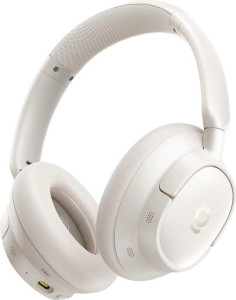
Baseus MH1
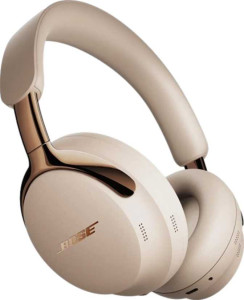
Bose QuietComfort Ultra Headphones (2nd Gen)

Baseus MH1 Bose QuietComfort Ultra Headphones (2nd Gen)

Common Features

  • Both products have an over-ear fit.
  • Both products have a detachable cable.
  • Neither product has water resistance.
  • Both products can be folded.
  • Neither product is designed for kids.
  • Both products have a tangle-free cable.
  • Neither product has an open-back design.
  • Both products have stereo speakers.
  • Both products have active noise cancellation (ANC).
  • Both products have passive noise reduction.
  • Both products have a lowest frequency of 20 Hz.
  • Both products have USB Type-C.
  • Both products have a battery level indicator.
  • Neither product supports wireless charging.
  • Neither product has a solar power battery.
  • Both products have a rechargeable battery.
  • Neither product has a removable battery.
  • Both products support wireless and wired connectivity.
  • Both products have a noise-canceling microphone.
  • Both products have ambient sound mode.

Main Differences

  • Baseus MH1 weighs 245 g while Bose QuietComfort Ultra Headphones (2nd Gen) weigh 265 g.
  • Baseus MH1 has a highest frequency of 40,000 Hz while Bose QuietComfort Ultra Headphones (2nd Gen) has a highest frequency of 20,000 Hz.
  • Baseus MH1 does not support spatial audio, but Bose QuietComfort Ultra Headphones (2nd Gen) do.
  • Baseus MH1 has a battery life of 80 hours, while Bose QuietComfort Ultra Headphones (2nd Gen) have a battery life of 30 hours.
  • Baseus MH1 has Bluetooth version 6, while Bose QuietComfort Ultra Headphones (2nd Gen) have Bluetooth version 5.4.
  • Baseus MH1 does not support aptX Adaptive, while Bose QuietComfort Ultra Headphones (2nd Gen) do.
  • Baseus MH1 supports LDAC, while Bose QuietComfort Ultra Headphones (2nd Gen) do not.
  • Baseus MH1 supports AAC, while Bose QuietComfort Ultra Headphones (2nd Gen) do not.
  • Baseus MH1 does not have in/on-ear detection, while Bose QuietComfort Ultra Headphones (2nd Gen) do.
Specs Comparison
Baseus MH1

Baseus MH1

Bose QuietComfort Ultra Headphones (2nd Gen)

Bose QuietComfort Ultra Headphones (2nd Gen)

Design:
Fit Over-ear Over-ear
weight 245 g 265 g
has a detachable cable
water resistance None None
can be folded
is designed for kids
has a tangle free cable
has an open-back design
has stereo speakers

Both the Baseus MH1 and the Bose QuietComfort Ultra Headphones (2nd Gen) feature an over-ear fit, making them comfortable for long listening sessions. The Baseus MH1 weighs 245 g, while the Bose model is slightly heavier at 265 g.

Both headphones come with a detachable cable and a tangle-free cable, which ensures more convenience during use. Neither product is water-resistant, and both models have the ability to fold for easier storage. Neither is designed specifically for kids, and neither has an open-back design. Both also come with stereo speakers for quality sound.

The only notable difference in design is the weight, with the Bose QuietComfort Ultra Headphones (2nd Gen) being 20 g heavier than the Baseus MH1. All other design features are identical between the two models.

Sound quality:
has active noise cancellation (ANC)
lowest frequency 20 Hz 20 Hz
highest frequency 40000 Hz 20000 Hz
supports spatial audio
has passive noise reduction

Both the Baseus MH1 and the Bose QuietComfort Ultra Headphones (2nd Gen) are equipped with active noise cancellation (ANC) and passive noise reduction, ensuring an immersive listening experience by blocking out external noise.

The Baseus MH1 has a frequency range that spans from 20 Hz to 40,000 Hz, offering a wider frequency response compared to the Bose model, which has a range from 20 Hz to 20,000 Hz. This means the Baseus MH1 can potentially reproduce higher-frequency sounds than the Bose headphones.

However, the Bose QuietComfort Ultra Headphones (2nd Gen) have an advantage with support for spatial audio, which the Baseus MH1 lacks. This feature enhances the 3D audio experience, making it ideal for users who want a more immersive soundstage.

Power:
Battery life 80 hours 30 hours
Has USB Type-C
has a battery level indicator
has wireless charging
Has a solar power battery
has a rechargeable battery
has a removable battery

The Baseus MH1 offers a significantly longer battery life than the Bose QuietComfort Ultra Headphones (2nd Gen), with up to 80 hours of usage compared to 30 hours for the Bose model. Both headphones feature a rechargeable battery, a battery level indicator, and USB Type-C charging, but neither supports wireless charging or solar power.

Additionally, neither model offers a removable battery, so users will not be able to swap out the battery for a fresh one during use.

While both models share most power features, the Baseus MH1’s extended battery life stands out as the primary difference between the two products in this category.

Connectivity:
connectivity Wireless & wired Wireless & wired
Bluetooth version 6 5.4
has aptX Adaptive
has aptX
has LDAC
has LDHC
has Bluetooth LE Audio
has aptX Low Latency
has aptX HD
has aptX Lossless
has AAC
has Auracast
maximum Bluetooth range 10 m 10 m
supports Bluetooth pairing using NFC

Both the Baseus MH1 and the Bose QuietComfort Ultra Headphones (2nd Gen) offer wireless and wired connectivity options, making them versatile for different usage scenarios. However, the Bluetooth versions differ: the Baseus MH1 features Bluetooth 6, while the Bose model uses Bluetooth 5.4.

The Baseus MH1 supports LDAC for high-quality audio streaming, but lacks support for aptX Adaptive, aptX Low Latency, aptX HD, aptX Lossless, and AAC. In contrast, the Bose QuietComfort Ultra Headphones (2nd Gen) support aptX Adaptive, but do not support LDAC or AAC. Neither product supports Bluetooth pairing using NFC or any form of Auracast, and both have a maximum Bluetooth range of 10 meters.

Overall, the Baseus MH1 stands out with its support for LDAC, while the Bose model offers aptX Adaptive, which may appeal to different preferences depending on audio codec compatibility.

Features:
release date October 2025 September 2025
has a noise-canceling microphone
has ambient sound mode
has in/on-ear detection
has a mute function
control panel placed on a device
can be used as a headset
Has an in-line control panel

Both the Baseus MH1 and the Bose QuietComfort Ultra Headphones (2nd Gen) come with a noise-canceling microphone and an ambient sound mode, which allows users to hear their surroundings while still enjoying audio. Both can also be used as a headset for calls or other communication needs.

While both models feature a control panel placed on the device, neither has an in-line control panel. The Baseus MH1 does not include in/on-ear detection, while the Bose QuietComfort Ultra Headphones (2nd Gen) do offer this feature, allowing for automatic pausing when the headphones are removed.

Neither product has a mute function, but they both provide essential features like noise cancellation and ambient sound mode, making them suitable for a variety of listening and communication scenarios.

Comparison Summary

This is a specification comparison between Baseus MH1 and Bose QuietComfort Ultra Headphones (2nd Gen). Both products have an over-ear fit, detachable cables, and active noise cancellation (ANC). Additionally, both have a rechargeable battery and support wireless and wired connectivity. The Baseus MH1 weighs 245 g, while the Bose QuietComfort Ultra Headphones (2nd Gen) weigh 265 g. The Baseus MH1 offers a higher highest frequency of 40,000 Hz compared to the Bose model’s 20,000 Hz. The Baseus MH1 also has a longer battery life of 80 hours, while the Bose headphones last for 30 hours. The Baseus MH1 supports LDAC, while the Bose QuietComfort Ultra Headphones (2nd Gen) do not. Lastly, the Bose model supports in/on-ear detection, which the Baseus MH1 lacks.