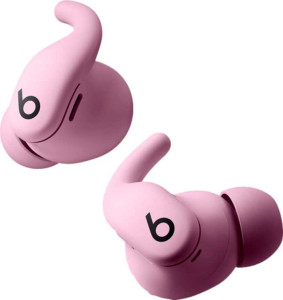
Beats Powerbeats Fit
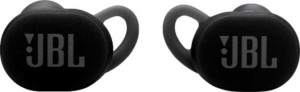
JBL Endurance Race 2

Beats Powerbeats Fit JBL Endurance Race 2

Overview

When choosing between the Beats Powerbeats Fit and the JBL Endurance Race 2, active users face a genuinely competitive matchup. Both are truly wireless, wingtip-secured in-ear earbuds built for physical activity, sharing features like ANC, ambient sound mode, and fast charging. But key battlegrounds emerge around water resistance and battery endurance, as well as audio performance and spatial audio support — areas where each product takes a notably different stance.

Common Features

  • Both products use an in-ear fit design.
  • Neither product has wires or cables.
  • Neither product is a neckband earbud style.
  • Both products include wingtips.
  • Neither product features RGB lighting.
  • Both products have stereo speakers.
  • Neither product has a UV light.
  • Neither product has a display.
  • Both products have active noise cancellation (ANC).
  • Both products offer passive noise reduction.
  • The lowest frequency on both products is 20 Hz.
  • The highest frequency on both products is 20000 Hz.
  • Neither product supports Dolby Atmos.
  • Neither product supports Dirac Virtuo.
  • Neither product uses a neodymium magnet.
  • Neither product supports wireless charging.
  • Neither product has a solar power battery.
  • Both products have a battery level indicator.
  • Both products have a rechargeable battery.
  • Both products include a USB Type-C connection.
  • Neither product supports LDAC.
  • Neither product supports LDHC.
  • Neither product supports Bluetooth LE Audio.
  • Neither product supports aptX Adaptive.
  • Neither product supports aptX Low Latency.
  • Neither product supports aptX HD.
  • Neither product supports aptX.
  • Both products have an ambient sound mode.
  • Both products include a find device feature.
  • Both products support fast charging.
  • Neither product can read notifications.
  • Both products have a mute function.
  • Both products can be used as a headset.
  • Both products have a control panel placed on the device.
  • Both products have voice prompts.
  • Both products have a noise-canceling microphone.

Main Differences

  • The Ingress Protection rating is IPX4 on Beats Powerbeats Fit and IP68 on JBL Endurance Race 2.
  • Water resistance is sweat resistant on Beats Powerbeats Fit, while JBL Endurance Race 2 is fully waterproof.
  • Weight is 11.56 g on Beats Powerbeats Fit and 12.8 g on JBL Endurance Race 2.
  • Driver unit size is 9.5 mm on Beats Powerbeats Fit and 6.8 mm on JBL Endurance Race 2.
  • Spatial audio support is available on Beats Powerbeats Fit but not on JBL Endurance Race 2.
  • Battery life is 7 hours on Beats Powerbeats Fit and 12 hours on JBL Endurance Race 2.
  • Battery life of the charging case is 23 hours on Beats Powerbeats Fit and 36 hours on JBL Endurance Race 2.
  • Battery life with ANC enabled is 6 hours on Beats Powerbeats Fit and 10 hours on JBL Endurance Race 2.
  • Charge time is 1.5 hours on Beats Powerbeats Fit and 2 hours on JBL Endurance Race 2.
  • Fast pairing is available on JBL Endurance Race 2 but not on Beats Powerbeats Fit.
  • In-ear/on-ear detection is present on Beats Powerbeats Fit but not available on JBL Endurance Race 2.
  • The number of microphones is 6 on Beats Powerbeats Fit and 4 on JBL Endurance Race 2.
Specs Comparison
Beats Powerbeats Fit

Beats Powerbeats Fit

JBL Endurance Race 2

JBL Endurance Race 2

Design:
Fit In-ear In-ear
Ingress Protection (IP) rating IPX4 IP68
water resistance Sweat resistant Waterproof
weight 11.56 g 12.8 g
has no wires or cables
are neckband earbuds
wingtips included
has RGB lighting
has stereo speakers
has UV light
Has a display

Both the Beats Powerbeats Fit and the JBL Endurance Race 2 share the same fundamental design philosophy: fully wireless, in-ear earbuds with wingtips for a secure fit and stereo audio. Neither product uses a neckband, has RGB lighting, a display, or a UV light, so on those fronts they are evenly matched and cater to the same use-case profile — active, on-the-go listeners who need stability without cable clutter.

The most significant divergence in this category is water resistance. The Powerbeats Fit carries an IPX4 rating, meaning it is protected against sweat and light splashes from any direction — sufficient for gym sessions and light runs, but not submersion. The Endurance Race 2 steps up considerably with a full IP68 rating, which means it is both dust-tight and capable of withstanding prolonged submersion in water. For swimmers, outdoor athletes training in rain, or anyone who simply wants peace of mind around water, this is a meaningful real-world advantage.

On weight, the Powerbeats Fit edges ahead at 11.56 g versus the Endurance Race 2's 12.8 g — a roughly 10% difference. While neither earbud is heavy, the lighter Beats may feel marginally less fatiguing during very long wear sessions. Overall, however, the JBL Endurance Race 2 holds a clear design edge for users who prioritize environmental protection, thanks to its superior IP68 waterproofing.

Sound quality:
has active noise cancellation (ANC)
has passive noise reduction
driver unit size 9.5 mm 6.8 mm
lowest frequency 20 Hz 20 Hz
highest frequency 20000 Hz 20000 Hz
supports spatial audio
has Dolby Atmos
has Dirac Virtuo
has a neodymium magnet

At the frequency level, both earbuds cover the standard 20 Hz – 20,000 Hz range, matching the full span of human hearing. Neither product includes Dolby Atmos, Dirac Virtuo, or a neodymium magnet, so those dimensions cancel out entirely. Where the comparison gets more interesting is in driver size and spatial audio support.

The Powerbeats Fit uses a 9.5 mm driver versus the Endurance Race 2's 6.8 mm driver — a roughly 40% larger surface area. In general acoustic engineering, a larger driver moves more air, which tends to produce fuller bass response and greater overall dynamic range, though real-world output also depends heavily on tuning. The Endurance Race 2's smaller driver is not necessarily a disadvantage in a compact, sport-focused earbud, but on paper the Powerbeats Fit has more potential headroom for rich, immersive sound. Both models include ANC and passive noise reduction, so their isolation capabilities are nominally comparable.

The decisive differentiator here is spatial audio: the Powerbeats Fit supports it, while the Endurance Race 2 does not. Spatial audio creates a wider, more three-dimensional soundstage — particularly noticeable when watching video or listening to compatible music content. Combined with the larger driver, the Powerbeats Fit holds a clear edge in sound quality on paper, making it the stronger choice for listeners who prioritize audio immersion alongside their active lifestyle.

Power:
Battery life 7 hours 12 hours
Battery life of charging case 23 hours 36 hours
Battery life (ANC) 6 hours 10 hours
charge time 1.5 hours 2 hours
has wireless charging
Has a solar power battery
has a battery level indicator
has a rechargeable battery

Battery life is where the JBL Endurance Race 2 pulls decisively ahead. Its earbuds last 12 hours on a single charge compared to the Powerbeats Fit's 7 hours — nearly double the runtime. Factor in the charging case and the gap widens further: the Endurance Race 2 delivers a combined 36 hours of total playback versus 23 hours for the Powerbeats Fit. For someone doing long training sessions, travel days, or simply wanting to go several days without hunting for a cable, this difference is practically significant.

ANC performance follows the same pattern. With noise cancellation active, the Endurance Race 2 sustains 10 hours of playback, while the Powerbeats Fit drops to 6 hours. That one-hour reduction under ANC is fairly typical for both products, but the Endurance Race 2's higher baseline means it remains usable for much longer even with ANC engaged. The Powerbeats Fit's 6-hour ANC runtime may require mid-day top-ups for heavy users.

The one area where the Powerbeats Fit partially compensates is charge time — 1.5 hours to the Endurance Race 2's 2 hours — meaning it refills faster when you do plug in. Neither model offers wireless charging, so both require a cable. Still, faster charging is a secondary consideration when the underlying capacity gap is this wide. The JBL Endurance Race 2 is the clear winner in this category for any user where longevity between charges is a priority.

Connectivity:
has fast pairing
Has USB Type-C
has LDAC
has LDHC
has Bluetooth LE Audio
has aptX Adaptive
has aptX Low Latency
has aptX HD
has aptX
has aptX Lossless
has aptX Voice
has Auracast
maximum Bluetooth range 10 m 10 m
supports Bluetooth pairing using NFC
Can be used wirelessly
has AAC

Connectivity is a category where these two earbuds are remarkably similar — and notably limited. Neither supports any advanced audio codec: LDAC, aptX in any of its variants, AAC, and Bluetooth LE Audio are all absent from both products. In practice, this means audio is transmitted over standard Bluetooth SBC, which is adequate for most listeners but leaves audiophiles with no high-resolution wireless streaming option on either side. Both share an identical 10 m maximum Bluetooth range and both charge via USB-C, so those dimensions offer no basis for differentiation.

The single meaningful distinction in this category is fast pairing. The JBL Endurance Race 2 supports it; the Powerbeats Fit does not. Fast pairing streamlines the initial device setup — instead of manually navigating Bluetooth menus, the earbuds are detected and paired automatically when brought near a compatible device. It is a convenience feature rather than a performance one, but for users who frequently switch between devices or simply value a frictionless out-of-box experience, it is a tangible advantage.

Overall, this is a weak category for both products given the absence of any premium codec support or modern features like Auracast or NFC pairing. The JBL Endurance Race 2 takes a narrow edge solely on the strength of fast pairing, but neither earbud distinguishes itself meaningfully in connectivity.

Features:
release date September 2025 March 2025
has ambient sound mode
has in/on-ear detection
has find device feature
Supports fast charging
can read notifications
has a mute function
can be used as a headset
control panel placed on a device
Has voice prompts
travel bag is included
Has an in-line control panel
Has a temperature sensor
Has a built-in camera remote control function

Across most of this feature set, the two earbuds are virtually identical. Ambient sound mode, fast charging, a mute function, on-device controls, voice prompts, a find-device feature, headset capability, and an included travel bag — all present on both. For the majority of everyday use cases, users of either product will have access to the same practical toolkit.

The one feature that separates them is in/on-ear detection, which the Powerbeats Fit supports and the Endurance Race 2 does not. This sensor automatically pauses playback when an earbud is removed from the ear and resumes when it is replaced — a small but genuinely useful quality-of-life feature, especially during workouts when you might pull out an earbud to speak with someone. Without it, the Endurance Race 2 requires manual pause/play interaction in those moments.

It is a modest gap in an otherwise evenly matched category, but it is the only functional differentiator the data supports. The Powerbeats Fit takes a narrow edge here on the strength of in-ear detection alone.

Microphone:
number of microphones 6 4
has a noise-canceling microphone

Both earbuds include noise-canceling microphones, making them functionally capable as call and voice assistant headsets. The meaningful distinction here is microphone count: the Powerbeats Fit deploys 6 microphones compared to the Endurance Race 2's 4 microphones. More microphones generally enable more sophisticated beamforming and wind noise suppression algorithms — particularly relevant for sport earbuds used outdoors where ambient noise and movement are constant factors.

A higher microphone count allows the system to triangulate the user's voice more precisely, filtering out surrounding noise from multiple angles simultaneously. For a sport-focused earbud used during runs or outdoor training, that additional processing headroom can translate to noticeably cleaner call quality for the person on the other end of the line. The Powerbeats Fit holds a clear structural advantage on this front, and the Endurance Race 2 offers no compensating microphone-related feature to narrow the gap.

Comparison Summary & Verdict

After a thorough side-by-side review, both earbuds serve active users well but cater to different priorities. The Beats Powerbeats Fit stands out with its larger 9.5 mm driver, spatial audio support, six-microphone array for clearer calls, and faster 1.5-hour charge time — making it an excellent pick for those who value rich sound and voice communication quality. The JBL Endurance Race 2, on the other hand, dominates on endurance and protection, offering a full IP68 waterproof rating, up to 12 hours of playback (10 with ANC), and a charging case that extends total use to 36 hours — a significant edge for long sessions and outdoor use. Fast pairing also gives the JBL a small convenience advantage. Your choice ultimately comes down to whether audio depth and call quality or battery longevity and water protection matter more to you.

Beats Powerbeats Fit
Buy Beats Powerbeats Fit if...

Buy the Beats Powerbeats Fit if you prioritize superior sound quality with a larger driver and spatial audio support, faster charging, and a six-microphone setup for clearer calls.

JBL Endurance Race 2
Buy JBL Endurance Race 2 if...

Buy the JBL Endurance Race 2 if you need maximum battery life, full IP68 waterproof protection, and longer total playtime for extended outdoor or aquatic workouts.