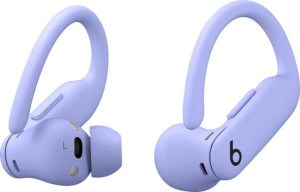
Beats Powerbeats Pro 2
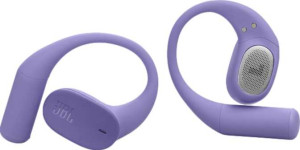
JBL Sense Lite

Beats Powerbeats Pro 2 JBL Sense Lite

Overview

Welcome to this detailed specification face-off between the Beats Powerbeats Pro 2 and the JBL Sense Lite. Both earbuds share a wireless, truly cable-free design with fast charging and a travel bag included, but they take notably different approaches when it comes to fit style, noise cancellation, and overall battery endurance. Read on to explore how these two earbuds stack up across every key category before making your decision.

Common Features

  • Both products are sweat resistant.
  • Neither product uses wires or cables.
  • Neither product is a neckband earbud design.
  • Neither product has RGB lighting.
  • Both products have stereo speakers.
  • Neither product has a UV light.
  • Neither product has a display.
  • Both products share the same frequency range, from 20 Hz to 20000 Hz.
  • Neither product supports Dolby Atmos.
  • Neither product supports Dirac Virtuo.
  • Neither product uses a neodymium magnet.
  • Both products take 1.5 hours to fully charge.
  • Neither product has a solar power battery.
  • Both products have a battery level indicator.
  • Both products have a rechargeable battery.
  • Neither product supports fast pairing.
  • Both products have a USB Type-C port.
  • Neither product supports LDAC, LDHC, Bluetooth LE Audio, aptX Adaptive, aptX Low Latency, or aptX HD.
  • Both products support fast charging.
  • Both products have a mute function.
  • Both products can be used as a headset.
  • Both products have a control panel placed on the device.
  • Both products have voice prompts.
  • A travel bag is included with both products.
  • Neither product has an in-line control panel.
  • Neither product has a temperature sensor.
  • Both products have a noise-canceling microphone.

Main Differences

  • The fit is in-ear on Beats Powerbeats Pro 2 and open-ear on JBL Sense Lite.
  • The Ingress Protection rating is IPX4 on Beats Powerbeats Pro 2 and IP54 on JBL Sense Lite.
  • The weight is 17.4 g on Beats Powerbeats Pro 2 and 38 g on JBL Sense Lite.
  • Wingtips are included with Beats Powerbeats Pro 2 but not with JBL Sense Lite.
  • Active noise cancellation is available on Beats Powerbeats Pro 2 but not on JBL Sense Lite.
  • Passive noise reduction is present on Beats Powerbeats Pro 2 but not on JBL Sense Lite.
  • Spatial audio is supported on Beats Powerbeats Pro 2 but not on JBL Sense Lite.
  • Battery life is 10 hours on Beats Powerbeats Pro 2 and 8 hours on JBL Sense Lite.
  • The battery life of the charging case is 35 hours on Beats Powerbeats Pro 2 and 24 hours on JBL Sense Lite.
  • Wireless charging is available on Beats Powerbeats Pro 2 but not on JBL Sense Lite.
  • The Bluetooth version is 5.3 on Beats Powerbeats Pro 2 and 5.4 on JBL Sense Lite.
  • Ambient sound mode is available on Beats Powerbeats Pro 2 but not on JBL Sense Lite.
  • The number of microphones is 6 on Beats Powerbeats Pro 2 and 4 on JBL Sense Lite.
Specs Comparison
Beats Powerbeats Pro 2

Beats Powerbeats Pro 2

JBL Sense Lite

JBL Sense Lite

Design:
Fit In-ear Open-ear
Ingress Protection (IP) rating IPX4 IP54
water resistance Sweat resistant Sweat resistant
weight 17.4 g 38 g
has no wires or cables
are neckband earbuds
wingtips included
has RGB lighting
has stereo speakers
has UV light
Has a display

The most fundamental design difference here is the fit philosophy. The Beats Powerbeats Pro 2 uses a traditional in-ear design with wingtips included, meaning the earbud physically seals inside the ear canal for passive noise isolation and a secure, sport-focused hold. The JBL Sense Lite, by contrast, adopts an open-ear form factor, which sits outside the ear canal entirely. This has significant real-world implications: open-ear designs keep users aware of their surroundings — useful for running outdoors or office use — but sacrifice the sound isolation and bass reinforcement that an in-ear seal provides.

On protection, both are rated sweat resistant, but the JBL Sense Lite holds an edge with a full IP54 rating, which covers both dust ingress and water splashing from any direction. The Powerbeats Pro 2 carries an IPX4 rating, meaning it is tested against water only, with no certified dust resistance. For most gym or running scenarios this distinction is minor, but in dusty outdoor environments the IP54 rating offers broader real-world durability. Weight is another key differentiator: at 17.4 g, the Powerbeats Pro 2 is dramatically lighter than the Sense Lite's 38 g, which matters for long sessions where fatigue from heavier earwear can become noticeable.

Overall, neither product is strictly superior in design — they target different use cases. The Powerbeats Pro 2 has a clear edge in weight and delivers the secure, isolating fit that performance athletes typically prefer. The JBL Sense Lite counters with a stronger ingress protection rating and an open-ear design suited to users who prioritize situational awareness. The right choice depends entirely on whether isolation or ambient awareness matters more to the buyer.

Sound quality:
has active noise cancellation (ANC)
has passive noise reduction
lowest frequency 20 Hz 20 Hz
highest frequency 20000 Hz 20000 Hz
supports spatial audio
has Dolby Atmos
has Dirac Virtuo
has a neodymium magnet

The frequency range is identical for both — 20 Hz to 20,000 Hz — covering the full spectrum of human hearing. On paper this looks like a tie, but frequency range alone says little about actual sound quality; what matters far more is how the hardware and software process audio within that range. This is where the two products diverge sharply.

The Beats Powerbeats Pro 2 brings active noise cancellation (ANC) and passive noise reduction to the table, along with support for spatial audio. ANC uses microphones to actively counteract ambient sound, which meaningfully improves perceived audio clarity in noisy environments like gyms or commutes. Passive noise reduction, a byproduct of its in-ear seal, further blocks environmental sound without any power draw. Spatial audio, meanwhile, creates a three-dimensional soundstage that makes music and media feel more immersive and less ″in your head.″ The JBL Sense Lite offers none of these features — no ANC, no passive isolation (expected given its open-ear design), and no spatial audio processing.

The Powerbeats Pro 2 holds a decisive edge in this category. While neither product leans on premium audio processing technologies like Dolby Atmos or Dirac Virtuo, the combination of ANC, passive isolation, and spatial audio on the Powerbeats Pro 2 represents a substantially richer sound quality toolkit. The Sense Lite's open-ear design structurally precludes noise isolation, making this an inherent limitation rather than an oversight — but the result is the same: users prioritizing immersive, interference-free audio will find the Powerbeats Pro 2 considerably better equipped.

Power:
Battery life 10 hours 8 hours
Battery life of charging case 35 hours 24 hours
charge time 1.5 hours 1.5 hours
has wireless charging
Has a solar power battery
has a battery level indicator
has a rechargeable battery

Battery endurance favors the Beats Powerbeats Pro 2 across the board. Its earbuds last 10 hours per charge versus 8 hours for the JBL Sense Lite, and the gap widens significantly at the case level: the Powerbeats Pro 2 case extends total listening time to 35 hours, compared to 24 hours for the Sense Lite. In practical terms, the Powerbeats Pro 2 can cover roughly three to four full days of heavy use before needing a wall outlet, while the Sense Lite will require recharging noticeably sooner for the same usage pattern.

Charge time is identical at 1.5 hours for both, so neither has an advantage in how quickly they recover. Where the Powerbeats Pro 2 pulls further ahead is with wireless charging support — a convenience the Sense Lite lacks entirely. For users already invested in a Qi charging ecosystem, being able to top up the case without fumbling for a cable is a meaningful quality-of-life upgrade, particularly for travel or desk use.

The Powerbeats Pro 2 holds a clear edge in this category. The combination of longer earbud runtime, substantially higher case capacity, and wireless charging support makes it the stronger option for users who prioritize staying untethered from power outlets. The Sense Lite is not weak on battery for its class, but it cannot match the Powerbeats Pro 2 on any individual power metric here.

Connectivity:
has fast pairing
Has USB Type-C
Bluetooth version 5.3 5.4
has LDAC
has LDHC
has Bluetooth LE Audio
has aptX Adaptive
has aptX Low Latency
has aptX HD
has aptX
has aptX Lossless
has aptX Voice
has Auracast
maximum Bluetooth range 10 m 10 m
supports Bluetooth pairing using NFC
Can be used wirelessly
has AAC

Connectivity is remarkably similar between these two products, and the only meaningful differentiator is the Bluetooth version. The JBL Sense Lite runs Bluetooth 5.4 versus the Powerbeats Pro 2's Bluetooth 5.3. In practice, the gap between these two adjacent versions is marginal — both deliver stable wireless connections, low latency for everyday use, and identical maximum ranges of 10 m. Neither product supports advanced audio codecs such as LDAC, aptX, or AAC, which means both rely on standard SBC transmission. For most listeners this will be imperceptible, but audiophiles seeking higher-fidelity wireless streaming will find both products equally limited in this regard.

Shared features include USB Type-C charging and full wireless operation, with no NFC pairing or fast-pairing support on either side. The absence of Bluetooth LE Audio and Auracast on both products is also worth noting — these newer standards enable more efficient streaming and multi-device broadcast scenarios, and neither earphone takes advantage of them despite their Bluetooth versions technically laying groundwork for such features.

This category is effectively a tie. The single-version Bluetooth difference carries no real-world significance for typical users, and every other connectivity attribute is shared. Buyers should not let connectivity specs influence their decision between these two products.

Features:
release date February 2025 October 2025
has ambient sound mode
Supports fast charging
has a mute function
can be used as a headset
control panel placed on a device
Has voice prompts
travel bag is included
Has an in-line control panel
Has a temperature sensor

Most features here are shared: both earbuds support fast charging, include a mute function, function as a headset for calls, offer on-device controls, deliver voice prompts, and come bundled with a travel bag. For day-to-day usability, this common ground means neither product has a structural advantage in how users interact with or manage them.

The single differentiator in this category is ambient sound mode, which the Beats Powerbeats Pro 2 supports and the JBL Sense Lite does not. Ambient sound mode uses the earbuds' microphones to pipe in environmental audio, letting users stay aware of their surroundings without removing the earphones. For runners, cyclists, or anyone navigating busy spaces, this is a genuinely useful safety and convenience feature. It is worth noting, however, that the Sense Lite's open-ear design inherently allows ambient sound to pass through — so while it lacks the dedicated mode, its physical form factor partially compensates in real-world use.

The Powerbeats Pro 2 holds a narrow edge here on paper, with ambient sound mode being the only spec-backed differentiator. In practice, how meaningful that advantage feels will depend on which product a user chooses — the open-ear Sense Lite naturally lets sound in, softening the gap. For users choosing the in-ear Powerbeats Pro 2, however, having ambient mode available adds a layer of flexibility the Sense Lite simply cannot offer through software.
Microphone:
number of microphones 6 4
has a noise-canceling microphone

Both earbuds feature noise-canceling microphones, so call clarity in moderately noisy environments is a baseline expectation for either choice. The meaningful difference lies in microphone count: the Beats Powerbeats Pro 2 deploys 6 microphones versus 4 on the JBL Sense Lite. More microphones generally allow for more sophisticated beamforming and noise isolation algorithms — the array can better pinpoint the user's voice and suppress wind, crowd noise, or ambient sound from multiple directions simultaneously.

For the Powerbeats Pro 2, the higher microphone count also serves a dual purpose: those additional mics feed into its ANC system as well as call quality, meaning the hardware investment carries over across use cases. The Sense Lite's 4-microphone setup is competitive for its class, but with fewer pickup points, its ability to isolate voice in genuinely challenging acoustic environments — think a busy street or a loud gym — is likely more constrained by comparison.

The Powerbeats Pro 2 holds the edge here. While both products clear the noise-canceling microphone threshold, a 6-microphone array offers a structural advantage in call quality and voice pickup precision that the Sense Lite's 4-microphone configuration cannot match on spec alone. Users who frequently take calls in noisy conditions will find this difference practically relevant.

Comparison Summary & Verdict

After examining every specification, it is clear that the Beats Powerbeats Pro 2 and the JBL Sense Lite are built for different listeners. The Powerbeats Pro 2 stands out with its active noise cancellation, spatial audio support, longer battery life of 10 hours plus a 35-hour charging case, wireless charging, and a lighter 17.4 g weight — making it the stronger choice for focused listeners and active users who want premium audio isolation. The JBL Sense Lite, on the other hand, offers an open-ear fit ideal for situational awareness, a slightly newer Bluetooth 5.4 standard, and a more robust IP54 dust and water rating. Choose the Powerbeats Pro 2 if immersive audio and endurance are your priorities; choose the JBL Sense Lite if you prefer an open, ambient listening experience with solid environmental protection.

Beats Powerbeats Pro 2
Buy Beats Powerbeats Pro 2 if...

Buy the Beats Powerbeats Pro 2 if you want active noise cancellation, spatial audio, and longer battery life in a lightweight in-ear design with wireless charging support.

JBL Sense Lite
Buy JBL Sense Lite if...

Buy the JBL Sense Lite if you prefer an open-ear fit for ambient awareness, a stronger IP54 ingress protection rating, and a more straightforward listening experience.