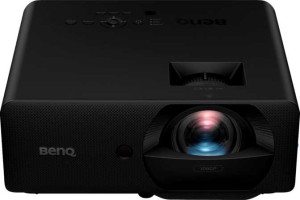
BenQ LH830ST
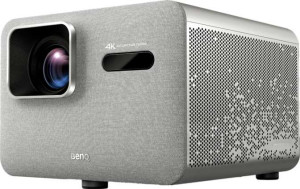
BenQ TK705i

BenQ LH830ST BenQ TK705i

Overview

Welcome to our detailed spec comparison between the BenQ LH830ST and the BenQ TK705i, two laser projectors that share a common foundation yet take notably different approaches. While both deliver HDR10 and HLG support, built-in smart TV functionality, and AirPlay with Chromecast, they diverge sharply on key battlegrounds like output resolution, brightness, connectivity, and audio performance. Read on to discover which projector best fits your specific needs.

Common Features

  • Both projectors use a laser light source.
  • Neither projector has a motorized zoom.
  • Both projectors offer a 10-bit color depth.
  • Both projectors have a 60Hz refresh rate.
  • HDR10 support is available on both projectors.
  • HLG support is available on both projectors.
  • AirPlay support is available on both projectors.
  • Bluetooth is available on both projectors.
  • Both projectors have 2 USB ports.
  • Chromecast built-in is available on both projectors.
  • Neither projector has a VGA connector.
  • Neither projector has a DVI connector.
  • Neither projector has an RJ45 port.
  • Both projectors have an S/PDIF Out port.
  • Both projectors come with a remote control.
  • Both projectors have a built-in smart TV platform.
  • Both projectors have a built-in speaker.

Main Differences

  • Lamp life is 200 h on BenQ LH830ST and 20000 h on BenQ TK705i.
  • Audible noise is 33 dB on BenQ LH830ST and 26 dB on BenQ TK705i.
  • Audible noise in eco mode is 29 dB on BenQ LH830ST and 24 dB on BenQ TK705i.
  • Operating power consumption is 320W on BenQ LH830ST and 250W on BenQ TK705i.
  • Lamp life in eco mode is 0.5 h on BenQ LH830ST and 30000 h on BenQ TK705i.
  • Width is 279.2 mm on BenQ LH830ST and 230 mm on BenQ TK705i.
  • Height is 120.5 mm on BenQ LH830ST and 170 mm on BenQ TK705i.
  • Thickness is 229.3 mm on BenQ LH830ST and 250 mm on BenQ TK705i.
  • Weight is 3400 g on BenQ LH830ST and 3800 g on BenQ TK705i.
  • Volume is 7714.48 cm³ on BenQ LH830ST and 9775 cm³ on BenQ TK705i.
  • Brightness is 4000 lumens on BenQ LH830ST and 3000 lumens on BenQ TK705i.
  • Output resolution is 1080p on BenQ LH830ST and 4K on BenQ TK705i.
  • Response time is 16.7 ms on BenQ LH830ST and 5 ms on BenQ TK705i.
  • Motorized focus is available on BenQ TK705i but not on BenQ LH830ST.
  • Maximum projection size is 180″ on BenQ LH830ST and 160″ on BenQ TK705i.
  • HDR10+ support is present on BenQ TK705i but not available on BenQ LH830ST.
  • Manual focus is available on BenQ LH830ST but not on BenQ TK705i.
  • Minimum throw distance is 0.5 m on BenQ LH830ST and 1.4 m on BenQ TK705i.
  • HDMI ports number 1 on BenQ LH830ST and 2 on BenQ TK705i.
  • Wi-Fi support is present on BenQ LH830ST but not available on BenQ TK705i.
  • Miracast support is present on BenQ LH830ST but not available on BenQ TK705i.
  • Stereo speakers are present on BenQ TK705i but not on BenQ LH830ST.
  • Audio output power is 1 x 2W on BenQ LH830ST and 2 x 8W on BenQ TK705i.
Specs Comparison
BenQ LH830ST

BenQ LH830ST

BenQ TK705i

BenQ TK705i

General info:
lamp life 200 h 20000 h
audible noise 33 dB 26 dB
has laser light source
audible noise (eco) 29 dB 24 dB
release date August 2025 October 2025
operating power consumption 320W 250W
lamp life (eco mode) 0.5 h 30000 h
width 279.2 mm 230 mm
height 120.5 mm 170 mm
thickness 229.3 mm 250 mm
weight 3400 g 3800 g
volume 7714.47748 cm³ 9775 cm³

Both the BenQ LH830ST and the BenQ TK705i share a laser light source, which is a meaningful baseline advantage over traditional lamp-based projectors. However, the similarities largely end there. The most striking divergence is lamp longevity: the LH830ST is rated at just 200 hours in standard mode, compared to the TK705i's 20,000 hours — and the gap widens further in eco mode, where the TK705i reaches 30,000 hours against a nominal 0.5 hours for the LH830ST. In practical terms, this means the TK705i can run for years of daily use before the light source degrades meaningfully, while the LH830ST would require far more frequent servicing or replacement — a significant operational cost consideration for any installation.

Acoustic performance also favors the TK705i. Its 26 dB standard noise level (dropping to 24 dB in eco mode) is noticeably quieter than the LH830ST's 33 dB and 29 dB respectively. In a quiet meeting room or home cinema environment, that 7 dB difference is perceptible and can affect viewer comfort during extended sessions. The TK705i also consumes less power at 250W versus the LH830ST's 320W, which compounds savings over its much longer operational life.

On physical footprint, the LH830ST is the more compact and lighter unit at 3,400 g and roughly 7,714 cm³ of volume, versus the TK705i's 3,800 g and ~9,775 cm³ — an advantage if portability or tight mounting spaces matter. Overall, though, the TK705i holds a clear edge in this group: its dramatically longer laser life, quieter operation, and lower power draw make it the more practical and cost-efficient choice for long-term or fixed installations, while the LH830ST's smaller form factor is its primary physical advantage.
Projection quality:
ANSI lumens 4000 lumens 3000 lumens
output resolution 1080p 4K
response time 16.7 ms 5 ms
has motorized focus
maximum projection size 180" 160"
has motorized zoom
supports HDR10+
bit depth 10-bit 10-bit
has manual focus
minimum throw distance 0.5 m 1.4 m
refresh rate 60Hz 60Hz
supports HDR10
supports HLG

The resolution divide here is the defining split: the LH830ST outputs at 1080p, while the TK705i delivers native 4K. For cinema-quality detail, large-screen presentations, or any use case where the audience sits close to the image, 4K resolves significantly more texture and sharpness — though in a large venue where viewers sit far back, 1080p at 4,000 lumens can still produce a punchy, highly visible image. That brightness advantage is real: the LH830ST outshines the TK705i by a full 1,000 lumens, making it more capable in ambient-light environments like classrooms or conference rooms where blackout conditions aren't guaranteed.

The TK705i counters with a 5 ms response time versus the LH830ST's 16.7 ms, a gap that matters for gaming or fast-motion video where trailing and blur become visible. It also supports HDR10+ — the dynamic metadata upgrade over standard HDR10 — which both units otherwise share alongside HLG. The TK705i's motorized focus adds installation convenience, particularly useful when the projector is ceiling-mounted and manual adjustments are difficult to reach. The LH830ST's manual-only focus is a minor inconvenience in fixed installs but less of an issue in portable setups.

On throw distance, the LH830ST's 0.5 m minimum throw confirms its short-throw credentials, giving it a meaningful deployment advantage in tight spaces — the TK705i requires at least 1.4 m to start projecting. The winner depends squarely on use case: the LH830ST is the stronger choice for bright, space-constrained environments prioritizing visibility, while the TK705i is the better fit for controlled home cinema or gaming rooms where resolution, HDR fidelity, and response time take precedence.

Connectivity:
HDMI ports 1 2
has AirPlay
Has Bluetooth
supports Wi-Fi
USB ports 2 2
has Chromecast built-in
has a VGA connector
has a DVI connector
supports Miracast
RJ45 ports 0 0
Has S/PDIF Out port

Wired connectivity tips in favor of the TK705i, which offers 2 HDMI ports versus the LH830ST's single port. In practice, two HDMI inputs mean fewer cable swaps when running multiple sources simultaneously — a laptop and a streaming stick, for example — making it a more flexible hub for living room or multi-device setups. Both projectors match on USB (2 ports each) and include an S/PDIF optical output for routing audio to an external sound system, so neither has an edge on those fronts.

Wireless connectivity, however, swings decisively toward the LH830ST. It supports Wi-Fi and Miracast, neither of which the TK705i provides. Wi-Fi connectivity enables direct network access and broader streaming flexibility without relying on a paired device, while Miracast allows screen mirroring from Android devices and Windows PCs natively — no app or adapter required. The TK705i does include Chromecast built-in and AirPlay, as does the LH830ST, so Apple and Google ecosystem users are covered on both units. But the absence of Wi-Fi on the TK705i means it depends on those cast protocols or a wired source to function wirelessly, which is a meaningful limitation in environments without a dedicated media player attached.

Neither unit offers an RJ45 ethernet port, so wired network connectivity is off the table for both. On balance, the two projectors trade blows: the TK705i wins on wired source flexibility with its dual HDMI, while the LH830ST holds the broader wireless advantage through native Wi-Fi and Miracast support. Users who prioritize cable-free screen mirroring across device types will find the LH830ST more accommodating; those running a fixed multi-source setup will appreciate the TK705i's extra HDMI input.

Features:
has stereo speakers
has a remote control
has built-in smart TV
has a built-in speaker
audio output power 1 x 2W 2 x 8W

Audio output is where these two projectors diverge most sharply in this group. The TK705i packs a 2 x 8W stereo speaker system, delivering 16W of total output across two channels — a configuration that produces genuine spatial separation and enough volume to fill a mid-sized room without an external audio setup. The LH830ST, by contrast, offers a single 2W mono speaker, which is essentially adequate for system alerts or quiet supplementary audio but falls well short as a standalone sound solution for any serious viewing environment.

In practical terms, the TK705i's stereo setup makes it considerably more self-contained for home cinema or casual use where connecting a soundbar or AV receiver isn't always convenient. The LH830ST's 2W mono output is honest about its role — it's a projector designed for professional or commercial installs where external audio infrastructure is typically assumed. Both units share built-in smart TV functionality and remote control, so day-to-day operability is on equal footing outside of audio.

The TK705i holds a clear and unambiguous edge in this group. The combination of stereo channels and an eightfold increase in total wattage means its built-in audio is genuinely usable as a primary output, whereas the LH830ST's speaker is best treated as a fallback rather than a feature.

Comparison Summary & Verdict

After examining every specification, it is clear that both projectors serve distinct audiences. The BenQ LH830ST stands out with its higher brightness of 4000 lumens, larger maximum projection size of 180″, a more compact and lighter body, built-in Wi-Fi and Miracast support, and a shorter minimum throw distance of 0.5 m, making it an excellent choice for professional or installation environments. The BenQ TK705i, on the other hand, wins decisively on 4K resolution, a much faster 5 ms response time, a dramatically longer laser lamp life of up to 30000 hours in eco mode, lower power consumption, quieter operation, motorized focus, HDR10+ support, and a powerful 2 x 8W stereo speaker system, making it the superior pick for home cinema and gaming enthusiasts who prioritize image quality and long-term value.

BenQ LH830ST
Buy BenQ LH830ST if...

Buy the BenQ LH830ST if you need maximum brightness at 4000 lumens, a shorter throw distance, and built-in Wi-Fi and Miracast support for flexible installation in a variety of spaces.

BenQ TK705i
Buy BenQ TK705i if...

Buy the BenQ TK705i if you want native 4K resolution, a dramatically longer laser lamp life, a faster 5 ms response time, and a powerful stereo speaker system for an immersive home cinema or gaming experience.