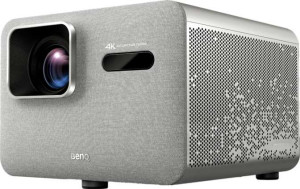
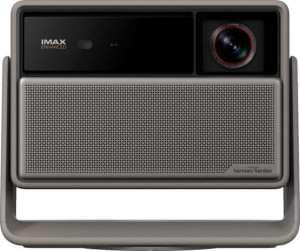
The wired and wireless casting foundations are identical across both projectors — 2 HDMI ports, 2 USB ports, AirPlay, Bluetooth, and Chromecast built-in are all present on each. For most living room setups, this shared base covers the majority of daily connection needs comfortably. The divergence, however, starts with a fundamental wireless capability: the XGIMI Horizon 20 Pro supports Wi-Fi, while the BenQ TK705i does not. This is a significant gap — without native Wi-Fi, the TK705i relies on its smart platform features being delivered through other means, and wireless streaming independence is inherently more limited.
The XGIMI further extends its wireless reach with Miracast support, enabling direct screen mirroring from Android and Windows devices without a shared network — useful in hotel rooms, offices, or any environment where network access is restricted. It also adds a DVI connector, a legacy port that broadens compatibility with older monitors, PCs, and AV equipment. The BenQ counters with an S/PDIF optical audio output, which the XGIMI lacks. For users with a dedicated AV receiver or soundbar that uses optical input, this is a meaningful audio routing advantage that avoids reliance on HDMI ARC or Bluetooth for audio passthrough.
Taken as a whole, the XGIMI Horizon 20 Pro has a clear connectivity edge, primarily driven by its Wi-Fi support and Miracast capability — both of which expand its usability across varied environments and devices. The TK705i's S/PDIF output is a genuine advantage for audiophile or home-theater setups with optical audio chains, but it does not offset the broader wireless flexibility gap.