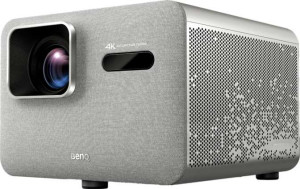
BenQ TK705STi
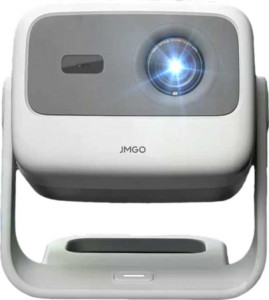
JMGO N1S 4K

BenQ TK705STi JMGO N1S 4K

Overview

Welcome to our in-depth specification comparison between the BenQ TK705STi and the JMGO N1S 4K, two laser-powered 4K projectors competing for a spot in your home theater setup. Both machines share a strong common foundation — laser light sources, 4K resolution, 10-bit color, HDR10 support, and built-in smart TV platforms — but they diverge sharply when it comes to response time, throw distance, and connectivity options. Read on to discover which projector best aligns with your viewing environment and feature priorities.

Common Features

  • Both projectors use a laser light source.
  • Both projectors have a dedicated smartphone app.
  • Both projectors output at 4K resolution.
  • Both projectors feature motorized focus.
  • Neither projector has motorized zoom.
  • Both projectors support 10-bit color depth.
  • Both projectors have a 60Hz refresh rate.
  • Both projectors support HDR10.
  • Neither projector has manual focus.
  • Both projectors support AirPlay.
  • Both projectors have Bluetooth connectivity.
  • Both projectors have Chromecast built-in.
  • Neither projector has a VGA connector.
  • Neither projector has a DVI connector.
  • Neither projector has an RJ45 port.
  • Both projectors have stereo speakers and a built-in speaker.
  • Neither projector has vertical or horizontal lens shift.
  • Both projectors include a remote control.
  • Both projectors have a built-in smart TV platform.
  • Both projectors have a 3.5mm audio jack socket.
  • Neither projector has an external memory slot.

Main Differences

  • Width is 230 mm on BenQ TK705STi and 170 mm on JMGO N1S 4K.
  • Height is 170 mm on BenQ TK705STi and 190 mm on JMGO N1S 4K.
  • Thickness is 250 mm on BenQ TK705STi and 190 mm on JMGO N1S 4K.
  • Weight is 3800 g on BenQ TK705STi and 2000 g on JMGO N1S 4K.
  • Volume is 9775 cm³ on BenQ TK705STi and 6137 cm³ on JMGO N1S 4K.
  • Response time is 5 ms on BenQ TK705STi and 17 ms on JMGO N1S 4K.
  • Maximum projection size is 160″ on BenQ TK705STi and 200″ on JMGO N1S 4K.
  • HDR10+ support is available on BenQ TK705STi but not on JMGO N1S 4K.
  • Minimum throw distance is 0.8 m on BenQ TK705STi and 1.6 m on JMGO N1S 4K.
  • HLG support is available on BenQ TK705STi but not on JMGO N1S 4K.
  • HDMI ports: BenQ TK705STi has 2 and JMGO N1S 4K has 1.
  • Wi-Fi connectivity is present on JMGO N1S 4K but not available on BenQ TK705STi.
  • USB ports: BenQ TK705STi has 2 and JMGO N1S 4K has 1.
  • Miracast support is present on JMGO N1S 4K but not available on BenQ TK705STi.
  • An S/PDIF Out port is present on BenQ TK705STi but not on JMGO N1S 4K.
  • Audio output power is 2 x 8W on BenQ TK705STi and 2 x 5W on JMGO N1S 4K.
  • Voice command support is available on JMGO N1S 4K but not on BenQ TK705STi.
Specs Comparison
BenQ TK705STi

BenQ TK705STi

JMGO N1S 4K

JMGO N1S 4K

General info:
has laser light source
release date October 2025 April 2025
width 230 mm 170 mm
height 170 mm 190 mm
thickness 250 mm 190 mm
weight 3800 g 2000 g
Has a dedicated smartphone app
volume 9775 cm³ 6137 cm³

Both the BenQ TK705STi and the JMGO N1S 4K share a laser light source and a dedicated smartphone app, placing them in the same technology tier for illumination and connectivity. These are meaningful shared strengths: laser engines typically deliver superior color accuracy, longer lifespan, and faster warm-up times compared to lamp-based alternatives, so neither product concedes ground here.

Where they diverge significantly is in physical footprint and weight. The TK705STi is a noticeably bulkier unit — 230 × 170 × 250 mm and 3800 g — giving it a volume of roughly 9775 cm³. The N1S 4K, by contrast, measures 170 × 190 × 190 mm and weighs just 2000 g, resulting in a volume of approximately 6137 cm³. In real-world terms, the JMGO is nearly half the weight and about 37% smaller by volume, making it substantially easier to move between rooms, pack for travel, or mount in tighter spaces.

For users who prioritize portability and compact installation, the JMGO N1S 4K holds a clear edge in this group. The BenQ TK705STi's larger chassis may suggest a more robust internal build or larger optical components, but based strictly on the general specs provided, the N1S 4K is the more versatile form factor by a meaningful margin.

Projection quality:
output resolution 4K 4K
response time 5 ms 17 ms
has motorized focus
maximum projection size 160" 200"
has motorized zoom
supports HDR10+
bit depth 10-bit 10-bit
has manual focus
minimum throw distance 0.8 m 1.6 m
refresh rate 60Hz 60Hz
supports HDR10
supports HLG

At the foundation, both projectors output native 4K resolution at 60Hz with 10-bit color depth and motorized focus — a solid shared baseline for cinematic image quality. The meaningful differences emerge in the details. The BenQ TK705STi supports HDR10+ and HLG in addition to HDR10, while the JMGO N1S 4K is limited to HDR10 alone. HDR10+ adds dynamic metadata that adjusts tone-mapping scene by scene rather than applying a single static curve, which translates to more nuanced highlight and shadow rendering on compatible content. HLG support further broadens compatibility with broadcast and streaming sources. The JMGO misses both.

Response time is another point of divergence. The TK705STi's 5 ms response time is considerably faster than the N1S 4K's 17 ms, a gap that matters for gaming and fast-motion content where input lag and motion blur become visible. On the installation side, the TK705STi requires a minimum throw distance of just 0.8 m versus the N1S 4K's 1.6 m, giving it considerably more flexibility in smaller rooms. The N1S 4K counters with a larger maximum image size of 200″ compared to 160″, which is an advantage only in very large, dedicated spaces.

Across this spec group, the BenQ TK705STi holds a clear overall edge. Its faster response time, broader HDR format support, and shorter minimum throw distance make it the more versatile and capable performer for a wider range of use cases — from gaming setups to mixed-content living rooms. The JMGO's larger maximum image ceiling is a niche advantage that won't apply to most buyers.

Connectivity:
HDMI ports 2 1
has AirPlay
Has Bluetooth
supports Wi-Fi
USB ports 2 1
has Chromecast built-in
has a VGA connector
has a DVI connector
supports Miracast
RJ45 ports 0 0
Has S/PDIF Out port

Wireless connectivity tells an interesting story here. The JMGO N1S 4K supports Wi-Fi and Miracast, while the BenQ TK705STi lacks both. The absence of Wi-Fi on the TK705STi is a notable constraint — it means the projector depends entirely on wired or device-based streaming solutions rather than connecting independently to a network. The JMGO's Miracast support adds further flexibility for screen mirroring from Android devices without any additional hardware. Both share AirPlay, Bluetooth, and Chromecast built-in, so Apple and Google ecosystem users are equally served on either unit.

On the wired side, the balance tips back toward the TK705STi. It offers 2 HDMI ports versus the N1S 4K's single port — a practical advantage for users running multiple source devices like a game console and a streaming stick simultaneously without swapping cables. The TK705STi also adds 2 USB ports to the N1S 4K's one, and crucially includes an S/PDIF optical audio output, which the JMGO lacks. For users with a dedicated AV receiver or soundbar that accepts optical input, this is a meaningful differentiator that expands audio system integration options.

This group is genuinely split depending on use case. The JMGO N1S 4K wins for wireless flexibility, particularly in setups where network-connected operation or Android screen mirroring is a priority. The BenQ TK705STi wins for wired versatility, offering more ports and better audio routing options. Users building a traditional home theater rack will favor the TK705STi; those prioritizing a clean, cable-light setup will lean toward the JMGO.

Features:
has stereo speakers
has lens shift (vertical)
has lens shift (horizontal)
has a remote control
has built-in smart TV
has a built-in speaker
audio output power 2 x 8W 2 x 5W
has a socket for a 3.5 mm audio jack
has an external memory slot
has voice commands

The feature set for both projectors is remarkably similar at a high level — stereo speakers, a built-in smart TV platform, remote control, and a 3.5 mm audio jack are all present on each. Neither offers lens shift in any direction, which means both rely on physical placement or digital keystone correction for alignment, a limitation shared equally. The more telling differences are in the finer details.

Audio output is one of them. The BenQ TK705STi delivers 2 × 8W of built-in speaker power compared to the JMGO N1S 4K's 2 × 5W. In a projector context — where built-in audio is often a convenience fallback rather than a primary system — this gap is moderate but real. The TK705STi will produce noticeably louder and potentially fuller sound in larger rooms without an external speaker, making it more self-sufficient for casual viewing. The JMGO's output is adequate for smaller spaces but may feel underpowered in the same environments where its 200″ maximum image size would be used.

The one feature exclusive to the JMGO is voice command support, which the TK705STi lacks entirely. For users who prefer hands-free control — navigating apps, adjusting settings, or launching content by voice — this adds a layer of convenience the BenQ cannot match. On balance, the TK705STi holds the edge in raw audio capability, while the JMGO offers a more modern interaction model through voice. Neither dominates this group outright, but users who rarely use external speakers will find the TK705STi's higher speaker wattage the more consistently useful advantage.

Comparison Summary & Verdict

After examining every specification, it is clear that these two 4K laser projectors are built with different audiences in mind. The BenQ TK705STi stands out with its superior 5 ms response time, shorter 0.8 m minimum throw distance, HDR10+ and HLG support, dual HDMI and USB ports, an S/PDIF output, and stronger 2x8W audio — making it the better choice for dedicated home theater rooms and users who demand precise image calibration and richer connectivity. The JMGO N1S 4K, on the other hand, impresses with its compact and lighter build (2000 g vs 3800 g), a larger 200-inch maximum projection size, built-in Wi-Fi and Miracast, and voice command support, positioning it as the more flexible and portable-friendly option for versatile living spaces.

BenQ TK705STi
Buy BenQ TK705STi if...

Buy the BenQ TK705STi if you need a faster response time, a shorter throw distance for tighter rooms, broader HDR format support, and more complete connectivity with dual HDMI ports and S/PDIF output.

JMGO N1S 4K
Buy JMGO N1S 4K if...

Buy the JMGO N1S 4K if you prefer a lighter, more compact projector with a larger maximum image size, built-in Wi-Fi, Miracast, and voice command support for a more flexible, modern smart home setup.