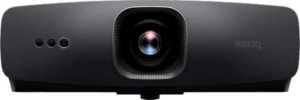
BenQ W2720i
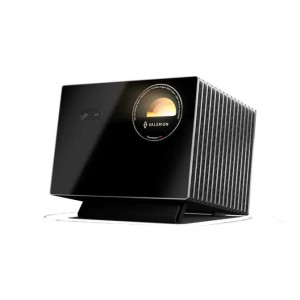
Valerion VisionMaster Max

BenQ W2720i Valerion VisionMaster Max

Overview

When choosing between the BenQ W2720i and the Valerion VisionMaster Max, buyers face a fascinating clash of two capable 4K projectors that share a surprising amount of common ground yet diverge sharply in key areas. Both deliver 4K resolution, 240Hz refresh rates, and broad HDR support, but the comparison heats up when examining their light source technology, connectivity options, audio power, and projection capabilities. Read on to see how every spec stacks up between these two contenders.

Common Features

  • Both products have a dedicated smartphone app.
  • Both products output at 4K resolution.
  • Both products support HDR10+.
  • Both products support HDR10.
  • Both products support HLG.
  • Both products have a 240Hz refresh rate.
  • Both products support AirPlay.
  • Both products support Wi-Fi.
  • Both products have 2 USB ports.
  • Both products have Chromecast built-in.
  • Both products support Miracast.
  • Neither product has a DVI connector.
  • Both products have stereo speakers.
  • Both products include a remote control.
  • Both products have built-in smart TV functionality.
  • Both products have a built-in speaker.
  • Both products have a 3.5mm audio jack socket.
  • Both products have a sleep timer.
  • Both products support Dolby Atmos.
  • Neither product has an external memory slot.

Main Differences

  • The light source on Valerion VisionMaster Max is laser, while BenQ W2720i does not use a laser light source.
  • Lamp life in eco mode is 30000 h on BenQ W2720i and 25000 h on Valerion VisionMaster Max.
  • Warranty period is 3 years on BenQ W2720i and 2 years on Valerion VisionMaster Max.
  • Response time is 8.7 ms on BenQ W2720i and 4 ms on Valerion VisionMaster Max.
  • Motorized focus is available on Valerion VisionMaster Max but not on BenQ W2720i.
  • Maximum projection size is 200″ on BenQ W2720i and 150″ on Valerion VisionMaster Max.
  • Dolby Vision support is present on Valerion VisionMaster Max but not available on BenQ W2720i.
  • HDMI ports number 3 on BenQ W2720i and 2 on Valerion VisionMaster Max.
  • Bluetooth is available on Valerion VisionMaster Max but not on BenQ W2720i.
  • A VGA connector is present on BenQ W2720i but not on Valerion VisionMaster Max.
  • RJ45 ports number 0 on BenQ W2720i and 1 on Valerion VisionMaster Max.
  • An S/PDIF Out port is present on BenQ W2720i but not on Valerion VisionMaster Max.
  • Audio output power is 2 x 5W on BenQ W2720i and 2 x 12W on Valerion VisionMaster Max.
Specs Comparison
BenQ W2720i

BenQ W2720i

Valerion VisionMaster Max

Valerion VisionMaster Max

General info:
has laser light source
release date January 2025 January 2025
lamp life (eco mode) 30000 h 25000 h
Has a dedicated smartphone app
warranty period 3 years 2 years

The most fundamental difference in this group is the light source technology. The Valerion VisionMaster Max uses a laser light source, while the BenQ W2720i relies on a traditional lamp. In practice, laser projectors offer more consistent brightness and color accuracy over their lifespan — they do not gradually dim the way conventional lamps do — and typically enable near-instant startup and shutdown. This is a meaningful quality-of-life and performance advantage for the Valerion in day-to-day use.

However, the lamp life figures complicate the picture. The BenQ W2720i is rated for 30,000 hours in eco mode, versus 25,000 hours for the VisionMaster Max. While the Valerion's laser should maintain its output quality more uniformly across those hours, the W2720i technically promises a longer rated lifespan on paper. For most users watching a few hours per day, both figures translate to well over a decade of use, so this gap is unlikely to be decisive in practice.

On support and peace of mind, the BenQ W2720i holds a clear edge with a 3-year warranty compared to the VisionMaster Max's 2-year coverage — a tangible advantage if something goes wrong. Both projectors offer a dedicated smartphone app, so neither differentiates on that front. Overall, the Valerion wins on light source technology quality, but the BenQ counters with a longer warranty and higher rated lamp hours, making it the stronger choice for buyers who prioritize long-term ownership assurance.

Projection quality:
output resolution 4K 4K
response time 8.7 ms 4 ms
has motorized focus
maximum projection size 200" 150"
supports HDR10+
refresh rate 240Hz 240Hz
supports Dolby Vision
supports HDR10
supports HLG

At the foundation, both projectors share the same headline specs: 4K output resolution and a 240Hz refresh rate, meaning neither holds an advantage in raw sharpness or motion fluency. Where they diverge meaningfully is in the finer details. The Valerion VisionMaster Max's 4 ms response time is roughly half that of the BenQ W2720i's 8.7 ms — a gap that matters most for gaming, where lower input lag translates directly to more responsive on-screen feedback. For passive movie watching, the difference is negligible, but competitive gamers will notice it.

On HDR support, the Valerion again pulls ahead: it covers the full modern stack — HDR10, HDR10+, HLG, and crucially, Dolby Vision — while the BenQ W2720i lacks Dolby Vision entirely. Since an increasing share of premium streaming content is mastered in Dolby Vision, this is a real-world content compatibility gap, not just a spec sheet distinction. The BenQ's HDR10+ and HLG support is solid but represents a narrower coverage umbrella. Additionally, the Valerion's motorized focus allows lens adjustment without physically touching the unit — a convenience the W2720i, which requires manual focus, cannot match.

The one area where the BenQ W2720i claims a decisive win is screen size: it supports projections up to 200 inches, versus the Valerion's cap of 150 inches. For buyers with large dedicated home theater rooms who want truly cinematic scale, that 50-inch ceiling difference is significant. Ultimately, the Valerion VisionMaster Max holds the broader projection quality advantage — better response time, wider HDR compatibility, and motorized focus — but the BenQ is the right call for anyone prioritizing maximum image size above all else.
Connectivity:
HDMI ports 3 2
has AirPlay
Has Bluetooth
supports Wi-Fi
USB ports 2 2
has Chromecast built-in
has a VGA connector
has a DVI connector
supports Miracast
RJ45 ports 0 1
Has S/PDIF Out port

Both projectors cover the essential wireless bases — AirPlay, Chromecast, Miracast, and Wi-Fi — so neither has an edge for screen mirroring or streaming from mobile devices. The divergence comes in the wired and peripheral connectivity. The BenQ W2720i offers 3 HDMI ports against the Valerion's 2 HDMI ports, which is a practical advantage in living rooms or home theaters where multiple sources — a console, a media player, and a cable box, for example — need to be connected simultaneously without swapping cables.

Each product compensates with a distinct strength the other lacks. The Valerion VisionMaster Max includes Bluetooth, enabling direct wireless pairing with speakers or headphones without any additional adapters — the BenQ W2720i has no Bluetooth at all, which forces users toward wired audio solutions or a separate wireless transmitter. Conversely, the BenQ counters with an S/PDIF optical audio output, a port the Valerion omits, making it better suited for integration into traditional AV receiver setups that rely on digital optical audio. The Valerion also includes a dedicated RJ45 ethernet port for a stable wired network connection, whereas the BenQ relies entirely on Wi-Fi for networking.

For legacy device compatibility, the BenQ's VGA connector offers an advantage for users with older laptops or equipment, though this is a niche consideration for most buyers today. Taken together, the connectivity comparison is genuinely split by use case: the BenQ W2720i suits traditional home theater setups with more HDMI ports and optical audio out, while the Valerion VisionMaster Max is better for modern, wireless-first environments where Bluetooth audio flexibility and a wired network connection matter more.

Features:
has stereo speakers
has a remote control
has built-in smart TV
has a built-in speaker
audio output power 2 x 5W 2 x 12W
has a socket for a 3.5 mm audio jack
has a sleep timer
has Dolby Atmos
has an external memory slot
has voice commands

Across this feature set, these two projectors are remarkably well-matched. Both include a built-in smart TV platform, stereo speakers, Dolby Atmos decoding, voice commands, a 3.5mm audio jack, sleep timer, and a remote control. For most buyers, the feature checklist will look essentially identical — and in functional terms, it largely is.

The single meaningful differentiator here is audio output power. The Valerion VisionMaster Max delivers 2 x 12W from its built-in stereo speakers, compared to just 2 x 5W on the BenQ W2720i. That is more than double the wattage, which translates to noticeably higher maximum volume and generally better headroom for filling a larger room with sound before the audio starts to strain. In practice, this matters most in casual viewing scenarios where users rely on the built-in speakers rather than a dedicated sound system — the Valerion will simply sound louder and more dynamic at higher volumes. Dolby Atmos support on both units is a nice addition, though its real-world impact depends heavily on the content and room setup.

Given how closely matched everything else is, the Valerion VisionMaster Max holds a clear edge in this group purely on the strength of its superior built-in audio output. The BenQ W2720i is not lacking in features, but users who plan to rely on onboard speakers — rather than routing audio to an external system — will find the Valerion's amplification meaningfully more capable.

Comparison Summary & Verdict

After a thorough review of the specifications, both projectors prove compelling depending on your priorities. The BenQ W2720i stands out with a larger maximum projection size of 200″, a longer lamp life of 30,000 hours, a 3-year warranty, and more HDMI ports, making it an excellent choice for dedicated home cinema enthusiasts who want a big screen and long-term peace of mind. The Valerion VisionMaster Max, on the other hand, commands attention with its laser light source, faster 4ms response time, Dolby Vision support, motorized focus, built-in Bluetooth, stronger 2x12W audio output, and a dedicated RJ45 port, positioning it as the more feature-rich and future-ready option for users who prioritize cutting-edge performance and convenience over raw screen size.

BenQ W2720i
Buy BenQ W2720i if...

Buy the BenQ W2720i if you want a larger maximum projection size of up to 200″, a longer lamp life, and a 3-year warranty for added long-term value.

Valerion VisionMaster Max
Buy Valerion VisionMaster Max if...

Buy the Valerion VisionMaster Max if you prioritize a laser light source, faster response time, Dolby Vision support, built-in Bluetooth, and more powerful audio output.