BenQ W2720i
XGIMI Horizon 20 Pro

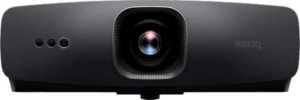
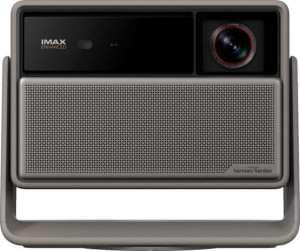
BenQ W2720i XGIMI Horizon 20 Pro

Overview

Welcome to our in-depth spec comparison between the BenQ W2720i and the XGIMI Horizon 20 Pro, two ambitious 4K projectors competing for your home cinema setup. Both share a strong foundation — 4K resolution, 240Hz refresh rate, HDR10+ support, and built-in smart TV functionality — but they diverge sharply when it comes to light source technology, physical footprint, audio performance, and connectivity options. Read on to see which projector best matches your needs.

Common Features

  • Both the BenQ W2720i and XGIMI Horizon 20 Pro have a dedicated smartphone app.
  • Both projectors output at 4K resolution.
  • HDR10+ support is available on both products.
  • Both projectors support a 240Hz refresh rate.
  • HDR10 support is available on both products.
  • HLG support is available on both products.
  • AirPlay is supported on both the BenQ W2720i and XGIMI Horizon 20 Pro.
  • Wi-Fi connectivity is supported on both projectors.
  • Both projectors have 2 USB ports.
  • Chromecast is built into both the BenQ W2720i and XGIMI Horizon 20 Pro.
  • Miracast is supported on both projectors.
  • Neither the BenQ W2720i nor the XGIMI Horizon 20 Pro has an RJ45 port.
  • Both projectors feature stereo speakers.
  • Vertical lens shift is available on both the BenQ W2720i and XGIMI Horizon 20 Pro.
  • Both projectors include a remote control.
  • Both the BenQ W2720i and XGIMI Horizon 20 Pro have built-in smart TV functionality.
  • A built-in speaker is present on both projectors.
  • A 3.5mm audio jack socket is available on both the BenQ W2720i and XGIMI Horizon 20 Pro.
  • A sleep timer is included on both projectors.
  • Voice commands are supported on both the BenQ W2720i and XGIMI Horizon 20 Pro.

Main Differences

  • A laser light source is present on the XGIMI Horizon 20 Pro but not on the BenQ W2720i.
  • The width is 420mm on the BenQ W2720i and 218mm on the XGIMI Horizon 20 Pro.
  • The height is 140mm on the BenQ W2720i and 208mm on the XGIMI Horizon 20 Pro.
  • The thickness is 310mm on the BenQ W2720i and 136mm on the XGIMI Horizon 20 Pro.
  • The weight is 6500g on the BenQ W2720i and 4900g on the XGIMI Horizon 20 Pro.
  • The volume is 18228cm³ on the BenQ W2720i and 6166.784cm³ on the XGIMI Horizon 20 Pro.
  • The warranty period is 3 years on the BenQ W2720i and 2 years on the XGIMI Horizon 20 Pro.
  • The response time is 8.7ms on the BenQ W2720i and 1ms on the XGIMI Horizon 20 Pro.
  • The maximum projection size is 200″ on the BenQ W2720i and 300″ on the XGIMI Horizon 20 Pro.
  • The minimum throw distance is 0.9m on the BenQ W2720i and 2.1m on the XGIMI Horizon 20 Pro.
  • Dolby Vision support is present on the XGIMI Horizon 20 Pro but not available on the BenQ W2720i.
  • The BenQ W2720i has 3 HDMI ports while the XGIMI Horizon 20 Pro has 2 HDMI ports.
  • Bluetooth is available on the XGIMI Horizon 20 Pro but not on the BenQ W2720i.
  • A VGA connector is present on the BenQ W2720i but not on the XGIMI Horizon 20 Pro.
  • A DVI connector is present on the XGIMI Horizon 20 Pro but not on the BenQ W2720i.
  • An S/PDIF Out port is present on the BenQ W2720i but not on the XGIMI Horizon 20 Pro.
  • Horizontal lens shift is available on the XGIMI Horizon 20 Pro but not on the BenQ W2720i.
  • The audio output power is 2 x 5W on the BenQ W2720i and 2 x 12W on the XGIMI Horizon 20 Pro.
  • Dolby Atmos support is present on the BenQ W2720i but not available on the XGIMI Horizon 20 Pro.
Specs Comparison
BenQ W2720i

BenQ W2720i

XGIMI Horizon 20 Pro

XGIMI Horizon 20 Pro

General info:
has laser light source
release date January 2025 September 2025
width 420 mm 218 mm
height 140 mm 208 mm
thickness 310 mm 136 mm
weight 6500 g 4900 g
Has a dedicated smartphone app
volume 18228 cm³ 6166.784 cm³
warranty period 3 years 2 years

The most consequential difference in this group is the light source: the XGIMI Horizon 20 Pro uses a laser light engine, while the BenQ W2720i relies on a traditional lamp-based source. In practice, laser projectors offer significantly longer operational lifespans, more consistent color output over time, and near-instant on/off behavior — advantages that compound over years of use and reduce long-term maintenance costs.

Physical form factor is another area where the two diverge sharply. The BenQ W2720i is a substantially larger and heavier unit at 6500 g and a volume of roughly 18,229 cm³, compared to the XGIMI's more compact 4900 g frame occupying just 6,167 cm³ — nearly three times smaller by volume. For users who intend to mount the projector permanently in a dedicated home theater room, the BenQ's bulk is manageable; but for anyone seeking a portable or flexible setup, the XGIMI's significantly smaller footprint is a meaningful advantage.

On the support side, the BenQ counters with a longer 3-year warranty versus the XGIMI's 2-year coverage, which offers a degree of added peace of mind — particularly relevant given the higher replacement cost typically associated with lamp-based systems. Both projectors include a dedicated smartphone app, so neither holds an edge there. Overall, the XGIMI Horizon 20 Pro holds a clear advantage in this group: its laser light source and far more compact design make it the more modern and versatile package, while the BenQ's only meaningful edge is its longer warranty period.

Projection quality:
output resolution 4K 4K
response time 8.7 ms 1 ms
maximum projection size 200" 300"
supports HDR10+
minimum throw distance 0.9 m 2.1 m
refresh rate 240Hz 240Hz
supports Dolby Vision
supports HDR10
supports HLG

Both projectors output native 4K resolution and share a 240Hz refresh rate, so neither holds an edge on raw sharpness or motion fluidity. Where they diverge meaningfully is response time: the XGIMI Horizon 20 Pro claims a remarkable 1 ms response time versus the BenQ W2720i's 8.7 ms. For cinematic viewing this difference is largely academic, but for gaming it matters — a 1 ms figure puts the XGIMI in genuinely competitive territory for fast-paced titles where input lag perception is a real concern.

HDR support tells a more nuanced story. Both units cover HDR10, HDR10+, and HLG, which handles the vast majority of consumer content. The critical differentiator is Dolby Vision: the XGIMI supports it, the BenQ does not. Dolby Vision's scene-by-scene dynamic metadata typically produces more precise tone mapping than HDR10+ on compatible content, and its growing adoption across streaming platforms — particularly Apple TV+ and Netflix — makes this a tangible real-world advantage rather than a checkbox distinction.

Throw distance is worth flagging for room-planning purposes: the BenQ requires a minimum of 0.9 m from the screen, while the XGIMI needs at least 2.1 m, limiting placement flexibility in smaller rooms. The XGIMI does compensate with a larger maximum image size of 300″ versus 200″, suiting larger venues. On balance, the XGIMI Horizon 20 Pro edges ahead in this group, primarily due to its Dolby Vision support and superior response time, though the BenQ's shorter minimum throw distance gives it a practical advantage in tighter spaces.

Connectivity:
HDMI ports 3 2
has AirPlay
Has Bluetooth
supports Wi-Fi
USB ports 2 2
has Chromecast built-in
has a VGA connector
has a DVI connector
supports Miracast
RJ45 ports 0 0
Has S/PDIF Out port

Wired connectivity favors the BenQ W2720i in one key area: it offers 3 HDMI ports compared to the XGIMI's 2, which is a practical advantage for users running multiple source devices — a game console, a streaming stick, and a Blu-ray player can all stay connected simultaneously without swapping cables. The BenQ also includes an S/PDIF optical audio output, a meaningful addition for users with a dedicated AV receiver or soundbar that accepts digital audio over optical — a port the XGIMI entirely omits.

The XGIMI Horizon 20 Pro counters with Bluetooth, which the BenQ lacks entirely. This is a notable gap: Bluetooth enables wireless pairing of headphones, speakers, and remote controls without relying on Wi-Fi infrastructure, adding genuine flexibility in how the projector integrates into a living room setup. Both units are well-matched on wireless streaming protocols — AirPlay, Chromecast, and Miracast are all present on each — so neither holds an advantage for screen mirroring from phones, tablets, or laptops.

The VGA versus DVI distinction is largely legacy territory, relevant only to users with older source equipment, so it is unlikely to tip decisions for most buyers. On balance, this group is closely contested: the BenQ W2720i holds a slight edge for traditional home theater setups thanks to its extra HDMI port and optical audio output, while the XGIMI's Bluetooth support makes it more versatile for wireless audio and modern peripheral pairing.
Features:
has stereo speakers
has lens shift (vertical)
has lens shift (horizontal)
has a remote control
has built-in smart TV
has a built-in speaker
audio output power 2 x 5W 2 x 12W
has a socket for a 3.5 mm audio jack
has a sleep timer
has Dolby Atmos
has voice commands

Audio output is where these two projectors part ways most decisively. The XGIMI Horizon 20 Pro delivers 2 x 12W of stereo power, more than double the BenQ W2720i's 2 x 5W. In a darkened room with ambient noise, that difference is perceptible — the XGIMI's built-in speakers are far more likely to fill a medium-to-large space without needing an external audio system, while the BenQ may feel underpowered in anything beyond a small, quiet room.

Lens shift tells a similarly one-sided story for installation flexibility. Both projectors support vertical lens shift, which allows the image to be nudged up or down without physically repositioning the unit — already a valuable feature for permanent ceiling or shelf mounts. The XGIMI goes further by also offering horizontal lens shift, a capability the BenQ lacks. This matters when the projector cannot be placed perfectly centered with the screen, as it avoids the image distortion that would otherwise require a compromise in placement or geometry correction.

The BenQ reclaims ground with Dolby Atmos support — an object-based surround sound format increasingly common on streaming content — which the XGIMI does not offer. However, at just 5W per channel, the BenQ's built-in speakers are unlikely to do Atmos justice; the feature becomes meaningful primarily when audio is routed to an external system via optical or HDMI. Taking the group as a whole, the XGIMI Horizon 20 Pro holds the advantage, driven by its substantially more powerful speakers and superior lens shift flexibility, both of which have direct everyday impact regardless of external equipment.

Comparison Summary & Verdict

After a thorough comparison, both projectors deliver a capable 4K, HDR10+, and 240Hz experience, but they are clearly aimed at different buyers. The BenQ W2720i stands out with its shorter minimum throw distance of 0.9m, making it the better fit for smaller or medium-sized rooms, and it also brings Dolby Atmos audio, a longer 3-year warranty, and more HDMI ports. The XGIMI Horizon 20 Pro, on the other hand, excels in versatility and sheer scale: its laser light source, support for projections up to 300″, Dolby Vision, Bluetooth, and considerably more powerful 2 x 12W stereo audio make it a compelling choice for large dedicated home theatre rooms. Size and weight also favour the XGIMI, which is notably more compact and lighter than the BenQ.

BenQ W2720i
Buy BenQ W2720i if...

Buy the BenQ W2720i if you need a short throw distance for a smaller room, want Dolby Atmos audio, or require a longer 3-year warranty and more HDMI ports.

XGIMI Horizon 20 Pro
Buy XGIMI Horizon 20 Pro if...

Buy the XGIMI Horizon 20 Pro if you want a laser light source, a massive projection size up to 300″, Dolby Vision support, Bluetooth, and more powerful built-in speakers for a large home theatre.