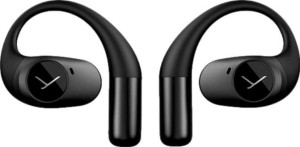
Beyerdynamic Amiron 200
Beyerdynamic Amiron Zero

Beyerdynamic Amiron 200 Beyerdynamic Amiron Zero

Overview

Welcome to this in-depth specification comparison between the Beyerdynamic Amiron 200 and the Beyerdynamic Amiron Zero. Both of these wireless, open-ear earbuds share a strong common foundation — including IP54 sweat resistance, noise-canceling microphones, and fast charging support — but a closer look reveals meaningful differences in areas such as battery endurance, physical weight, and Bluetooth connectivity. Read on to see how these two models stack up across every key specification.

Common Features

  • Both products have an open-ear fit.
  • Both products have an IP54 ingress protection rating.
  • Both products are sweat resistant.
  • Both products are wireless with no cables.
  • Neither product is a neckband earbud.
  • Neither product has RGB lighting.
  • Both products have stereo speakers.
  • Neither product has a UV light.
  • Neither product has active noise cancellation.
  • Neither product has passive noise reduction.
  • Both products have a lowest frequency of 20 Hz and a highest frequency of 20000 Hz.
  • Neither product supports spatial audio.
  • Neither product has Dolby Atmos.
  • Neither product has a neodymium magnet.
  • Neither product supports wireless charging.
  • Neither product has a solar power battery.
  • Both products have a battery level indicator.
  • Both products have a rechargeable battery.
  • Both products have USB Type-C.
  • Neither product supports LDAC, LDHC, Bluetooth LE Audio, aptX Adaptive, aptX Low Latency, aptX HD, or aptX.
  • Neither product has an ambient sound mode.
  • Both products support fast charging.
  • Neither product can read notifications.
  • Neither product has a built-in translator.
  • Both products have a mute function.
  • Both products can be used as a headset.
  • Both products have a control panel placed on the device.
  • Both products have voice prompts.
  • Both products have 4 microphones.
  • Both products have a noise-canceling microphone.

Main Differences

  • Weight is 20.4 g on Beyerdynamic Amiron 200 and 12 g on Beyerdynamic Amiron Zero.
  • Wingtips are included with the Beyerdynamic Amiron 200 but not included with the Beyerdynamic Amiron Zero.
  • Battery life is 11 hours on Beyerdynamic Amiron 200 and 6 hours on Beyerdynamic Amiron Zero.
  • Battery life of the charging case is 25 hours on Beyerdynamic Amiron 200 and 14 hours on Beyerdynamic Amiron Zero.
  • Charge time is 1.5 hours on Beyerdynamic Amiron 200 and 1 hour on Beyerdynamic Amiron Zero.
  • Bluetooth version is 5.3 on Beyerdynamic Amiron 200 and 5.4 on Beyerdynamic Amiron Zero.
  • Maximum Bluetooth range is 15 m on Beyerdynamic Amiron 200 and 10 m on Beyerdynamic Amiron Zero.
Specs Comparison
Beyerdynamic Amiron 200

Beyerdynamic Amiron 200

Beyerdynamic Amiron Zero

Beyerdynamic Amiron Zero

Design:
Fit Open-ear Open-ear
Ingress Protection (IP) rating IP54 IP54
water resistance Sweat resistant Sweat resistant
weight 20.4 g 12 g
has no wires or cables
are neckband earbuds
wingtips included
has RGB lighting
has stereo speakers
has UV light
Has a display

Both the Beyerdynamic Amiron 200 and the Amiron Zero share the same open-ear form factor, IP54 ingress protection rating, and sweat-resistant build — making them functionally equivalent in terms of environmental durability and overall design philosophy. Neither uses a neckband, both are fully wireless, and both deliver stereo audio without RGB lighting or a display cluttering the experience.

The most meaningful difference in this group is weight. The Amiron Zero comes in at a notably lighter 12 g versus the Amiron 200's 20.4 g — a gap of nearly 70%. In open-ear wearables worn for extended sessions, that difference is tangible: lighter earbuds reduce fatigue on the ear cartilage and are less likely to feel intrusive during long workouts or all-day wear. The Amiron 200 also ships with wingtips included, which can meaningfully improve stability and fit security for users with active lifestyles or harder-to-fit ears — the Amiron Zero offers no such accessory out of the box.

On balance, the Amiron Zero holds the edge in pure comfort-from-weight, which is often the dominant factor in open-ear design. However, the Amiron 200 partially compensates with bundled wingtips that may deliver better physical retention during vigorous movement — a real-world advantage for users who prioritize a locked-in fit over minimal mass.

Sound quality:
has active noise cancellation (ANC)
has passive noise reduction
lowest frequency 20 Hz 20 Hz
highest frequency 20000 Hz 20000 Hz
supports spatial audio
has Dolby Atmos
has Dirac Virtuo
has a neodymium magnet

Across every sound quality specification provided, the Amiron 200 and Amiron Zero are in complete lockstep. Both reproduce the full standard audible range of 20 Hz to 20,000 Hz, neither employs active or passive noise isolation, and neither supports spatial audio formats such as Dolby Atmos or Dirac Virtuo.

The absence of ANC and passive noise reduction is consistent with their open-ear design — these earbuds are engineered for situational awareness rather than immersion, which is a deliberate trade-off rather than a shortcoming. Users who need to hear their environment while listening will find this appropriate; those wanting to block out the world should look elsewhere, and that applies equally to both models.

This group is a clear tie. No differentiating data exists here to favor either product, and a buying decision between the two should rest entirely on the design and connectivity specifications covered in other groups.

Power:
Battery life 11 hours 6 hours
Battery life of charging case 25 hours 14 hours
charge time 1.5 hours 1 hours
has wireless charging
Has a solar power battery
has a battery level indicator
has a rechargeable battery

Battery life is where these two models diverge most sharply. The Amiron 200 delivers 11 hours of continuous playback per charge versus the Amiron Zero's 6 hours — nearly double. Factor in their respective charging cases and the gap widens further: a combined 36 hours total for the Amiron 200 against 20 hours for the Amiron Zero. For commuters, travelers, or anyone going through a full workday without easy access to a charger, that difference is practically significant.

The Amiron Zero does edge ahead on charge time, replenishing in 1 hour compared to the Amiron 200's 1.5 hours. That half-hour advantage softens the blow slightly — shorter sessions of heavy use followed by quick top-ups are more viable with the Zero — but it does not close the gap in total endurance. Neither model supports wireless charging, so both require a physical connection regardless.

The Amiron 200 holds a clear advantage in this group. Its superior per-earbud and total case battery capacity makes it the stronger choice for users who prioritize uninterrupted listening over longer stretches, while the Amiron Zero suits those with shorter, more predictable usage patterns who can tolerate more frequent charging stops.

Connectivity:
Has USB Type-C
Bluetooth version 5.3 5.4
has LDAC
has LDHC
has Bluetooth LE Audio
has aptX Adaptive
has aptX Low Latency
has aptX HD
has aptX
has aptX Lossless
has aptX Voice
has Auracast
maximum Bluetooth range 15 m 10 m
supports Bluetooth pairing using NFC
Can be used wirelessly
has AAC

Codec support is identical across both models — AAC is the ceiling for both, with no aptX variants, LDAC, or LE Audio on either side. That shared limitation means neither earbud can stream lossless or high-resolution audio wirelessly, and users coming from higher-end codec ecosystems should temper expectations accordingly. USB-C is present on both for wired charging, and NFC pairing is absent from both.

The two meaningful differentiators here cut in opposite directions. The Amiron Zero carries the newer Bluetooth 5.4 against the Amiron 200's 5.3 — a marginal generational step that offers incremental improvements in connection efficiency but no dramatic real-world difference for most listeners. The Amiron 200, however, pulls ahead on maximum Bluetooth range, rated at 15 m versus the Amiron Zero's 10 m. A 50% range advantage is noticeable in practice — walking to another room, leaving a phone on a desk, or moving through open spaces without signal dropouts are all scenarios where the Amiron 200 has a tangible edge.

On balance, the Amiron 200 takes this group. The Amiron Zero's marginally newer Bluetooth version does not translate into a meaningful user-facing benefit, while the Amiron 200's superior range offers a practical, everyday advantage that most users will encounter regularly.

Features:
release date September 2025 September 2025
has ambient sound mode
Supports fast charging
can read notifications
Has a built-in translator
has a mute function
can be used as a headset
control panel placed on a device
Has voice prompts
travel bag is included
Has an in-line control panel
Has a temperature sensor
Has a built-in camera remote control function

Feature parity is total in this group — every single specification is identical between the Amiron 200 and the Amiron Zero. Both support fast charging, include on-device controls, offer voice prompts, can function as a headset with mute capability, and ship with a travel bag. These are meaningful quality-of-life inclusions that position both earbuds as polished, everyday-ready products rather than bare-bones audio devices.

The practical takeaway is that neither model is holding back features to differentiate a tier. Fast charging on both means a short plug-in session can recover meaningful playback time, and the bundled travel bag adds real-world portability value without requiring a separate purchase. On-device controls keeping hands off the phone is a usability staple that both handle equally well.

This group is an unambiguous tie. There is no feature-based reason to choose one over the other here, and the decision remains entirely in the hands of the design, power, and connectivity differences covered in the other groups.

Microphone:
number of microphones 4 4
has a noise-canceling microphone

Both the Amiron 200 and the Amiron Zero are equipped with 4 microphones and noise-canceling mic technology — a setup that, in open-ear earbuds, is particularly relevant given the lack of passive isolation. A multi-mic array allows beamforming algorithms to better isolate the user's voice from ambient noise, which matters significantly during calls in busy environments like streets, offices, or gyms.

Having noise-canceling microphone capability on both models means call quality should be a strength for either choice, with wind noise and background chatter attenuated at the source before audio reaches the other end of the line. This is a meaningful inclusion for users who take frequent calls on the move.

With specs perfectly matched across the board, this group is a complete tie. Microphone performance cannot differentiate these two models based on the available data, and prospective buyers should weigh the distinctions found in other specification groups when making their decision.

Comparison Summary & Verdict

After examining every specification, both earbuds prove to be capable wireless companions built on the same core platform. The Beyerdynamic Amiron 200 stands out for users who prioritize longer battery life — delivering 11 hours of playback and up to 25 hours with the charging case — as well as a wider Bluetooth range of 15 m and the inclusion of wingtips for a more secure fit during active use. On the other hand, the Beyerdynamic Amiron Zero appeals to those who value a noticeably lighter design at just 12 g, a faster charge time of 1 hour, and the latest Bluetooth 5.4 standard. Neither model sacrifices noise-canceling microphone quality or fast charging support, making the decision largely a matter of whether endurance or lightweight portability matters more to you.

Beyerdynamic Amiron 200
Buy Beyerdynamic Amiron 200 if...

Buy the Beyerdynamic Amiron 200 if you need longer battery life, a greater Bluetooth range, and a secure fit with included wingtips.

Beyerdynamic Amiron Zero
Buy Beyerdynamic Amiron Zero if...

Buy the Beyerdynamic Amiron Zero if you prefer a lighter, more compact earbud with faster charging and the latest Bluetooth 5.4 standard.