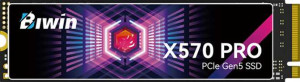
Biwin Black Opal X570 Pro 2TB
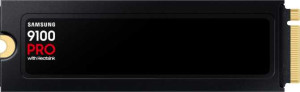
Samsung 9100 Pro 2TB

Biwin Black Opal X570 Pro 2TB Samsung 9100 Pro 2TB

Common Features

  • Both products use the M.2 form factor.
  • Both products feature a DRAM cache.
  • Both products are NVMe SSDs.
  • Both products use NVMe version 2.
  • Both products offer 2000GB of internal storage.
  • Both products use TLC NAND flash storage.
  • Both products connect via PCIe version 5.
  • Both products have a controller with 8 channels.

Main Differences

  • Sequential read speed is 14000 MB/s on Biwin Black Opal X570 Pro 2TB and 14700 MB/s on Samsung 9100 Pro 2TB.
  • Random read speed is 2000000 IOPS on Biwin Black Opal X570 Pro 2TB and 1850000 IOPS on Samsung 9100 Pro 2TB.
  • Sequential write speed is 13000 MB/s on Biwin Black Opal X570 Pro 2TB and 13400 MB/s on Samsung 9100 Pro 2TB.
  • Random write speed is 1600000 IOPS on Biwin Black Opal X570 Pro 2TB and 2600000 IOPS on Samsung 9100 Pro 2TB.
  • The controller is Silicon Motion SM2508 on Biwin Black Opal X570 Pro 2TB and Samsung Presto (S4LY027) on Samsung 9100 Pro 2TB.
  • Terabytes Written (TBW) is 1500 TB on Biwin Black Opal X570 Pro 2TB and 1200 TB on Samsung 9100 Pro 2TB.
  • Hardware encryption support is not available on Biwin Black Opal X570 Pro 2TB, while Samsung 9100 Pro 2TB supports 256-bit encryption.
Specs Comparison
Biwin Black Opal X570 Pro 2TB

Biwin Black Opal X570 Pro 2TB

Samsung 9100 Pro 2TB

Samsung 9100 Pro 2TB

Read speed:
sequential read speed 14000 MB/s 14700 MB/s
random read speed 2000000 IOPS 1850000 IOPS

Both drives operate at the very top of the NVMe performance envelope, but they trade blows depending on the workload type. The Samsung 9100 Pro pulls ahead in sequential reads at 14700 MB/s versus 14000 MB/s for the Biwin Black Opal X570 Pro — a roughly 5% gap that matters most for large-file transfers like video editing timelines, game asset streaming, or moving massive archives.

The picture flips for random reads, where the Black Opal X570 Pro claims a meaningful lead at 2,000,000 IOPS compared to the 9100 Pro's 1,850,000 IOPS — an 8% advantage. Random IOPS reflect real-world responsiveness in OS boot times, application launches, and database or virtualization workloads where the drive is hammered with small, scattered requests rather than long continuous streams.

Neither drive has a clean sweep across both read metrics. Users whose workloads are dominated by large sequential transfers — content creation, media production — will find a slight edge with the Samsung 9100 Pro. Those running latency-sensitive or heavily concurrent workloads benefit more from the Black Opal X570 Pro's superior random read throughput. For general consumers, the difference is negligible day-to-day; at this tier, both drives will saturate PCIe 5.0 bandwidth far beyond what most applications can exploit.

Write speed:
sequential write speed 13000 MB/s 13400 MB/s
random write speed 1600000 IOPS 2600000 IOPS

On the write side, the Samsung 9100 Pro holds an advantage in both categories, though the degree varies significantly between them. Sequential write speeds are close — 13400 MB/s for the 9100 Pro versus 13000 MB/s for the Black Opal X570 Pro — a modest 3% difference that will rarely surface in practical use. At these speeds, both drives comfortably handle the most demanding sequential write scenarios, including 8K video capture, large backup jobs, and high-throughput data ingestion.

The more telling gap is in random write IOPS. The 9100 Pro's 2,600,000 IOPS represents a substantial 62% lead over the Black Opal X570 Pro's 1,600,000 IOPS. Random write performance is the metric most directly tied to sustained system snappiness under mixed workloads — think compiling large codebases, running virtual machines, or handling database transactions where the drive must constantly commit small writes to scattered locations. A gap of this magnitude is not just a spec-sheet distinction; it translates to measurably lower write latency under pressure.

The Samsung 9100 Pro takes a clear edge in this group. While sequential write parity is close enough to be irrelevant for most users, the commanding random write advantage makes the 9100 Pro the stronger choice for write-intensive professional and enterprise-adjacent workloads. The Black Opal X570 Pro remains competitive for users whose primary use case skews toward large sequential operations, but anyone prioritizing sustained random write throughput should weight this gap seriously.

General info:
type M2 M2
SSD cache DRAM cache DRAM cache
Is an NVMe SSD
NVMe version 2 2
internal storage 2000GB 2000GB
release date March 2025 February 2025
controller Silicon Motion SM2508 Samsung Presto (S4LY027)
SSD storage type TLC TLC
PCI Express (PCIe) version 5 5
Controller channels 8 8
Terabytes Written (TBW) 1500 1200
MTBF 1.5million hours 1.5million hours
warranty period 5 years 5 years
Has an integrated heatsink
bits of encryption supported 0 256
has RGB lighting

At a foundational level, these two drives share an almost identical architecture: both are M.2 NVMe 2.0 SSDs running over PCIe 5.0 with DRAM cache, TLC NAND, and 8 controller channels. The shared foundation means neither holds a structural advantage in interface bandwidth or cache strategy — the differentiation lies in the details underneath.

Endurance is where the Black Opal X570 Pro earns a meaningful point. Its 1500 TBW rating outpaces the Samsung 9100 Pro's 1200 TBW by 25% — a gap that matters for users who write heavily to their drives over years of ownership, such as video editors, data scientists, or anyone running the drive as a primary scratch disk. Both carry identical 1.5 million hour MTBF ratings and 5-year warranties, so the TBW figure is the clearest signal of long-term write endurance here. The controllers differ — Silicon Motion SM2508 versus Samsung's in-house Presto — but neither is inherently superior based solely on the provided data.

The Samsung 9100 Pro counters with 256-bit hardware encryption, which the Black Opal X570 Pro entirely lacks. For enterprise users, IT-managed deployments, or anyone storing sensitive data who wants the security of AES-256 encryption handled at the hardware level — without the CPU overhead of software-based alternatives — this is a non-trivial advantage. In summary: the Black Opal X570 Pro is the better fit for write-heavy longevity-focused workloads, while the 9100 Pro is the stronger choice where data security and encryption compliance are priorities.

Comparison Summary & Verdict

This is a specification comparison between Biwin Black Opal X570 Pro 2TB and Samsung 9100 Pro 2TB. Both products share M.2 form factor, DRAM cache, NVMe support, 2000GB internal storage, and PCI Express version 5. The products differ in their sequential read and write speeds, with the Samsung 9100 Pro 2TB offering slightly faster performance. The Samsung 9100 Pro 2TB also has a higher random write speed and supports 256 bits of encryption, while the Biwin Black Opal X570 Pro 2TB lacks encryption. Additionally, the Biwin Black Opal X570 Pro 2TB has a higher Terabytes Written (TBW) rating at 1500 compared to the Samsung's 1200.