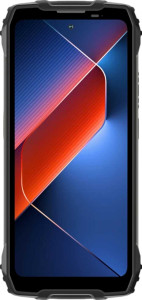
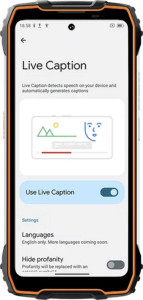
The shared connectivity foundation is solid on both devices: Bluetooth 5.2, dual-SIM support, NFC, USB Type-C, expandable storage, Wi-Fi 5, and a full sensor suite including GPS, Galileo, gyroscope, accelerometer, and compass. For rugged field use, this combination covers the vast majority of professional connectivity and positioning requirements competently on either phone.
Two specs split the two devices apart. The Blackview BL7000 supports 5G, while the Oscal Pilot 3 is capped at 4G LTE. With a listed download ceiling of 3300 Mbps on both — a figure consistent with 5G capability — the BL7000 is positioned to take full advantage of next-generation network infrastructure where available, delivering substantially faster data throughput and lower latency. For users operating in 5G-covered areas or planning ahead for network rollouts, this is a significant practical advantage. Conversely, the Blackview Oscal Pilot 3 includes a barometer, which the BL7000 lacks. A barometer enables atmospheric pressure readings useful for altitude estimation and weather trend monitoring — a niche but genuinely relevant sensor for outdoor professionals in hiking, construction, or emergency response contexts.
Weighing these two trade-offs, the BL7000 holds the broader connectivity edge thanks to 5G support, which has wider everyday impact for a larger user base than a barometer. The Oscal Pilot 3's barometer advantage is real but situational — users in altitude-sensitive or weather-monitoring roles may genuinely value it, but for most buyers, future-proof cellular connectivity is the more consequential differentiator.