Blackview BL7000
Doogee Blade 20 Play

Blackview BL7000 Doogee Blade 20 Play

Overview

Welcome to our in-depth comparison of the Blackview BL7000 and the Doogee Blade 20 Play, two rugged Android 15 smartphones battling it out in the tough-phone arena. Both share waterproof builds and 5G connectivity, but they diverge significantly when it comes to display quality, processing performance, and battery capacity. Read on as we break down every key specification to help you decide which device truly fits your needs.

Common Features

  • Both phones are waterproof and feature a rugged build.
  • Neither phone can be folded.
  • Both displays use LCD IPS panel technology.
  • HDR10 support is not available on either product.
  • HDR10+ support is not available on either product.
  • Always-On Display is not available on either product.
  • Dolby Vision support is not available on either product.
  • Neither phone has a secondary screen.
  • Both phones have a touchscreen.
  • Both phones come with 256GB of internal storage and 8GB of RAM.
  • Both phones use a 6nm semiconductor process.
  • Both chipsets support 64-bit processing and DirectX 12.
  • Both phones have integrated LTE and integrated graphics.
  • The GPU clock speed is 950 MHz on both phones.
  • Both phones feature a multi-lens main camera including a 50MP and 20MP sensor.
  • Neither phone has built-in optical image stabilization.
  • Both phones support phase-detection autofocus for photos and continuous autofocus during video recording.
  • Both phones support slow-motion video recording.
  • Neither phone has a dual-tone LED flash, but both have 2 flash LEDs.
  • Both phones run Android 15 and share the same privacy features including clipboard warnings, location privacy options, camera and microphone privacy options, theme customization, and the ability to block app tracking.
  • Cross-site tracking blocking is not available on either phone.
  • Mail Privacy Protection is not available on either phone.
  • Neither phone supports wireless charging, but both support 33W fast charging.
  • Both phones have a non-removable rechargeable battery with a battery level indicator.
  • Neither phone has stereo speakers.
  • Neither phone supports aptX, aptX HD, aptX Adaptive, aptX Lossless, or LDAC audio codecs.
  • Both phones support 5G, dual SIM, Bluetooth 5.2, NFC, USB Type-C, and have a fingerprint scanner.
  • Both phones have an external memory slot.
  • Emergency SOS via satellite is not available on either phone.
  • Both phones have a video light, no sapphire glass display, no curved display, and no e-paper display.

Main Differences

  • Weight is 357g on the Blackview BL7000 and 362g on the Doogee Blade 20 Play.
  • Thickness is 14.5mm on the Blackview BL7000 and 15.8mm on the Doogee Blade 20 Play.
  • Width is 86mm on the Blackview BL7000 and 81.2mm on the Doogee Blade 20 Play.
  • Height is 182.2mm on the Blackview BL7000 and 174mm on the Doogee Blade 20 Play.
  • Volume is 227.2034 cm³ on the Blackview BL7000 and 223.23504 cm³ on the Doogee Blade 20 Play.
  • IP rating is IP68 on the Blackview BL7000 and IP67 on the Doogee Blade 20 Play.
  • Screen size is 6.78″ on the Blackview BL7000 and 6.6″ on the Doogee Blade 20 Play.
  • Pixel density is 396 ppi on the Blackview BL7000 and 267 ppi on the Doogee Blade 20 Play.
  • Resolution is 1080 x 2460 px on the Blackview BL7000 and 720 x 1612 px on the Doogee Blade 20 Play.
  • Refresh rate is 120Hz on the Blackview BL7000 and 90Hz on the Doogee Blade 20 Play.
  • Damage-resistant glass is present on the Blackview BL7000 but not available on the Doogee Blade 20 Play.
  • The chipset is the MediaTek Dimensity 6300 on the Blackview BL7000 and the MediaTek Dimensity 7050 on the Doogee Blade 20 Play.
  • The GPU is the Arm Mali-G57 MC2 on the Blackview BL7000 and the Mali G68 MP4 on the Doogee Blade 20 Play.
  • CPU speed is 2 x 2.4 & 6 x 2 GHz on the Blackview BL7000 and 2 x 2.6 & 6 x 2 GHz on the Doogee Blade 20 Play.
  • Geekbench 6 multi-core score is 2012 on the Blackview BL7000 and 2257 on the Doogee Blade 20 Play.
  • Geekbench 6 single-core score is 782 on the Blackview BL7000 and 936 on the Doogee Blade 20 Play.
  • RAM speed is 2133 MHz on the Blackview BL7000 and 3200 MHz on the Doogee Blade 20 Play.
  • Maximum memory is 12GB on the Blackview BL7000 and 16GB on the Doogee Blade 20 Play.
  • DDR memory version is DDR4 on the Blackview BL7000 and DDR5 on the Doogee Blade 20 Play.
  • The main camera has 50, 20, and 2 MP sensors on the Blackview BL7000 and 50 and 20 MP sensors on the Doogee Blade 20 Play.
  • The front camera is 32MP on the Blackview BL7000 and 16MP on the Doogee Blade 20 Play.
  • Main camera video recording is 1440p at 30fps on the Blackview BL7000 and 1080p at 30fps on the Doogee Blade 20 Play.
  • A CMOS sensor is present on the Doogee Blade 20 Play but not on the Blackview BL7000.
  • Battery capacity is 7500 mAh on the Blackview BL7000 and 10300 mAh on the Doogee Blade 20 Play.
  • A 3.5mm audio jack is present on the Blackview BL7000 but not on the Doogee Blade 20 Play.
  • FM radio is available on the Blackview BL7000 but not on the Doogee Blade 20 Play.
  • Wi-Fi support includes Wi-Fi 4 and Wi-Fi 5 on the Blackview BL7000, while the Doogee Blade 20 Play also adds Wi-Fi 6.
  • Download speed is 3300 Mbits/s on the Blackview BL7000 and 2770 Mbits/s on the Doogee Blade 20 Play.
Specs Comparison
Blackview BL7000

Blackview BL7000

Doogee Blade 20 Play

Doogee Blade 20 Play

Design:
water resistance Waterproof Waterproof
weight 357 g 362 g
thickness 14.5 mm 15.8 mm
width 86 mm 81.2 mm
height 182.2 mm 174 mm
volume 227.2034 cm³ 223.23504 cm³
Ingress Protection (IP) rating IP68 IP67
has a rugged build
can be folded

Both the Blackview BL7000 and the Doogee Blade 20 Play are purpose-built rugged devices sharing the same core DNA: waterproof construction, a robust chassis, and no folding mechanism. Their overall volumes are remarkably close — 227.2 cm³ vs 223.2 cm³ — and both weigh in around the 360 g mark, so neither will feel light in the pocket. In day-to-day handling, that weight difference of just 5 g is completely imperceptible.

Where the two diverge in feel is their shape. The BL7000 is taller (182.2 mm vs 174 mm) and wider (86 mm vs 81.2 mm), making it a notably larger footprint in the hand. The Blade 20 Play compensates by being thicker (15.8 mm vs 14.5 mm), which can make single-handed grip feel bulkier even if the screen real estate is smaller. Practically speaking, the BL7000's slimmer profile may feel more manageable despite its larger face dimensions, while the Blade 20 Play's narrower width could appeal to users who prioritize one-handed reach.

The clearest advantage in this group belongs to the BL7000: its IP68 rating versus the Blade 20 Play's IP67. Both certifications guarantee full dust-tightness and protection against sustained water immersion, but IP68 allows for deeper and longer submersion under conditions defined by the manufacturer — a meaningful edge for users who work or recreate in genuinely wet environments. For casual splashes or rain, both phones are equally capable; for underwater use cases, the BL7000 is the more confident choice.

Display:
Display type LCD, IPS LCD, IPS
screen size 6.78" 6.6"
pixel density 396 ppi 267 ppi
resolution 1080 x 2460 px 720 x 1612 px
refresh rate 120Hz 90Hz
has branded damage-resistant glass
supports HDR10
supports HDR10+
Always-On Display
supports Dolby Vision
Has a secondary screen
has a touch screen

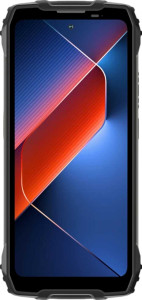
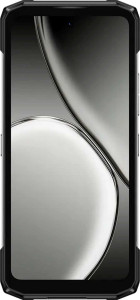
Both phones use an LCD IPS panel, so neither offers the deep blacks or vivid contrast of AMOLED technology — a common trade-off in the rugged mid-range segment. That said, the similarities end at the panel type. The Blackview BL7000 pulls significantly ahead on screen quality across nearly every measurable dimension: a larger 6.78″ display, a 1080 x 2460 px resolution, and a pixel density of 396 ppi. The Doogee Blade 20 Play, by contrast, tops out at 720 x 1612 px on a 6.6″ screen, yielding just 267 ppi — a gap large enough to be noticeable when reading text, browsing the web, or viewing detailed images.

The refresh rate gap reinforces the BL7000's advantage. Its 120Hz panel delivers visibly smoother scrolling and UI animations compared to the Blade 20 Play's 90Hz screen. While 90Hz is a step above the standard 60Hz baseline, users who switch between the two devices would immediately perceive the difference during everyday navigation. Additionally, the BL7000 features branded damage-resistant glass, adding a layer of scratch protection that the Blade 20 Play lacks — a meaningful consideration for a device likely to face rough conditions.

The verdict here is clear: the BL7000 wins this category decisively. Its combination of higher resolution, sharper pixel density, faster refresh rate, and protected glass makes it the stronger display in every practical respect, whether for field use or media consumption.

Performance:
internal storage 256GB 256GB
RAM 8GB 8GB
Chipset (SoC) name MediaTek Dimensity 6300 MediaTek Dimensity 7050
GPU name Arm Mali-G57 MC2 Mali G68 MP4
CPU speed 2 x 2.4 & 6 x 2 GHz 2 x 2.6 & 6 x 2 GHz
Geekbench 6 result (multi) 2012 2257
Geekbench 6 result (single) 782 936
GPU clock speed 950 MHz 950 MHz
Has integrated LTE
RAM speed 2133 MHz 3200 MHz
semiconductor size 6 nm 6 nm
Supports 64-bit
DirectX version DirectX 12 DirectX 12
Has integrated graphics
Uses big.LITTLE technology
CPU threads 8 threads 8 threads
Uses HMP
maximum memory amount 12GB 16GB
uses multithreading
DDR memory version 4 5
L3 cache 2 MB 2 MB

On paper, these two devices look nearly identical at a glance — same 256GB storage, same 8GB RAM, same 6nm fabrication, and an identical 8-core big.LITTLE CPU layout. Dig deeper, though, and the Doogee Blade 20 Play's Dimensity 7050 chip establishes a consistent performance lead over the BL7000's Dimensity 6300. The Blade 20 Play's peak CPU cores run at 2.6 GHz versus 2.4 GHz on the BL7000, and the Geekbench 6 scores confirm that gap translates to real-world output: single-core results of 936 vs 782 and multi-core results of 2257 vs 2012 put the Blade 20 Play roughly 15–20% ahead in raw CPU throughput.

The memory subsystem tells a similar story. The Blade 20 Play uses DDR5 RAM running at 3200 MHz, compared to the BL7000's DDR4 at 2133 MHz. Faster memory bandwidth means the processor spends less time waiting on data, which benefits multitasking, app launch times, and any workload that moves large amounts of data quickly. The Blade 20 Play also supports a higher maximum memory of 16GB (versus 12GB on the BL7000), giving it more headroom for virtual RAM expansion — a feature that can meaningfully reduce app reloading on memory-constrained tasks.

GPU performance is the one area where the two are evenly matched: both run at an identical 950 MHz GPU clock, though the Blade 20 Play's Mali G68 MP4 has more shader cores than the BL7000's Mali-G57 MC2, which could yield a modest graphics edge in demanding apps. Overall, the Blade 20 Play wins the performance category — its chipset generation advantage, faster memory, and higher benchmark scores make it the more capable processor platform of the two.

Cameras:
megapixels (main camera) 50 & 20 & 2 MP 50 & 20 MP
Has a dual-lens (or multi-lens) main camera
megapixels (front camera) 32MP 16MP
has built-in optical image stabilization
video recording (main camera) 1440 x 30 fps 1080 x 30 fps
Has a dual-tone LED flash
number of flash LEDs 2 2
has a BSI sensor
has a CMOS sensor
has continuous autofocus when recording movies
Has phase-detection autofocus for photos
supports slow-motion video recording
has a built-in HDR mode
has manual exposure
has a flash
optical zoom 0x 0x
has manual ISO
has a serial shot mode
has manual focus
has a front camera
Has laser autofocus
Shoots 360° panorama
has manual white balance
shoots raw
has touch autofocus
can create panoramas in-camera
Has a front-facing LED flash
has a dual-lens (or multi-lens) front camera
supports HDR10 recording
supports Dolby Vision recording
has a front-facing camera under the display
Has a RGB LED flash
has 3D photo/video recording capabilities

The rear camera systems start from a shared foundation — a 50 MP primary lens paired with a 20 MP secondary shooter — but the Blackview BL7000 adds a third 2 MP auxiliary lens that the Blade 20 Play simply does not have. While a 2 MP sensor is modest in isolation, its presence expands the BL7000's shooting versatility, typically serving depth-sensing or macro functions. The more impactful rear-camera differentiator, however, is video: the BL7000 records at 1440p @ 30fps, a full resolution tier above the Blade 20 Play's ceiling of 1080p @ 30fps. For users who capture footage in the field, that gap translates to noticeably more detail and better cropping flexibility in post-processing.

The selfie camera gap is equally pronounced. The BL7000 sports a 32 MP front shooter versus just 16 MP on the Blade 20 Play — double the pixel count, which allows for sharper portrait shots and more room to crop without losing detail. Beyond resolution, both devices share an otherwise identical feature set: phase-detection autofocus, continuous autofocus during video, slow-motion recording, HDR mode, and a full suite of manual controls including ISO, exposure, focus, and white balance. Neither offers optical image stabilization or optical zoom, which is typical for the rugged mid-range tier.

Across every meaningful camera differentiator in this data set, the BL7000 holds the advantage — more rear lenses, higher video resolution, and a significantly higher-resolution front camera. The Blade 20 Play keeps pace on shooting modes and manual controls, but cannot close the gap on hardware capability. The BL7000 is the clear winner in this category.
Operating system:
Android version Android 15 Android 15
has clipboard warnings
has location privacy options
has camera/microphone privacy options
has Mail Privacy Protection
has theme customization
can block app tracking
blocks cross-site tracking
has on-device machine learning
has notification permissions
has media picker
Can play games while they download
has dark mode
has Wi-Fi password sharing
has battery health check
has an extra dim mode
has focus modes
has dynamic theming
can offload apps
Has customizable notifications
has Live Text
has full-page screenshots
supports split screen
gets direct OS updates
has PiP
Can be used as a PC
Has sharing intents
has a child lock
Supports widgets
Is free and open source
Has offline voice recognition
has voice commands
Tracks the current position of a mobile device
is a multi-user system
has Quick Start

This is a rare category where the comparison yields a definitive tie — not because the data is sparse, but because every single spec is identical. Both the Blackview BL7000 and the Doogee Blade 20 Play ship with Android 15, placing them on equal footing in terms of OS maturity, security patches, and access to the latest platform features at launch.

The shared feature set is broad and meaningful. Both devices include a solid privacy toolkit — location controls, camera and microphone permissions, clipboard warnings, and app tracking restrictions — alongside quality-of-life features like dark mode, dynamic theming, split-screen multitasking, Picture-in-Picture, and offline voice recognition. Neither phone receives direct OS updates from Google, which is standard for third-party Android manufacturers and means both users should have similar expectations around the timeliness and longevity of future software support.

With no divergence across any data point in this group, there is no advantage to award. Buyers choosing between these two phones can treat the software experience as a non-factor — whatever one offers, the other matches exactly.

Battery:
battery power 7500 mAh 10300 mAh
has wireless charging
Supports fast charging
charging speed 33W 33W
has a removable battery
has a battery level indicator
has a rechargeable battery

Battery capacity is where the Doogee Blade 20 Play makes its most emphatic statement in this entire comparison. Its 10300 mAh cell is a genuinely massive power reserve — roughly 37% larger than the BL7000's already-generous 7500 mAh. To put that in perspective, most mainstream smartphones ship with batteries in the 4500–5000 mAh range, meaning both of these rugged devices are already exceptional endurance performers. The Blade 20 Play, however, pushes well beyond even that benchmark, making multi-day use without a charger a realistic expectation for moderate users.

The trade-off is worth acknowledging: a larger battery cell adds weight and bulk, which is part of why the Blade 20 Play is thicker than the BL7000 as seen in the Design specs. For a device targeting field professionals or outdoor enthusiasts who may lack regular access to power outlets, though, that physical compromise is likely an acceptable one. The BL7000's 7500 mAh is no slouch — it comfortably covers heavy single-day use — but it cannot match the sheer staying power the Blade 20 Play offers.

Where the two converge is on charging: both support 33W fast charging and neither offers wireless charging. The identical charging speed means the Blade 20 Play will actually take longer to top up from empty given its larger capacity, but day-to-day top-up sessions will feel comparable. On balance, the Blade 20 Play wins this category clearly and convincingly — for any user where battery longevity is a priority, the 10300 mAh advantage is simply too large to overlook.

Audio:
has a socket for a 3.5 mm audio jack
has stereo speakers
has aptX
has LDAC
has aptX HD
has aptX Adaptive
has aptX Lossless
Has a radio

Audio is a lean category for both devices, with neither offering stereo speakers or any high-resolution Bluetooth audio codec — no aptX, LDAC, or their variants. For wired listening, however, the two phones part ways meaningfully: the Blackview BL7000 retains a 3.5mm headphone jack, while the Doogee Blade 20 Play drops it entirely. For rugged device users — who are often in environments where Bluetooth connectivity is impractical, unreliable, or simply inconvenient — a physical audio jack is a genuinely useful feature, not just a legacy convenience.

The BL7000 also includes a built-in FM radio, which the Blade 20 Play lacks. In contexts where internet connectivity is unavailable — remote worksites, disaster response scenarios, or off-grid outdoor use — FM radio provides access to broadcasts without consuming data or requiring a network signal. It is a small addition that fits naturally into the rugged device use case.

With no high-fidelity wireless audio support on either side, the winner here is determined by what each phone includes rather than what it enhances. The BL7000 takes this category by offering both a headphone jack and FM radio — two features the Blade 20 Play omits entirely — making it the more capable and versatile audio option based strictly on the available data.

Connectivity & Features:
release date May 2025 March 2025
has 5G support
Wi-Fi version Wi-Fi 4 (802.11n), Wi-Fi 5 (802.11ac) Wi-Fi 4 (802.11n), Wi-Fi 6 (802.11ax), Wi-Fi 5 (802.11ac)
SIM cards 2 SIM 2 SIM
Bluetooth version 5.2 5.2
has an external memory slot
Has USB Type-C
has NFC
download speed 3300 MBits/s 2770 MBits/s
Has a fingerprint scanner
has emergency SOS via satellite
has crash detection
is DLNA-certified
has a gyroscope
supports ANT+
Has a heart rate monitor
has GPS
has a compass
supports Wi-Fi
Has an infrared sensor
has an accelerometer
has a cellular module
Has a barometer
has an HDMI output
Uses 3D facial recognition
Has an iris scanner
Stylus included
supports Galileo
Has motion tracking
Has optical tracking
Has a built-in projector

Across the core connectivity checklist — 5G, dual SIM, NFC, USB-C, Bluetooth 5.2, expandable storage, fingerprint scanner, GPS with Galileo support, gyroscope, accelerometer, and compass — these two phones are perfectly matched. For most users, that shared foundation covers everything needed for modern connectivity and everyday sensor use. The one area where they diverge is Wi-Fi: the Doogee Blade 20 Play supports Wi-Fi 6 (802.11ax) in addition to Wi-Fi 5 and Wi-Fi 4, while the Blackview BL7000 tops out at Wi-Fi 5 (802.11ac). Wi-Fi 6 delivers better performance in congested network environments — such as offices, warehouses, or public venues with many simultaneous connections — through improved channel efficiency and reduced latency.

Interestingly, the BL7000 counters with a higher rated download speed of 3300 Mbits/s versus the Blade 20 Play's 2770 Mbits/s. This reflects the peak theoretical cellular throughput, meaning the BL7000 has a higher ceiling on 5G data speeds in optimal network conditions. In practice, real-world speeds depend heavily on carrier infrastructure, but the advantage is notable on paper.

This group results in a narrow split rather than a clean winner. The Blade 20 Play holds the edge in Wi-Fi capability thanks to Wi-Fi 6 support — relevant in dense wireless environments — while the BL7000 claims the higher theoretical cellular download speed. For users who rely primarily on mobile data, the BL7000's edge is more pertinent; for those frequently on managed Wi-Fi networks, the Blade 20 Play's Wi-Fi 6 support is the more future-proof asset.

Miscellaneous:
has a video light
Has sapphire glass display
Has a curved display
Has an e-paper display

The Miscellaneous category offers very little to separate the Blackview BL7000 and the Doogee Blade 20 Play — every data point is identical. Both include a video light, a useful addition for rugged devices frequently used in low-light field conditions, and neither features a curved display, e-paper screen, or sapphire glass. The absence of sapphire glass is unsurprising at this price tier, where it remains a premium rarity, and the flat display on both devices is a practical choice that simplifies screen protector compatibility and reduces edge vulnerability in tough environments.

With no differentiating specs present in this group, there is no advantage to assign to either device. This is a clean tie, and buyers can set this category aside entirely when making their decision.

Comparison Summary & Verdict

After a thorough comparison, both phones prove themselves as capable rugged devices, but they cater to different priorities. The Blackview BL7000 stands out with its sharper 1080p 120Hz display, higher IP68 water resistance rating, damage-resistant glass, a 3.5mm audio jack, and FM radio support — making it the better pick for media consumption and daily usability. The Doogee Blade 20 Play, on the other hand, dominates with its massive 10300 mAh battery, faster Dimensity 7050 chipset, DDR5 RAM, superior Geekbench scores, and Wi-Fi 6 support, making it ideal for users who demand longer endurance and stronger performance. Choose the Blackview BL7000 for a more refined display and audio experience; opt for the Doogee Blade 20 Play if raw power and battery life are your top concerns.

Blackview BL7000
Buy Blackview BL7000 if...

Buy the Blackview BL7000 if you prioritize a sharper high-refresh display, stronger water resistance (IP68), and want a headphone jack with FM radio support.

Doogee Blade 20 Play
Buy Doogee Blade 20 Play if...

Buy the Doogee Blade 20 Play if you need exceptional battery life with its 10300 mAh cell, faster chipset performance, and Wi-Fi 6 connectivity.