Blackview BL7000
Doogee Blade 20 Ultra

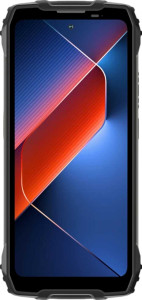
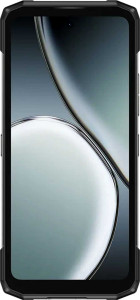
Blackview BL7000 Doogee Blade 20 Ultra

Overview

Welcome to our in-depth comparison of the Blackview BL7000 and the Doogee Blade 20 Ultra, two rugged Android 15 smartphones battling it out in the tough-phone segment. Both devices share a waterproof build, 8GB of RAM, and 33W fast charging, but they diverge sharply on display quality, processor performance, battery capacity, and connectivity options. Read on to see which one earns a place in your pocket.

Common Features

  • Both phones are waterproof with a rugged build.
  • Neither phone can be folded.
  • Both feature an LCD IPS display.
  • HDR10 support is not available on either phone.
  • HDR10+ support is not available on either phone.
  • Always-On Display is not available on either phone.
  • Dolby Vision support is not available on either phone.
  • Both phones have a touchscreen.
  • Both phones come with 8GB of RAM and support up to 12GB.
  • Both phones have integrated LTE, support 64-bit, integrated graphics, big.LITTLE technology, 8 CPU threads, and multithreading.
  • Neither phone has built-in optical image stabilization.
  • Both phones support continuous autofocus when recording video and phase-detection autofocus for photos.
  • Both phones support slow-motion video recording and have a built-in HDR mode.
  • Both phones run Android 15.
  • Both phones have clipboard warnings, location privacy options, and camera/microphone privacy options.
  • App tracking blocking is available on both phones, but cross-site tracking blocking is not.
  • Neither phone supports wireless charging, but both support 33W fast charging.
  • Both phones have a non-removable rechargeable battery with a battery level indicator.
  • Neither phone has stereo speakers, aptX, LDAC, aptX HD, aptX Adaptive, aptX Lossless, or any hi-res Bluetooth audio codec.
  • Both phones have two SIM card slots, an external memory slot, USB Type-C, NFC, and a fingerprint scanner.

Main Differences

  • Thickness is 14.5 mm on Blackview BL7000 and 15.8 mm on Doogee Blade 20 Ultra.
  • Width is 86 mm on Blackview BL7000 and 81.2 mm on Doogee Blade 20 Ultra.
  • Height is 182.2 mm on Blackview BL7000 and 174 mm on Doogee Blade 20 Ultra.
  • IP rating is IP68 on Blackview BL7000 and IP67 on Doogee Blade 20 Ultra.
  • Screen size is 6.78″ on Blackview BL7000 and 6.6″ on Doogee Blade 20 Ultra.
  • Pixel density is 396 ppi on Blackview BL7000 and 267 ppi on Doogee Blade 20 Ultra.
  • Resolution is 1080 x 2460 px on Blackview BL7000 and 720 x 1612 px on Doogee Blade 20 Ultra.
  • Refresh rate is 120Hz on Blackview BL7000 and 90Hz on Doogee Blade 20 Ultra.
  • Damage-resistant glass is present on Blackview BL7000 but not on Doogee Blade 20 Ultra.
  • A secondary screen is present on Doogee Blade 20 Ultra but not on Blackview BL7000.
  • Internal storage is 256GB on Blackview BL7000 and 512GB on Doogee Blade 20 Ultra.
  • The chipset is MediaTek Dimensity 6300 on Blackview BL7000 and Unisoc T7250 on Doogee Blade 20 Ultra.
  • CPU speed is 2 x 2.4 & 6 x 2 GHz on Blackview BL7000 and 2 x 1.8 & 6 x 1.6 GHz on Doogee Blade 20 Ultra.
  • Geekbench 6 multi-core score is 2012 on Blackview BL7000 and 1461 on Doogee Blade 20 Ultra.
  • Geekbench 6 single-core score is 782 on Blackview BL7000 and 437 on Doogee Blade 20 Ultra.
  • Semiconductor size is 6 nm on Blackview BL7000 and 12 nm on Doogee Blade 20 Ultra.
  • The main camera setup is 50 & 20 & 2 MP (multi-lens) on Blackview BL7000 and 50 MP (single-lens) on Doogee Blade 20 Ultra.
  • Front camera resolution is 32MP on Blackview BL7000 and 8MP on Doogee Blade 20 Ultra.
  • Max video recording resolution is 1440p at 30 fps on Blackview BL7000 and 1080p at 30 fps on Doogee Blade 20 Ultra.
  • Battery capacity is 7500 mAh on Blackview BL7000 and 10300 mAh on Doogee Blade 20 Ultra.
  • A 3.5 mm audio jack is present on Blackview BL7000 but not on Doogee Blade 20 Ultra.
  • An FM radio is present on Blackview BL7000 but not on Doogee Blade 20 Ultra.
  • 5G support is available on Blackview BL7000 but not on Doogee Blade 20 Ultra.
  • Wi-Fi versions include Wi-Fi 4 and Wi-Fi 5 on Blackview BL7000, while Doogee Blade 20 Ultra supports Wi-Fi 4, Wi-Fi 5, and Wi-Fi 6.
  • Bluetooth version is 5.2 on Blackview BL7000 and 5.0 on Doogee Blade 20 Ultra.
  • Maximum download speed is 3300 Mbit/s on Blackview BL7000 and 300 Mbit/s on Doogee Blade 20 Ultra.
Specs Comparison
Blackview BL7000

Blackview BL7000

Doogee Blade 20 Ultra

Doogee Blade 20 Ultra

Design:
water resistance Waterproof Waterproof
thickness 14.5 mm 15.8 mm
width 86 mm 81.2 mm
height 182.2 mm 174 mm
volume 227.2034 cm³ 223.23504 cm³
Ingress Protection (IP) rating IP68 IP67
has a rugged build
can be folded

Both the Blackview BL7000 and the Doogee Blade 20 Ultra share the rugged-phone fundamentals: waterproof construction, a reinforced build, and no folding mechanism. The meaningful split, however, starts with water resistance. The BL7000 carries an IP68 rating, while the Blade 20 Ultra is rated IP67. In practical terms, IP68 allows for deeper and longer submersion than IP67, making the BL7000 the safer choice for users who regularly work near water or in wet field conditions rather than just needing splash protection.

On physical form factor, the two phones trade advantages. The BL7000 is noticeably taller (182.2 mm vs 174 mm) and wider (86 mm vs 81.2 mm), but it is meaningfully thinner at 14.5 mm compared to the Blade 20 Ultra's 15.8 mm. The Blade 20 Ultra's narrower, shorter footprint makes it easier to grip with one hand and more pocketable day-to-day, even though its extra thickness partially offsets that advantage. Overall displaced volume is nearly identical, so neither phone is dramatically bulkier than the other.

The BL7000 holds a clear edge on the most protection-critical spec — its IP68 rating offers a measurably higher standard of water resistance than the Blade 20 Ultra's IP67. For users who prioritize ruggedness and durability above all else, that difference is decisive. Those who value a more compact, easier-to-handle grip may find the Blade 20 Ultra's shorter and narrower profile a worthwhile trade-off, but on balance the BL7000 is the stronger performer in this design category.

Display:
Display type LCD, IPS LCD, IPS
screen size 6.78" 6.6"
pixel density 396 ppi 267 ppi
resolution 1080 x 2460 px 720 x 1612 px
refresh rate 120Hz 90Hz
has branded damage-resistant glass
supports HDR10
supports HDR10+
Always-On Display
supports Dolby Vision
Has a secondary screen
has a touch screen

Both devices use an LCD IPS panel, so neither has an inherent contrast or color advantage from display technology alone. Where they diverge sharply is resolution and pixel density. The Blackview BL7000 offers a 1080 x 2460 px resolution at 396 ppi, while the Doogee Blade 20 Ultra manages only 720 x 1612 px at 267 ppi — a gap large enough to be immediately visible. At 267 ppi, individual pixels become distinguishable during everyday tasks like reading text or browsing, whereas 396 ppi sits comfortably in the sharp-to-the-eye range for typical viewing distances.

The BL7000 also pulls ahead on refresh rate — 120Hz versus the Blade 20 Ultra's 90Hz — which translates to noticeably smoother scrolling and animations. Additionally, the BL7000 features branded damage-resistant glass, adding a layer of scratch and impact protection that the Blade 20 Ultra lacks, a meaningful consideration in rugged-use scenarios. The Blade 20 Ultra's one structural differentiator is its secondary screen, which can be useful for quick notifications or camera previews without waking the main display, though its practical value depends heavily on the user's workflow.

On display quality, the BL7000 has a decisive advantage: sharper resolution, a higher refresh rate, and protected glass together make it the stronger panel by a considerable margin. The Blade 20 Ultra's secondary screen is a genuine extra, but it does not compensate for the significant shortfalls in sharpness and smoothness that define day-to-day display experience.

Performance:
internal storage 256GB 512GB
RAM 8GB 8GB
Chipset (SoC) name MediaTek Dimensity 6300 Unisoc T7250
GPU name Arm Mali-G57 MC2 Mali G57
CPU speed 2 x 2.4 & 6 x 2 GHz 2 x 1.8 & 6 x 1.6 GHz
Geekbench 6 result (multi) 2012 1461
Geekbench 6 result (single) 782 437
GPU clock speed 950 MHz 850 MHz
Has integrated LTE
RAM speed 2133 MHz 1866 MHz
semiconductor size 6 nm 12 nm
Supports 64-bit
Has integrated graphics
Uses big.LITTLE technology
CPU threads 8 threads 8 threads
maximum memory amount 12GB 12GB
uses multithreading
DDR memory version 4 4
L3 cache 2 MB 1 MB

The silicon gap between these two devices is substantial. The Blackview BL7000 runs on the MediaTek Dimensity 6300, built on a 6 nm process, while the Doogee Blade 20 Ultra uses the Unisoc T7250 on a 12 nm process. A smaller node generally means greater power efficiency and more headroom for sustained performance — a meaningful advantage in a rugged device that may run demanding workloads or operate in warm environments for extended periods. The BL7000's CPU also clocks higher across both its performance and efficiency cores (2.4 / 2 GHz vs 1.8 / 1.6 GHz), compounding the raw speed difference.

Benchmark results make the gap concrete. The BL7000 scores 782 single-core and 2012 multi-core on Geekbench 6, compared to the Blade 20 Ultra's 437 single-core and 1461 multi-core. Single-core performance is especially relevant for everyday responsiveness — app launches, UI interactions, and camera processing — where the BL7000's nearly double score translates to a noticeably snappier feel. The GPU clock advantage (950 MHz vs 850 MHz), faster RAM (2133 MHz vs 1866 MHz), and double the L3 cache (2 MB vs 1 MB) reinforce this lead across graphics and memory-bound tasks. The Blade 20 Ultra does offer 512 GB of internal storage versus the BL7000's 256 GB, which is a genuine advantage for users who store large files locally.

In performance, the BL7000 wins decisively across every compute metric. The combination of a modern 6 nm chip, higher clock speeds, faster memory, and substantially better benchmark scores makes it the clear choice for users who need reliable, responsive performance. The Blade 20 Ultra's storage advantage is real but secondary — it cannot offset a processor generation's worth of performance deficit.

Cameras:
megapixels (main camera) 50 & 20 & 2 MP 50 MP
Has a dual-lens (or multi-lens) main camera
megapixels (front camera) 32MP 8MP
has built-in optical image stabilization
video recording (main camera) 1440 x 30 fps 1080 x 30 fps
Has a dual-tone LED flash
number of flash LEDs 2 2
has a BSI sensor
has a CMOS sensor
has continuous autofocus when recording movies
Has phase-detection autofocus for photos
supports slow-motion video recording
has a built-in HDR mode
has manual exposure
has a flash
optical zoom 0x 0x
has manual ISO
has a serial shot mode
has manual focus
has a front camera
Has laser autofocus
Shoots 360° panorama
has manual white balance
shoots raw
has touch autofocus
can create panoramas in-camera
Has a front-facing LED flash
has a dual-lens (or multi-lens) front camera
supports HDR10 recording
supports Dolby Vision recording
has a front-facing camera under the display
Has a RGB LED flash
has 3D photo/video recording capabilities

The rear camera systems tell notably different stories. The Blackview BL7000 fields a triple-lens setup — 50 MP, 20 MP, and 2 MP — giving it versatility the Doogee Blade 20 Ultra's single 50 MP lens simply cannot match. The additional sensors open up use cases like ultra-wide or depth-assisted shots that are unavailable on the Blade 20 Ultra, making the BL7000 a more flexible tool in varied shooting conditions. Video capability follows the same pattern: the BL7000 records up to 1440p at 30 fps, a step above the Blade 20 Ultra's ceiling of 1080p at 30 fps, which matters for users who want sharper footage for documentation or field reporting.

The selfie camera gap is equally stark. The BL7000 offers a 32 MP front sensor versus the Blade 20 Ultra's 8 MP — a fourfold difference that has a real impact on video calls, ID verification, and any scenario where the front camera sees regular use. Feature parity across both devices is otherwise high: phase-detection autofocus, slow-motion, HDR mode, and a full manual controls suite are all present on both, so neither has a hidden edge in shooting flexibility beyond the hardware differences already noted.

The BL7000 holds a clear advantage in this category. More rear lenses, higher video resolution, and a dramatically higher-resolution front camera collectively make it the stronger imaging device by a meaningful margin. The Blade 20 Ultra's camera system is functional but limited, and offers no compensating feature to close that gap.

Operating system:
Android version Android 15 Android 15
has clipboard warnings
has location privacy options
has camera/microphone privacy options
has Mail Privacy Protection
has theme customization
can block app tracking
blocks cross-site tracking
has on-device machine learning
has notification permissions
has media picker
Can play games while they download
has dark mode
has Wi-Fi password sharing
has battery health check
has an extra dim mode
has focus modes
has dynamic theming
can offload apps
Has customizable notifications
has Live Text
has full-page screenshots
supports split screen
gets direct OS updates
has PiP
Can be used as a PC
Has sharing intents
has a child lock
Supports widgets
Is free and open source
Has offline voice recognition
has voice commands
Tracks the current position of a mobile device
is a multi-user system
has Quick Start

This is a rare category where the comparison ends before it begins. The Blackview BL7000 and the Doogee Blade 20 Ultra run identical software configurations across every single tracked specification — both ship with Android 15 and share an exactly matching feature set, from privacy controls like app tracking blocking and camera/microphone permissions, to productivity tools like split-screen, Picture-in-Picture, and offline voice recognition.

Notably, both devices share the same limitations too: neither gets direct OS updates from Google, meaning update delivery depends on the manufacturer's own schedule — a relevant consideration for users who prioritize timely security patches. Neither supports Wi-Fi password sharing or focus modes, and neither can be used as a PC. These are consistent omissions, not differentiators.

This category is a complete tie. With no divergence across any tracked spec, the operating system experience is functionally identical on both devices, and cannot serve as a deciding factor between them.

Battery:
battery power 7500 mAh 10300 mAh
has wireless charging
Supports fast charging
charging speed 33W 33W
has a removable battery
has a battery level indicator
has a rechargeable battery

Battery capacity is where the Doogee Blade 20 Ultra makes its strongest case in this entire comparison. Its 10,300 mAh cell dwarfs the Blackview BL7000's already-generous 7,500 mAh — a difference of nearly 2,800 mAh, or roughly 37% more capacity. For a rugged device intended for extended field use, that gap is highly practical: it translates directly to more hours of operation between charges, whether that means longer shifts, multi-day deployments, or simply less dependency on access to a power source.

Where the two devices converge is on charging: both support fast charging at 33W and neither offers wireless charging. Equal charging speeds mean the Blade 20 Ultra will actually take longer to reach full charge from empty due to its larger cell — a minor trade-off, but worth noting for users who rely on quick top-ups. Neither battery is removable, which is standard for this segment.

The Blade 20 Ultra wins this category clearly. A 10,300 mAh battery is exceptional even by rugged-phone standards, and the capacity advantage over the BL7000 is large enough to be a genuine differentiator for users who prioritize endurance above all else. It is the first category in this comparison where the Blade 20 Ultra holds an unambiguous lead.

Audio:
has a socket for a 3.5 mm audio jack
has stereo speakers
has aptX
has LDAC
has aptX HD
has aptX Adaptive
has aptX Lossless
Has a radio

Audio is a lean category for both devices, with neither offering stereo speakers or any high-resolution Bluetooth audio codec — no aptX, LDAC, or any variant. For users who care about wireless audio quality, both phones are limited to standard Bluetooth audio, which is a shared limitation rather than a differentiator.

The two meaningful splits are the 3.5 mm headphone jack and the built-in radio. The Blackview BL7000 includes both; the Doogee Blade 20 Ultra has neither. A headphone jack remains genuinely useful in rugged and field contexts — wired connections are more reliable than Bluetooth in noisy or RF-congested environments, and standard earphones or hearing protection adapters connect without pairing or battery concerns. The FM radio adds a further practical dimension, providing access to local broadcasts and emergency information without any data connection.

The BL7000 takes this category by virtue of two features the Blade 20 Ultra simply omits. Neither phone is an audio powerhouse, but the headphone jack and radio are both practically relevant additions for a rugged device, and their absence on the Blade 20 Ultra is a tangible limitation.

Connectivity & Features:
release date May 2025 March 2025
has 5G support
Wi-Fi version Wi-Fi 4 (802.11n), Wi-Fi 5 (802.11ac) Wi-Fi 4 (802.11n), Wi-Fi 6 (802.11ax), Wi-Fi 5 (802.11ac)
SIM cards 2 SIM 2 SIM
Bluetooth version 5.2 5
has an external memory slot
Has USB Type-C
has NFC
download speed 3300 MBits/s 300 MBits/s
Has a fingerprint scanner
has emergency SOS via satellite
has crash detection
is DLNA-certified
has a gyroscope
supports ANT+
Has a heart rate monitor
has GPS
has a compass
supports Wi-Fi
Has an infrared sensor
has an accelerometer
has a cellular module
Has a barometer
has an HDMI output
Uses 3D facial recognition
Has an iris scanner
Stylus included
supports Galileo
Has motion tracking
Has optical tracking
Has a built-in projector

Cellular connectivity is where the sharpest divide appears. The Blackview BL7000 supports 5G, while the Doogee Blade 20 Ultra is limited to 4G LTE — and the downstream impact on download speeds is dramatic: 3300 Mbits/s versus just 300 Mbits/s. For users in 5G-covered areas, this means the BL7000 can pull large files, firmware updates, or media at speeds an order of magnitude faster. For field workers relying on cellular data, that difference is far from trivial. The BL7000 also edges ahead on Bluetooth, offering version 5.2 versus the Blade 20 Ultra's 5.0, which brings modest improvements in connection stability and coexistence with other wireless signals.

The Wi-Fi picture is more nuanced. The Blade 20 Ultra supports Wi-Fi 6 (802.11ax) in addition to Wi-Fi 4 and 5, whereas the BL7000 tops out at Wi-Fi 5 (802.11ac). Wi-Fi 6 delivers better throughput and efficiency in congested network environments — relevant in warehouses, offices, or public venues with many connected devices. This is a genuine advantage for the Blade 20 Ultra on local networking, though it does not compensate for the cellular gap. The remaining shared features — dual SIM, NFC, USB-C, expandable storage, GPS with Galileo, fingerprint scanner, and the full sensor suite — are identical across both devices.

On balance, the BL7000 holds the stronger position in this category. Its 5G support and much higher potential download speeds represent a more impactful connectivity advantage than the Blade 20 Ultra's Wi-Fi 6 support, particularly given that rugged phones are often used in environments where cellular is the primary data link. The Blade 20 Ultra's Wi-Fi 6 is a real plus, but it is outweighed by the BL7000's cellular lead.
Miscellaneous:
has a video light
Has sapphire glass display
Has a curved display
Has an e-paper display

The Miscellaneous category offers nothing to separate the Blackview BL7000 and the Doogee Blade 20 Ultra. Every tracked spec is identical: both include a video light, and neither features sapphire glass, a curved display, or an e-paper display. With only four data points and zero divergence between them, there is no analytical ground to cover here.

This is a complete tie — the specs in this group carry no weight in the decision between these two devices.

Comparison Summary & Verdict

After examining every specification, these two rugged phones clearly target different priorities. The Blackview BL7000 stands out with its sharper 1080p 120Hz display, the more powerful MediaTek Dimensity 6300 chipset, a higher-resolution 32MP front camera, 5G connectivity, and a 3.5mm audio jack with FM radio — making it the stronger choice for users who value raw performance and modern wireless speeds. The Doogee Blade 20 Ultra, on the other hand, counters with a massive 10300 mAh battery, 512GB of internal storage, a secondary screen, and Wi-Fi 6 support, appealing to users who need exceptional endurance and extra storage on a rugged handset. Neither phone is a universal winner; your ideal pick depends entirely on whether performance and connectivity or battery life and storage matter more to you.

Blackview BL7000
Buy Blackview BL7000 if...

Buy the Blackview BL7000 if you want a sharper 1080p 120Hz display, stronger chipset performance, 5G support, and a headphone jack with FM radio in a rugged package.

Doogee Blade 20 Ultra
Buy Doogee Blade 20 Ultra if...

Buy the Doogee Blade 20 Ultra if you prioritize an enormous 10300 mAh battery, 512GB of storage, a secondary screen, and Wi-Fi 6 support over raw processing power.