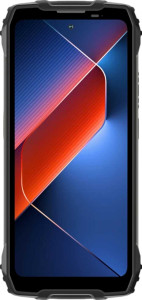
Blackview BL7000
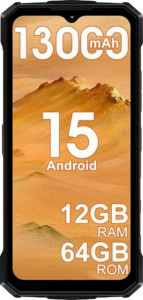
Doogee Fire 5

Blackview BL7000 Doogee Fire 5

Overview

Welcome to our in-depth comparison of the Blackview BL7000 and the Doogee Fire 5, two rugged Android 15 smartphones built to withstand the elements with IP68 waterproof certification. While both devices share a tough exterior and target users who demand durability, they take very different approaches when it comes to performance and display quality, battery strategy, and overall form factor. Read on to see how these two contenders stack up across every major specification category.

Common Features

  • Both phones are waterproof with an IP68 ingress protection rating.
  • Both phones have a rugged build.
  • Neither phone can be folded.
  • Both phones feature an LCD IPS display type.
  • Neither phone supports HDR10.
  • Neither phone supports HDR10+.
  • Neither phone has an Always-On Display.
  • Neither phone supports Dolby Vision.
  • Neither phone has a secondary screen.
  • Both phones have a touchscreen.
  • Both phones have integrated LTE.
  • Both phones support 64-bit processing.
  • Both phones use big.LITTLE CPU technology.
  • Both phones have 8 CPU threads.
  • Both phones use DDR4 memory.
  • Both phones have integrated graphics.
  • Neither phone has built-in optical image stabilization.
  • Both phone cameras have a built-in HDR mode.
  • Both phones have phase-detection autofocus for photos.
  • Both phones support slow-motion video recording.
  • Both phones have manual exposure control.
  • Both phones run Android 15.
  • Both phones have clipboard warnings.
  • Both phones offer location privacy options.
  • Both phones offer camera and microphone privacy options.
  • Neither phone has Mail Privacy Protection.
  • Both phones support theme customization.
  • Both phones can block app tracking.
  • Neither phone blocks cross-site tracking.
  • Neither phone supports wireless charging.
  • Both phones support fast charging.
  • Both phones have a battery level indicator.
  • Both phones have a rechargeable battery.
  • Neither phone has stereo speakers.
  • Neither phone supports aptX, LDAC, aptX HD, aptX Adaptive, aptX Lossless.
  • Both phones support Wi-Fi 4 and Wi-Fi 5.
  • Both phones have dual SIM support.
  • Both phones have an external memory slot.
  • Both phones have a USB Type-C port.
  • Both phones have NFC.
  • Both phones have a fingerprint scanner.
  • Neither phone has emergency SOS via satellite.
  • Neither phone has crash detection.
  • Both phones have a video light.
  • Neither phone has a sapphire glass display.
  • Neither phone has a curved display.
  • Neither phone has an e-paper display.

Main Differences

  • Weight is 357 g on Blackview BL7000 and 389 g on Doogee Fire 5.
  • Thickness is 14.5 mm on Blackview BL7000 and 18.7 mm on Doogee Fire 5.
  • Width is 86 mm on Blackview BL7000 and 82.5 mm on Doogee Fire 5.
  • Height is 182.2 mm on Blackview BL7000 and 176.5 mm on Doogee Fire 5.
  • Volume is 227.2034 cm³ on Blackview BL7000 and 272.295375 cm³ on Doogee Fire 5.
  • Screen size is 6.78″ on Blackview BL7000 and 6.6″ on Doogee Fire 5.
  • Pixel density is 396 ppi on Blackview BL7000 and 269 ppi on Doogee Fire 5.
  • Resolution is 1080 x 2460 px on Blackview BL7000 and 720 x 1612 px on Doogee Fire 5.
  • Refresh rate is 120Hz on Blackview BL7000 and 90Hz on Doogee Fire 5.
  • Damage-resistant glass is present on Blackview BL7000 but not available on Doogee Fire 5.
  • Internal storage is 256GB on Blackview BL7000 and 64GB on Doogee Fire 5.
  • RAM is 8GB on Blackview BL7000 and 3GB on Doogee Fire 5.
  • The chipset is MediaTek Dimensity 6300 on Blackview BL7000, while no chipset name is specified for Doogee Fire 5.
  • GPU is Arm Mali-G57 MC2 on Blackview BL7000 and PowerVR GE8322 on Doogee Fire 5.
  • CPU speed is 2 x 2.4 & 6 x 2 GHz on Blackview BL7000 and 4 x 1.6 & 4 x 1.2 GHz on Doogee Fire 5.
  • Geekbench 6 multi-core score is 2012 on Blackview BL7000 and 725 on Doogee Fire 5.
  • Geekbench 6 single-core score is 782 on Blackview BL7000 and 164 on Doogee Fire 5.
  • GPU clock speed is 950 MHz on Blackview BL7000 and 550 MHz on Doogee Fire 5.
  • RAM speed is 2133 MHz on Blackview BL7000 and 933 MHz on Doogee Fire 5.
  • Semiconductor size is 6 nm on Blackview BL7000 and 28 nm on Doogee Fire 5.
  • DirectX version is DirectX 12 on Blackview BL7000 and DirectX 11 on Doogee Fire 5.
  • Maximum memory bandwidth is 17.07 GB/s on Blackview BL7000 and 7.464 GB/s on Doogee Fire 5.
  • Main camera resolution is 50 & 20 & 2 MP on Blackview BL7000 and 13 MP on Doogee Fire 5.
  • A multi-lens main camera is present on Blackview BL7000 but not available on Doogee Fire 5.
  • Front camera resolution is 32MP on Blackview BL7000 and 8MP on Doogee Fire 5.
  • Number of flash LEDs is 2 on Blackview BL7000 and 4 on Doogee Fire 5.
  • A CMOS sensor is present on Doogee Fire 5 but not on Blackview BL7000.
  • Front camera aperture is f/2.2 on Blackview BL7000 and f/2 on Doogee Fire 5.
  • Battery capacity is 7500 mAh on Blackview BL7000 and 13000 mAh on Doogee Fire 5.
  • Charging speed is 33W on Blackview BL7000 and 10W on Doogee Fire 5.
  • A removable battery is available on Doogee Fire 5 but not on Blackview BL7000.
  • A 3.5 mm audio jack is present on Blackview BL7000 but not available on Doogee Fire 5.
  • FM radio is present on Blackview BL7000 but not available on Doogee Fire 5.
  • 5G support is present on Blackview BL7000 but not available on Doogee Fire 5.
  • Bluetooth version is 5.2 on Blackview BL7000 and 5.4 on Doogee Fire 5.
  • Download speed is 3300 Mbit/s on Blackview BL7000 and 300 Mbit/s on Doogee Fire 5.
  • A gyroscope is present on Blackview BL7000 but not available on Doogee Fire 5.
  • A compass is present on Blackview BL7000 but not available on Doogee Fire 5.
Specs Comparison
Blackview BL7000

Blackview BL7000

Doogee Fire 5

Doogee Fire 5

Design:
water resistance Waterproof Waterproof
weight 357 g 389 g
thickness 14.5 mm 18.7 mm
width 86 mm 82.5 mm
height 182.2 mm 176.5 mm
volume 227.2034 cm³ 272.295375 cm³
Ingress Protection (IP) rating IP68 IP68
has a rugged build
can be folded

Both the Blackview BL7000 and the Doogee Fire 5 share the same rugged-device fundamentals: full IP68 waterproofing, a reinforced build, and no folding mechanism. For users who need a phone that can take a beating and survive submersion, neither option cuts corners on protection.

Where they diverge meaningfully is in physical form factor. The BL7000 is noticeably slimmer at 14.5 mm versus the Fire 5's 18.7 mm — a 4.2 mm difference that is substantial in hand, making the BL7000 feel far closer to a mainstream smartphone despite its rugged credentials. It is also lighter at 357 g compared to 389 g, and its total volume of 227.2 cm³ versus 272.3 cm³ confirms it is the more compact device overall. In everyday use, that translates to easier one-handed handling, less fatigue during extended carry, and a better fit in standard pockets.

The Blackview BL7000 holds a clear design edge here. Without sacrificing any protection rating, it delivers a significantly thinner, lighter, and more manageable chassis — a real differentiator for users who want rugged durability without the bulk that typically comes with it.

Display:
Display type LCD, IPS LCD, IPS
screen size 6.78" 6.6"
pixel density 396 ppi 269 ppi
resolution 1080 x 2460 px 720 x 1612 px
refresh rate 120Hz 90Hz
has branded damage-resistant glass
supports HDR10
supports HDR10+
Always-On Display
supports Dolby Vision
Has a secondary screen
has a touch screen

Both phones use an LCD IPS panel, so neither offers the deep blacks or vivid contrast of an OLED display. That said, the gap between them within this panel category is substantial. The Blackview BL7000 packs a 1080 x 2460 resolution into a 6.78″ screen, yielding a sharp 396 ppi — dense enough that individual pixels are effectively invisible at normal viewing distances. The Doogee Fire 5, by contrast, resolves only 720 x 1612 pixels across a slightly smaller 6.6″ panel, landing at just 269 ppi. That difference is visible in daily use: text edges will appear softer, fine detail in photos will be less defined, and the overall image will feel noticeably less crisp.

The refresh rate advantage also sits with the BL7000. Its 120Hz panel delivers smoother scrolling, more fluid animations, and a more responsive feel compared to the Fire 5's 90Hz screen. While 90Hz is a step above the 60Hz baseline, users who have experienced 120Hz displays will notice the difference. On top of that, the BL7000 includes branded damage-resistant glass, adding a layer of scratch protection the Fire 5 lacks — a meaningful omission on a device marketed for rugged use.

The Blackview BL7000 wins this category decisively. It offers a higher-resolution, higher-refresh-rate screen with added glass protection, amounting to a meaningfully superior viewing experience across virtually every real-world scenario.

Performance:
internal storage 256GB 64GB
RAM 8GB 3GB
Chipset (SoC) name MediaTek Dimensity 6300
GPU name Arm Mali-G57 MC2 PowerVR GE8322
CPU speed 2 x 2.4 & 6 x 2 GHz 4 x 1.6 & 4 x 1.2 GHz
Geekbench 6 result (multi) 2012 725
Geekbench 6 result (single) 782 164
GPU clock speed 950 MHz 550 MHz
Has integrated LTE
RAM speed 2133 MHz 933 MHz
semiconductor size 6 nm 28 nm
Supports 64-bit
DirectX version DirectX 12 DirectX 11
Has integrated graphics
Uses big.LITTLE technology
CPU threads 8 threads 8 threads
maximum memory bandwidth 17.07 GB/s 7.464 GB/s
maximum memory amount 12GB 6GB
DDR memory version 4 4
L3 cache 2 MB 0.512 MB

The silicon divide here is generational, not incremental. The Blackview BL7000 runs on the MediaTek Dimensity 6300, a modern 6 nm chip, while the Doogee Fire 5 relies on a processor built on a 28 nm process — a manufacturing node that is multiple generations behind. That gap in fabrication technology alone means the BL7000's chip is dramatically more power-efficient and thermally capable, translating to better sustained performance and lower battery drain under load.

The benchmark results confirm this in hard numbers. The BL7000 scores 2012 on Geekbench 6 multi-core and 782 single-core; the Fire 5 manages only 725 multi-core and a striking 164 single-core. That single-core figure is particularly telling — it governs everyday responsiveness like app launches and UI interactions, and the Fire 5's score suggests it will feel sluggish in routine use. The memory story compounds this: the BL7000 pairs 8 GB of RAM at 2133 MHz against the Fire 5's 3 GB at 933 MHz, meaning the BL7000 can hold far more apps in memory simultaneously and feed its CPU data nearly twice as fast. Storage follows the same pattern — 256 GB versus a tight 64 GB.

This is not a close contest. The Blackview BL7000 outperforms the Fire 5 across every measurable performance dimension — raw compute, GPU capability, memory bandwidth, and storage capacity. The Fire 5 is adequate only for the most basic smartphone tasks, whereas the BL7000 is equipped to handle demanding applications, multitasking, and heavier workloads without compromise.

Cameras:
megapixels (main camera) 50 & 20 & 2 MP 13 MP
Has a dual-lens (or multi-lens) main camera
megapixels (front camera) 32MP 8MP
has built-in optical image stabilization
Has a dual-tone LED flash
number of flash LEDs 2 4
has a BSI sensor
has a CMOS sensor
has continuous autofocus when recording movies
Has phase-detection autofocus for photos
supports slow-motion video recording
has a built-in HDR mode
has manual exposure
has a flash
optical zoom 0x 0x
has manual ISO
has a serial shot mode
has manual focus
has a front camera
Has laser autofocus
Shoots 360° panorama
has manual white balance
shoots raw
has touch autofocus
can create panoramas in-camera
wide aperture (front camera) 2.2f 2f
Has a front-facing LED flash
has a dual-lens (or multi-lens) front camera
supports HDR10 recording
supports Dolby Vision recording
has a front-facing camera under the display
Has a RGB LED flash
has 3D photo/video recording capabilities

Sensor count and resolution tell the opening story. The Blackview BL7000 fields a triple rear camera system at 50, 20, and 2 MP, while the Doogee Fire 5 has a single 13 MP rear shooter. The BL7000's primary lens captures significantly more detail, and the multi-lens setup adds shooting versatility the Fire 5 simply cannot match. The selfie camera gap is equally wide — 32 MP on the BL7000 versus 8 MP on the Fire 5 — which is a meaningful difference for anyone who prioritizes front-facing photo or video quality.

The feature set is largely mirrored across both devices: phase-detection autofocus, continuous autofocus during recording, slow-motion video, HDR mode, and a full suite of manual controls are present on each. Neither phone offers optical image stabilization or optical zoom, so both rely on digital stabilization and cropping for those scenarios. One minor structural distinction worth noting is that the Fire 5 uses a 4-LED flash array versus the BL7000's 2-LED setup, which could provide marginally better flash coverage in very dark conditions — though this is a narrow advantage relative to the resolution and versatility gap.

The Blackview BL7000 holds a clear camera advantage. Its higher-resolution main and front sensors, combined with the added flexibility of a multi-lens rear system, make it the stronger imaging device by a substantial margin based on the provided specifications.

Operating system:
Android version Android 15 Android 15
has clipboard warnings
has location privacy options
has camera/microphone privacy options
has Mail Privacy Protection
has theme customization
can block app tracking
blocks cross-site tracking
has on-device machine learning
has notification permissions
has media picker
Can play games while they download
has dark mode
has Wi-Fi password sharing
has battery health check
has an extra dim mode
has focus modes
has dynamic theming
can offload apps
Has customizable notifications
has Live Text
has full-page screenshots
supports split screen
gets direct OS updates
has PiP
Can be used as a PC
Has sharing intents
has a child lock
Supports widgets
Is free and open source
Has offline voice recognition
has voice commands
Tracks the current position of a mobile device
is a multi-user system
has Quick Start

For this specification group, the data tells an unusually clear story: every single listed attribute is identical between the Blackview BL7000 and the Doogee Fire 5. Both ship with Android 15, and both carry the same full set of privacy controls, including location options, camera and microphone access management, and app tracking restrictions — a solid baseline for users who care about data hygiene.

The shared feature set is genuinely well-rounded. Both devices support split-screen multitasking, picture-in-picture, dynamic theming, on-device machine learning, offline voice recognition, and multi-user mode. Neither receives direct OS updates, meaning both depend on manufacturer-pushed patches rather than receiving them straight from Google — a relevant consideration for long-term software support.

This category is a complete tie. The operating system experience, as defined by the provided specs, is functionally indistinguishable between the two phones. A buyer's decision here should rest entirely on the differentiators found in other categories.

Battery:
battery power 7500 mAh 13000 mAh
has wireless charging
Supports fast charging
charging speed 33W 10W
has a removable battery
has a battery level indicator
has a rechargeable battery

Battery capacity is where the Doogee Fire 5 makes its most dramatic statement. Its 13000 mAh cell is nearly 74% larger than the Blackview BL7000's already-generous 7500 mAh pack. For context, most mainstream smartphones ship with batteries in the 4000–5000 mAh range, so both devices are well above average — but the Fire 5's capacity pushes firmly into power-bank territory, making multi-day use between charges a realistic expectation for moderate users.

The trade-off reveals itself at the charger. The BL7000 supports 33W fast charging, meaning its 7500 mAh battery can be meaningfully replenished in a reasonable timeframe. The Fire 5 is capped at 10W, and filling a 13000 mAh cell at that rate will take a very long time — potentially exceeding four to five hours for a full charge. For users who do have access to an outlet, that sluggish replenishment is a real inconvenience. The Fire 5 also offers a removable battery, a rare feature that allows carrying a spare cell for field-swapping — a practical edge in off-grid or expedition scenarios where the BL7000's sealed design cannot compete.

There is no single winner here — it depends entirely on usage pattern. The Doogee Fire 5 is the better choice for maximum endurance and off-grid flexibility, while the Blackview BL7000 is the more practical daily driver for users who charge regularly and value getting back to full power quickly.

Audio:
has a socket for a 3.5 mm audio jack
has stereo speakers
has aptX
has LDAC
has aptX HD
has aptX Adaptive
has aptX Lossless
Has a radio

Audio is a lean category for both devices, with neither offering stereo speakers or any high-resolution Bluetooth codec support — no aptX, LDAC, or their variants on either side. For wireless listening, both phones are limited to standard Bluetooth audio quality, which is adequate for casual use but will not satisfy audiophiles seeking lossless or high-fidelity wireless playback.

The two meaningful differentiators both favor the Blackview BL7000. It retains a 3.5 mm headphone jack, a feature the Doogee Fire 5 omits entirely. For a rugged device — frequently used in environments where wireless connectivity may be unreliable or where users wear gloves — a wired connection is more than a convenience; it is a practical necessity. The BL7000 also includes a built-in FM radio, which the Fire 5 lacks. In remote or off-grid settings where these phones are often deployed, the ability to receive broadcast radio without a data connection has genuine utility.

The Blackview BL7000 takes this category. Its advantages are modest in a hi-fi sense, but the headphone jack and FM radio are both functionally relevant for the rugged-use audience these phones target, and the Fire 5 offers nothing in return to offset those omissions.

Connectivity & Features:
release date May 2025 September 2025
has 5G support
Wi-Fi version Wi-Fi 4 (802.11n), Wi-Fi 5 (802.11ac) Wi-Fi 4 (802.11n), Wi-Fi 5 (802.11ac)
SIM cards 2 SIM 2 SIM
Bluetooth version 5.2 5.4
has an external memory slot
Has USB Type-C
has NFC
download speed 3300 MBits/s 300 MBits/s
Has a fingerprint scanner
has emergency SOS via satellite
has crash detection
is DLNA-certified
has a gyroscope
supports ANT+
Has a heart rate monitor
has GPS
has a compass
supports Wi-Fi
Has an infrared sensor
has an accelerometer
has a cellular module
Has a barometer
has an HDMI output
Uses 3D facial recognition
Has an iris scanner
Stylus included
supports Galileo
Has motion tracking
Has optical tracking
Has a built-in projector

The most consequential difference in this category is cellular generation. The Blackview BL7000 supports 5G, while the Doogee Fire 5 is limited to 4G LTE — and the download speed figures reflect this starkly: 3300 Mbits/s versus 300 Mbits/s. In practical terms, the BL7000 can leverage next-generation network speeds where available, which matters for large file transfers, video streaming, and latency-sensitive tasks in the field. The Fire 5's ceiling is a tenth of that throughput, which is adequate but increasingly a limitation as 5G coverage expands.

Sensor coverage also diverges. The BL7000 includes a gyroscope and compass, both of which the Fire 5 lacks. For a rugged device likely used in outdoor or navigation-heavy contexts, the absence of these sensors on the Fire 5 is a meaningful gap — gyroscope data enhances navigation accuracy and enables motion-sensitive features, while the compass is foundational for directional orientation without a data connection. Interestingly, the Fire 5 carries a slightly newer Bluetooth 5.4 versus the BL7000's Bluetooth 5.2, though the real-world difference between these two versions is negligible for most users. Both phones share dual-SIM support, Wi-Fi 5, USB-C, NFC, expandable storage, and GPS with Galileo — a solid shared connectivity foundation.

The Blackview BL7000 holds the clear advantage here. Its 5G support and substantially higher download ceiling, combined with the addition of a gyroscope and compass, make it the more capable and future-ready device for connectivity and field use alike.
Miscellaneous:
has a video light
Has sapphire glass display
Has a curved display
Has an e-paper display

The miscellaneous category offers no differentiating data between the two devices. Both the Blackview BL7000 and the Doogee Fire 5 include a video light, and neither features a sapphire glass display, a curved screen, or an e-paper panel — all shared absences that are entirely standard for smartphones in this segment.

This is a complete tie by the provided specifications. Buyers should weigh the distinctions covered in other categories to inform their decision, as this group contributes no separating factors between the two phones.

Comparison Summary & Verdict

After examining every specification, these two rugged phones clearly serve different kinds of users. The Blackview BL7000 is the stronger choice for those who demand serious processing power, thanks to its Dimensity 6300 chipset, 8 GB of RAM, a crisp 1080p 120 Hz display, and 5G connectivity, all wrapped in a slimmer, lighter chassis with faster 33 W charging. The Doogee Fire 5, on the other hand, takes a completely different stance by packing a massive 13,000 mAh removable battery that will outlast almost anything in the field, making it ideal for extended outdoor use where charging access is limited. Its Bluetooth 5.4 and four-LED flash are minor highlights, but its low-resolution display and modest 3 GB RAM mean it trades performance for endurance. Choose the BL7000 for speed and connectivity; choose the Fire 5 for maximum battery longevity.

Blackview BL7000
Buy Blackview BL7000 if...

Buy the Blackview BL7000 if you want a high-performance rugged phone with a sharp 1080p 120 Hz display, 5G support, and significantly faster charging. It is the better pick for users who need responsive everyday performance without sacrificing portability.

Doogee Fire 5
Buy Doogee Fire 5 if...

Buy the Doogee Fire 5 if your top priority is exceptional battery endurance in the field, especially since its massive 13,000 mAh removable battery and replaceable design make it ideal for long trips or work environments where power outlets are scarce.