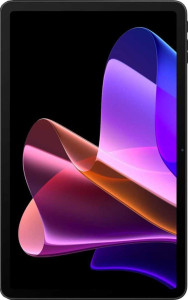
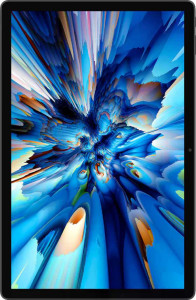
Across a broad and detailed connectivity and features spec sheet, these two tablets are remarkably alike — identical cellular capabilities (4G LTE, no 5G, dual SIM), matched networking speeds of 300 Mbps down / 150 Mbps up, and the same software feature set covering split-screen, Picture-in-Picture, dark mode, dynamic theming, multi-user support, and a robust privacy toolkit. For the vast majority of use cases, the connectivity experience on both devices will be indistinguishable.
Dig into the sensors, however, and one meaningful gap emerges: the Mega 2 includes GPS, while the Mega 8 does not. Both tablets list Galileo support and device position tracking, but without a dedicated GPS receiver, the Mega 8's location capabilities are likely dependent on network-based positioning — which is less accurate, slower to acquire a fix, and non-functional without data connectivity. For navigation, field work, location tagging, or any use case that demands reliable standalone positioning, the Mega 2's hardware GPS is a concrete functional advantage.
Neither device offers NFC, a fingerprint scanner, gyroscope, compass, or HDMI output, so there are no further differentiators to weigh. The verdict here is straightforward: the Mega 2 holds the edge in this category solely due to its built-in GPS — a practically significant feature whose absence on the Mega 8 limits location accuracy and offline navigation capability.