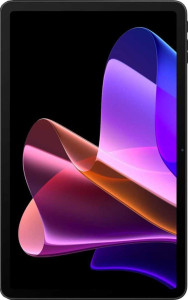
Blackview Mega 2
Doogee Tab G6

Blackview Mega 2 Doogee Tab G6

Overview

Welcome to our in-depth specification comparison between the Blackview Mega 2 and the Doogee Tab G6. These two Android tablets compete closely in the budget segment, but they take notably different approaches when it comes to display size and resolution, RAM and camera performance, and key connectivity features. Read on to discover how these two devices stack up across every major category.

Common Features

  • Neither product includes a stylus.
  • Neither product has a detachable keyboard.
  • Neither product has a backlit keyboard.
  • Neither product offers water resistance.
  • Neither product has tilt sensitivity.
  • Neither product has branded damage-resistant glass.
  • Neither product supports HDR10.
  • Both products have a touch screen.
  • Neither product has a sapphire glass display.
  • Neither product supports HDR10+.
  • Neither product supports Dolby Vision.
  • Neither product has an e-paper display.
  • Both products have 256GB of internal storage.
  • Both products use the Mali G57 GPU.
  • Both products share the same CPU speed of 2 x 1.8 and 6 x 1.6 GHz.
  • Both products achieved a Geekbench 6 multi-core score of 1461.
  • Both products achieved a Geekbench 6 single-core score of 437.
  • Both products have an external memory slot.
  • Both products are built on a 12 nm semiconductor process.
  • Both products support 64-bit processing.
  • Both products have a camera flash.
  • Both products have a front camera.
  • Both products have a built-in HDR mode.
  • Neither product can create panoramas in-camera.
  • Both products have touch autofocus.
  • Neither product offers optical zoom.
  • Neither product has a BSI sensor.
  • Both products support manual white balance.
  • Neither product supports aptX, aptX HD, LDAC, aptX Low Latency, aptX Adaptive, or aptX Lossless.
  • Both products have stereo speakers.
  • Neither product has a radio.
  • Both products support fast charging.
  • Neither product supports wireless charging.
  • Both products have a battery level indicator.
  • Both products have a rechargeable, non-removable battery.
  • Neither product has Mail Privacy Protection.
  • Both products have on-device machine learning.
  • Both products have clipboard warnings.
  • Both products have location privacy options.
  • Both products have camera and microphone privacy options.
  • Both products can block app tracking.
  • Neither product blocks cross-site tracking.
  • Both products support split screen.
  • Both products achieved a Geekbench 5 single-core score of 357.
  • Both products achieved a Geekbench 5 multi-core score of 1350.
  • Both products use DDR4 memory.
  • Both products use multithreading.

Main Differences

  • Weight is 615 g on Blackview Mega 2 and 554 g on Doogee Tab G6.
  • Thickness is 8 mm on Blackview Mega 2 and 8.1 mm on Doogee Tab G6.
  • Width is 281.7 mm on Blackview Mega 2 and 257.3 mm on Doogee Tab G6.
  • Height is 177.2 mm on Blackview Mega 2 and 168.8 mm on Doogee Tab G6.
  • Volume is 399.34 cm³ on Blackview Mega 2 and 351.80 cm³ on Doogee Tab G6.
  • Screen size is 12″ on Blackview Mega 2 and 11″ on Doogee Tab G6.
  • Resolution is 2000 x 1200 px on Blackview Mega 2 and 1280 x 800 px on Doogee Tab G6.
  • Pixel density is 194 ppi on Blackview Mega 2 and 138 ppi on Doogee Tab G6.
  • RAM is 12GB on Blackview Mega 2 and 6GB on Doogee Tab G6.
  • The chipset is Unisoc T615 on Blackview Mega 2 and Unisoc T7250 on Doogee Tab G6.
  • Main camera resolution is 16 MP on Blackview Mega 2 and 8 MP on Doogee Tab G6.
  • Front camera resolution is 8 MP on Blackview Mega 2 and 5 MP on Doogee Tab G6.
  • Slow-motion video recording is supported on Doogee Tab G6 but not available on Blackview Mega 2.
  • A 3.5 mm audio jack is present on Doogee Tab G6 but not available on Blackview Mega 2.
  • Battery capacity is 9000 mAh on Blackview Mega 2 and 8000 mAh on Doogee Tab G6.
  • Blackview Mega 2 supports 2 SIM cards while Doogee Tab G6 supports only 1 SIM card.
  • GPS is present on Blackview Mega 2 but not available on Doogee Tab G6.
Specs Comparison
Blackview Mega 2

Blackview Mega 2

Doogee Tab G6

Doogee Tab G6

Design:
weight 615 g 554 g
thickness 8 mm 8.1 mm
width 281.7 mm 257.3 mm
height 177.2 mm 168.8 mm
volume 399.33792 cm³ 351.801144 cm³
Stylus included
Has a detachable keyboard
Has a backlit keyboard
water resistance None None
Has tilt sensitivity

In terms of physical footprint, the Blackview Mega 2 is notably larger across every dimension — 281.7 × 177.2 mm versus the Doogee Tab G6's 257.3 × 168.8 mm. This translates to a meaningfully bigger screen area and a volume difference of roughly 47 cm³, which in practice means the Mega 2 occupies considerably more space in a bag or on a desk. For users who prioritize a larger display canvas, that size works in the Mega 2's favor, but it comes at a cost.

That cost is weight. The Mega 2 tips the scales at 615 g compared to the Tab G6's 554 g — a 61 g difference that becomes quite noticeable during extended handheld use. Holding a tablet one-handed for reading or media consumption, that extra weight adds up over time, giving the Tab G6 a more comfortable, fatigue-free experience in the hand. Thickness is virtually identical at 8 mm vs. 8.1 mm, so neither device has a meaningful edge in slimness.

Both tablets share the same accessory limitations — no stylus, no detachable or backlit keyboard, no water resistance, and no tilt sensitivity — so there is no differentiation on those fronts. The Doogee Tab G6 holds a clear design advantage in portability and ergonomics thanks to its lighter weight and more compact form, while the Blackview Mega 2 suits users who explicitly want a larger physical display at the trade-off of added bulk.

Display:
screen size 12" 11"
resolution 2000 x 1200 px 1280 x 800 px
pixel density 194 ppi 138 ppi
Display type LCD, IPS IPS, LCD
has branded damage-resistant glass
supports HDR10
has a touch screen
Has sapphire glass display
supports HDR10+
supports Dolby Vision
Has an e-paper display

The screen is where these two tablets diverge most sharply. The Blackview Mega 2 packs a 12″ panel at 2000 × 1200 resolution, yielding a pixel density of 194 ppi, while the Doogee Tab G6 offers an 11″ screen at just 1280 × 800, which works out to a noticeably softer 138 ppi. That 56 ppi gap is significant in everyday use — text edges appear crisper, images render with more detail, and fine UI elements look cleaner on the Mega 2. At 138 ppi, the Tab G6 sits at a density where individual pixels can become visible under normal viewing distances, particularly when reading small text.

Both devices use IPS LCD panels, so color reproduction characteristics and wide viewing angles are broadly comparable in technology terms. Neither supports HDR10, Dolby Vision, or any premium display certification, and neither features branded damage-resistant glass — so the playing field is level on those fronts. The distinction comes down purely to resolution and screen real estate.

The Blackview Mega 2 holds a clear and meaningful display advantage here. Its larger, higher-resolution screen makes it the stronger choice for media consumption, productivity, or any task where image sharpness and workspace size matter. The Tab G6's display is functional but represents a budget-tier experience by comparison.

Performance:
internal storage 256GB 256GB
RAM 12GB 6GB
Chipset (SoC) name Unisoc T615 Unisoc T7250
GPU name Mali G57 Mali G57
CPU speed 2 x 1.8 & 6 x 1.6 GHz 2 x 1.8 & 6 x 1.6 GHz
Geekbench 6 result (multi) 1461 1461
Geekbench 6 result (single) 437 437
has an external memory slot
semiconductor size 12 nm 12 nm
Supports 64-bit
Has integrated LTE
Uses big.LITTLE technology
OpenGL version 3.2 3.2
Has integrated graphics
GPU clock speed 850 MHz 850 MHz
CPU threads 8 threads 8 threads
RAM speed 1866 MHz 1866 MHz
Has TrustZone
maximum memory amount 12GB 12GB
Android version Android 15 Android 15
Thermal Design Power (TDP) 10W 10W
GPU execution units 2 2
L3 cache 1 MB 1 MB
OpenGL ES version 3.2 3.2
shading units 64 64
eMMC version 5.1 5.1
OpenCL version 2 2

At first glance, these two tablets appear to be near-identical performers — and the benchmark data confirms it. Both run on octa-core processors with the same 2 × 1.8 GHz + 6 × 1.6 GHz configuration, share the same Mali G57 GPU at 850 MHz, and post matching Geekbench 6 scores of 1461 multi-core and 437 single-core. The chipset names differ — Unisoc T615 versus Unisoc T7250 — but the measured output is indistinguishable, and all remaining silicon-level specs from process node to cache to graphics units are identical.

The one meaningful separator is RAM. The Blackview Mega 2 ships with 12 GB, double the 6 GB found in the Doogee Tab G6. In practical terms, this matters most for multitasking: more RAM allows more apps to remain active in the background without being reloaded, which results in snappier app-switching and a smoother experience when juggling several tasks simultaneously. For light, single-app use the difference is negligible, but for users who run multiple apps, use split-screen, or keep a browser with many tabs open, the Mega 2's memory advantage becomes tangible.

The Blackview Mega 2 takes the edge in this category solely on the strength of its larger RAM allocation. Raw processing power is a dead heat, but the doubled memory gives it a real-world multitasking advantage that the Tab G6 cannot match on paper or in practice.

Cameras:
megapixels (main camera) 16 MP 8 MP
megapixels (front camera) 8MP 5MP
has a flash
has a front camera
has a built-in HDR mode
can create panoramas in-camera
supports slow-motion video recording
has touch autofocus
optical zoom 0x 0x
has a BSI sensor
has manual white balance
has a CMOS sensor
supports HDR10 recording
has continuous autofocus when recording movies
supports Dolby Vision recording
Has a front-facing LED flash
number of flash LEDs 1 1
has manual ISO
has a video light
Shoots 360° panorama
has a serial shot mode
has built-in optical image stabilization
has 3D photo/video recording capabilities
Has a dual-tone LED flash
has manual focus
Has a RGB LED flash
has manual exposure
has manual shutter speed

Camera hardware on tablets is rarely a priority, but the gap here is worth noting. The Blackview Mega 2 equips a 16 MP rear shooter and an 8 MP front camera, while the Doogee Tab G6 offers 8 MP and 5 MP respectively. On paper, the Mega 2's higher megapixel counts allow for more detailed stills and greater flexibility when cropping images — an advantage in document scanning, video calls, or casual photography where resolution gives you more to work with.

The Tab G6 counters with one exclusive capability: slow-motion video recording, which the Mega 2 lacks entirely. For users who specifically want that feature, it is the only differentiator in the Tab G6's favor on the camera front. Otherwise, the two tablets share an identical feature set — both support HDR mode, touch autofocus, continuous autofocus during video, manual ISO, manual white balance, manual exposure, and manual focus. Neither offers optical zoom, OIS, or any advanced computational photography features, which is typical for this tablet segment.

Overall, the Blackview Mega 2 holds the stronger camera profile thanks to its significantly higher resolution on both lenses. The Tab G6's slow-motion support is a niche perk that won't matter to most users, making the Mega 2 the more capable imaging device for everyday tablet use cases.

Audio:
has aptX
has aptX HD
has LDAC
has aptX Low Latency
has aptX Adaptive
has aptX Lossless
has stereo speakers
has a socket for a 3.5 mm audio jack
Has a radio

Audio specs are lean for both tablets, and the two are largely identical — both feature stereo speakers and neither supports any high-quality Bluetooth audio codec such as aptX, LDAC, or their variants. For wireless listening, this means both devices are limited to standard Bluetooth audio quality, which is adequate for casual use but falls short for audiophiles who rely on lossless or low-latency wireless transmission.

The single differentiator is the 3.5 mm headphone jack, which the Doogee Tab G6 includes and the Blackview Mega 2 omits entirely. This is a practical distinction: wired headphone users — whether for privacy, reliability, or simply avoiding Bluetooth pairing friction — can plug in directly on the Tab G6 without any adapter. On the Mega 2, wired audio requires a USB-C dongle or adapter, adding inconvenience and an extra accessory to carry.

For the audio category, the Doogee Tab G6 has the edge. The shared stereo speaker setup keeps speaker output equal, but the presence of a headphone jack gives the Tab G6 greater connectivity flexibility — a tangible advantage for users who prefer or rely on wired audio.

Battery:
battery power 9000 mAh 8000 mAh
Supports fast charging
has wireless charging
has a battery level indicator
has a rechargeable battery
has a removable battery

Both tablets arrive with generously sized batteries well suited to large-screen devices, but the Blackview Mega 2 pulls ahead with a 9000 mAh cell versus the 8000 mAh in the Doogee Tab G6. That 1000 mAh difference represents a 12.5% larger capacity, which in real-world terms translates to a meaningful extension of screen-on time — particularly relevant given that the Mega 2 also drives a larger, higher-resolution display that draws more power.

Where the two are evenly matched: both support fast charging, neither offers wireless charging, and both have non-removable rechargeable batteries. The absence of wireless charging is standard for this tablet tier and unlikely to disappoint buyers in this segment.

The Blackview Mega 2 holds a modest but real battery advantage. Its larger capacity offsets the additional power demands of its bigger screen, while the Tab G6's smaller battery must sustain a less demanding display — meaning real-world endurance may end up closer than the raw numbers suggest. Still, on capacity alone, the Mega 2 earns the edge here.

Connectivity & Features:
release date January 2025 May 2025
SIM cards 2 SIM 1 SIM
has Mail Privacy Protection
has on-device machine learning
has clipboard warnings
has location privacy options
has camera/microphone privacy options
can block app tracking
blocks cross-site tracking
supports split screen
has Live Text
has notification permissions
has full-page screenshots
has Quick Start
has theme customization
has Wi-Fi password sharing
has PiP
Can play games while they download
has an extra dim mode
can offload apps
has focus modes
has media picker
has dynamic theming
has dark mode
has battery health check
Has USB Type-C
has a cellular module
has 5G support
is a multi-user system
gets direct OS updates
has GPS
has a child lock
has an HDMI output
has NFC
Has a fingerprint scanner
Supports widgets
download speed 300 MBits/s 300 MBits/s
has a gyroscope
Is free and open source
Has offline voice recognition
has a compass
upload speed 150 MBits/s 150 MBits/s
supports Wi-Fi
Has sharing intents
Has customizable notifications
Uses 3D facial recognition
supports Galileo
Has a barometer
has an accelerometer
has voice commands
Has an iris scanner
Has a built-in projector
supports Ethernet
Has an infrared sensor
Tracks the current position of a mobile device

Across a wide feature set, these two tablets are remarkably well-matched — identical download and upload speeds, the same software privacy controls, identical sensor loadouts, and a shared set of Android conveniences like split-screen, Picture-in-Picture, dark mode, and multi-user support. Two differences, however, stand out. The Blackview Mega 2 accommodates 2 SIM cards versus the Doogee Tab G6's single SIM. For users who want to separate personal and work data plans, or maintain a local SIM while traveling, dual-SIM support is a meaningful practical advantage.

The second differentiator is GPS. The Mega 2 includes a dedicated GPS module; the Tab G6 does not, despite both devices being listed as capable of tracking current position — the Tab G6 likely achieves this through network-based or Wi-Fi positioning alone. In practice, dedicated GPS matters when navigating outdoors without a reliable data connection, such as hiking or driving in low-coverage areas, where network-assisted location can be slow or inaccurate.

The Blackview Mega 2 takes a clear edge in this category. Dual-SIM flexibility and hardware GPS are both tangible, real-world advantages over the Tab G6, while the two devices are otherwise functionally equivalent across the rest of this extensive feature list.

Miscellaneous:
Geekbench 5 result (single) 357 357
Geekbench 5 result (multi) 1350 1350
DDR memory version 4 4
uses multithreading

This group leaves nothing to debate. The Blackview Mega 2 and Doogee Tab G6 post identical Geekbench 5 scores — 357 single-core and 1350 multi-core — and share the same DDR4 memory standard and multithreading support. Every data point in this group is a perfect match.

The Geekbench 5 results reinforce what the Geekbench 6 figures from the Performance group already indicated: these two devices are built around silicon that delivers the same measurable computational output. DDR4 memory on both ensures consistent bandwidth characteristics, and multithreading support means neither has an architectural edge in handling parallelized workloads.

This category is a complete tie. There is no differentiator here whatsoever, and buyers should look to other specification groups to inform their decision between these two tablets.

Comparison Summary & Verdict

After reviewing all the specs, both tablets share a solid foundation: identical internal storage, the same GPU, and comparable benchmark scores. However, their differences reveal two distinct identities. The Blackview Mega 2 stands out with its larger 12-inch 2000x1200 display, 12GB of RAM, a 16MP main camera, a bigger 9000 mAh battery, GPS support, and dual SIM capability, making it the stronger choice for productivity and multimedia use. The Doogee Tab G6, on the other hand, is lighter and more compact, and uniquely offers a 3.5mm audio jack, slow-motion video recording, making it a more portable and media-friendly companion for everyday use. Choose the Blackview Mega 2 for power and versatility, or the Doogee Tab G6 if portability and audio connectivity matter most to you.

Blackview Mega 2
Buy Blackview Mega 2 if...

Buy the Blackview Mega 2 if you want a larger, sharper display with more RAM, a higher-resolution camera, GPS, dual SIM support, and a bigger battery for demanding everyday tasks.

Doogee Tab G6
Buy Doogee Tab G6 if...

Buy the Doogee Tab G6 if you prefer a lighter, more compact tablet that includes a 3.5mm headphone jack and slow-motion video recording for casual, on-the-go use.