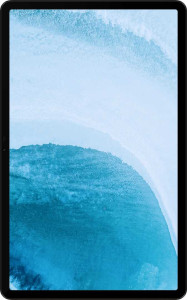
Blackview Mega 2
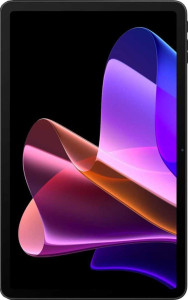
Honor Pad X9a

Blackview Mega 2 Honor Pad X9a

Overview

Welcome to our in-depth comparison of the Blackview Mega 2 and the Honor Pad X9a, two Android 15 tablets that take very different approaches to the mid-range market. From display sharpness and raw performance to camera versatility and connectivity options, these two devices each bring a distinct set of priorities to the table. Whether you care most about storage and RAM headroom or a sharper, more compact display, read on to see how every key specification stacks up side by side.

Common Features

  • Both tablets use an LCD IPS display type.
  • Neither tablet includes a stylus.
  • Neither tablet has a detachable keyboard.
  • Neither tablet has a backlit keyboard.
  • Neither tablet offers water resistance.
  • Neither tablet supports tilt sensitivity.
  • Neither tablet has branded damage-resistant glass.
  • Neither tablet supports HDR10.
  • Neither tablet supports HDR10+.
  • Both tablets have a touchscreen.
  • Neither tablet has a sapphire glass display.
  • Neither tablet has an e-paper display.
  • Both tablets support external memory via a memory card slot.
  • Both tablets support 64-bit processing.
  • Both tablets have integrated LTE.
  • Both tablets use big.LITTLE CPU technology.
  • Both tablets have integrated graphics.
  • Both tablets have 8 CPU threads.
  • Both tablets support TrustZone.
  • Both tablets run Android 15.
  • Both tablets have a front camera.
  • Both tablets have a built-in HDR photo mode.
  • Both tablets support manual white balance.
  • Both tablets support continuous autofocus during video recording.
  • Neither tablet has a front-facing LED flash.
  • Both tablets support manual ISO control.
  • Neither tablet has a timelapse function.
  • Neither tablet shoots 360° panoramas.
  • Both tablets have stereo speakers.
  • Neither tablet has a 3.5 mm audio jack.
  • Neither tablet has a radio.
  • Both tablets support fast charging.
  • Neither tablet supports wireless charging.
  • Both tablets have a battery level indicator.
  • Both tablets have a rechargeable, non-removable battery.
  • Both tablets support on-device machine learning.
  • Both tablets have clipboard warnings.
  • Both tablets offer location privacy options.
  • Both tablets offer camera and microphone privacy options.
  • Both tablets can block app tracking.
  • Neither tablet blocks cross-site tracking.
  • Both tablets support split-screen mode.
  • Both tablets use DDR4 memory.

Main Differences

  • Weight is 615 g on Blackview Mega 2 and 475 g on Honor Pad X9a.
  • Thickness is 8 mm on Blackview Mega 2 and 6.8 mm on Honor Pad X9a.
  • Width is 281.7 mm on Blackview Mega 2 and 267.3 mm on Honor Pad X9a.
  • Height is 177.2 mm on Blackview Mega 2 and 167.4 mm on Honor Pad X9a.
  • Volume is 399.34 cm³ on Blackview Mega 2 and 304.27 cm³ on Honor Pad X9a.
  • Screen size is 12″ on Blackview Mega 2 and 11.5″ on Honor Pad X9a.
  • Resolution is 2000 x 1200 px on Blackview Mega 2 and 2508 x 1504 px on Honor Pad X9a.
  • Pixel density is 194 ppi on Blackview Mega 2 and 254 ppi on Honor Pad X9a.
  • Internal storage is 256 GB on Blackview Mega 2 and 128 GB on Honor Pad X9a.
  • RAM is 12 GB on Blackview Mega 2 and 8 GB on Honor Pad X9a.
  • The chipset is Unisoc T615 on Blackview Mega 2 and Qualcomm Snapdragon 685 4G on Honor Pad X9a.
  • The GPU is Mali G57 on Blackview Mega 2 and Adreno 610 on Honor Pad X9a.
  • CPU speed is 2 x 1.8 & 6 x 1.6 GHz on Blackview Mega 2 and 4 x 2.8 & 4 x 1.9 GHz on Honor Pad X9a.
  • Geekbench 6 multi-core score is 1461 on Blackview Mega 2 and 1510 on Honor Pad X9a.
  • Geekbench 6 single-core score is 437 on Blackview Mega 2 and 473 on Honor Pad X9a.
  • Semiconductor size is 12 nm on Blackview Mega 2 and 6 nm on Honor Pad X9a.
  • GPU clock speed is 850 MHz on Blackview Mega 2 and 1260 MHz on Honor Pad X9a.
  • RAM speed is 1866 MHz on Blackview Mega 2 and 2133 MHz on Honor Pad X9a.
  • Maximum memory amount is 12 GB on Blackview Mega 2 and 16 GB on Honor Pad X9a.
  • Main camera resolution is 16 MP on Blackview Mega 2 and 8 MP on Honor Pad X9a.
  • Front camera resolution is 8 MP on Blackview Mega 2 and 5 MP on Honor Pad X9a.
  • A rear flash is present on Blackview Mega 2 but not available on Honor Pad X9a.
  • In-camera panorama creation is available on Honor Pad X9a but not on Blackview Mega 2.
  • Slow-motion video recording is supported on Honor Pad X9a but not on Blackview Mega 2.
  • A video light is present on Blackview Mega 2 but not available on Honor Pad X9a.
  • Battery capacity is 9000 mAh on Blackview Mega 2 and 8300 mAh on Honor Pad X9a.
  • A cellular module is present on Blackview Mega 2 but not available on Honor Pad X9a.
  • GPS is available on Blackview Mega 2 but not on Honor Pad X9a.
  • Download speed is 300 Mbit/s on Blackview Mega 2 and 390 Mbit/s on Honor Pad X9a.
  • Galileo navigation support is available on Blackview Mega 2 but not on Honor Pad X9a.
  • Voice commands are supported on Blackview Mega 2 but not on Honor Pad X9a.
  • Geekbench 5 single-core score is 357 on Blackview Mega 2 and 442 on Honor Pad X9a.
  • Geekbench 5 multi-core score is 1350 on Blackview Mega 2 and 1787 on Honor Pad X9a.
Specs Comparison
Blackview Mega 2

Blackview Mega 2

Honor Pad X9a

Honor Pad X9a

Design:
weight 615 g 475 g
thickness 8 mm 6.8 mm
width 281.7 mm 267.3 mm
height 177.2 mm 167.4 mm
volume 399.33792 cm³ 304.272936 cm³
Stylus included
Has a detachable keyboard
Has a backlit keyboard
water resistance None None
Has tilt sensitivity

The most striking difference between these two tablets in terms of design is weight and overall footprint. The Blackview Mega 2 weighs 615 g compared to the Honor Pad X9a's 475 g — a difference of 140 g that is very noticeable during extended handheld use. Whether reading, streaming, or gaming for long sessions, the Honor's lighter build reduces arm fatigue meaningfully. The Mega 2 is also physically larger in every dimension, with a greater width, height, and a volume of 399.34 cm³ versus 304.27 cm³ for the Honor — making the Mega 2 bulkier and less pocketable, while the X9a is more compact and easier to maneuver single-handed.

On thickness, the Mega 2 measures 8 mm against the X9a's 6.8 mm. That 1.2 mm gap is subtle to the eye but contributes to the cumulative bulk difference, and the Honor's slimmer profile generally feels more premium and modern in the hand. Neither device includes a stylus, detachable or backlit keyboard, tilt sensitivity, or any form of water resistance, so those categories offer no differentiation between the two.

In the Design category, the Honor Pad X9a holds a clear advantage. Its significantly lighter weight and more compact, slimmer form factor make it the better choice for users who prioritize portability and comfortable long-term handling. The Blackview Mega 2's larger dimensions may suit users who prefer a bigger canvas, but from a pure design and ergonomics standpoint, the Honor Pad X9a is the more refined and practical package.

Display:
screen size 12" 11.5"
resolution 2000 x 1200 px 2508 x 1504 px
pixel density 194 ppi 254 ppi
Display type LCD, IPS LCD, IPS
has branded damage-resistant glass
supports HDR10
has a touch screen
Has sapphire glass display
supports HDR10+
Has an e-paper display

Screen size slightly favors the Blackview Mega 2 at 12″ versus 11.5″ for the Honor Pad X9a, giving it a marginally larger canvas for media consumption and multitasking. However, that size advantage is quickly offset by a significant pixel density gap: the Honor X9a resolves at 254 ppi thanks to its 2508 x 1504 px resolution, while the Mega 2 manages only 194 ppi at 2000 x 1200 px. That 60 ppi difference is clearly perceptible — text appears sharper, fine details in images are more defined, and the overall viewing experience feels more polished on the Honor's panel.

Both devices use an LCD IPS panel, so neither benefits from the contrast ratios or power efficiency associated with OLED technology. Neither supports HDR10 or HDR10+, and neither features branded damage-resistant glass, placing them on equal footing across all those attributes. For everyday use — browsing, reading, video calls — both displays will perform adequately, but the Honor's sharper panel will be more comfortable for prolonged reading and detailed visual work.

In the Display category, the Honor Pad X9a has a clear edge. Its considerably higher pixel density makes a tangible real-world difference in sharpness and visual clarity, more than compensating for the Mega 2's slight size lead. Users who spend significant time reading text or consuming high-resolution content will find the Honor's screen noticeably more refined.

Performance:
internal storage 256GB 128GB
RAM 12GB 8GB
Chipset (SoC) name Unisoc T615 Qualcomm Snapdragon 685 4G
GPU name Mali G57 Adreno 610
CPU speed 2 x 1.8 & 6 x 1.6 GHz 4 x 2.8 & 4 x 1.9 GHz
Geekbench 6 result (multi) 1461 1510
Geekbench 6 result (single) 437 473
has an external memory slot
semiconductor size 12 nm 6 nm
Supports 64-bit
Has integrated LTE
Uses big.LITTLE technology
Has integrated graphics
GPU clock speed 850 MHz 1260 MHz
CPU threads 8 threads 8 threads
RAM speed 1866 MHz 2133 MHz
Has TrustZone
maximum memory amount 12GB 16GB
Android version Android 15 Android 15
OpenGL ES version 3.2 3.2
eMMC version 5.1 5.1
OpenCL version 2 2

Under the hood, these two tablets take notably different approaches. The Blackview Mega 2 runs on a Unisoc T615 built on a 12 nm process, while the Honor Pad X9a uses a Snapdragon 685 manufactured on a more modern 6 nm node. That process difference matters beyond raw clock speeds — the Honor's chip is architecturally more efficient, generating less heat and consuming less power under load. The CPU configuration reinforces this gap: the Snapdragon's performance cores run at 2.8 GHz versus the Unisoc's peak of 1.8 GHz, and this translates directly into snappier app launches, faster multitasking, and better responsiveness under sustained workloads. Geekbench 6 scores align with expectations — the Honor edges ahead in both single-core (473 vs 437) and multi-core (1510 vs 1461) results, confirming its CPU lead in real-world scenarios.

Graphics performance follows a similar pattern. The Honor's Adreno 610 GPU runs at 1260 MHz compared to the Mega 2's Mali G57 at 850 MHz — a substantial clock speed advantage that benefits gaming, UI rendering, and any GPU-accelerated workload. Where the Mega 2 pushes back is in raw memory configuration: it ships with 12 GB of RAM and 256 GB of storage, against the Honor's 8 GB RAM and 128 GB of internal storage. More RAM helps with aggressive multitasking and keeping more apps alive in the background, and the storage difference is meaningful for offline media or large app libraries. Both support microSD expansion, which softens the storage gap.

On balance, the Honor Pad X9a holds the performance edge where it counts most — processing efficiency, CPU throughput, GPU speed, and RAM bandwidth are all superior, underpinned by a more advanced chipset architecture. The Mega 2's higher RAM and storage allotment are genuine advantages for power users who juggle many apps or store large files locally, but those benefits do not outweigh the Honor's across-the-board computational lead for most use cases.
Cameras:
megapixels (main camera) 16 MP 8 MP
megapixels (front camera) 8MP 5MP
has a flash
has a front camera
has a built-in HDR mode
can create panoramas in-camera
supports slow-motion video recording
has manual white balance
has continuous autofocus when recording movies
Has a front-facing LED flash
has manual ISO
has a video light
Has timelapse function
Shoots 360° panorama
has built-in optical image stabilization
Has a dual-tone LED flash
has manual focus
Has a RGB LED flash
has manual exposure
has manual shutter speed

Camera hardware is one area where the Blackview Mega 2 holds a tangible lead. Its main rear sensor clocks in at 16 MP versus just 8 MP on the Honor Pad X9a, and the front-facing camera follows the same pattern at 8 MP against 5 MP. Higher megapixel counts on tablets are rarely the primary concern they are on smartphones, but the Mega 2's advantage means more detail when scanning documents, capturing whiteboards, or shooting in good light. The Mega 2 also includes a flash and a video light, giving it usable illumination in low-light scenarios — the Honor offers neither, leaving it essentially limited to well-lit environments for any photography or video needs.

The Honor Pad X9a counters with a couple of meaningful software-side advantages: it supports slow-motion video recording and in-camera panoramas, neither of which the Mega 2 offers. These are niche but genuinely useful features — panoramas are handy for capturing wide spaces like rooms or landscapes, and slow-motion can add creative value for video-oriented users. Both tablets share a solid set of manual controls including ISO, white balance, focus, and exposure, as well as continuous autofocus during video — so neither has an edge on manual shooting flexibility.

Overall, the Blackview Mega 2 has the stronger camera package for most users. Its higher-resolution sensors and the inclusion of a flash make it more versatile across a wider range of shooting conditions, which are the factors that matter most in everyday use. The Honor's slow-motion and panorama capabilities are welcome additions but do not overcome the Mega 2's fundamental hardware advantages in this category.

Audio:
has stereo speakers
has a socket for a 3.5 mm audio jack
Has a radio

Audio is a straightforward category here — both the Blackview Mega 2 and the Honor Pad X9a share an identical feature set. Each tablet includes stereo speakers, which is the most practically important audio spec for a tablet: stereo output provides a wider soundstage than mono, making media consumption, video calls, and casual gaming noticeably more immersive. Neither device includes a 3.5 mm headphone jack, so wired audio requires a USB-C adapter on both, and neither features an FM radio.

Given that the spec data is identical across every listed attribute, there is simply no differentiator to analyze between the two products in this group. Both make the same trade-offs and offer the same core capability.

This category is a complete tie. Users prioritizing wired headphone use should plan for an adapter regardless of which device they choose, and both will deliver equivalent stereo speaker experiences based on the available data.

Battery:
battery power 9000 mAh 8300 mAh
Supports fast charging
has wireless charging
has a battery level indicator
has a rechargeable battery
has a removable battery

Battery capacity is one of the few hardware categories where the Blackview Mega 2 pulls ahead, packing a 9000 mAh cell against the Honor Pad X9a's 8300 mAh. That 700 mAh difference represents roughly an 8% larger reservoir, which in practice could translate to an additional 30–60 minutes of screen-on time depending on workload and brightness settings. For users who rely on their tablet through long travel days or extended work sessions away from an outlet, that margin is a modest but real advantage.

Both devices support fast charging and share the same non-removable, rechargeable battery structure with no wireless charging on either side. Since no specific wattage figures are provided for fast charging, no conclusion can be drawn about which refills faster — only that both offer the feature. The shared absence of wireless charging is a common omission at this product tier and affects neither device's standing relative to the other.

The Blackview Mega 2 holds a narrow edge in this category purely on capacity. However, it is worth contextualizing: the Honor Pad X9a's more efficient 6 nm chipset — noted in the Performance group — may partially offset the raw mAh deficit in real-world endurance. Based strictly on the battery specs provided here, though, the Mega 2's larger cell gives it the advantage.

Connectivity & Features:
release date January 2025 March 2025
has Mail Privacy Protection
has on-device machine learning
has clipboard warnings
has location privacy options
has camera/microphone privacy options
can block app tracking
blocks cross-site tracking
supports split screen
has Live Text
has notification permissions
has full-page screenshots
has Quick Start
has theme customization
has Wi-Fi password sharing
has PiP
Can play games while they download
has an extra dim mode
can offload apps
has focus modes
has media picker
has dynamic theming
has dark mode
has battery health check
Has USB Type-C
has a cellular module
has 5G support
is a multi-user system
gets direct OS updates
has GPS
has a child lock
has an HDMI output
has NFC
Has a fingerprint scanner
Supports widgets
download speed 300 MBits/s 390 MBits/s
has a gyroscope
Is free and open source
Has offline voice recognition
has a compass
upload speed 150 MBits/s 150 MBits/s
supports Wi-Fi
Has sharing intents
Has customizable notifications
Uses 3D facial recognition
supports Galileo
has an accelerometer
has voice commands
Has an iris scanner
Has a built-in projector
supports Ethernet
Has an infrared sensor
Tracks the current position of a mobile device

Across the long list of software and privacy features in this group, the two tablets are remarkably well-matched — both support split screen, Picture-in-Picture, dark mode, dynamic theming, on-device machine learning, and a full suite of privacy controls. The meaningful divergence lies in hardware connectivity. The Blackview Mega 2 includes a cellular module with LTE, while the Honor Pad X9a is strictly Wi-Fi only. For users who need internet access on the go without relying on a smartphone hotspot, this is a significant real-world distinction — the Mega 2 can function as a fully independent connected device with its own SIM card.

Location capabilities further separate the two. The Mega 2 supports GPS and Galileo satellite positioning, while the Honor lacks both. This matters for navigation, location-based apps, and field use cases. The Honor counters on one front: its Wi-Fi download speed reaches 390 Mbits/s compared to the Mega 2's 300 Mbits/s, meaning it can pull data faster over a local network — useful for large file downloads or streaming in high-bandwidth environments. Upload speed is identical at 150 Mbits/s on both. The Mega 2 also includes offline voice recognition and voice commands, which the Honor lacks, adding a hands-free convenience layer the Honor cannot match.

Taken together, the Blackview Mega 2 has a clear advantage in this category. Its cellular connectivity, GPS, and Galileo support give it a level of real-world independence and location-awareness that the Honor simply cannot replicate. The Honor's faster Wi-Fi throughput is a useful but narrow counterpoint — it only applies when already connected to a network, making it a secondary consideration against the Mega 2's broader connectivity toolkit.

Miscellaneous:
Geekbench 5 result (single) 357 442
Geekbench 5 result (multi) 1350 1787
DDR memory version 4 4

The Geekbench 5 results in this group reinforce the performance picture established by the Geekbench 6 scores analyzed earlier. The Honor Pad X9a outpaces the Blackview Mega 2 by a meaningful margin in both tests: single-core scores of 442 vs 357 and multi-core scores of 1787 vs 1350. The multi-core gap is particularly telling — a difference of over 400 points represents roughly a 32% lead for the Honor, which is substantial enough to manifest in real-world tasks like rendering, background processing, and sustained multitasking workloads.

Single-core performance, reflected in the 442 vs 357 result, is arguably the more relevant metric for everyday responsiveness — it governs how quickly individual tasks like app launches, UI interactions, and web page rendering complete. The Honor's lead here confirms that its Snapdragon 685 consistently outclasses the Unisoc T615 in moment-to-moment use, not just in parallelized workloads. Both tablets use DDR4 memory, so there is no differentiation on that front.

The Honor Pad X9a holds a clear advantage in this group. Its Geekbench 5 results are consistently and significantly higher across both metrics, corroborating the same conclusion drawn from Geekbench 6 data — the Honor's chipset delivers demonstrably stronger computational performance than the Mega 2's across the board.

Comparison Summary & Verdict

After examining every specification, it becomes clear that these two tablets serve meaningfully different audiences. The Blackview Mega 2 stands out for users who need more from day one: its larger 256 GB storage and 12 GB RAM, bigger 9000 mAh battery, higher-resolution 16 MP main camera with a flash, and — critically — built-in cellular connectivity and GPS make it the stronger choice for users who need an always-connected, versatile device. The Honor Pad X9a, by contrast, wins decisively on refinement: its 254 ppi display is significantly sharper, its Snapdragon 685 chip delivers better benchmark scores and uses a more efficient 6 nm process, and its lighter 475 g body makes it far more comfortable to hold for extended sessions. Choose the Blackview Mega 2 if connectivity and capacity are your top priorities; choose the Honor Pad X9a if display quality, performance efficiency, and portability matter most.

Blackview Mega 2
Buy Blackview Mega 2 if...

Buy the Blackview Mega 2 if you need built-in cellular connectivity and GPS, want more storage and RAM out of the box, or rely on a higher-resolution camera with a flash.

Honor Pad X9a
Buy Honor Pad X9a if...

Buy the Honor Pad X9a if you prioritize a sharper display, a lighter and slimmer design, and a more efficient processor with stronger benchmark performance.