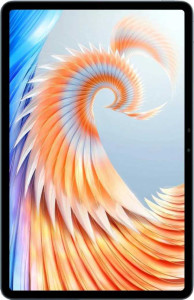
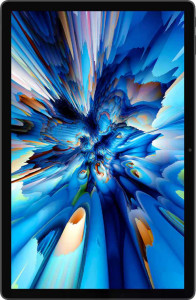
On paper, the Mega 8 offers a larger 13″ canvas versus the Mega 3's 12.1″, but the resolution tells a very different story. The Mega 3 packs a 2560 × 1600 px panel delivering 249 ppi, while the Mega 8 resolves only 1920 × 1200 px across its bigger screen — resulting in a noticeably softer 174 ppi. That 75 ppi gap is far from trivial: at typical tablet viewing distances, text edges, fine UI elements, and detailed images will appear meaningfully crisper on the Mega 3. For reading, document work, or any content where sharpness matters, the Mega 3's pixel density is a genuine everyday advantage.
Where the Mega 8 recovers some ground is with its anti-reflection coating, a feature the Mega 3 lacks entirely. In bright ambient conditions — near a window or outdoors — this coating reduces glare and diffuses light bouncing off the panel, keeping content legible where a bare glass surface would wash out. Neither tablet supports HDR10, Dolby Vision, or any advanced dynamic range format, and both use standard IPS LCD technology, so color volume and contrast depth are similarly constrained across the board.
The display advantage ultimately depends on use environment. For controlled indoor settings where sharpness is the priority, the Mega 3 wins clearly on pixel density alone. The Mega 8's anti-reflection coating offers a practical edge in high-glare scenarios, but it cannot compensate for a pixel density deficit this significant for detail-oriented tasks.