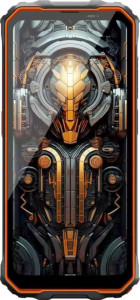
Blackview Oscal Marine 2
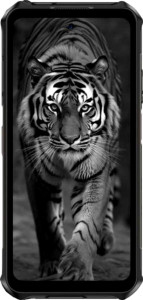
Ulefone Armor X16 Pro

Blackview Oscal Marine 2 Ulefone Armor X16 Pro

Common Features

  • Both products are waterproof.
  • Both products cannot be folded.
  • Both products use an LCD, IPS display.
  • Both products have a display resolution of 720 x 1612 px.
  • Both products feature branded damage-resistant glass on their displays.
  • Both products do not support HDR10.
  • Both products do not support HDR10+.
  • Both products do not have an Always-On Display.
  • Both products do not support Dolby Vision.
  • Both products do not have a secondary screen.
  • Both products have 256GB of internal storage.
  • Both products have 8GB of RAM.
  • Both products have integrated LTE support.
  • Both products support 64-bit processing.
  • Both products have integrated graphics.
  • Both products use big.LITTLE technology.
  • Both products have 8 CPU threads.
  • Both products have a maximum memory capacity of 12GB.
  • Both products do not have built-in optical image stabilization.
  • Both products do not have a dual-tone LED flash.
  • Both products have one flash LED.
  • Both products have a CMOS sensor.
  • Both products support continuous autofocus when recording movies.
  • Both products support phase-detection autofocus for photos.
  • Both products support slow-motion video recording.
  • Both products run Android 15.
  • Both products include clipboard warnings.
  • Both products provide location privacy options.
  • Both products include camera and microphone privacy options.
  • Both products do not have Mail Privacy Protection.
  • Both products allow theme customization.
  • Both products can block app tracking.
  • Both products do not block cross-site tracking.
  • Both products support fast charging.
  • Both products come with a charger.
  • Both products do not have a removable battery.
  • Both products have a battery level indicator.
  • Both products have a rechargeable battery.
  • Both products do not have stereo speakers.
  • Both products do not have aptX support.
  • Both products do not have LDAC support.
  • Both products do not have aptX HD support.
  • Both products do not have aptX Adaptive support.
  • Both products do not have aptX Lossless support.
  • Both products support Wi-Fi 4 (802.11n) and Wi-Fi 5 (802.11ac).
  • Both products support 2 SIM cards.
  • Both products have Bluetooth version 5.2.
  • Both products have an external memory slot.
  • Both products have USB Type-C.
  • Both products have NFC.
  • Both products have a fingerprint scanner.
  • Both products do not have emergency SOS via satellite.
  • Both products have a video light.
  • Both products do not have sapphire glass on their display.
  • Both products do not have a curved display.
  • Both products do not have an e-paper display.

Main Differences

  • Weight is 395 g on Blackview Oscal Marine 2 and 395.4 g on Ulefone Armor X16 Pro.
  • Thickness is 18.3 mm on Blackview Oscal Marine 2 and 18 mm on Ulefone Armor X16 Pro.
  • Width is 83.1 mm on Blackview Oscal Marine 2 and 83.4 mm on Ulefone Armor X16 Pro.
  • Height is 179.8 mm on Blackview Oscal Marine 2 and 173.8 mm on Ulefone Armor X16 Pro.
  • Volume is 273.427254 cm³ on Blackview Oscal Marine 2 and 260.90856 cm³ on Ulefone Armor X16 Pro.
  • Ingress Protection (IP) rating is IP68 on Blackview Oscal Marine 2 and IP69 on Ulefone Armor X16 Pro.
  • Screen size is 6.56″ on Blackview Oscal Marine 2 and 5.56″ on Ulefone Armor X16 Pro.
  • Pixel density is 269 ppi on Blackview Oscal Marine 2 and 318 ppi on Ulefone Armor X16 Pro.
  • Refresh rate is 90Hz on Blackview Oscal Marine 2 and 120Hz on Ulefone Armor X16 Pro.
  • Chipset (SoC) name is Unisoc T615 on Blackview Oscal Marine 2 and MediaTek Dimensity 6300 on Ulefone Armor X16 Pro.
  • GPU name is Mali G57 on Blackview Oscal Marine 2 and Arm Mali-G57 MC2 on Ulefone Armor X16 Pro.
  • CPU speed is 2 x 1.8 & 6 x 1.6 GHz on Blackview Oscal Marine 2 and 2 x 2.4 & 6 x 2 GHz on Ulefone Armor X16 Pro.
  • Geekbench 6 result (multi) is 1461 on Blackview Oscal Marine 2 and 2012 on Ulefone Armor X16 Pro.
  • Geekbench 6 result (single) is 437 on Blackview Oscal Marine 2 and 782 on Ulefone Armor X16 Pro.
  • GPU clock speed is 850 MHz on Blackview Oscal Marine 2 and 950 MHz on Ulefone Armor X16 Pro.
  • RAM speed is 1866 MHz on Blackview Oscal Marine 2 and 2133 MHz on Ulefone Armor X16 Pro.
  • Semiconductor size is 12 nm on Blackview Oscal Marine 2 and 6 nm on Ulefone Armor X16 Pro.
  • L3 cache is 1 MB on Blackview Oscal Marine 2 and 2 MB on Ulefone Armor X16 Pro.
  • Main camera megapixels are 16 MP on Blackview Oscal Marine 2 and 64 & 25 & 2 MP on Ulefone Armor X16 Pro.
  • Blackview Oscal Marine 2 does not have a dual-lens main camera while Ulefone Armor X16 Pro features a dual-lens main camera.
  • Front camera megapixels are 8MP on Blackview Oscal Marine 2 and 16MP on Ulefone Armor X16 Pro.
  • Main camera video recording is 1080 x 30 fps on Blackview Oscal Marine 2 and 1440 x 30 fps on Ulefone Armor X16 Pro.
  • Battery power is 11000 mAh on Blackview Oscal Marine 2 and 10360 mAh on Ulefone Armor X16 Pro.
  • Charging speed is 18W on Blackview Oscal Marine 2 and 33W on Ulefone Armor X16 Pro.
  • Blackview Oscal Marine 2 does not have a 3.5 mm audio jack while Ulefone Armor X16 Pro includes a 3.5 mm audio jack.
  • Blackview Oscal Marine 2 does not have a radio while Ulefone Armor X16 Pro has a radio.
  • 5G support is not available on Blackview Oscal Marine 2 but is present on Ulefone Armor X16 Pro.
  • Download speed is 300 MBits/s on Blackview Oscal Marine 2 and 3300 MBits/s on Ulefone Armor X16 Pro.
  • Blackview Oscal Marine 2 does not have an infrared sensor while Ulefone Armor X16 Pro includes an infrared sensor.
  • Blackview Oscal Marine 2 does not have a barometer while Ulefone Armor X16 Pro has a barometer.
Specs Comparison
Blackview Oscal Marine 2

Blackview Oscal Marine 2

Ulefone Armor X16 Pro

Ulefone Armor X16 Pro

Design:
water resistance Waterproof Waterproof
weight 395 g 395.4 g
thickness 18.3 mm 18 mm
width 83.1 mm 83.4 mm
height 179.8 mm 173.8 mm
volume 273.427254 cm³ 260.90856 cm³
Ingress Protection (IP) rating IP68 IP69
has a rugged build
can be folded

Both the Blackview Oscal Marine 2 and the Ulefone Armor X16 Pro are designed with waterproofing in mind, boasting water resistance features that make them suitable for various water-related activities. The Blackview model is rated IP68, while the Ulefone variant offers a slightly higher IP69 rating, indicating better resistance against dust and high-pressure water exposure.

In terms of size and weight, both devices are quite similar. The Blackview Oscal Marine 2 weighs 395 g, just slightly less than the Ulefone Armor X16 Pro, which weighs 395.4 g. The thickness of the two devices is also nearly identical, with the Blackview being 18.3 mm thick and the Ulefone at 18 mm. The width of the Blackview is 83.1 mm, a bit smaller compared to the Ulefone's 83.4 mm, while the height of the Blackview is 179.8 mm, and the Ulefone is shorter at 173.8 mm. In terms of volume, the Blackview's 273.43 cm³ is larger than the Ulefone's 260.91 cm³, reflecting the slight differences in size.

Both models lack a rugged build and do not have the ability to fold, which is similar between the two. Despite having similar physical specifications, the Ulefone's IP69 rating gives it a slight edge in terms of overall durability compared to the Blackview's IP68 rating.

Display:
Display type LCD, IPS LCD, IPS
screen size 6.56" 5.56"
pixel density 269 ppi 318 ppi
resolution 720 x 1612 px 720 x 1612 px
refresh rate 90Hz 120Hz
has branded damage-resistant glass
supports HDR10
supports HDR10+
Always-On Display
supports Dolby Vision
Has a secondary screen
has a touch screen

Both the Blackview Oscal Marine 2 and the Ulefone Armor X16 Pro feature LCD, IPS displays with a resolution of 720 x 1612 px, offering similar visual clarity. The Blackview model has a larger 6.56″ screen, while the Ulefone opts for a smaller 5.56″ display. Despite the size difference, both screens have the same resolution, which results in different pixel densities. The Blackview has a pixel density of 269 ppi, while the Ulefone achieves a higher 318 ppi, offering slightly sharper visuals.

The Blackview supports a refresh rate of 90Hz, while the Ulefone supports a faster 120Hz refresh rate, making its display potentially smoother for interactions and animations. Both devices feature branded damage-resistant glass, ensuring durability. Neither device supports HDR10, HDR10+, Dolby Vision, or an Always-On Display, and neither has a secondary screen.

Both the Blackview and Ulefone models are equipped with touchscreens, providing the usual tactile interface, but overall, the Ulefone offers a more compact and higher pixel density display, along with a faster refresh rate, while the Blackview leans toward a larger screen size.

Performance:
internal storage 256GB 256GB
RAM 8GB 8GB
Chipset (SoC) name Unisoc T615 MediaTek Dimensity 6300
GPU name Mali G57 Arm Mali-G57 MC2
CPU speed 2 x 1.8 & 6 x 1.6 GHz 2 x 2.4 & 6 x 2 GHz
Geekbench 6 result (multi) 1461 2012
Geekbench 6 result (single) 437 782
GPU clock speed 850 MHz 950 MHz
Has integrated LTE
RAM speed 1866 MHz 2133 MHz
semiconductor size 12 nm 6 nm
Supports 64-bit
Has integrated graphics
Uses big.LITTLE technology
CPU threads 8 threads 8 threads
maximum memory amount 12GB 12GB
uses multithreading
DDR memory version 4 4
L3 cache 1 MB 2 MB

Both the Blackview Oscal Marine 2 and the Ulefone Armor X16 Pro come with 256GB of internal storage and 8GB of RAM. The Blackview model is powered by the Unisoc T615 chipset with a Mali G57 GPU, offering a CPU with 2 cores running at 1.8 GHz and 6 cores at 1.6 GHz. In contrast, the Ulefone is equipped with the MediaTek Dimensity 6300 chipset, featuring a more powerful CPU with 2 cores running at 2.4 GHz and 6 cores at 2 GHz. The Blackview's CPU has a slightly lower clock speed compared to the Ulefone's faster 2.4 GHz cores.

In terms of performance benchmarks, the Ulefone performs significantly better. The Blackview scored 1461 in Geekbench 6 multi-core testing and 437 in single-core, while the Ulefone achieved 2012 in multi-core and 782 in single-core. The Ulefone also features a higher GPU clock speed of 950 MHz compared to the Blackview's 850 MHz, which could result in smoother graphical performance.

Other specs such as RAM speed, both devices support DDR4 memory, with the Blackview running at 1866 MHz and the Ulefone at 2133 MHz. The Ulefone’s semiconductor is built on a more advanced 6 nm process, compared to the Blackview’s 12 nm, which can contribute to more energy-efficient performance. Both devices support 64-bit architecture, big.LITTLE technology, multithreading, and can accommodate up to 12GB of RAM, with the Blackview’s L3 cache at 1MB and the Ulefone’s L3 cache at 2MB.

Cameras:
megapixels (main camera) 16 MP 64 & 25 & 2 MP
Has a dual-lens (or multi-lens) main camera
megapixels (front camera) 8MP 16MP
has built-in optical image stabilization
video recording (main camera) 1080 x 30 fps 1440 x 30 fps
Has a dual-tone LED flash
number of flash LEDs 1 1
has a BSI sensor
has a CMOS sensor
has continuous autofocus when recording movies
Has phase-detection autofocus for photos
supports slow-motion video recording
has a built-in HDR mode
has manual exposure
has a flash
optical zoom 0x 0x
has manual ISO
has a serial shot mode
has manual focus
has a front camera
Has laser autofocus
Shoots 360° panorama
has manual white balance
shoots raw
has touch autofocus
has manual shutter speed
can create panoramas in-camera
Has a front-facing LED flash
has a dual-lens (or multi-lens) front camera
supports HDR10 recording
supports Dolby Vision recording
has a front-facing camera under the display
Has a RGB LED flash
has 3D photo/video recording capabilities

The Blackview Oscal Marine 2 features a 16 MP main camera and an 8 MP front camera, while the Ulefone Armor X16 Pro comes with a more complex camera setup, featuring a 64 MP, 25 MP, and 2 MP triple-camera array on the back and a 16 MP front camera. Both phones lack built-in optical image stabilization and use CMOS sensors. They both support phase-detection autofocus for photos, continuous autofocus during video recording, and have manual control options like manual exposure, ISO, and white balance.

In terms of video recording, the Blackview supports 1080p at 30 fps, while the Ulefone supports a higher resolution of 1440p at 30 fps. Neither device has HDR10 or Dolby Vision recording capabilities, and both lack a front-facing LED flash. Both phones support slow-motion video recording, and neither offers raw photo shooting or 3D photo/video recording.

Other features like panorama creation, touch autofocus, and serial shot modes are available on both models. The Blackview does not have a dual-lens or multi-lens front camera, and neither device includes a front-facing camera under the display. Both phones lack laser autofocus and RGB LED flashes, and neither offers 360° panorama shooting. Overall, while both devices share many common features, the Ulefone stands out with its higher resolution main camera setup.

Operating system:
Android version Android 15 Android 15
has clipboard warnings
has location privacy options
has camera/microphone privacy options
has Mail Privacy Protection
has theme customization
can block app tracking
blocks cross-site tracking
has on-device machine learning
has notification permissions
has media picker
Can play games while they download
has dark mode
has Wi-Fi password sharing
has battery health check
has an extra dim mode
has focus modes
has dynamic theming
can offload apps
Has customizable notifications
has Live Text
has full-page screenshots
supports split screen
gets direct OS updates
has PiP
Can be used as a PC
Has sharing intents
has a child lock
Supports widgets
Is free and open source
Has offline voice recognition
has voice commands
Tracks the current position of a mobile device
is a multi-user system
has Quick Start

Both the Blackview Oscal Marine 2 and the Ulefone Armor X16 Pro run on Android 15 and offer a wide range of similar operating system features. Both devices support clipboard warnings, location privacy options, and camera/microphone privacy options, along with theme customization, blocking app tracking, and on-device machine learning. They also include features like notification permissions, a media picker, dark mode, battery health check, and an extra dim mode.

When it comes to multitasking, both phones support split screen, PiP (Picture-in-Picture), full-page screenshots, Live Text, and customizable notifications. They also offer widgets, voice commands, offline voice recognition, and can track the current position of the mobile device. Furthermore, both phones support a multi-user system and allow app offloading. Neither device supports Quick Start or gets direct OS updates.

In terms of privacy and control, both devices lack Wi-Fi password sharing and Mail Privacy Protection, while offering a child lock, dynamic theming, and the ability to block cross-site tracking. Both phones also support sharing intents. Notably, both models are free and open source, providing a customizable experience for users.

Battery:
battery power 11000 mAh 10360 mAh
has wireless charging
Supports fast charging
charging speed 18W 33W
comes with a charger
has a removable battery
has a battery level indicator
has a rechargeable battery

The Blackview Oscal Marine 2 and the Ulefone Armor X16 Pro both offer large batteries, with the Blackview model featuring a 11000 mAh battery and the Ulefone slightly behind with a 10360 mAh battery. Both phones support fast charging, but the Ulefone charges faster, supporting 33W compared to the Blackview’s 18W. Neither phone supports wireless charging, and both come with a charger included. Both models have non-removable batteries, a battery level indicator, and rechargeable batteries.

Despite the Blackview’s larger battery, the Ulefone’s faster charging speed may allow for quicker top-ups. Both phones share similar battery-related features, ensuring reliable power management, but the Blackview has a slightly higher capacity, while the Ulefone stands out for its faster charging capability.

Audio:
has a socket for a 3.5 mm audio jack
has stereo speakers
has aptX
has LDAC
has aptX HD
has aptX Adaptive
has aptX Lossless
Has a radio

The Blackview Oscal Marine 2 and the Ulefone Armor X16 Pro have distinct audio features. The Blackview does not have a 3.5 mm audio jack, while the Ulefone includes one, allowing for wired headphone use. Neither device is equipped with stereo speakers, and both lack support for aptX, LDAC, aptX HD, aptX Adaptive, or aptX Lossless, so there are no high-definition audio codecs supported on either model.

In terms of additional audio features, the Ulefone Armor X16 Pro is the only device to include a radio, a feature not available on the Blackview Oscal Marine 2. Both devices are limited in their audio capabilities but offer basic functionalities like wired audio connectivity (Ulefone) and standard sound quality.

Connectivity & Features:
release date May 2025 July 2025
has 5G support
Wi-Fi version Wi-Fi 4 (802.11n), Wi-Fi 5 (802.11ac) Wi-Fi 4 (802.11n), Wi-Fi 5 (802.11ac)
SIM cards 2 SIM 2 SIM
Bluetooth version 5.2 5.2
has an external memory slot
Has USB Type-C
has NFC
download speed 300 MBits/s 3300 MBits/s
Has a fingerprint scanner
has emergency SOS via satellite
has crash detection
is DLNA-certified
has a gyroscope
supports ANT+
Has a heart rate monitor
has GPS
has a compass
supports Wi-Fi
Has an infrared sensor
has an accelerometer
has a cellular module
Has a barometer
has an HDMI output
Uses 3D facial recognition
Has an iris scanner
Stylus included
supports Galileo
Has motion tracking
Has optical tracking
Has a built-in projector

The Blackview Oscal Marine 2 and the Ulefone Armor X16 Pro differ significantly in their connectivity and feature sets. The Blackview does not support 5G, whereas the Ulefone is 5G capable, offering faster download speeds of up to 3300 MBits/s compared to the Blackview’s 300 MBits/s. Both phones feature Wi-Fi 4 (802.11n) and Wi-Fi 5 (802.11ac) support, and both have dual SIM card slots, Bluetooth 5.2, and NFC.

In terms of additional sensors and features, the Ulefone includes an infrared sensor, a barometer, and supports motion tracking, none of which are present on the Blackview. However, both devices are equipped with a gyroscope, GPS, and a compass, and both have fingerprint scanners for security. Additionally, both phones include USB Type-C ports and external memory slots for added storage flexibility.

Neither device supports 3D facial recognition, iris scanning, or includes a stylus, and neither has an HDMI output or a built-in projector. The Blackview supports Galileo navigation, while the Ulefone shares this feature as well. Both phones lack emergency SOS via satellite, crash detection, and DLNA certification, but they have accelerometers for movement detection. Overall, while both phones share many similar features, the Ulefone stands out with additional sensors and 5G support for enhanced connectivity and capabilities.

Miscellaneous:
has a video light
Has sapphire glass display
Has a curved display
Has an e-paper display

Both the Blackview Oscal Marine 2 and the Ulefone Armor X16 Pro share similar miscellaneous features. Each device includes a video light, enhancing low-light video recording. Neither model features sapphire glass displays, curved displays, or e-paper displays. These features are absent from both devices, making their displays similar in terms of material and form factor.

Overall, the only common feature in this group between the two phones is the inclusion of a video light, while other display technologies like sapphire glass, curved screens, and e-paper are not present on either device.

Comparison Summary

This specification comparison examines the Blackview Oscal Marine 2 and Ulefone Armor X16 Pro, highlighting their shared and differing features. Both devices are waterproof, run Android 15, have 256GB internal storage with 8GB RAM, and support fast charging. The Blackview Oscal Marine 2 has a larger 6.56″ display at 269 ppi and a 16 MP main camera, while the Ulefone Armor X16 Pro has a smaller 5.56″ display at 318 ppi with a 64 & 25 & 2 MP main camera and 5G support. Battery capacity is 11000 mAh on the Blackview and 10360 mAh on the Ulefone, with charging speeds of 18W versus 33W. Additional differences include IP rating (IP68 vs IP69), CPU performance with Geekbench 6 results (1461/437 vs 2012/782), and presence of a 3.5 mm audio jack and radio on the Ulefone but not the Blackview.