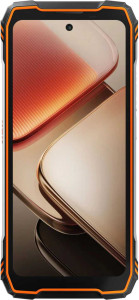
Blackview Xplore 1
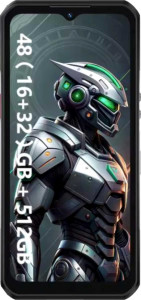
Oukitel WP62 5G

Blackview Xplore 1 Oukitel WP62 5G

Overview

Welcome to our in-depth comparison of the Blackview Xplore 1 and the Oukitel WP62 5G — two rugged, IP68-certified smartphones that share a surprising amount of common ground while diverging sharply in several key areas. Both devices target users who demand durability, but they take very different approaches when it comes to battery capacity, display technology, and overall form factor. Read on to see how these two tough competitors stack up across design, performance, cameras, and everyday usability.

Common Features

  • Both phones are waterproof with an IP68 ingress protection rating.
  • Both phones feature a rugged build.
  • Neither phone can be folded.
  • Both displays have a 120Hz refresh rate.
  • Both displays are protected by Gorilla Glass 5.
  • HDR10 support is not available on either product.
  • HDR10+ support is not available on either product.
  • Dolby Vision support is not available on either product.
  • Both phones have a touchscreen.
  • Both phones offer 512GB of internal storage and 16GB of RAM.
  • Both phones use a 6nm semiconductor and support 64-bit processing.
  • Both phones use MediaTek chipsets built on big.LITTLE technology with integrated LTE and integrated graphics.
  • Both phones support DirectX 12.
  • Both phones have a multi-lens main camera without optical image stabilization.
  • Neither phone has a BSI sensor, but both have a CMOS sensor.
  • Both phones support continuous autofocus during video recording and phase-detection autofocus for photos.
  • Both phones support slow-motion video recording.
  • Both phones run Android 15 with theme customization, clipboard warnings, location privacy options, and camera/microphone privacy controls.
  • App tracking can be blocked on both phones, but neither blocks cross-site tracking natively.
  • Fast charging is supported on both phones, and both come with a charger in the box.
  • Neither phone supports wireless charging or reverse wireless charging, and neither has a removable battery.
  • Both phones have a rechargeable battery with a battery level indicator.
  • Stereo speakers are not present on either phone.
  • Neither phone supports aptX, aptX HD, aptX Adaptive, aptX Lossless.
  • Both phones support 5G, dual SIM, Bluetooth 5.2, NFC, USB Type-C, external memory slot, and a fingerprint scanner.
  • Both phones share the same maximum download speed of 2770 MBits/s.
  • Both phones support Wi-Fi 4, Wi-Fi 5, and Wi-Fi 6.
  • A video light is present on both phones, but neither has a sapphire glass display, curved display, or e-paper display.

Main Differences

  • Weight is 638g on the Blackview Xplore 1 and 370g on the Oukitel WP62 5G.
  • Thickness is 29.5mm on the Blackview Xplore 1 and 15.3mm on the Oukitel WP62 5G.
  • Height is 184mm on the Blackview Xplore 1 and 172.2mm on the Oukitel WP62 5G.
  • Volume is 450.524 cm³ on the Blackview Xplore 1 and 213.40746 cm³ on the Oukitel WP62 5G.
  • The Blackview Xplore 1 uses an LCD IPS display while the Oukitel WP62 5G uses an OLED/AMOLED display.
  • Screen size is 6.78″ on the Blackview Xplore 1 and 6.58″ on the Oukitel WP62 5G.
  • A secondary screen is present on the Blackview Xplore 1 but not available on the Oukitel WP62 5G.
  • The Blackview Xplore 1 is powered by the MediaTek Dimensity 7050 while the Oukitel WP62 5G uses the MediaTek Dimensity 7025.
  • The GPU is a Mali G68 MP4 on the Blackview Xplore 1 and an IMG BXM-8-256 on the Oukitel WP62 5G.
  • CPU speed is 2 x 2.6 & 6 x 2 GHz on the Blackview Xplore 1 and 2 x 2.5 & 6 x 2 GHz on the Oukitel WP62 5G.
  • Geekbench 6 multi-core score is 2257 on the Blackview Xplore 1 and 2291 on the Oukitel WP62 5G.
  • Geekbench 6 single-core score is 936 on the Blackview Xplore 1 and 884 on the Oukitel WP62 5G.
  • GPU clock speed is 950 MHz on the Blackview Xplore 1 and 900 MHz on the Oukitel WP62 5G.
  • RAM speed is 3200 MHz on the Blackview Xplore 1 and 2750 MHz on the Oukitel WP62 5G.
  • Shading units total 64 on the Blackview Xplore 1 and 18 on the Oukitel WP62 5G.
  • Main camera resolution is 64 & 20 MP on the Blackview Xplore 1 and 108 & 8 & 2 MP on the Oukitel WP62 5G.
  • Front camera resolution is 50MP on the Blackview Xplore 1 and 32MP on the Oukitel WP62 5G.
  • The Blackview Xplore 1 has one flash LED while the Oukitel WP62 5G has none.
  • Front camera aperture is f/1.8 on the Blackview Xplore 1 and f/2.2 on the Oukitel WP62 5G.
  • Battery capacity is 20000 mAh on the Blackview Xplore 1 and 11000 mAh on the Oukitel WP62 5G.
  • Charging speed is 55W on the Blackview Xplore 1 and 33W on the Oukitel WP62 5G.
  • A 3.5mm audio jack is present on the Oukitel WP62 5G but not available on the Blackview Xplore 1.
  • LDAC support is present on the Oukitel WP62 5G but not available on the Blackview Xplore 1.
  • An FM radio is present on the Blackview Xplore 1 but not available on the Oukitel WP62 5G.
  • An infrared sensor is present on the Blackview Xplore 1 but not available on the Oukitel WP62 5G.
Specs Comparison
Blackview Xplore 1

Blackview Xplore 1

Oukitel WP62 5G

Oukitel WP62 5G

Design:
water resistance Waterproof Waterproof
weight 638 g 370 g
thickness 29.5 mm 15.3 mm
width 83 mm 81 mm
height 184 mm 172.2 mm
volume 450.524 cm³ 213.40746 cm³
Ingress Protection (IP) rating IP68 IP68
has a rugged build
can be folded

Both the Blackview Xplore 1 and the Oukitel WP62 5G share an identical protection profile — rugged builds with an IP68 waterproof rating — meaning neither has an edge when it comes to durability credentials on paper. In real-world terms, both can handle submersion and harsh environments equally well.

Where these two devices diverge dramatically is in physical footprint. The Xplore 1 weighs a substantial 638 g and measures 29.5 mm thick, resulting in a volume of over 450 cm³. The WP62 5G, by contrast, comes in at just 370 g and 15.3 mm thin — roughly half the volume at 213 cm³. A 268 g weight difference is not marginal: it is the equivalent of carrying an extra large smartphone in your pocket alongside the WP62 5G. The Xplore 1's bulk suggests it may house a significantly larger battery or more heavy-duty internal reinforcement, but that comes at a serious ergonomic cost for daily carry.

The Oukitel WP62 5G holds a clear advantage in this category for users who prioritize wearability and one-handed usability without sacrificing rugged protection. The Xplore 1 is better suited for specialized fieldwork where bulk is acceptable, but as an everyday carry device, its size and weight place it in a different — and less convenient — class.

Display:
Display type LCD, IPS OLED/AMOLED
screen size 6.78" 6.58"
pixel density 396 ppi 401 ppi
resolution 1080 x 2460 px 1080 x 2408 px
refresh rate 120Hz 120Hz
has branded damage-resistant glass
Gorilla Glass version Gorilla Glass 5 Gorilla Glass 5
supports HDR10
supports HDR10+
supports Dolby Vision
Has a secondary screen
has a touch screen

The most meaningful split between these two displays is panel technology. The Xplore 1 uses an IPS LCD, while the WP62 5G features an OLED/AMOLED panel — a difference that goes far beyond spec sheets. AMOLED delivers true blacks, higher contrast, and more vibrant colors because each pixel is self-emissive, whereas IPS relies on a backlight that limits contrast depth. For a rugged device used outdoors, AMOLED also tends to offer better visibility in direct sunlight at equivalent brightness levels.

On the metrics where they are comparable, the two are essentially matched: both run at 120Hz for smooth scrolling, both carry Gorilla Glass 5 for scratch and drop resistance, and pixel density is virtually identical at 396 ppi versus 401 ppi — a gap imperceptible to the human eye. The Xplore 1's screen is marginally larger at 6.78″ compared to 6.58″, which offers slightly more real estate but is unlikely to be a deciding factor on its own.

One genuinely unique feature of the Xplore 1 is its secondary screen — an addition that can surface notifications, time, or status information without waking the main display, which is a practical convenience in rugged field scenarios. Still, the overall display edge belongs to the Oukitel WP62 5G, purely on the strength of its AMOLED panel, which offers a superior everyday viewing experience that the Xplore 1's LCD cannot match regardless of its secondary screen bonus.

Performance:
internal storage 512GB 512GB
RAM 16GB 16GB
Chipset (SoC) name MediaTek Dimensity 7050 MediaTek Dimensity 7025
GPU name Mali G68 MP4 IMG BXM-8-256
CPU speed 2 x 2.6 & 6 x 2 GHz 2 x 2.5 & 6 x 2 GHz
Geekbench 6 result (multi) 2257 2291
Geekbench 6 result (single) 936 884
GPU clock speed 950 MHz 900 MHz
Has integrated LTE
RAM speed 3200 MHz 2750 MHz
semiconductor size 6 nm 6 nm
Supports 64-bit
DirectX version DirectX 12 DirectX 12
Has integrated graphics
Uses big.LITTLE technology
Has NX bit
Uses HMP
OpenCL version 2 2
memory channels 4 4
maximum memory amount 16GB 16GB
uses multithreading
DDR memory version 5 5
shading units 64 18

At the CPU level, the Xplore 1 (Dimensity 7050) and the WP62 5G (Dimensity 7025) are remarkably close. Both use a 6 nm process with identical big.LITTLE core configurations, and their Geekbench 6 scores reflect this — the Xplore 1 edges ahead in single-core (936 vs 884), while the WP62 5G marginally leads in multi-core (2291 vs 2257). In practice, these gaps are too small to feel in everyday tasks like browsing, multitasking, or running productivity apps. Both also share 16 GB of DDR5 RAM and 512 GB of storage, so memory capacity is a non-issue for either device.

The GPU comparison, however, tells a starkly different story. The Xplore 1's Mali G68 MP4 packs 64 shading units running at 950 MHz, compared to the WP62 5G's IMG BXM-8-256 with just 18 shading units at 900 MHz. Shading units are the workhorses of GPU rendering — more units mean the processor can handle more graphical operations in parallel. This translates directly to smoother frame rates in graphically demanding games and faster image processing tasks. The Xplore 1 also benefits from faster RAM at 3200 MHz versus 2750 MHz, which reduces memory latency and feeds the CPU and GPU data more efficiently under load.

Overall, the Blackview Xplore 1 holds a clear performance advantage, driven primarily by its substantially more capable GPU. For users who stick to calls, messaging, and light apps, both phones will feel nearly identical — but anyone pushing the device with gaming or media-intensive workloads will notice a meaningful difference in favor of the Xplore 1.

Cameras:
megapixels (main camera) 64 & 20 MP 108 & 8 & 2 MP
Has a dual-lens (or multi-lens) main camera
megapixels (front camera) 50MP 32MP
has built-in optical image stabilization
Has a dual-tone LED flash
number of flash LEDs 1 0
has a BSI sensor
has a CMOS sensor
has continuous autofocus when recording movies
Has phase-detection autofocus for photos
supports slow-motion video recording
has a built-in HDR mode
has manual exposure
has a flash
optical zoom 0x 0x
has manual ISO
has manual focus
has a front camera
Has laser autofocus
Shoots 360° panorama
has manual white balance
has touch autofocus
has manual shutter speed
can create panoramas in-camera
wide aperture (front camera) 1.8f 2.2f
Has timelapse function
Has a front-facing LED flash
has a dual-lens (or multi-lens) front camera
supports HDR10 recording
supports Dolby Vision recording
has a front-facing camera under the display
Has a RGB LED flash
has 3D photo/video recording capabilities

Rear camera hardware is where the WP62 5G makes its strongest argument. Its triple-lens system is anchored by a 108 MP main sensor, supported by 8 MP and 2 MP auxiliary lenses, versus the Xplore 1's dual setup topping out at 64 MP. Higher megapixel counts allow for greater detail retention when cropping shots and more flexibility in post-processing — a meaningful advantage for users who document fieldwork or want usable zoomed-in stills without optical zoom on either device.

Flip to the front, and the dynamic reverses. The Xplore 1 sports a 50 MP selfie camera with a notably wider f/1.8 aperture, compared to the WP62 5G's 32 MP shooter at f/2.2. A wider aperture lets in more light, which directly improves selfie quality in dim environments — a tangible everyday advantage for video calls and self-documentation in low-light conditions. Both cameras share the same feature set for controls — manual exposure, ISO, white balance, phase-detection autofocus, HDR, and timelapse — so neither holds an edge in shooting flexibility.

On balance, this category is split by use case. The Oukitel WP62 5G has the edge for rear photography thanks to its higher-resolution main sensor and triple-lens versatility, while the Blackview Xplore 1 leads on front camera quality with its higher megapixel count and brighter aperture. Users who prioritize rear imaging should lean toward the WP62 5G; those who frequently use the front camera will be better served by the Xplore 1.

Operating system:
Android version Android 15 Android 15
has clipboard warnings
has location privacy options
has camera/microphone privacy options
has Mail Privacy Protection
has theme customization
can block app tracking
blocks cross-site tracking
has on-device machine learning
has notification permissions
has media picker
Can play games while they download
has dark mode
has Wi-Fi password sharing
has battery health check
has an extra dim mode
has focus modes
has dynamic theming
can offload apps
Has customizable notifications
has Live Text
has full-page screenshots
supports split screen
gets direct OS updates
has PiP
Can be used as a PC
Has sharing intents
has a child lock
Supports widgets
Is free and open source
Has offline voice recognition
has voice commands
Tracks the current position of a mobile device
is a multi-user system
has Quick Start

Rarely does a spec group produce such a clear-cut result: the Blackview Xplore 1 and the Oukitel WP62 5G run an identical Android 15 software configuration across every single tracked feature. From privacy controls like location and camera/microphone permissions, to usability features like split-screen, Picture-in-Picture, dynamic theming, and offline voice recognition — there is no distinction between the two devices in this category whatsoever.

It is worth noting what both devices share as a baseline, since it reflects a capable and modern OS package. Android 15 brings on-device machine learning, granular app tracking controls, a media picker, and multi-user support — features that matter for both personal privacy and shared or enterprise device use. Neither phone, however, receives direct OS updates from Google, meaning future software support will depend entirely on each manufacturer's own update cadence.

This group is an absolute tie. No advantage can be assigned to either product based on the provided data, and the choice between the Xplore 1 and WP62 5G must rest entirely on the differences surfaced in other specification groups.

Battery:
battery power 20000 mAh 11000 mAh
has wireless charging
Supports fast charging
charging speed 55W 33W
has reverse wireless charging
comes with a charger
has a removable battery
has a battery level indicator
has a rechargeable battery

Battery capacity is where the Blackview Xplore 1 makes its most overwhelming statement. Its 20000 mAh cell is nearly double the WP62 5G's already generous 11000 mAh — and to put that in perspective, most flagship smartphones ship with batteries in the 4000–5000 mAh range. The Xplore 1's pack is essentially a built-in power bank, making it exceptionally well-suited for extended field deployments, remote work, or any scenario where access to a power outlet is limited or unpredictable.

The charging speed gap partially offsets this advantage. The Xplore 1 supports 55W fast charging versus the WP62 5G's 33W, which helps compensate for the sheer volume of energy that needs to be replenished in the larger battery. That said, even at 55W, fully topping up a 20000 mAh cell will take considerably longer than charging the WP62 5G's 11000 mAh battery at 33W. Neither device supports wireless or reverse wireless charging, so both are limited to wired top-ups only.

The Blackview Xplore 1 wins this category decisively. The near-doubling of battery capacity represents a fundamental difference in endurance potential — this is not a marginal gain but a category-defining advantage for users who need their device to last through multi-day use or demanding work environments without recharging.

Audio:
has a socket for a 3.5 mm audio jack
has stereo speakers
has aptX
has LDAC
has aptX HD
has aptX Adaptive
has aptX Lossless
Has a radio

Audio is a category where both devices make a meaningful trade-off, just in opposite directions. The WP62 5G retains a 3.5 mm headphone jack — an increasingly rare inclusion that rugged device users tend to appreciate, since it allows direct connection to wired headsets, earpieces, and audio equipment without adapters. The Xplore 1 omits this entirely, which may be a genuine inconvenience for users who rely on wired audio in the field.

On the wireless audio side, the WP62 5G supports LDAC, Sony's high-resolution Bluetooth codec capable of transmitting significantly more audio data than standard Bluetooth audio. For users pairing with compatible wireless headphones, this translates to noticeably higher fidelity playback. The Xplore 1 supports none of the premium wireless audio codecs listed. Neither device offers stereo speakers, so spatial audio from the built-in hardware is not a differentiator.

The one area where the Xplore 1 pulls ahead is its built-in FM radio — a practical feature in remote or emergency scenarios where streaming is not available. Taken together, this category splits on user priority: the Oukitel WP62 5G holds the stronger overall audio edge for most users thanks to its headphone jack and LDAC support, while the Xplore 1's radio is a niche but situationally valuable advantage.

Connectivity & Features:
release date August 2025 October 2025
has 5G support
Wi-Fi version Wi-Fi 4 (802.11n), Wi-Fi 5 (802.11ac), Wi-Fi 6 (802.11ax) Wi-Fi 4 (802.11n), Wi-Fi 6 (802.11ax), Wi-Fi 5 (802.11ac)
SIM cards 2 SIM 2 SIM
Bluetooth version 5.2 5.2
has an external memory slot
Has USB Type-C
has NFC
download speed 2770 MBits/s 2770 MBits/s
Has a fingerprint scanner
has emergency SOS via satellite
has crash detection
is DLNA-certified
has a gyroscope
supports ANT+
Has a heart rate monitor
has GPS
has a compass
supports Wi-Fi
Has an infrared sensor
has an accelerometer
has a cellular module
Has a barometer
has an HDMI output
Uses 3D facial recognition
Has an iris scanner
Stylus included
supports Galileo
Has motion tracking
Has optical tracking
Has a built-in projector

Connectivity parity between these two devices is striking. Both support 5G, Wi-Fi 6, Bluetooth 5.2, NFC, dual SIM, USB Type-C, and expandable storage — and both cap out at the same 2770 Mbits/s download speed. For day-to-day connectivity needs, whether that is fast network access, contactless payments, or peripheral pairing, users will experience no meaningful difference between the Xplore 1 and the WP62 5G.

Sensor loadouts are equally matched across the board — GPS with Galileo support, gyroscope, accelerometer, compass, and fingerprint scanner are present on both. The one exception is the Xplore 1's infrared sensor, which the WP62 5G lacks. An IR blaster lets the phone act as a universal remote for TVs, air conditioners, and other IR-controlled appliances — a small but genuinely useful convenience feature that some users actively seek out, and one that is increasingly uncommon even in the rugged device segment.

This category is very nearly a tie, but the Blackview Xplore 1 takes a narrow edge solely by virtue of its infrared sensor. For users who have no interest in IR functionality, the two phones are functionally identical in connectivity and features.

Miscellaneous:
has a video light
Has sapphire glass display
Has a curved display
Has an e-paper display

The Miscellaneous group offers no differentiation between these two devices. Both include a video light, and neither features a sapphire glass display, curved display, or e-paper display. Every data point in this category is identical, leaving no basis to assign an advantage to either product.

This is a complete tie. Any decision between the Blackview Xplore 1 and the Oukitel WP62 5G must be made on the strengths and trade-offs identified in the other specification groups.

Comparison Summary & Verdict

After examining every specification, it is clear that these two rugged phones serve distinct audiences. The Blackview Xplore 1 is purpose-built for users who need extreme endurance, thanks to its massive 20000 mAh battery with 55W fast charging, a secondary screen, an infrared sensor, and a significantly larger camera array with a 50MP front shooter — though its considerable bulk at 638g and 29.5mm thickness is a real trade-off. The Oukitel WP62 5G, on the other hand, delivers a far more pocketable and everyday-friendly experience with its lighter 370g frame, vibrant OLED display, 3.5mm audio jack, and LDAC Bluetooth audio support, while still offering a competitive 11000 mAh battery. Both phones run Android 15 and share identical storage, RAM, and connectivity fundamentals. Your choice ultimately comes down to whether you prioritize raw battery endurance and extra features or a sleeker, more portable rugged design.

Blackview Xplore 1
Buy Blackview Xplore 1 if...

Buy the Blackview Xplore 1 if you need an exceptionally long-lasting battery, a secondary display, and an infrared sensor in a feature-packed rugged phone and do not mind the extra size and weight.

Oukitel WP62 5G
Buy Oukitel WP62 5G if...

Buy the Oukitel WP62 5G if you want a lighter, slimmer rugged phone with an OLED screen, a 3.5mm audio jack, and LDAC audio support for a more comfortable everyday carry.