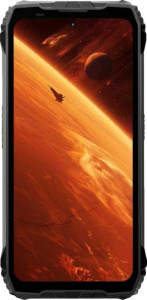
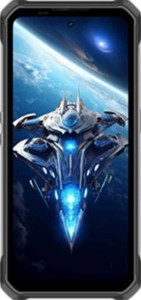
Shared foundations are strong here — both phones offer 5G, identical Wi-Fi support up to Wi-Fi 6E, dual SIM, NFC, USB-C, expandable storage, and a full suite of navigation sensors including GPS, compass, gyroscope, and Galileo support. That said, several meaningful differentiators emerge on closer inspection. The Xplore 2 5G's cellular modem delivers significantly higher peak speeds — 7,900 Mbps download versus the WP100 Titan's 3,270 Mbps — which matters for users transferring large files or operating on congested 5G networks. Its USB 3.0 port also enables much faster wired data transfers compared to the WP100's USB 2.0, a practical advantage when offloading photos, videos, or field data to a laptop.
The WP100 Titan counters with one genuinely unique feature: a built-in projector. For fieldwork presentations, briefings, or sharing content without an external screen, this is a standout capability that the Xplore 2 simply cannot replicate. The WP100 also carries a marginally newer Bluetooth 5.4 versus the Xplore 2's 5.3, though the real-world difference between these versions is negligible. In the other direction, the Xplore 2 adds an infrared sensor and a barometer — the former enabling use as a universal remote, the latter providing altitude and atmospheric pressure readings useful for outdoor and environmental work.
This category is split by use case. The Xplore 2 holds the broader connectivity edge — faster data speeds, USB 3.0, and more sensor depth — making it stronger for data-intensive fieldwork. The WP100's built-in projector is a singular feature that may be decisive for users who need on-site presentation capability, but as a general connectivity package, the Xplore 2 is better equipped.