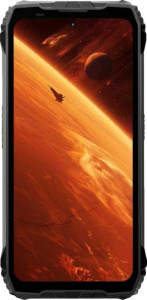
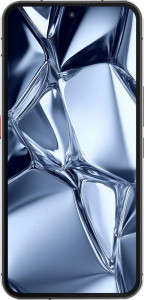
The most striking difference between these two phones is sheer physicality. The Blackview Xplore 2 5G is a genuinely massive device — weighing 670 g at 29 mm thick, it is more than twice as heavy as the Oukitel WP200 Pro's 311 g and more than twice as thick at 13.7 mm. With a volume of roughly 473.6 cm³ versus 174.5 cm³, the Xplore 2 5G displaces nearly three times the space. In practical terms, the Xplore 2 5G will feel substantial and demanding in-pocket or in-hand, while the WP200 Pro, despite being a larger-than-average phone, remains far closer to everyday carry norms.
On water resistance, both phones share a 1.5 m waterproof depth rating, but the Xplore 2 5G holds an IP69 certification versus the WP200 Pro's IP68. This is a meaningful distinction: IP69 adds protection against high-pressure, high-temperature water jets — a scenario relevant in industrial or outdoor environments where a simple submersion rating is not enough. Additionally, the Xplore 2 5G is explicitly certified as a rugged build, while the WP200 Pro is not, suggesting the Xplore 2 5G is engineered to absorb drops, vibration, and mechanical stress beyond what a standard handset endures.
For users who need a true workhorse in demanding environments — construction, field work, or extreme outdoor use — the Blackview Xplore 2 5G holds a clear design edge thanks to its superior IP69 rating and certified rugged construction. However, for anyone prioritizing portability and day-to-day wearability while still wanting solid water resistance, the Oukitel WP200 Pro is the decisive winner: its dramatically lower weight and slimmer profile make it far more practical as an everyday device.