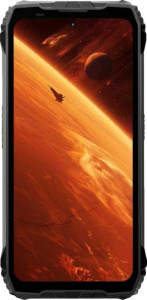
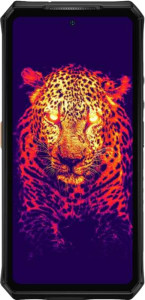
The chipset gap between these two devices is significant. The Xplore 2 5G runs on a MediaTek Dimensity 8300, a higher-tier processor, while the Armor 28 Pro uses the Dimensity 7300, a mid-range offering. This hierarchy is confirmed by Geekbench 6 scores: the Xplore 2 5G leads in both single-core (1485 vs 1026) and multi-core (4610 vs 2932) results, reflecting a clear real-world advantage in CPU-intensive tasks like app launches, multitasking, and processing-heavy workloads. The AnTuTu scores run counter to this — the Armor 28 Pro records 2,300,000 against the Xplore 2 5G's 1,479,000 — presenting a split benchmark picture users should weigh carefully.
Beyond raw processing, the Xplore 2 5G holds meaningful advantages in memory and graphics. Its RAM operates at 8533 MHz versus 6400 MHz on the Armor 28 Pro, enabling faster data throughput between processor and memory. Its GPU also clocks in at 1400 MHz compared to 1047 MHz, suggesting better graphical performance for gaming or GPU-accelerated tasks. The Xplore 2 5G further supports up to 24GB maximum memory versus the Armor 28 Pro's ceiling of 16GB, and doubles the internal storage at 1024GB vs 512GB.
On most measurable axes — CPU benchmarks, GPU clock speed, RAM throughput, maximum memory, and storage capacity — the Blackview Xplore 2 5G holds a clear performance edge. The Armor 28 Pro's higher AnTuTu score introduces some ambiguity, but the weight of evidence across Geekbench, GPU, and memory specs firmly favors the Xplore 2 5G for users who prioritize sustained processing power and headroom for demanding applications.