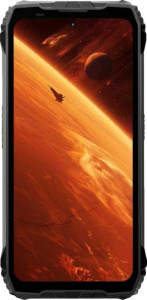
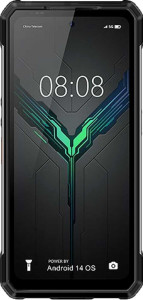
Wireless performance is where the Xplore 2 5G pulls significantly ahead. Its support for Wi-Fi 6E unlocks the 6 GHz band — less congested and capable of higher throughput than the Wi-Fi 5 ceiling on the Armor 34 Pro. The cellular speed gap is even more pronounced: the Xplore 2 5G supports download speeds up to 7900 Mbits/s versus the Armor 34 Pro's 3270 Mbits/s, and upload speeds of 4200 Mbits/s against a capped 3270 Mbits/s on the Armor 34 Pro. In 5G-rich environments, this translates to faster large file transfers, lower latency, and more headroom for data-heavy field applications.
The Armor 34 Pro edges ahead on Bluetooth 5.4 versus 5.3 on the Xplore 2 5G — a minor but real improvement in connection stability and efficiency for peripherals. Its most distinctive hardware feature, however, is a built-in projector, absent on the Xplore 2 5G entirely. For presenting content in the field without additional equipment — briefings, site walkthroughs, or training scenarios — this is a genuinely unique capability that no spec sheet number can fully capture.
The shared foundation is strong on both sides: dual SIM, NFC, fingerprint scanner, GPS with Galileo, barometer, infrared sensor, and expandable storage are all present across the board, giving both phones a well-rounded connectivity toolkit for professional use. Overall, the Xplore 2 5G holds the broader connectivity edge through superior Wi-Fi and cellular speeds, but the Armor 34 Pro's built-in projector is a niche differentiator that could be the deciding factor for specific deployment scenarios.