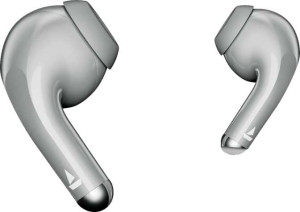
boAt Airdopes 101 v2
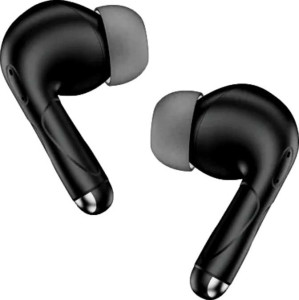
boAt Airdopes 212

boAt Airdopes 101 v2 boAt Airdopes 212

Overview

When it comes to budget-friendly true wireless earbuds, boAt Airdopes 101 v2 and boAt Airdopes 212 are two compelling options from the same brand. Both share a solid foundation — IPX4 sweat resistance, Bluetooth 5.4, fast charging, and noise-canceling microphones — yet they diverge in areas that truly matter to everyday listeners, including battery endurance, driver size, audio latency, and fit style. Read on to see how every specification compares.

Common Features

  • Both products have an IPX4 ingress protection rating.
  • Both products are sweat resistant.
  • Both products are fully wireless with no wires or cables.
  • Neither product is a neckband earbud style.
  • Neither product includes wingtips.
  • Neither product has RGB lighting.
  • Both products have stereo speakers.
  • Neither product has a UV light.
  • Neither product has active noise cancellation.
  • Both products have passive noise reduction.
  • Both products share a frequency range of 20 Hz to 20000 Hz.
  • Neither product supports spatial audio.
  • Neither product has Dolby Atmos.
  • Neither product has a neodymium magnet.
  • Neither product supports wireless charging.
  • Neither product has a solar power battery.
  • Both products have a battery level indicator.
  • Both products have a rechargeable battery.
  • Neither product has fast pairing.
  • Both products have a USB Type-C port.
  • Both products use Bluetooth version 5.4.
  • Neither product has LDAC, LDHC, Bluetooth LE Audio, aptX Adaptive, or aptX Low Latency support.
  • Neither product has an ambient sound mode.
  • Neither product has in/on-ear detection.
  • Neither product has a find device feature.
  • Both products support fast charging.
  • Neither product can read notifications.
  • Neither product has a built-in translator.
  • Both products have a mute function.
  • Both products can be used as a headset.
  • Both products have a noise-canceling microphone.

Main Differences

  • The fit style is earbud on boAt Airdopes 101 v2 and in-ear on boAt Airdopes 212.
  • The driver unit size is 13 mm on boAt Airdopes 101 v2 and 10 mm on boAt Airdopes 212.
  • Battery life is 7 hours on boAt Airdopes 101 v2 and 8 hours on boAt Airdopes 212.
  • Battery life of the charging case is 28 hours on boAt Airdopes 101 v2 and 42 hours on boAt Airdopes 212.
  • Charge time is 0.75 hours on boAt Airdopes 101 v2 and 0.5 hours on boAt Airdopes 212.
  • Earbud battery power is 30 mAh on boAt Airdopes 101 v2 and 25 mAh on boAt Airdopes 212.
  • Charging case battery power is 300 mAh on boAt Airdopes 101 v2 and 220 mAh on boAt Airdopes 212.
  • Audio latency is 50 ms on boAt Airdopes 101 v2 and 45 ms on boAt Airdopes 212.
  • The number of microphones is 5 on boAt Airdopes 101 v2 and 4 on boAt Airdopes 212.
Specs Comparison
boAt Airdopes 101 v2

boAt Airdopes 101 v2

boAt Airdopes 212

boAt Airdopes 212

Design:
Fit Earbud In-ear
Ingress Protection (IP) rating IPX4 IPX4
water resistance Sweat resistant Sweat resistant
has no wires or cables
are neckband earbuds
wingtips included
has RGB lighting
has stereo speakers
has UV light
Has a display

The most meaningful design difference between the boAt Airdopes 101 v2 and the boAt Airdopes 212 lies in their fit style. The 101 v2 uses an Earbud fit, meaning the driver housing rests at the entrance of the ear canal without creating a deep seal, while the 212 adopts an In-ear fit, which uses silicone tips to create a tighter seal inside the canal. In practice, this distinction matters: in-ear designs typically offer better passive noise isolation and a more secure fit during physical activity, whereas classic earbuds tend to feel less fatiguing over long sessions but may let in more ambient sound.

Beyond fit, the two products are essentially identical on every other design dimension provided. Both carry an IPX4 rating, meaning they can withstand sweat and light water splashes from any direction — sufficient for workouts but not submersion. Both are fully wireless with no cables or neckband, neither includes wingtips for extra ear stability, and neither features RGB lighting or a display. These shared attributes place them in the same broad product category and usage tier.

The Airdopes 212 holds a clear design edge for users who prioritize noise isolation and a locked-in feel, thanks to its in-ear fit. The Airdopes 101 v2 may appeal to those who prefer the lighter, less occlusive feel of a traditional earbud. All other design factors being equal, the choice here comes down entirely to personal fit preference.

Sound quality:
has active noise cancellation (ANC)
has passive noise reduction
driver unit size 13 mm 10 mm
lowest frequency 20 Hz 20 Hz
highest frequency 20000 Hz 20000 Hz
supports spatial audio
has Dolby Atmos
has Dirac Virtuo
has a neodymium magnet

The standout differentiator in this group is driver size. The Airdopes 101 v2 packs a 13 mm driver, while the Airdopes 212 uses a 10 mm unit. A larger driver moves more air, which generally translates to stronger bass reproduction and greater overall volume headroom. That said, driver size alone does not guarantee superior sound — tuning, diaphragm material, and enclosure design all play significant roles — but among budget earbuds at a similar price tier, the larger driver is a meaningful specification advantage.

Where the two converge is on frequency range: both cover the standard 20 Hz – 20,000 Hz span, matching the full range of human hearing on paper. Neither product offers active noise cancellation, spatial audio, Dolby Atmos, or any premium audio processing feature. Both rely solely on passive noise reduction — meaning the physical fit of the earbud in the ear provides whatever isolation is available, with no electronic assistance.

On sound quality specs, the Airdopes 101 v2 holds a measurable edge purely on the basis of its larger driver, which gives it a theoretical advantage in bass depth and loudness. The 212 is not at a dramatic disadvantage, but with all other audio specifications being equal, the 101 v2 presents the stronger case for users who prioritize low-end presence and driver-driven dynamics.

Power:
Battery life 7 hours 8 hours
Battery life of charging case 28 hours 42 hours
charge time 0.75 hours 0.5 hours
battery power 30 mAh 25 mAh
battery power (charging case) 300mAh 220mAh
has wireless charging
Has a solar power battery
has a battery level indicator
has a rechargeable battery

A curious paradox defines this power comparison. The Airdopes 101 v2 carries larger batteries — 30 mAh per earbud and 300 mAh in the case — yet delivers less runtime than the Airdopes 212, which runs on 25 mAh earbuds and a 220 mAh case. This suggests the 212 is more power-efficient in its internal design, squeezing more playback out of fewer milliamp-hours. Raw battery capacity, in other words, does not tell the whole story.

When it comes to real-world endurance, the 212 pulls ahead on every meaningful metric. It delivers 8 hours of continuous playback versus the 101 v2's 7 hours, and its total combined stamina — earbud plus case — reaches 42 hours compared to 28 hours. That 14-hour gap is substantial for heavy users who rely on the case for top-ups throughout the week. The 212 also charges faster at 0.5 hours versus 0.75 hours, a small but welcome convenience. Neither model supports wireless charging, and both include a battery level indicator.

The Airdopes 212 is the clear winner in this group. It lasts longer per charge, stores significantly more total energy across its ecosystem, and refuels more quickly — making it the stronger choice for users who prioritize uninterrupted, low-maintenance listening.

Connectivity:
has fast pairing
Has USB Type-C
Bluetooth version 5.4 5.4
has LDAC
has LDHC
has Bluetooth LE Audio
has aptX Adaptive
has aptX Low Latency
has aptX HD
has aptX
has aptX Lossless
audio latency 50 ms 45 ms
has aptX Voice
has Auracast
maximum Bluetooth range 10 m 10 m
supports Bluetooth pairing using NFC
Can be used wirelessly
has AAC

Connectivity is largely a draw between these two, with one minor but notable exception. Both earbuds run on Bluetooth 5.4 — a modern standard that offers stable connections, improved energy efficiency, and a 10 m wireless range. Neither supports advanced audio codecs like LDAC, aptX, or AAC, which means both rely on the standard SBC codec for transmission. At this price tier, that is expected, and it places them on equal footing for everyday streaming from phones and tablets.

The only differentiator here is audio latency. The Airdopes 212 edges ahead with a quoted 45 ms latency versus the 101 v2's 50 ms. In isolation, a 5 ms gap is unlikely to be perceptible during music playback, but for gaming or video watching — where audio-visual sync is more critical — lower latency is directionally preferable. It is a slim margin, but it favors the 212. Both products charge via USB Type-C and lack fast pairing, NFC, and Auracast support.

Given how closely matched these two are across nearly every connectivity dimension, the Airdopes 212 holds a marginal edge on latency alone. For users whose primary use case is casual music listening, this distinction will be imperceptible in practice, making connectivity effectively a tie for most people.

Features:
release date July 2025 July 2025
has ambient sound mode
has in/on-ear detection
has find device feature
Supports fast charging
can read notifications
Has a built-in translator
has a mute function
can be used as a headset
control panel placed on a device
Has voice prompts
travel bag is included
Has an in-line control panel
Has a temperature sensor
Has a built-in camera remote control function

Rarely does a comparison yield such a clean result: across every single feature in this group, the boAt Airdopes 101 v2 and the boAt Airdopes 212 are identical. Both support fast charging, include on-device touch controls, offer voice prompts, carry a mute function, and can function as a headset for calls. Both also come packaged with a travel bag — a small but appreciated inclusion at this price point.

Neither product offers more advanced conveniences such as ambient sound mode, in-ear detection, or a find-my-device function. These omissions are consistent with their positioning as entry-level true wireless earbuds, and the absence of these features is not a surprise. What they do offer — fast charging, call capability, and tactile controls — covers the practical essentials that most everyday users actually rely on.

This group is an unambiguous tie. There is no feature present in one product that is absent in the other, meaning the feature set provides zero basis for choosing one over the other. Decisions should rest entirely on the differentiators found in other specification groups.

Microphone:
number of microphones 5 4
has a noise-canceling microphone

Call quality comes down to microphone count here, and the Airdopes 101 v2 takes a clear lead with 5 microphones versus the Airdopes 212's 4 microphones. More microphones enable more sophisticated beamforming — the process by which a device isolates the speaker's voice and suppresses surrounding noise. In noisy environments like busy streets or open offices, that extra mic can contribute to more consistent voice pickup and cleaner call audio on the receiving end.

Both earbuds do share noise-canceling microphone technology, which means neither is operating with a purely basic setup. The foundation is solid on both sides, and for quiet or moderately noisy environments, the practical difference may be minimal. The gap becomes more relevant when call conditions are challenging and the microphone array needs to work harder to separate voice from background noise.

The Airdopes 101 v2 holds the edge in this group. One additional microphone is not a dramatic leap, but it represents a structural advantage in voice capture that is directionally meaningful — particularly for users who take frequent calls in demanding acoustic conditions.

Comparison Summary & Verdict

Both the boAt Airdopes 101 v2 and boAt Airdopes 212 cover the essentials well, sharing IPX4 sweat resistance, Bluetooth 5.4, fast charging support, and noise-canceling microphones. Yet the differences shape two distinct use cases. The boAt Airdopes 212 stands out for endurance-focused listeners, offering 8 hours of playback and an impressive 42-hour charging case, paired with a quicker 0.5-hour charge time and marginally lower latency of 45 ms. The boAt Airdopes 101 v2, meanwhile, counters with a larger 13 mm driver and a 5-microphone array, appealing to those who prioritize audio richness and superior call clarity. In short, pick the 212 for all-day battery freedom, and pick the 101 v2 if a bigger driver and more microphones top your checklist.

boAt Airdopes 101 v2
Buy boAt Airdopes 101 v2 if...

Buy the boAt Airdopes 101 v2 if you want a larger 13 mm driver for richer audio reproduction and a 5-microphone setup for clearer, more detailed call quality.

boAt Airdopes 212
Buy boAt Airdopes 212 if...

Buy the boAt Airdopes 212 if long battery life is your priority — it delivers 8 hours of playback, a 42-hour charging case, and a faster 0.5-hour charge time for uninterrupted use on the go.