boAt Airdopes 131 Gen 2
boAt Airdopes 148 Gen 2

boAt Airdopes 131 Gen 2 boAt Airdopes 148 Gen 2

Overview

Welcome to our in-depth specification comparison between the boAt Airdopes 131 Gen 2 and the boAt Airdopes 148 Gen 2. Both earbuds share a strong foundation — Bluetooth 5.4, fast charging, a 4-microphone setup, and noise-canceling mic support — but they diverge in areas that matter most to everyday listeners, including battery endurance, driver size, and passive noise reduction. Read on to see which model best fits your lifestyle and listening needs.

Common Features

  • Both products have an IPX4 ingress protection rating.
  • Neither product has any wires or cables.
  • Neither product is a neckband earbud design.
  • Neither product includes wingtips.
  • Neither product has RGB lighting.
  • Both products have stereo speakers.
  • Neither product has a UV light.
  • Neither product has a display.
  • Neither product has active noise cancellation (ANC).
  • Both products have a lowest frequency of 20 Hz and a highest frequency of 20000 Hz.
  • Neither product supports spatial audio.
  • Neither product has Dolby Atmos.
  • Neither product has a neodymium magnet.
  • Both products have a battery power of 40 mAh.
  • Neither product supports wireless charging.
  • Neither product has a solar power battery.
  • Both products have a battery level indicator.
  • Both products have a rechargeable battery.
  • Neither product supports fast pairing.
  • Both products have USB Type-C connectivity.
  • Both products use Bluetooth version 5.4.
  • Neither product supports LDAC, LDHC, Bluetooth LE Audio, aptX Adaptive, or aptX Low Latency.
  • Neither product has an ambient sound mode.
  • Neither product has in/on-ear detection.
  • Neither product has a find device feature.
  • Both products support fast charging.
  • Neither product can read notifications.
  • Neither product has a built-in translator.
  • Both products have a mute function.
  • Both products can be used as a headset.
  • Both products have 4 microphones.
  • Both products have a noise-canceling microphone.

Main Differences

  • Fit type is Earbud on boAt Airdopes 131 Gen 2 and In-ear on boAt Airdopes 148 Gen 2.
  • Water resistance is present on boAt Airdopes 131 Gen 2 (sweat resistant) but not available on boAt Airdopes 148 Gen 2.
  • Passive noise reduction is available on boAt Airdopes 148 Gen 2 but not available on boAt Airdopes 131 Gen 2.
  • Driver unit size is 13 mm on boAt Airdopes 131 Gen 2 and 10 mm on boAt Airdopes 148 Gen 2.
  • Battery life is 10 hours on boAt Airdopes 131 Gen 2 and 8 hours on boAt Airdopes 148 Gen 2.
  • Battery life of the charging case is 60 hours on boAt Airdopes 131 Gen 2 and 40 hours on boAt Airdopes 148 Gen 2.
  • Charge time is 0.6 hours on boAt Airdopes 131 Gen 2 and 0.5 hours on boAt Airdopes 148 Gen 2.
  • Charging case battery power is 650 mAh on boAt Airdopes 131 Gen 2 and 450 mAh on boAt Airdopes 148 Gen 2.
Specs Comparison
boAt Airdopes 131 Gen 2

boAt Airdopes 131 Gen 2

boAt Airdopes 148 Gen 2

boAt Airdopes 148 Gen 2

Design:
Fit Earbud In-ear
Ingress Protection (IP) rating IPX4 IPX4
water resistance Sweat resistant None
has no wires or cables
are neckband earbuds
wingtips included
has RGB lighting
has stereo speakers
has UV light
Has a display

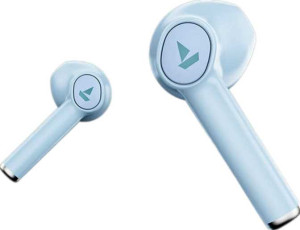
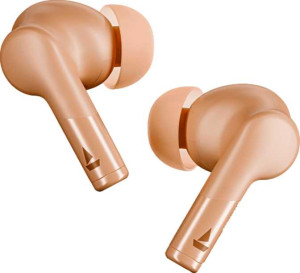
The most meaningful design difference between these two earbuds lies in their fit style. The boAt Airdopes 131 Gen 2 uses an earbud fit, meaning it rests at the entrance of the ear canal without sealing it, while the boAt Airdopes 148 Gen 2 uses an in-ear fit, where a silicone tip creates a seal inside the canal. In real-world use, this matters significantly: in-ear designs typically provide better passive noise isolation and a more secure fit during physical activity, whereas earbud-style designs feel less intrusive and are more comfortable for extended wear but let in more ambient sound.

On water resistance, both carry an IPX4 rating, but there is a critical distinction in how it is applied. The Airdopes 131 Gen 2 is rated as sweat resistant, meaning it has been tested against perspiration specifically. The Airdopes 148 Gen 2, despite sharing the same IPX4 rating, lists water resistance as None — suggesting the rating may apply only to incidental splash protection and that the product is not positioned for sweat-intensive use. For gym or workout use cases, this gives the 131 Gen 2 a practical edge.

In all other design respects — both are fully wireless, neither features neckband design, RGB lighting, a display, UV light, or wingtips, and both deliver stereo audio — they are evenly matched. Overall, the Airdopes 148 Gen 2 has an advantage in fit for noise isolation and stability, but the Airdopes 131 Gen 2 edges ahead on sweat resistance, making it the more workout-friendly option based strictly on these specs.
Sound quality:
has active noise cancellation (ANC)
has passive noise reduction
driver unit size 13 mm 10 mm
lowest frequency 20 Hz 20 Hz
highest frequency 20000 Hz 20000 Hz
supports spatial audio
has Dolby Atmos
has Dirac Virtuo
has a neodymium magnet

The driver unit is where these two earbuds diverge most meaningfully. The Airdopes 131 Gen 2 packs a larger 13 mm driver, compared to the 10 mm driver in the Airdopes 148 Gen 2. In general, a larger driver can move more air, which often translates to fuller bass response and greater overall loudness potential — though driver size alone does not guarantee superior sound quality, it is a favorable indicator at this price tier where tuning complexity is limited.

Noise isolation tells a different story. The Airdopes 148 Gen 2 gains passive noise reduction — a direct benefit of its in-ear fit that physically blocks ambient sound. The Airdopes 131 Gen 2 lists neither ANC nor passive noise reduction, consistent with its open earbud design. For commuters or users in moderately noisy environments, this is a tangible real-world advantage for the 148 Gen 2, as it helps music cut through background noise without requiring extra processing or battery drain. Both products share an identical 20 Hz – 20,000 Hz frequency range and lack spatial audio, Dolby Atmos, or Dirac Virtuo support, so neither has an edge on audio processing features.

These two specs point in opposite directions, making the choice context-dependent. The Airdopes 131 Gen 2 holds an edge in raw driver size, which may favor richer, louder audio in quiet settings. The Airdopes 148 Gen 2 counters with passive isolation that makes it more practical in real-world noisy conditions. Neither product dominates outright — the better pick depends on whether the user prioritizes driver-driven output or environmental noise blocking.

Power:
Battery life 10 hours 8 hours
Battery life of charging case 60 hours 40 hours
charge time 0.6 hours 0.5 hours
battery power 40 mAh 40 mAh
battery power (charging case) 650mAh 450mAh
has wireless charging
Has a solar power battery
has a battery level indicator
has a rechargeable battery

Battery endurance is where the Airdopes 131 Gen 2 pulls ahead most decisively. Its earbuds last 10 hours per charge versus 8 hours for the Airdopes 148 Gen 2 — a 25% advantage that is meaningful for long commutes, travel, or full workdays without a top-up. The gap widens further at the case level: the 131 Gen 2 carries a 650 mAh case delivering a total of 60 hours of combined playback, while the 148 Gen 2's 450 mAh case caps out at 40 hours. In practical terms, a user who charges their case once a week would get significantly more days of use from the 131 Gen 2 before needing a wall outlet.

Charge speed is essentially a wash — the 131 Gen 2 takes 0.6 hours to charge its earbuds while the 148 Gen 2 does it in 0.5 hours, a difference of just six minutes that is unlikely to matter in day-to-day use. Both share identical 40 mAh earbud battery capacities, no wireless charging, and a battery level indicator, so the runtime gap is not explained by earbud capacity but rather by efficiency or power draw differences.

On power, the Airdopes 131 Gen 2 has a clear and meaningful advantage across both per-session listening time and total case capacity. For users who prioritize going longer between charges — particularly travelers or heavy daily listeners — the 131 Gen 2 is the stronger choice in this category.

Connectivity:
has fast pairing
Has USB Type-C
Bluetooth version 5.4 5.4
has LDAC
has LDHC
has Bluetooth LE Audio
has aptX Adaptive
has aptX Low Latency
has aptX HD
has aptX
has aptX Lossless
has aptX Voice
has Auracast
maximum Bluetooth range 10 m 10 m
supports Bluetooth pairing using NFC
Can be used wirelessly
has AAC

Connectivity is the one category where these two earbuds are in complete lockstep. Both run on Bluetooth 5.4, a relatively modern version of the standard that brings improved connection stability and energy efficiency compared to older iterations like 5.0 or 5.1. Paired with a 10 m wireless range, everyday use cases — phone in pocket, bag on a desk nearby — are well covered by either device.

Neither product supports any premium audio codec: LDAC, aptX in any of its variants, and AAC are all absent on both. This means audio is transmitted over the standard SBC codec by default, which is adequate for casual listening but does represent a ceiling on wireless audio fidelity. For users who prioritize high-resolution wireless audio, this is a shared limitation worth noting — but it is not a differentiator between the two. Both also share USB-C charging, no NFC pairing, and no fast-pairing support.

Based strictly on the provided specs, this group is a complete tie. Every connectivity attribute is identical across the Airdopes 131 Gen 2 and the Airdopes 148 Gen 2. The choice between them cannot and should not be influenced by connectivity considerations alone.

Features:
release date August 2025 July 2025
has ambient sound mode
has in/on-ear detection
has find device feature
Supports fast charging
can read notifications
Has a built-in translator
has a mute function
can be used as a headset
control panel placed on a device
warranty period 1 years 1 years
Has voice prompts
travel bag is included
Has an in-line control panel
Has a temperature sensor
Has a built-in camera remote control function

Much like connectivity, the features category yields no differentiation between these two earbuds — every single attribute is identical. Both support fast charging, which at this price point is a genuinely useful perk, allowing users to get meaningful playback time from a short charging window. Both function as headsets for calls, include on-device controls, and offer voice prompts to communicate battery and connection status without needing to check a phone.

A few shared inclusions stand out as practical value-adds. The inclusion of a travel bag with both models is a small but welcome accessory that budget-tier earbuds do not always provide. The mute function adds utility for call-heavy users, and the 1-year warranty on both sets a consistent baseline for after-sales coverage. Neither model offers more advanced features such as ambient sound mode, ear detection, or a find-my-device function — absences that are expected at this segment but worth noting for users coming from higher-end alternatives.

This group is a complete tie. The Airdopes 131 Gen 2 and Airdopes 148 Gen 2 share an identical features profile with no distinction on any data point provided. Buyers should look to other specification groups — particularly design, sound quality, and power — to guide their decision.

Microphone:
number of microphones 4 4
has a noise-canceling microphone

Both the Airdopes 131 Gen 2 and the Airdopes 148 Gen 2 are equipped with 4 microphones and noise-canceling microphone technology. A quad-mic setup at this price tier is a solid specification, as multiple microphones allow the earbuds to apply beamforming or environmental noise filtering techniques that improve voice clarity during calls — particularly in windy or crowded settings.

This group is a complete tie. With no differences across either provided data point, microphone capability offers no basis for choosing one product over the other. Users prioritizing call quality can consider both models equally matched in this regard.

Comparison Summary & Verdict

After examining every specification, both earbuds prove to be capable companions in the same price segment, yet they cater to different priorities. The boAt Airdopes 131 Gen 2 stands out with its larger 13 mm driver, impressive 10-hour battery life, and a 650 mAh charging case delivering up to 60 total hours — making it the stronger choice for users who value long listening sessions and sweat resistance during workouts. The boAt Airdopes 148 Gen 2, on the other hand, offers a snug in-ear fit with passive noise reduction, which makes it better suited for commuters or office users who need a degree of environmental isolation without active noise cancellation. Neither product is a clear-cut winner; your ideal pick comes down to whether you prioritize battery stamina and fit comfort or ambient noise blocking and a more secure acoustic seal.

boAt Airdopes 131 Gen 2
Buy boAt Airdopes 131 Gen 2 if...

Buy the boAt Airdopes 131 Gen 2 if you want longer battery life — up to 10 hours per charge and 60 total hours with the case — along with sweat resistance for active use.

boAt Airdopes 148 Gen 2
Buy boAt Airdopes 148 Gen 2 if...

Buy the boAt Airdopes 148 Gen 2 if you prefer an in-ear fit with passive noise reduction to help block out ambient sounds during commutes or work.