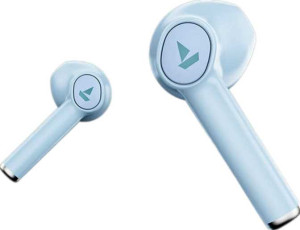
boAt Airdopes 131 Gen 2
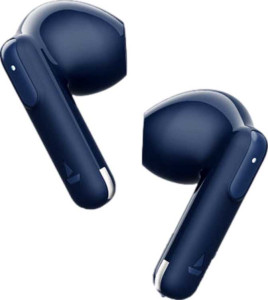
boAt Airdopes Alpha Gen 2

boAt Airdopes 131 Gen 2 boAt Airdopes Alpha Gen 2

Overview

Welcome to our in-depth spec comparison between the boAt Airdopes 131 Gen 2 and the boAt Airdopes Alpha Gen 2. Both earbuds share a surprisingly similar foundation — identical driver sizes, the same Bluetooth 5.4 standard, and matching microphone setups — yet they diverge in meaningful ways when it comes to battery endurance, water resistance, and audio latency. Read on to see which one earns its place in your ears.

Common Features

  • Both products have an earbud fit design.
  • Neither product has wires or cables.
  • Neither product is a neckband earbud.
  • Neither product includes wingtips.
  • Neither product has RGB lighting.
  • Both products have stereo speakers.
  • Neither product has a UV light.
  • Neither product has a display.
  • Neither product has active noise cancellation (ANC).
  • Neither product has passive noise reduction.
  • Both products have a driver unit size of 13 mm.
  • Both products have a lowest frequency of 20 Hz and a highest frequency of 20000 Hz.
  • Neither product supports spatial audio.
  • Neither product has Dolby Atmos.
  • Neither product has wireless charging.
  • Both products have a battery level indicator.
  • Both products have a rechargeable battery.
  • Neither product supports fast pairing.
  • Both products have USB Type-C charging.
  • Both products use Bluetooth version 5.4.
  • Neither product has LDAC, LDHC, Bluetooth LE Audio, aptX Adaptive, or aptX Low Latency.
  • Neither product has an ambient sound mode.
  • Neither product has in/on-ear detection.
  • Neither product has a find device feature.
  • Both products support fast charging.
  • Neither product can read notifications.
  • Neither product has a built-in translator.
  • Both products have a mute function.
  • Both products can be used as a headset.
  • Both products have 4 microphones.
  • Both products have a noise-canceling microphone.

Main Differences

  • IP rating is IPX4 on boAt Airdopes 131 Gen 2 and IPX5 on boAt Airdopes Alpha Gen 2.
  • Water resistance is sweat resistant on boAt Airdopes 131 Gen 2 and water resistant on boAt Airdopes Alpha Gen 2.
  • Battery life is 10 hours on boAt Airdopes 131 Gen 2 and 9 hours on boAt Airdopes Alpha Gen 2.
  • Battery life of the charging case is 60 hours on boAt Airdopes 131 Gen 2 and 36 hours on boAt Airdopes Alpha Gen 2.
  • Charge time is 0.6 hours on boAt Airdopes 131 Gen 2 and 0.8 hours on boAt Airdopes Alpha Gen 2.
  • Battery power is 40 mAh on boAt Airdopes 131 Gen 2 and 35 mAh on boAt Airdopes Alpha Gen 2.
  • Charging case battery power is 650 mAh on boAt Airdopes 131 Gen 2 and 320 mAh on boAt Airdopes Alpha Gen 2.
  • Audio latency is 45 ms on boAt Airdopes 131 Gen 2 and 50 ms on boAt Airdopes Alpha Gen 2.
Specs Comparison
boAt Airdopes 131 Gen 2

boAt Airdopes 131 Gen 2

boAt Airdopes Alpha Gen 2

boAt Airdopes Alpha Gen 2

Design:
Fit Earbud Earbud
Ingress Protection (IP) rating IPX4 IPX5
water resistance Sweat resistant Water resistant
has no wires or cables
are neckband earbuds
wingtips included
has RGB lighting
has stereo speakers
has UV light
Has a display

Both the boAt Airdopes 131 Gen 2 and the boAt Airdopes Alpha Gen 2 share the same fundamental design DNA: a true wireless earbud form factor with no cables, no neckband, no wingtips, and stereo sound — making them equally portable and comparable in how they sit in your ears out of the box.

The one meaningful design differentiator is water resistance. The Airdopes 131 Gen 2 carries an IPX4 rating, meaning it can handle sweat and light splashes from any direction — adequate for workouts but not much more. The Alpha Gen 2 steps up to IPX5, which adds protection against sustained, low-pressure water jets. In practice, this means the Alpha Gen 2 is better suited for running in light rain or heavy sweat sessions where water exposure is more intense and prolonged.

On design, the Airdopes Alpha Gen 2 holds a clear edge solely due to its superior ingress protection rating. For users who prioritize durability in wet or high-activity conditions, that single step up from IPX4 to IPX5 is a tangible real-world advantage. For casual, everyday indoor use, both are equally capable.

Sound quality:
has active noise cancellation (ANC)
has passive noise reduction
driver unit size 13 mm 13 mm
lowest frequency 20 Hz 20 Hz
highest frequency 20000 Hz 20000 Hz
supports spatial audio
has Dolby Atmos
has Dirac Virtuo
has a neodymium magnet

Across every sound quality specification provided, the boAt Airdopes 131 Gen 2 and the Airdopes Alpha Gen 2 are identical. Both use a 13 mm driver and cover the standard human hearing range of 20 Hz to 20,000 Hz — a frequency response that, on paper, captures the full audible spectrum from deep bass to the highest treble a human ear can detect.

Neither earphone offers ANC, passive noise reduction, spatial audio, Dolby Atmos, Dirac Virtuo, or a neodymium magnet. The absence of noise isolation features means neither will meaningfully block out ambient sound, which matters in commuting or gym environments. Equally, the lack of spatial audio or premium audio processing means the soundstage will remain conventional — adequate for casual listening, but not engineered for immersive or cinematic experiences.

On sound quality specs alone, this is a complete tie. There is no differentiator between the two products in this category based on the available data, so neither holds an advantage here — the choice between them must rest on other specification groups.

Power:
Battery life 10 hours 9 hours
Battery life of charging case 60 hours 36 hours
charge time 0.6 hours 0.8 hours
battery power 40 mAh 35 mAh
battery power (charging case) 650mAh 320mAh
has wireless charging
Has a solar power battery
has a battery level indicator
has a rechargeable battery

Battery performance is where these two earbuds diverge most noticeably. The Airdopes 131 Gen 2 delivers 10 hours of earbud playback versus 9 hours on the Alpha Gen 2 — a modest but real difference for back-to-back listening sessions. More striking is the charging case gap: the 131 Gen 2 packs a 650 mAh case rated for 60 total hours, while the Alpha Gen 2's 320 mAh case tops out at 36 hours. That means the 131 Gen 2 can recharge its earbuds roughly six times over before the case itself needs power, compared to about four times for the Alpha Gen 2 — a meaningful advantage for frequent travelers or anyone who charges infrequently.

Charging speed adds another dimension. The 131 Gen 2 refills in just 0.6 hours, while the Alpha Gen 2 takes 0.8 hours — a 12-minute difference that is minor in isolation but compounds when you need a quick top-up before heading out. Neither supports wireless charging, so both rely on a wired connection.

The Airdopes 131 Gen 2 holds a clear power advantage across every metric — longer earbud life, a dramatically larger case capacity, and faster charging. For users who prioritize going longer between charges and spending less time tethered to a cable, the 131 Gen 2 is the stronger choice in this category.

Connectivity:
has fast pairing
Has USB Type-C
Bluetooth version 5.4 5.4
has LDAC
has LDHC
has Bluetooth LE Audio
has aptX Adaptive
has aptX Low Latency
has aptX HD
has aptX
has aptX Lossless
audio latency 45 ms 50 ms
has aptX Voice
has Auracast
maximum Bluetooth range 10 m 10 m
supports Bluetooth pairing using NFC
Can be used wirelessly
has AAC

Connectivity is largely a shared story between these two earbuds. Both run on Bluetooth 5.4 — a modern version that brings improved connection stability and efficiency — and both cap out at a 10 m wireless range. Neither supports advanced audio codecs like aptX, LDAC, or AAC, meaning audio is transmitted over the standard SBC codec in both cases. For most listeners this is unnoticeable, but audiophiles seeking high-resolution wireless audio will find both equally limited.

The one measurable difference is audio latency. The Airdopes 131 Gen 2 comes in at 45 ms, while the Alpha Gen 2 registers at 50 ms. In practice, both figures are low enough that lip-sync drift during video playback is unlikely to be perceived by most users — the general threshold for noticeable audio-video desync sits above 100 ms. For casual gaming, the gap is similarly negligible, though neither is marketed as a dedicated low-latency gaming earbud.

Given how closely matched these two are, the Airdopes 131 Gen 2 holds a narrow edge on latency alone. It is not a difference most users will consciously register, but in an otherwise identical connectivity profile, it is the only data point that separates them — making this category effectively a tie for the vast majority of use cases.

Features:
release date August 2025 September 2025
has ambient sound mode
has in/on-ear detection
has find device feature
Supports fast charging
can read notifications
Has a built-in translator
has a mute function
can be used as a headset
control panel placed on a device
warranty period 1 years 1 years
Has voice prompts
travel bag is included
Has an in-line control panel
Has a temperature sensor
Has a built-in camera remote control function

Feature-for-feature, the Airdopes 131 Gen 2 and the Airdopes Alpha Gen 2 are a perfect match in this category. Both support fast charging, include on-device touch controls, offer voice prompts, and can function as a headset with a mute function — a practical set of essentials that covers the needs of most daily users, whether for calls, commutes, or casual listening.

A couple of shared inclusions are worth highlighting for the value they represent. Both come with a travel bag, a small but appreciated accessory that budget-segment earbuds often omit. Both also carry a 1-year warranty, providing identical post-purchase protection. Notable absences — such as ambient sound mode, in-ear detection, and a find-my-device feature — apply equally to both, so neither is disadvantaged relative to the other.

This category is an unambiguous tie. Every feature present or absent is shared identically across both products, leaving no basis to favor one over the other here. As with sound quality, the decision between these two must hinge on the differentiators found in other specification groups.

Microphone:
number of microphones 4 4
has a noise-canceling microphone

Both the Airdopes 131 Gen 2 and the Airdopes Alpha Gen 2 are equipped with 4 microphones and noise-canceling microphone technology. A quad-mic setup at this price tier is a genuine plus — multiple mics allow the earbuds to better isolate the user's voice by cross-referencing input across different pickup points, which typically results in cleaner call quality in noisy environments like streets or busy offices.

On microphone specs, this is a complete tie. With identical mic counts and the same noise-canceling capability on both sides, there is no differentiator to analyze here — users can expect the same call and voice pickup performance from either earbud.

Comparison Summary & Verdict

After reviewing every specification, a clear picture emerges for each buyer. The boAt Airdopes 131 Gen 2 is the stronger choice for users who demand longer battery life, with 10 hours of playback versus 9, and a significantly larger charging case capacity of 650 mAh delivering up to 60 total hours — nearly double that of its rival. It also edges ahead with a faster 0.6-hour charge time and a slightly lower audio latency of 45 ms. On the other hand, the boAt Airdopes Alpha Gen 2 steps up with a superior IPX5 water resistance rating, making it the better companion for workouts in rain or high-sweat conditions where splash protection truly matters. Both models are otherwise evenly matched in sound profile, connectivity, and features, so your decision ultimately comes down to whether you prioritize stamina and speed or enhanced water protection.

boAt Airdopes 131 Gen 2
Buy boAt Airdopes 131 Gen 2 if...

Buy the boAt Airdopes 131 Gen 2 if you want maximum battery endurance, a much larger charging case capacity, faster charge times, and slightly lower audio latency.

boAt Airdopes Alpha Gen 2
Buy boAt Airdopes Alpha Gen 2 if...

Buy the boAt Airdopes Alpha Gen 2 if you need stronger water resistance with its IPX5 rating, making it the better pick for outdoor workouts or use in wet conditions.