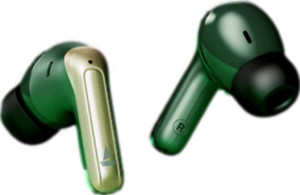
boAt Airdopes 219
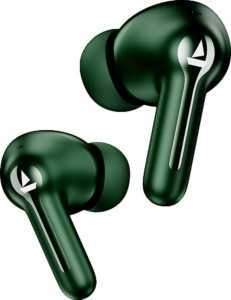
boAt Airdopes Prime 413

boAt Airdopes 219 boAt Airdopes Prime 413

Overview

Welcome to our in-depth specification comparison between the boAt Airdopes 219 and the boAt Airdopes Prime 413. Both are fully wireless, in-ear earbuds sharing a strong foundation of features, yet they diverge in meaningful ways across battery endurance, water resistance, and audio latency. If you are trying to decide which of these boAt offerings best suits your lifestyle, read on as we break down every spec side by side.

Common Features

  • Both products have an in-ear fit.
  • Neither product has wires or cables, making them fully wireless.
  • Neither product is a neckband-style earbud.
  • Neither product includes wingtips.
  • Neither product features RGB lighting.
  • Both products have stereo speakers.
  • Neither product includes a UV light.
  • Neither product has a display.
  • Neither product features active noise cancellation (ANC).
  • Both products offer passive noise reduction.
  • Both products share a lowest frequency of 20 Hz.
  • Both products share a highest frequency of 20000 Hz.
  • Neither product supports spatial audio.
  • Neither product supports Dolby Atmos.
  • Neither product includes Dirac Virtuo.
  • Neither product uses a neodymium magnet.
  • Both products have a 35 mAh earbud battery.
  • Both products have a 400 mAh charging case battery.
  • Neither product supports wireless charging.
  • Neither product has a solar power battery.
  • Both products include a battery level indicator.
  • Both products have a rechargeable battery.
  • Neither product supports fast pairing.
  • Both products feature a USB Type-C connection.
  • Both products use Bluetooth version 5.4.
  • Neither product supports LDAC.
  • Neither product supports LDHC.
  • Neither product supports Bluetooth LE Audio.
  • Neither product supports aptX Adaptive.
  • Neither product supports aptX Low Latency.
  • Neither product has an ambient sound mode.
  • Neither product has in/on-ear detection.
  • Neither product includes a find device feature.
  • Both products support fast charging.
  • Neither product can read notifications aloud.
  • Neither product has a built-in translator.
  • Both products include a mute function.
  • Both products can be used as a headset.
  • Both products have 4 microphones.
  • Both products feature a noise-canceling microphone.

Main Differences

  • The Ingress Protection rating is IPX4 on the boAt Airdopes 219 and IPX5 on the boAt Airdopes Prime 413.
  • The boAt Airdopes 219 is sweat resistant, while the boAt Airdopes Prime 413 is water resistant.
  • The driver unit size is 13 mm on the boAt Airdopes 219 and 12 mm on the boAt Airdopes Prime 413.
  • Battery life is 8 hours on the boAt Airdopes 219 and 10 hours on the boAt Airdopes Prime 413.
  • The charging case battery life is 32 hours on the boAt Airdopes 219 and 40 hours on the boAt Airdopes Prime 413.
  • Charge time is 0.6 hours on the boAt Airdopes 219 and 0.5 hours on the boAt Airdopes Prime 413.
  • Audio latency is 45 ms on the boAt Airdopes 219 and 60 ms on the boAt Airdopes Prime 413.
Specs Comparison
boAt Airdopes 219

boAt Airdopes 219

boAt Airdopes Prime 413

boAt Airdopes Prime 413

Design:
Fit In-ear In-ear
Ingress Protection (IP) rating IPX4 IPX5
water resistance Sweat resistant Water resistant
has no wires or cables
are neckband earbuds
wingtips included
has RGB lighting
has stereo speakers
has UV light
Has a display

Both the boAt Airdopes 219 and the boAt Airdopes Prime 413 share the same fundamental design DNA: fully wireless, in-ear fit with stereo speakers, no neckband, and no wingtips. For most users, this means an identical wearing experience in terms of form factor, with neither model offering extra stabilization fins for high-intensity activities.

The only meaningful design differentiator is water resistance. The Airdopes 219 carries an IPX4 rating, classifying it as sweat resistant — adequate for casual workouts and light perspiration, but not suited for exposure to rain or splashing water. The Airdopes Prime 413 steps up to IPX5, which means it can withstand sustained, low-pressure water jets from any direction. In practical terms, this makes the Prime 413 a more capable companion for outdoor runs in light rain or more intense sweat-heavy sessions.

On design, the Airdopes Prime 413 holds a clear edge due to its superior IP rating. If you use earbuds exclusively indoors or for light activity, this difference may be negligible — but for anyone who trains outdoors or pushes harder in the gym, the added water protection of the Prime 413 is a meaningful real-world advantage.

Sound quality:
has active noise cancellation (ANC)
has passive noise reduction
driver unit size 13 mm 12 mm
lowest frequency 20 Hz 20 Hz
highest frequency 20000 Hz 20000 Hz
supports spatial audio
has Dolby Atmos
has Dirac Virtuo
has a neodymium magnet

At the core of both earbuds' sound systems, the specs are nearly identical: a full 20 Hz – 20,000 Hz frequency range covering the entire spectrum of human hearing, passive noise reduction via the in-ear seal, and no advanced noise-cancellation or spatial audio technologies on either side. Neither ANC, Dolby Atmos, nor Dirac Virtuo feature here, which is typical at this price segment.

The only hardware distinction is driver size — the boAt Airdopes 219 uses a 13 mm driver versus the 12 mm unit in the Airdopes Prime 413. In theory, a larger driver can move more air, which may contribute to fuller bass reproduction and overall loudness headroom. However, driver size alone is not a reliable predictor of sound quality — tuning, diaphragm material, and acoustic chamber design matter just as much, none of which are specified here. The 1 mm difference is marginal and unlikely to be perceptible in a direct A/B listen for most users.

On sound quality specs alone, this is effectively a near-tie. The Airdopes 219 holds a very slight theoretical edge on paper with its larger driver, but the gap is too narrow to be a deciding factor. Users prioritizing audio performance should weigh this category as essentially equal between the two.

Power:
Battery life 8 hours 10 hours
Battery life of charging case 32 hours 40 hours
charge time 0.6 hours 0.5 hours
battery power 35 mAh 35 mAh
battery power (charging case) 400mAh 400mAh
has wireless charging
Has a solar power battery
has a battery level indicator
has a rechargeable battery

Despite sharing identical earbud battery capacity (35 mAh) and case capacity (400 mAh), the two models deliver noticeably different real-world endurance. The boAt Airdopes Prime 413 is rated for 10 hours of playback per charge versus 8 hours for the Airdopes 219, and that gap carries through to total combined battery life — 40 hours versus 32 hours respectively. Squeezing more playtime from the same hardware capacity suggests the Prime 413 benefits from more efficient power management or a lower-draw audio circuit.

Where the Airdopes 219 claws back some ground is charge speed. It refills in 0.6 hours compared to 0.5 hours for the Prime 413 — a difference that is marginal in practice. Both are fast enough for a quick top-up during a break. Neither model supports wireless charging, which is expected at this price tier.

The Airdopes Prime 413 holds a clear advantage in this category. Two extra hours of continuous playback is a meaningful real-world difference — enough to cover a long-haul flight segment or an extended workday without reaching for the case. For users who value going longer between charges, the Prime 413 is the stronger choice here.

Connectivity:
has fast pairing
Has USB Type-C
Bluetooth version 5.4 5.4
has LDAC
has LDHC
has Bluetooth LE Audio
has aptX Adaptive
has aptX Low Latency
has aptX HD
has aptX
has aptX Lossless
audio latency 45 ms 60 ms
has aptX Voice
has Auracast
maximum Bluetooth range 10 m 10 m
supports Bluetooth pairing using NFC
Can be used wirelessly
has AAC

From a connectivity standpoint, the two earbuds are remarkably alike. Both run on Bluetooth 5.4 — a modern standard that brings improved connection stability and energy efficiency — and share an identical 10 m wireless range. Neither supports advanced audio codecs such as LDAC, aptX, or AAC, meaning both rely on standard SBC transmission. For typical music streaming, this is unlikely to be an issue, but audiophiles seeking higher-fidelity wireless transmission will find both models equally limited.

The one spec that separates them is audio latency. The boAt Airdopes 219 is rated at 45 ms, while the Airdopes Prime 413 comes in at 60 ms. In practice, latency below 40 ms is generally considered imperceptible, so neither model is optimized for zero-lag gaming. That said, the 15 ms advantage of the Airdopes 219 is a tangible difference when watching video or playing casual games — at 60 ms, lip-sync drift becomes subtly noticeable to attentive viewers, whereas 45 ms sits closer to an acceptable threshold.

The Airdopes 219 edges ahead in this category, purely on the strength of its lower latency. Everything else — Bluetooth version, range, codec support, and charging port — is identical. For users who primarily stream music, this distinction is negligible; but for those who consume video content or game on mobile, the Airdopes 219's lower latency rating is a meaningful practical advantage.

Features:
release date August 2025 September 2025
has ambient sound mode
has in/on-ear detection
has find device feature
Supports fast charging
can read notifications
Has a built-in translator
has a mute function
can be used as a headset
control panel placed on a device
warranty period 1 years 1 years
Has voice prompts
travel bag is included
Has an in-line control panel
Has a temperature sensor
Has a built-in camera remote control function

Across every single feature spec in this category, the boAt Airdopes 219 and boAt Airdopes Prime 413 are a perfect match. Both support fast charging, offer on-device touch controls, include voice prompts, and function as call headsets with a mute option — a practical set of essentials that covers the needs of most everyday users.

A few shared highlights are worth noting in context. The inclusion of a travel bag with both models adds tangible value for users on the go. Voice prompts aid usability without requiring a companion app. The absence of features like ambient sound mode or in-ear detection is consistent across both, reflecting the budget positioning of the lineup rather than a gap in one product over the other.

This category is a complete tie. There is no differentiator — not a single spec favors one model over the other. Users should look to other specification groups, such as power or connectivity, to inform their decision between these two.

Microphone:
number of microphones 4 4
has a noise-canceling microphone

Both the boAt Airdopes 219 and the Airdopes Prime 413 are equipped with 4 microphones and noise-canceling microphone technology — a setup that, at this price tier, is genuinely competitive. Multi-microphone arrays allow the earbuds to apply beamforming techniques, capturing the user's voice more accurately while filtering out surrounding ambient noise during calls.

This category is a complete tie. Every microphone spec is identical across both models, and there is no basis in the provided data to favor one over the other. Users who prioritize call clarity can consider either option with equal confidence from a hardware specification standpoint.

Comparison Summary & Verdict

After a thorough comparison, both earbuds prove to be well-matched siblings that share the same core DNA, including Bluetooth 5.4, fast charging, four-microphone noise-canceling setups, and a 400 mAh charging case. However, the differences are decisive enough to guide distinct buyers. The boAt Airdopes Prime 413 stands out with a superior IPX5 water resistance rating, a longer 10-hour playback time, a 40-hour total case life, and a faster 0.5-hour charge time, making it the better pick for active users and frequent travelers. On the other hand, the boAt Airdopes 219 earns its place with a slightly larger 13 mm driver and a notably lower 45 ms audio latency, giving it an edge for users who watch videos or game casually and want tighter audio sync. Choose based on what matters most to your daily routine.

boAt Airdopes 219
Buy boAt Airdopes 219 if...

Buy the boAt Airdopes 219 if you prioritize lower audio latency for video or casual gaming, and prefer a slightly larger driver unit for your listening experience.

boAt Airdopes Prime 413
Buy boAt Airdopes Prime 413 if...

Buy the boAt Airdopes Prime 413 if you want stronger water resistance, longer battery life of up to 10 hours, and a faster charging time for an active, on-the-go lifestyle.