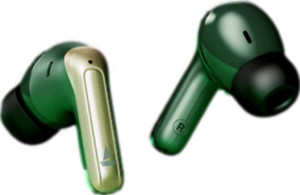
boAt Airdopes 219
OnePlus Nord Buds 3R

boAt Airdopes 219 OnePlus Nord Buds 3R

Overview

Welcome to our detailed specification comparison of the boAt Airdopes 219 and the OnePlus Nord Buds 3R — two compelling true wireless earbuds competing in the affordable audio segment. Both share a number of strong foundational features, yet they take notably different approaches when it comes to battery endurance, water resistance, and smart functionality. Read on to explore every key specification side by side and find out which pair is the right fit for your lifestyle.

Common Features

  • Both products have an in-ear fit design.
  • Neither product uses neckband-style earbuds.
  • Both products are true wireless, with no wires or cables.
  • Wingtips are not included with either product.
  • RGB lighting is not available on either product.
  • Both products feature stereo speakers.
  • A UV light is not present on either product.
  • Neither product has a display.
  • Both products offer passive noise reduction.
  • The lowest frequency on both products is 20 Hz.
  • The highest frequency on both products is 20000 Hz.
  • Dolby Atmos support is not available on either product.
  • Active noise cancellation (ANC) is not available on either product.
  • Both products have a total charging case battery life of 32 hours.
  • Wireless charging is not supported by either product.
  • Both products have a rechargeable battery with a battery level indicator.
  • Both products use Bluetooth version 5.4.
  • USB Type-C charging is available on both products.
  • LDAC support is not available on either product.
  • Fast pairing is not supported by either product.
  • Both products support fast charging.
  • Neither product has an ambient sound mode.
  • In-ear or on-ear detection is not available on either product.
  • Both products include a mute function.
  • Both products can be used as a headset.
  • Both products have a control panel placed on the device.
  • Voice prompts are available on both products.
  • Both products are equipped with 4 microphones.
  • Both products feature a noise-canceling microphone.

Main Differences

  • Ingress Protection rating is IPX4 on boAt Airdopes 219 and IP55 on OnePlus Nord Buds 3R.
  • Water resistance is sweat resistant on boAt Airdopes 219, while OnePlus Nord Buds 3R is fully water resistant.
  • Weight is 8.56 g on boAt Airdopes 219 and 9 g on OnePlus Nord Buds 3R.
  • Driver unit size is 13 mm on boAt Airdopes 219 and 12.4 mm on OnePlus Nord Buds 3R.
  • Spatial audio support is present on OnePlus Nord Buds 3R but not available on boAt Airdopes 219.
  • Battery life per charge is 8 hours on boAt Airdopes 219 and 12 hours on OnePlus Nord Buds 3R.
  • Charge time is 0.6 hours on boAt Airdopes 219 and 2 hours on OnePlus Nord Buds 3R.
  • Audio latency is 45 ms on boAt Airdopes 219 and 47 ms on OnePlus Nord Buds 3R.
  • A find device feature is available on OnePlus Nord Buds 3R but not on boAt Airdopes 219.
  • A built-in translator is present on OnePlus Nord Buds 3R but not available on boAt Airdopes 219.
Specs Comparison
boAt Airdopes 219

boAt Airdopes 219

OnePlus Nord Buds 3R

OnePlus Nord Buds 3R

Design:
Fit In-ear In-ear
Ingress Protection (IP) rating IPX4 IP55
water resistance Sweat resistant Water resistant
weight 8.56 g 9 g
has no wires or cables
are neckband earbuds
wingtips included
has RGB lighting
has stereo speakers
has UV light
Has a display

Both the boAt Airdopes 219 and OnePlus Nord Buds 3R share the same fundamental design philosophy: true wireless, in-ear fit with no neckband, no wingtips, no RGB lighting, and stereo playback. For most users, the day-to-day ergonomics will feel broadly similar out of the box.

Where they diverge meaningfully is water resistance. The Airdopes 219 carries an IPX4 rating, meaning it can handle sweat and light splashes — adequate for workouts but not much more. The Nord Buds 3R steps up to a full IP55 rating, which adds protection against low-pressure water jets from any direction, not just incidental moisture. In practical terms, IP55 holds up better in rain or under a tap, making it the more versatile choice for outdoor and active use.

On weight, the difference is negligible — 8.56 g vs. 9 g — and unlikely to be perceptible during wear. Overall, the OnePlus Nord Buds 3R has a clear edge in this group solely due to its superior ingress protection, which offers meaningfully broader real-world durability without any meaningful trade-off in form or fit.

Sound quality:
has active noise cancellation (ANC)
has passive noise reduction
driver unit size 13 mm 12.4 mm
lowest frequency 20 Hz 20 Hz
highest frequency 20000 Hz 20000 Hz
supports spatial audio
has Dolby Atmos
has Dirac Virtuo
has a neodymium magnet

At the core, both earbuds rely on passive noise reduction and cover the full standard human hearing range of 20 Hz to 20,000 Hz — neither offers ANC, so isolation depends entirely on the physical seal of the ear tip. For a budget segment, this is expected, and the passive approach still does a reasonable job of blocking ambient noise when fit is good.

The driver size difference — 13 mm on the Airdopes 219 versus 12.4 mm on the Nord Buds 3R — is marginal and, without tuning data, cannot be reliably used to predict which will sound fuller or more bass-forward. Driver size alone is not a definitive indicator of audio quality; acoustic tuning matters far more.

The decisive differentiator here is spatial audio support on the Nord Buds 3R, which the Airdopes 219 lacks entirely. Spatial audio creates a wider, more three-dimensional soundstage — particularly noticeable with compatible streaming content and games — elevating the perceived immersion beyond what stereo alone can deliver. On sound quality specs, the OnePlus Nord Buds 3R holds the edge, with spatial audio being a feature that has real perceptual impact rather than just a number on a sheet.

Power:
Battery life 8 hours 12 hours
Battery life of charging case 32 hours 32 hours
charge time 0.6 hours 2 hours
has wireless charging
Has a solar power battery
has a battery level indicator
has a rechargeable battery

Total case endurance is identical at 32 hours for both, meaning neither has an advantage when it comes to how long you can go between wall charges. That parity, however, masks a significant gap in per-session playback time: the OnePlus Nord Buds 3R delivers 12 hours on a single charge versus just 8 hours from the Airdopes 219. That 4-hour difference is substantial — it separates a bud that comfortably covers a full workday from one that may need a mid-day top-up during heavy use.

The trade-off comes at charging speed. The Airdopes 219 refills in a remarkably fast 0.6 hours (roughly 36 minutes), while the Nord Buds 3R takes 2 hours to fully charge — more than three times as long. For users who tend to charge overnight or have predictable routines, this is a non-issue. But if you regularly find yourself needing a quick turnaround between uses, the Airdopes 219's near-instant recharge is a genuinely practical advantage.

Neither model supports wireless charging, so the decision here comes down to usage pattern. For most users who prioritize uninterrupted listening over long sessions, the Nord Buds 3R holds the clearer overall edge thanks to its superior earbud battery life — but the Airdopes 219's charging speed makes it a compelling option for anyone who values rapid recovery time.

Connectivity:
has fast pairing
Has USB Type-C
Bluetooth version 5.4 5.4
has LDAC
has LDHC
has Bluetooth LE Audio
has aptX Adaptive
has aptX Low Latency
has aptX HD
has aptX
has aptX Lossless
audio latency 45 ms 47 ms
has aptX Voice
has Auracast
maximum Bluetooth range 10 m 10 m
supports Bluetooth pairing using NFC
Can be used wirelessly
has AAC

Connectivity is the most evenly matched category in this comparison. Both earbuds run on Bluetooth 5.4, share an identical 10 m wireless range, charge via USB-C, and offer no advanced audio codecs — no aptX, no LDAC, no AAC. Transmission relies on the standard SBC codec by default, which is adequate for everyday listening but represents a ceiling on wireless audio fidelity that neither product breaks through.

Audio latency comes in at 45 ms for the Airdopes 219 and 47 ms for the Nord Buds 3R — a 2 ms gap that is imperceptible in any real-world scenario, whether gaming, watching video, or on calls. Neither figure is class-leading for latency-sensitive use cases, but both sit in a range that most users will find acceptable for casual content consumption.

With no differentiating features anywhere in this spec group, connectivity is a dead heat. The choice between these two products should rest entirely on the distinctions found in other categories, as this group offers no meaningful basis for preference either way.

Features:
release date August 2025 August 2025
has ambient sound mode
has in/on-ear detection
has find device feature
Supports fast charging
can read notifications
Has a built-in translator
has a mute function
can be used as a headset
control panel placed on a device
Has voice prompts
travel bag is included
Has an in-line control panel
Has a temperature sensor
Has a built-in camera remote control function

The shared feature set between these two is solid for the price tier: both support fast charging, include on-device controls, offer voice prompts, function as headsets with mute, and even come with a travel bag. These are the kinds of practical, everyday conveniences that make a real difference in usability without requiring a premium price tag.

The Nord Buds 3R, however, pulls ahead with two exclusive additions. A find device feature is a low-key but genuinely useful safeguard — losing a small earbud is easy, and having locator support can save considerable frustration. More notably, a built-in translator sets the Nord Buds 3R apart as a more versatile tool for users who travel or communicate across languages, even if the practical depth of that feature depends on implementation details not captured here.

Neither earbud offers ambient sound mode or in-ear detection, which are omissions worth noting for users who expect those conveniences. Still, on the strength of its two exclusive features, the OnePlus Nord Buds 3R takes a clear edge in this category — the find device function alone is broadly useful, and the translator capability adds a dimension the Airdopes 219 simply cannot match.

Microphone:
number of microphones 4 4
has a noise-canceling microphone

Microphone hardware is identical across both earbuds: each packs 4 microphones with noise-canceling capability. A quad-mic array at this price point is a genuine strength — more microphones allow for better beamforming, meaning the earbuds can more effectively isolate your voice from surrounding noise during calls, which is particularly valuable in busy or outdoor environments.

This is a straightforward tie. With no differences in mic count or noise-canceling support, neither product holds any advantage here. Call quality performance will ultimately come down to software processing and tuning, neither of which is captured in these specs.

Comparison Summary & Verdict

After comparing both products across all major categories, a clear picture emerges of who each pair is best suited for. The boAt Airdopes 219 stands out with its faster 0.6-hour charge time and slightly larger 13 mm driver, making it a practical pick for users who need a quick top-up before heading out. The OnePlus Nord Buds 3R, on the other hand, pulls ahead with a significantly longer 12-hour battery life, stronger IP55 water resistance, spatial audio support, and added smart features like a built-in translator and find-device functionality. If day-long durability and richer features matter most, the Nord Buds 3R offers a more complete package overall.

boAt Airdopes 219
Buy boAt Airdopes 219 if...

Buy the boAt Airdopes 219 if you prioritize ultra-fast charging and a slightly larger driver unit, and do not need advanced smart features or extended battery life.

OnePlus Nord Buds 3R
Buy OnePlus Nord Buds 3R if...

Buy the OnePlus Nord Buds 3R if you want longer battery life, stronger water resistance, spatial audio support, and extras like a find-device feature and built-in translator.