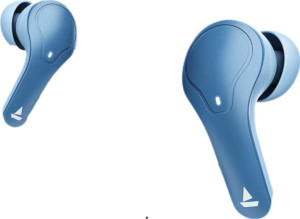
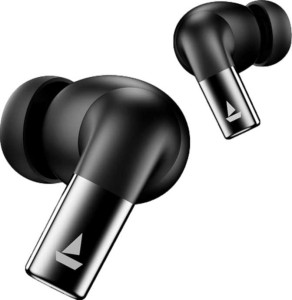
boAt Airdopes Plus 311
boAt Airdopes Ultra Pro

boAt Airdopes Plus 311 boAt Airdopes Ultra Pro

Overview

Choosing between the boAt Airdopes Plus 311 and the boAt Airdopes Ultra Pro is not as straightforward as it might seem. While both true-wireless earbuds share a surprisingly strong common foundation, they diverge in areas that could be decisive depending on your daily routine. This comparison examines key battlegrounds including battery endurance, audio capabilities, audio latency, and lifestyle-oriented features to help you determine which model genuinely suits your needs.

Common Features

  • Both products use an in-ear fit design.
  • Both products carry an IPX4 ingress protection rating.
  • Both products are fully wireless with no wires or cables.
  • Neither product is a neckband-style earbud.
  • Neither product includes wingtips.
  • Neither product features RGB lighting.
  • Both products have stereo speakers.
  • Neither product includes a UV light.
  • Neither product has active noise cancellation (ANC).
  • Both products offer passive noise reduction.
  • Both products use a 10 mm driver unit.
  • Both products share a frequency range of 20 Hz to 20000 Hz.
  • Neither product supports Dolby Atmos.
  • Neither product supports Dirac Virtuo.
  • Neither product uses a neodymium magnet.
  • Both products offer 8 hours of battery life.
  • Both products have a charge time of 0.5 hours.
  • Neither product supports wireless charging.
  • Neither product has a solar power battery.
  • Both products have a battery level indicator.
  • Both products have a rechargeable battery.
  • Neither product supports fast pairing.
  • Both products feature USB Type-C connectivity.
  • Both products use Bluetooth version 5.3.
  • Neither product supports LDAC, LDHC, Bluetooth LE Audio, aptX Adaptive, or aptX Low Latency.
  • Neither product has an ambient sound mode.
  • Both products support fast charging.
  • Neither product can read notifications.
  • Both products have a mute function.
  • Both products can be used as a headset.
  • Both products have a control panel placed on the device.
  • Both products have voice prompts.
  • Both products include a travel bag.
  • Both products are equipped with 4 microphones.
  • Both products have a noise-canceling microphone.

Main Differences

  • Water resistance is not present on boAt Airdopes Plus 311, while boAt Airdopes Ultra Pro is sweat resistant.
  • Spatial audio support is available on boAt Airdopes Ultra Pro but not on boAt Airdopes Plus 311.
  • Battery life of the charging case is 42 hours on boAt Airdopes Plus 311 and 92 hours on boAt Airdopes Ultra Pro.
  • Audio latency is 50 ms on boAt Airdopes Plus 311 and 65 ms on boAt Airdopes Ultra Pro.
  • In/on-ear detection is present on boAt Airdopes Ultra Pro but not available on boAt Airdopes Plus 311.
Specs Comparison
boAt Airdopes Plus 311

boAt Airdopes Plus 311

boAt Airdopes Ultra Pro

boAt Airdopes Ultra Pro

Design:
Fit In-ear In-ear
Ingress Protection (IP) rating IPX4 IPX4
water resistance None Sweat resistant
has no wires or cables
are neckband earbuds
wingtips included
has RGB lighting
has stereo speakers
has UV light
Has a display

Both the boAt Airdopes Plus 311 and the boAt Airdopes Ultra Pro share a nearly identical design foundation: true wireless, in-ear fit, no neckband, no wingtips, no RGB lighting, and an IPX4 ingress protection rating. For most users, this means both earbuds can handle light splashes and brief rain exposure without issue.

The one meaningful differentiator in this group is how each product communicates its water resistance. The Ultra Pro explicitly lists sweat resistant as a feature, while the Plus 311 lists water resistance as ″None″ despite sharing the same IPX4 rating. In practice, IPX4 covers splashes from any direction — which inherently includes sweat — so the Plus 311 is not more vulnerable; the labeling simply differs. That said, the Ultra Pro′s explicit sweat-resistant claim may offer greater peace of mind for workout-focused users.

Overall, the two earbuds are effectively tied on design. The shared IPX4 rating, form factor, and feature set leave little to differentiate them in this category. The Ultra Pro holds a marginal edge purely on clearer marketing around sweat resistance, which could matter to gym users, but the real-world protection level is comparable.

Sound quality:
has active noise cancellation (ANC)
has passive noise reduction
driver unit size 10 mm 10 mm
lowest frequency 20 Hz 20 Hz
highest frequency 20000 Hz 20000 Hz
supports spatial audio
has Dolby Atmos
has Dirac Virtuo
has a neodymium magnet

At their core, the Airdopes Plus 311 and the Airdopes Ultra Pro are acoustically very similar. Both rely on a 10 mm driver with an identical frequency range of 20 Hz to 20,000 Hz — the full span of human hearing — and both use passive noise reduction rather than active noise cancellation. Without ANC, neither earbud electronically suppresses ambient sound; they rely solely on the physical seal of the in-ear fit to block out the environment.

The single differentiator here is that the Ultra Pro supports spatial audio, while the Plus 311 does not. Spatial audio processing creates a sense of three-dimensional soundstage — making music, movies, or games feel more immersive and directionally layered rather than flat and centered in the head. It is a meaningful feature for content consumers who prioritize an enveloping listening experience, even if the underlying driver hardware is identical.

The Ultra Pro holds a clear edge in this category strictly because of spatial audio support. The shared driver size and frequency response mean raw sound reproduction is on equal footing, but the Ultra Pro′s ability to deliver a wider, more dimensional soundstage gives it a tangible advantage for users who value immersive audio.

Power:
Battery life 8 hours 8 hours
Battery life of charging case 42 hours 92 hours
charge time 0.5 hours 0.5 hours
has wireless charging
Has a solar power battery
has a battery level indicator
has a rechargeable battery

Earbud battery life is identical across both models at 8 hours per charge, and both refill in a remarkably fast 0.5 hours. For daily commuters or casual listeners, this shared foundation is more than adequate. The real divergence, however, lies in the charging case.

The Airdopes Plus 311′s case extends total playtime to 42 hours, while the Airdopes Ultra Pro′s case delivers a substantially larger 92 hours of combined reserve — more than double. In practical terms, this means the Ultra Pro can go well over a week of typical daily use without ever needing to find a power outlet, making it a far more travel-friendly and low-maintenance option for heavy users or frequent travelers.

The Ultra Pro wins this category decisively. Neither product offers wireless charging, but that limitation applies equally to both. The massive gap in case battery capacity is the defining factor here — users who prioritize long intervals between charges will find the Ultra Pro significantly more convenient.

Connectivity:
has fast pairing
Has USB Type-C
Bluetooth version 5.3 5.3
has LDAC
has LDHC
has Bluetooth LE Audio
has aptX Adaptive
has aptX Low Latency
has aptX HD
has aptX
has aptX Lossless
audio latency 50 ms 65 ms
has aptX Voice
has Auracast
maximum Bluetooth range 10 m 10 m
supports Bluetooth pairing using NFC
Can be used wirelessly
has AAC

Connectivity is largely a wash between these two earbuds. Both run on Bluetooth 5.3, share an identical 10 m wireless range, charge via USB Type-C, and lack advanced codec support — no aptX, LDAC, or AAC on either side. This means audio is transmitted using the standard SBC codec by default, which is adequate for everyday listening but leaves audiophile-grade wireless fidelity on the table for both products equally.

The one concrete differentiator is audio latency. The Airdopes Plus 311 clocks in at 50 ms, while the Airdopes Ultra Pro registers a slightly higher 65 ms. In real-world use, latency under 100 ms is generally considered acceptable for video content, but the gap becomes more relevant for gaming or any scenario where precise audio-visual sync is critical. A 15 ms advantage for the Plus 311 is noticeable in sensitive use cases, even if casual listeners are unlikely to perceive it during music playback.

The Airdopes Plus 311 holds a narrow edge here, strictly on the basis of lower latency. For gamers or users who frequently watch video content and are sensitive to lip-sync drift, this difference is meaningful. For everyone else, the two earbuds are functionally equivalent on connectivity.

Features:
release date April 2025 January 2025
has ambient sound mode
has in/on-ear detection
Supports fast charging
can read notifications
has a mute function
can be used as a headset
control panel placed on a device
Has voice prompts
travel bag is included
Has an in-line control panel
Has a temperature sensor
Has a built-in camera remote control function

Across most practical features, these two earbuds are well-matched. Fast charging, mute, on-device controls, voice prompts, headset capability, and even an included travel bag are all present on both — a solid shared feature set for the price segment.

The single distinguishing feature in this group is in/on-ear detection, which the Airdopes Ultra Pro has and the Plus 311 lacks. This sensor automatically pauses playback when an earbud is removed and resumes when it is placed back in the ear — a small but genuinely useful quality-of-life feature that reduces the need to manually interact with the device during quick conversations or interruptions.

The Ultra Pro takes the edge in this category, solely on the strength of in-ear detection. It is not a transformative advantage, but it reflects a more refined user experience. For users who frequently take their earbuds in and out throughout the day, it is a meaningful convenience upgrade over the Plus 311.

Microphone:
number of microphones 4 4
has a noise-canceling microphone

Microphone performance is identical across both earbuds. Each is equipped with 4 microphones and noise-canceling mic technology — a configuration that enables beamforming, where multiple mics work together to isolate the speaker′s voice and suppress surrounding noise. For calls in busy environments, this is a meaningfully capable setup that goes beyond what basic single-mic designs can offer.

With no differentiators present in this group, the Airdopes Plus 311 and the Airdopes Ultra Pro are evenly matched on microphone specs. Users prioritizing call clarity can expect a comparable experience from either device.

Comparison Summary & Verdict

Both the boAt Airdopes Plus 311 and the boAt Airdopes Ultra Pro deliver a consistent core experience, sharing identical 8-hour playback, fast charging via USB-C, Bluetooth 5.3, and four noise-canceling microphones. The differences, however, reveal two clearly distinct audiences. The boAt Airdopes Ultra Pro pulls ahead with its sweat-resistant build, spatial audio support, in/on-ear detection, and a commanding 92-hour charging case, making it the stronger companion for active lifestyles and long trips. The boAt Airdopes Plus 311 counters with a notably lower audio latency of 50 ms compared to 65 ms on the Ultra Pro, which gives it a meaningful edge for users who prioritize tighter audio sync during media playback. If feature richness and endurance matter most, the Ultra Pro is the clear pick; if latency sensitivity is your primary concern, the Plus 311 holds its ground well.

boAt Airdopes Plus 311
Buy boAt Airdopes Plus 311 if...

Buy the boAt Airdopes Plus 311 if you prioritize lower audio latency, as its 50 ms latency gives it a tighter audio sync advantage over the Ultra Pro.

boAt Airdopes Ultra Pro
Buy boAt Airdopes Ultra Pro if...

Buy the boAt Airdopes Ultra Pro if you need sweat resistance, spatial audio, in/on-ear detection, and a much larger 92-hour charging case for extended, active use.