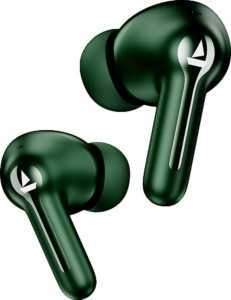
boAt Airdopes Prime 413
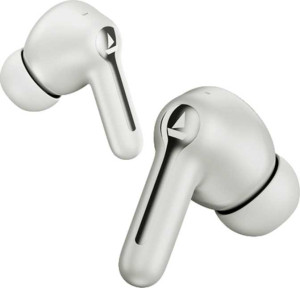
boAt Airdopes Prime 511

boAt Airdopes Prime 413 boAt Airdopes Prime 511

Overview

Welcome to our in-depth specification comparison between the boAt Airdopes Prime 413 and the boAt Airdopes Prime 511. Both are fully wireless, in-ear earbuds sharing a strong foundation of features, yet a closer look reveals meaningful differences in areas like charging speed, battery capacity, and fast pairing support that could tip the scales depending on your priorities. Read on to see exactly how these two siblings stack up against each other.

Common Features

  • Both products use an in-ear fit design.
  • Both products carry an IPX5 ingress protection rating, making them water resistant.
  • Both products are fully wireless with no wires or cables.
  • Neither product is a neckband-style earbud.
  • Neither product includes wingtips.
  • Neither product features RGB lighting.
  • Both products have stereo speakers.
  • Neither product has active noise cancellation (ANC).
  • Both products offer passive noise reduction.
  • Both products use a 12 mm driver unit.
  • Both products share a frequency range of 20 Hz to 20000 Hz.
  • Neither product supports spatial audio, Dolby Atmos, or Dirac Virtuo.
  • Both products offer 10 hours of battery life and 40 hours from the charging case.
  • Neither product supports wireless charging or solar power.
  • Both products have a battery level indicator and a rechargeable battery.
  • Both products support fast charging.
  • Both products feature USB Type-C connectivity.
  • Both products use Bluetooth version 5.4.
  • Neither product supports LDAC, LDHC, Bluetooth LE Audio, aptX Adaptive, aptX Low Latency, or aptX HD.
  • Both products support multipoint connection with up to 2 devices simultaneously.
  • Neither product has an ambient sound mode, in/on-ear detection, find device feature, or notification reading.
  • Both products have a mute function.
  • Both products are equipped with 4 microphones and a noise-canceling microphone.

Main Differences

  • Charge time is 0.5 hours on boAt Airdopes Prime 413 and 1.5 hours on boAt Airdopes Prime 511.
  • Battery power is 35 mAh on boAt Airdopes Prime 413 and 40 mAh on boAt Airdopes Prime 511.
  • Charging case battery power is 400 mAh on boAt Airdopes Prime 413 and 470 mAh on boAt Airdopes Prime 511.
  • Fast pairing is available on boAt Airdopes Prime 511 but not on boAt Airdopes Prime 413.
Specs Comparison
boAt Airdopes Prime 413

boAt Airdopes Prime 413

boAt Airdopes Prime 511

boAt Airdopes Prime 511

Design:
Fit In-ear In-ear
Ingress Protection (IP) rating IPX5 IPX5
water resistance Water resistant Water resistant
has no wires or cables
are neckband earbuds
wingtips included
has RGB lighting
has stereo speakers
has UV light
Has a display

In terms of design, the boAt Airdopes Prime 413 and the boAt Airdopes Prime 511 are virtually identical across every measured specification. Both earbuds share an in-ear fit, are fully wireless with no cables or neckband, and neither includes wingtips, RGB lighting, a UV light, or a display. Both also feature stereo speakers for a standard left-right audio channel experience.

On the protection front, both models carry an IPX5 rating, meaning they can withstand water jets from any direction — well-suited for workouts and light rain, though not for submersion. This is a meaningful shared feature for active users, as it ensures durability in everyday sweat-heavy or outdoor scenarios.

Given that every single design specification is identical between the two, this category results in a complete tie. Neither product holds any design advantage over the other based on the available data. A buyer choosing between these two should look to other spec groups — such as audio performance, battery life, or connectivity — to find meaningful differentiation.

Sound quality:
has active noise cancellation (ANC)
has passive noise reduction
driver unit size 12 mm 12 mm
lowest frequency 20 Hz 20 Hz
highest frequency 20000 Hz 20000 Hz
supports spatial audio
has Dolby Atmos
has Dirac Virtuo
has a neodymium magnet

The sound quality specifications for the Airdopes Prime 413 and Airdopes Prime 511 are a mirror image of each other. Both rely on a 12 mm driver — a reasonably sized dynamic driver for in-ear buds that generally delivers adequate bass response and volume levels for casual listening. Neither model employs a neodymium magnet, which is often used in premium drivers to improve efficiency and magnetic field strength.

The shared frequency range of 20 Hz to 20,000 Hz covers the full theoretical span of human hearing, though it is worth noting that this is a commonly cited spec that speaks more to marketing convention than guaranteed audio fidelity at the extremes. On the noise management side, both offer passive noise reduction only — meaning isolation comes purely from the physical in-ear seal rather than any electronic cancellation circuit. Neither supports ANC, spatial audio, Dolby Atmos, or Dirac Virtuo, placing them firmly in the entry-level audio tier.

With every sound quality metric being identical, this category is a complete tie. Neither the 413 nor the 511 holds any acoustic advantage over the other based on the provided data. Buyers seeking advanced features like ANC or spatial audio will need to look elsewhere in the boAt lineup, as both of these models offer the same straightforward, no-frills audio profile.

Power:
Battery life 10 hours 10 hours
Battery life of charging case 40 hours 40 hours
charge time 0.5 hours 1.5 hours
battery power 35 mAh 40 mAh
battery power (charging case) 400mAh 470mAh
has wireless charging
Has a solar power battery
has a battery level indicator
has a rechargeable battery

Power is where the first real differences between the Airdopes Prime 413 and Airdopes Prime 511 emerge. Both deliver identical real-world endurance — 10 hours of earbud playback and 40 hours of total combined battery life with the case — making them equivalent for daily use and multi-day trips without a charger. However, the 511 achieves this with slightly larger cells: 40 mAh per earbud and a 470 mAh case versus the 413's 35 mAh and 400 mAh respectively.

The most practically significant difference is charge time. The 413 refills in a remarkable 0.5 hours, while the 511 requires 1.5 hours — three times as long. For users who frequently find themselves topping up on the go or between meetings, this gap is genuinely impactful. A quick 30-minute charge on the 413 getting you back to full is a meaningful convenience advantage in real-world usage.

Weighing both sides, the Airdopes Prime 413 holds a clear edge in this category. Despite having slightly smaller batteries, it matches the 511's total battery life while charging three times faster — a trade-off that strongly favors the 413 for users who prioritize convenience and quick top-ups. The 511's larger capacity cells don't translate into any additional listening time, making the faster charge speed of the 413 the more useful real-world advantage.

Connectivity:
has fast pairing
Has USB Type-C
Bluetooth version 5.4 5.4
has LDAC
has LDHC
has Bluetooth LE Audio
has aptX Adaptive
has aptX Low Latency
has aptX HD
has aptX
has aptX Lossless
has aptX Voice
has Auracast
maximum Bluetooth range 10 m 10 m
supports Bluetooth pairing using NFC
Can be used wirelessly
has AAC

Both the Airdopes Prime 413 and Airdopes Prime 511 share the same connectivity foundation: Bluetooth 5.4, a 10 m wireless range, USB Type-C charging, and no support for advanced audio codecs such as LDAC, aptX, or AAC. Bluetooth 5.4 is a modern standard that offers improved connection stability and efficiency over older versions, which is a solid baseline for entry-level earbuds in this segment.

The absence of high-resolution codecs on both models means audio is transmitted over the standard SBC codec by default — adequate for everyday streaming but not ideal for audiophiles. Neither model supports LE Audio, Auracast, or NFC pairing, keeping both firmly in the no-frills connectivity tier. The single differentiator here is fast pairing, which the 511 supports and the 413 does not. Fast pairing streamlines the initial Bluetooth handshake with compatible devices, reducing the setup friction from several manual steps to a near-instant connection prompt.

While fast pairing is a convenience feature rather than a performance one, it is the only distinction in this category — and it gives the Airdopes Prime 511 a narrow edge. For users who frequently switch between devices or simply value a smoother out-of-box experience, this small advantage is worth noting. That said, the core wireless performance of both models is identical, so the practical gap remains slim.

Features:
release date September 2025 September 2025
has ambient sound mode
has in/on-ear detection
has find device feature
Supports fast charging
multipoint count 2 2
can read notifications
Has a built-in translator
has a mute function
can be used as a headset
control panel placed on a device
warranty period 1 years 1 years
Has voice prompts
travel bag is included
Has an in-line control panel
Has a temperature sensor
Has a built-in camera remote control function

Across the features category, the Airdopes Prime 413 and Airdopes Prime 511 are once again perfectly matched. Both support multipoint connectivity for up to 2 devices simultaneously — a genuinely useful feature at this price point, allowing users to stay connected to a phone and laptop at the same time without manual re-pairing. Fast charging support on both models further reinforces their practical, everyday-use positioning.

Shared quality-of-life features include on-device controls, voice prompts, a mute function, headset capability for calls, and notably, a travel bag included in the box — a small but appreciated accessory that many competitors at this tier omit. Neither model offers more advanced features like ambient sound mode, ear detection, a find-my-device function, or notification readout, which keeps expectations appropriately calibrated for the entry-level segment both occupy.

With no feature present on one model that is absent from the other, this category is a complete tie. Both the 413 and the 511 deliver the same practical feature set, and no advantage can be assigned to either based on the available data. Users prioritizing a specific feature should confirm it exists on both before making a decision — and those hoping to find differentiation here will need to weigh the distinctions uncovered in other spec groups instead.

Microphone:
number of microphones 4 4
has a noise-canceling microphone

For call quality, both the Airdopes Prime 413 and Airdopes Prime 511 field the same microphone setup: 4 microphones with noise-canceling capability. A quad-mic array is a notably strong specification at this price tier, as more microphones allow the earbuds to better isolate the user's voice through beamforming techniques — capturing sound from the intended direction while suppressing ambient noise from other angles.

The inclusion of noise-canceling microphones on both models means call clarity should hold up reasonably well in moderately noisy environments such as offices, commutes, or cafes. This is a meaningful shared strength, particularly for users who rely on their earbuds for frequent voice and video calls rather than just music playback.

Since both models are identically equipped in this category, the microphone specs result in a complete tie. Neither the 413 nor the 511 has any call-quality advantage over the other based on the provided data. For buyers who prioritize hands-free calling, both are equally well-positioned — and the quad-mic setup with noise cancellation is a genuine selling point shared across the entire lineup.

Comparison Summary & Verdict

After examining every specification, it is clear that the boAt Airdopes Prime 413 and boAt Airdopes Prime 511 are closely matched siblings that share the same driver size, frequency range, IPX5 water resistance, Bluetooth 5.4, and overall feature set. The key distinctions lie in the details: the Prime 413 stands out with a dramatically faster 0.5-hour charge time, making it the better pick for users who are always on the go and need a quick power top-up. The Prime 511, on the other hand, edges ahead with a larger battery capacity (40 mAh vs 35 mAh), a bigger 470 mAh charging case, and the added convenience of fast pairing support for quicker device connections. Neither product is a clear-cut winner overall; your ideal choice simply depends on whether you value recharge speed or slightly greater battery reserves and seamless pairing.

boAt Airdopes Prime 413
Buy boAt Airdopes Prime 413 if...

Buy the boAt Airdopes Prime 413 if ultra-fast charging is your top priority, as it fully charges in just 0.5 hours compared to the 1.5 hours required by the Prime 511.

boAt Airdopes Prime 511
Buy boAt Airdopes Prime 511 if...

Buy the boAt Airdopes Prime 511 if you want a slightly larger battery, a higher-capacity charging case, and the convenience of fast pairing for quicker Bluetooth connections.