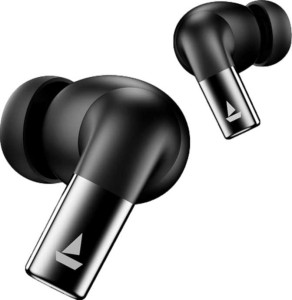
boAt Airdopes Ultra Pro
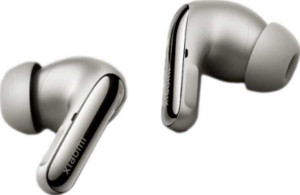
Xiaomi Buds 5 Pro

boAt Airdopes Ultra Pro Xiaomi Buds 5 Pro

Overview

Welcome to our in-depth specification comparison between the boAt Airdopes Ultra Pro and the Xiaomi Buds 5 Pro. Both earbuds share a wireless in-ear design with spatial audio support and fast charging, yet they diverge sharply when it comes to audio codec support, active noise cancellation, and overall battery ecosystem. Read on to discover how these two contenders stack up across every major category before making your decision.

Common Features

  • Both products use an in-ear fit design.
  • Both products are sweat resistant.
  • Both products are completely wireless with no cables.
  • Neither product is a neckband-style earbud.
  • Neither product includes wingtips.
  • Neither product features RGB lighting.
  • Both products have stereo speakers.
  • Neither product includes a UV light.
  • Both products offer passive noise reduction.
  • Both products support spatial audio.
  • Neither product supports Dolby Atmos.
  • Neither product supports Dirac Virtuo.
  • Neither product uses a neodymium magnet.
  • Neither product has a solar power battery.
  • Both products have a battery level indicator.
  • Both products have a rechargeable battery.
  • Both products include a USB Type-C charging port.
  • Neither product supports LDHC, aptX Low Latency, aptX HD, aptX, aptX Voice, or Auracast.
  • Both products have a maximum Bluetooth range of 10 m.
  • Both products feature in/on-ear detection.
  • Both products support fast charging.
  • Both products support multipoint connection with up to 2 devices.
  • Neither product can read notifications.
  • Both products have a mute function.
  • Both products can be used as a headset.
  • Both products have a control panel placed on the device.
  • Both products have voice prompts.
  • Both products have a noise-canceling microphone.

Main Differences

  • The Ingress Protection rating is IPX4 on boAt Airdopes Ultra Pro and IP54 on Xiaomi Buds 5 Pro.
  • Active noise cancellation (ANC) is present on Xiaomi Buds 5 Pro but not available on boAt Airdopes Ultra Pro.
  • The driver unit size is 10 mm on boAt Airdopes Ultra Pro and 11 mm on Xiaomi Buds 5 Pro.
  • The lowest frequency is 20 Hz on boAt Airdopes Ultra Pro and 15 Hz on Xiaomi Buds 5 Pro.
  • The highest frequency is 20000 Hz on boAt Airdopes Ultra Pro and 50000 Hz on Xiaomi Buds 5 Pro.
  • Battery life is 8 hours on boAt Airdopes Ultra Pro and 10 hours on Xiaomi Buds 5 Pro.
  • Battery life of the charging case is 92 hours on boAt Airdopes Ultra Pro and 30 hours on Xiaomi Buds 5 Pro.
  • Charge time is 0.5 hours on boAt Airdopes Ultra Pro and 1.5 hours on Xiaomi Buds 5 Pro.
  • Wireless charging is supported on Xiaomi Buds 5 Pro but not available on boAt Airdopes Ultra Pro.
  • Fast pairing is supported on Xiaomi Buds 5 Pro but not available on boAt Airdopes Ultra Pro.
  • The Bluetooth version is 5.3 on boAt Airdopes Ultra Pro and 5.4 on Xiaomi Buds 5 Pro.
  • LDAC support is present on Xiaomi Buds 5 Pro but not available on boAt Airdopes Ultra Pro.
  • Bluetooth LE Audio support is present on Xiaomi Buds 5 Pro but not available on boAt Airdopes Ultra Pro.
  • aptX Adaptive support is present on Xiaomi Buds 5 Pro but not available on boAt Airdopes Ultra Pro.
  • aptX Lossless support is present on Xiaomi Buds 5 Pro but not available on boAt Airdopes Ultra Pro.
  • AAC support is present on Xiaomi Buds 5 Pro but not available on boAt Airdopes Ultra Pro.
  • Audio latency is 65 ms on boAt Airdopes Ultra Pro and 50 ms on Xiaomi Buds 5 Pro.
  • Ambient sound mode is available on Xiaomi Buds 5 Pro but not on boAt Airdopes Ultra Pro.
  • The warranty period is 1 year on boAt Airdopes Ultra Pro and 2 years on Xiaomi Buds 5 Pro.
  • A built-in camera remote control function is present on Xiaomi Buds 5 Pro but not available on boAt Airdopes Ultra Pro.
  • The number of microphones is 4 on boAt Airdopes Ultra Pro and 6 on Xiaomi Buds 5 Pro.
Specs Comparison
boAt Airdopes Ultra Pro

boAt Airdopes Ultra Pro

Xiaomi Buds 5 Pro

Xiaomi Buds 5 Pro

Design:
Fit In-ear In-ear
Ingress Protection (IP) rating IPX4 IP54
water resistance Sweat resistant Sweat resistant
has no wires or cables
are neckband earbuds
wingtips included
has RGB lighting
has stereo speakers
has UV light
Has a display

Both the boAt Airdopes Ultra Pro and the Xiaomi Buds 5 Pro share the same fundamental design philosophy: true wireless, in-ear earbuds with no cables, no neckband, no wingtips, no RGB lighting, and no display. For a user scanning the basics, these two are nearly identical on paper.

The one meaningful differentiator in this group is the ingress protection rating. The Airdopes Ultra Pro carries an IPX4 rating, which means it is tested only against water splashes from any direction — the ″X″ indicates dust resistance was not assessed. The Buds 5 Pro steps up to a full IP54 rating, adding a dust-resistance component (level 5, meaning limited dust ingress) alongside the same splash protection. In practice, both handle sweat and light rain comfortably, but the Buds 5 Pro offers a measurable advantage for dusty environments such as outdoor workouts on dry trails or commutes in urban pollution.

Overall, design is largely a tie, but the Xiaomi Buds 5 Pro holds a narrow edge due to its superior IP54 rating, which provides broader environmental protection than the IPX4 on the boAt.

Sound quality:
has active noise cancellation (ANC)
has passive noise reduction
driver unit size 10 mm 11 mm
lowest frequency 20 Hz 15 Hz
highest frequency 20000 Hz 50000 Hz
supports spatial audio
has Dolby Atmos
has Dirac Virtuo
has a neodymium magnet

The most consequential difference here is that the Xiaomi Buds 5 Pro includes Active Noise Cancellation (ANC), while the boAt Airdopes Ultra Pro relies solely on passive noise reduction. Passive isolation — achieved through the physical seal of the eartips — can dampen ambient sound to a degree, but ANC electronically counters low-frequency noise like engine rumble, AC hum, and crowd chatter. For commuters, frequent flyers, or anyone working in noisy environments, this is a decisive real-world advantage for the Buds 5 Pro.

On the driver and frequency side, the Buds 5 Pro also pulls ahead. Its 11 mm driver (versus 10 mm on the boAt) can theoretically move more air, contributing to fuller low-end response. More notably, its frequency range extends from 15 Hz to 50,000 Hz, compared to the Airdopes Ultra Pro's standard 20 Hz – 20,000 Hz. The sub-20 Hz extension adds subtle tactile bass presence, and the high-frequency ceiling of 50 kHz positions the Buds 5 Pro for hi-res audio content — meaningful for listeners using high-bitrate sources. Both earbuds support spatial audio, and neither includes Dolby Atmos or Dirac Virtuo processing.

The Xiaomi Buds 5 Pro holds a clear and substantial advantage in this category, combining ANC, a wider driver, and a significantly broader frequency range — making it the stronger choice for listeners who prioritize audio fidelity and noise isolation.

Power:
Battery life 8 hours 10 hours
Battery life of charging case 92 hours 30 hours
charge time 0.5 hours 1.5 hours
has wireless charging
Has a solar power battery
has a battery level indicator
has a rechargeable battery

Power is where these two earbuds diverge most sharply — and where the ″right″ choice depends heavily on how you use them. The Xiaomi Buds 5 Pro lasts 10 hours per charge versus 8 hours for the boAt Airdopes Ultra Pro, a meaningful gap for long-haul flights or all-day listening sessions. The Buds 5 Pro also supports wireless charging, adding everyday convenience for users already in a Qi ecosystem.

Flip the lens, however, and the Airdopes Ultra Pro makes a compelling counter-argument. Its charging case delivers a staggering 92 total hours of combined playback — more than three times the Buds 5 Pro's 30 hours. For travelers or users who go days between case charges, that gap is enormous. Add to that a remarkably fast 30-minute charge time for the earbuds themselves, compared to 1.5 hours on the Buds 5 Pro, and the boAt becomes the clear winner for anyone who needs a quick top-up before heading out.

There is no single winner here — the edge belongs to different products depending on the use case. The Xiaomi Buds 5 Pro suits listeners who prioritize per-session stamina and wireless charging convenience, while the boAt Airdopes Ultra Pro is the stronger pick for extended trips or users who rarely have access to a charger, thanks to its vastly superior case capacity and near-instant charge time.

Connectivity:
has fast pairing
Has USB Type-C
Bluetooth version 5.3 5.4
has LDAC
has LDHC
has Bluetooth LE Audio
has aptX Adaptive
has aptX Low Latency
has aptX HD
has aptX
has aptX Lossless
audio latency 65 ms 50 ms
has aptX Voice
has Auracast
maximum Bluetooth range 10 m 10 m
supports Bluetooth pairing using NFC
Can be used wirelessly
has AAC

Connectivity is arguably the category where the gap between these two earbuds is most technically pronounced. The Xiaomi Buds 5 Pro runs on Bluetooth 5.4 versus 5.3 on the boAt Airdopes Ultra Pro — a modest version difference on its own, but it coincides with a dramatically richer codec suite. The Buds 5 Pro supports LDAC, aptX Adaptive, and aptX Lossless, all of which are high-resolution audio codecs capable of transmitting significantly more audio data than standard SBC. For listeners streaming hi-res content from compatible sources, this translates to audibly richer detail and reduced compression artifacts. The Airdopes Ultra Pro, by contrast, lists none of these codecs, meaning it falls back to SBC regardless of the source — a notable limitation for audio enthusiasts.

Latency and pairing experience also favor the Buds 5 Pro. Its 50 ms audio latency undercuts the boAt's 65 ms, a difference that matters during video playback or casual gaming where lip-sync accuracy is noticeable. Fast pairing further streamlines the connection experience on the Buds 5 Pro, reducing the friction of switching between devices. Both earbuds share the same 10 m Bluetooth range and USB-C charging, and neither supports NFC pairing or Auracast.

The Xiaomi Buds 5 Pro holds a decisive advantage in connectivity. Its combination of advanced codec support, lower latency, Bluetooth LE Audio, and fast pairing makes it the clear choice for users who demand high-fidelity wireless audio and a seamless multi-device experience.

Features:
release date January 2025 February 2025
has ambient sound mode
has in/on-ear detection
Supports fast charging
multipoint count 2 2
can read notifications
has a mute function
can be used as a headset
control panel placed on a device
warranty period 1 years 2 years
Has voice prompts
travel bag is included
Has an in-line control panel
Has a temperature sensor
Has a built-in camera remote control function

Much of this category is shared ground: both earbuds offer fast charging, dual-device multipoint connection, in/on-ear detection, a mute function, on-device controls, voice prompts, and a travel bag in the box. For everyday usability, this common foundation means neither product feels feature-stripped relative to the other at a glance.

Look closer, though, and three differentiators emerge. The Xiaomi Buds 5 Pro includes an ambient sound mode, which lets external audio pass through the earbuds — essential for staying aware of surroundings during outdoor use or catching announcements without removing the earbuds. The boAt Airdopes Ultra Pro omits this entirely. The Buds 5 Pro also doubles the warranty period to 2 years versus 1 year on the boAt, a practical long-term ownership advantage. Rounding out its extras, the Buds 5 Pro adds a camera remote control function — a niche but genuinely useful feature for mobile photographers and content creators.

The Xiaomi Buds 5 Pro takes this category clearly, with ambient sound mode standing out as the most impactful daily-use advantage, supported further by a longer warranty and the camera remote feature. The boAt Airdopes Ultra Pro holds its own on the shared fundamentals but offers nothing exclusive in return.

Microphone:
number of microphones 4 6
has a noise-canceling microphone

Microphone hardware is lean but telling in this comparison. Both earbuds feature noise-canceling microphones, ensuring that call quality benefits from active filtering of background noise on the sending end — a baseline expectation at this product tier. The meaningful distinction is microphone count: the Xiaomi Buds 5 Pro packs 6 microphones versus 4 on the boAt Airdopes Ultra Pro.

More microphones allow for more sophisticated beamforming and noise-isolation algorithms. With additional pickup points, the system can more accurately triangulate the direction of the speaker's voice and suppress off-axis noise — wind, traffic, or crowd chatter — more effectively. For users who take frequent calls in dynamic environments, this architectural advantage can translate to noticeably cleaner voice transmission for the person on the other end.

The Xiaomi Buds 5 Pro holds the edge here. While both earbuds share noise-canceling mic capability, the Buds 5 Pro's 6-microphone array provides a stronger hardware foundation for call clarity in challenging conditions, making it the more capable pick for call-heavy users.

Comparison Summary & Verdict

After a thorough review of every specification, these two earbuds serve distinctly different audiences. The boAt Airdopes Ultra Pro stands out with its exceptional 92-hour combined battery life and a remarkably fast 0.5-hour charge time, making it the go-to choice for users who prioritize endurance and minimal downtime. On the other hand, the Xiaomi Buds 5 Pro delivers a richer feature set with active noise cancellation, a wider frequency range of 15 Hz to 50000 Hz, superior codec support including LDAC and aptX Lossless, wireless charging, and a 2-year warranty — all at the cost of a smaller case battery. If audio fidelity and versatile connectivity matter most to you, the Xiaomi is the stronger pick; if all-day battery stamina and fast recharging are your priorities, the boAt earns its place.

boAt Airdopes Ultra Pro
Buy boAt Airdopes Ultra Pro if...

Buy the boAt Airdopes Ultra Pro if you need an exceptionally long-lasting charging case with up to 92 hours of total battery life and the fastest possible recharge time of just 30 minutes.

Xiaomi Buds 5 Pro
Buy Xiaomi Buds 5 Pro if...

Buy the Xiaomi Buds 5 Pro if you want active noise cancellation, premium codec support including LDAC and aptX Lossless, a wider frequency range, wireless charging, and a longer 2-year warranty.