boAt Nirvana Ivy Pro
boAt Nirvana Zenith Pro

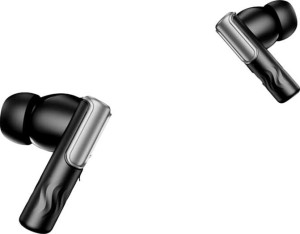
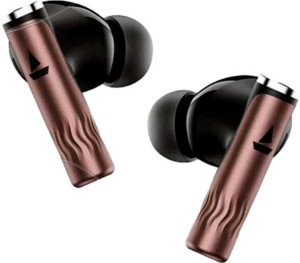
boAt Nirvana Ivy Pro boAt Nirvana Zenith Pro

Overview

Choosing between the boAt Nirvana Ivy Pro and the boAt Nirvana Zenith Pro is no simple task — both are fully wireless, IPX4-rated earbuds that share a strong common foundation of features. Yet the two models diverge in meaningful ways when it comes to active noise cancellation, audio enhancements, and battery endurance. This head-to-head comparison examines every key specification so you can confidently decide which earbud best suits your listening habits and daily needs.

Common Features

  • Both products use an in-ear fit design.
  • Both products carry an IPX4 ingress protection rating, making them sweat resistant.
  • Both products are fully wireless with no wires or cables.
  • Neither product is a neckband-style earbud.
  • Neither product includes wingtips.
  • Neither product features RGB lighting.
  • Both products have stereo speakers.
  • Both products offer passive noise reduction.
  • Both products cover a frequency range of 20 Hz to 20000 Hz.
  • Spatial audio is not supported on either product.
  • Dirac Virtuo is not available on either product.
  • Neither product uses a neodymium magnet.
  • Both products deliver 8 hours of battery life on a single charge.
  • Wireless charging is not available on either product.
  • Neither product has a solar power battery.
  • Both products have a battery level indicator.
  • Both products have a rechargeable battery.
  • Both products include a USB Type-C connection.
  • Both products support LDAC audio codec.
  • LDHC, Bluetooth LE Audio, aptX Adaptive, aptX Low Latency, aptX HD, and aptX are not supported on either product.
  • Fast charging is supported on both products.
  • Neither product can read notifications.
  • Both products have a mute function.
  • Both products can be used as a headset.
  • Both products have a control panel placed on the device.
  • Both products have voice prompts.
  • A travel bag is included with both products.
  • A find device feature is not available on either product.
  • Both products are equipped with 6 microphones.
  • Both products have a noise-canceling microphone.

Main Differences

  • Active noise cancellation (ANC) is present on the boAt Nirvana Ivy Pro but not available on the boAt Nirvana Zenith Pro.
  • Driver unit size is 11 mm on the boAt Nirvana Ivy Pro and 12 mm on the boAt Nirvana Zenith Pro.
  • Dolby Atmos support is present on the boAt Nirvana Ivy Pro but not available on the boAt Nirvana Zenith Pro.
  • Battery life of the charging case is 42 hours on the boAt Nirvana Ivy Pro and 72 hours on the boAt Nirvana Zenith Pro.
  • Charge time is 1.5 hours on the boAt Nirvana Ivy Pro and 0.55 hours on the boAt Nirvana Zenith Pro.
  • Fast pairing is available on the boAt Nirvana Ivy Pro but not on the boAt Nirvana Zenith Pro.
  • Bluetooth version is 5.3 on the boAt Nirvana Ivy Pro and 5.4 on the boAt Nirvana Zenith Pro.
  • Audio latency is 50 ms on the boAt Nirvana Ivy Pro and 60 ms on the boAt Nirvana Zenith Pro.
  • Ambient sound mode is present on the boAt Nirvana Ivy Pro but not available on the boAt Nirvana Zenith Pro.
  • In/on-ear detection is present on the boAt Nirvana Ivy Pro but not available on the boAt Nirvana Zenith Pro.
Specs Comparison
boAt Nirvana Ivy Pro

boAt Nirvana Ivy Pro

boAt Nirvana Zenith Pro

boAt Nirvana Zenith Pro

Design:
Fit In-ear In-ear
Ingress Protection (IP) rating IPX4 IPX4
water resistance Sweat resistant Sweat resistant
has no wires or cables
are neckband earbuds
wingtips included
has RGB lighting
has stereo speakers
has UV light
Has a display

In terms of design, the boAt Nirvana Ivy Pro and the boAt Nirvana Zenith Pro are virtually identical across every measured specification. Both adopt a true wireless, in-ear fit with no neckband, no wires, and no wingtips included — meaning neither product offers extra ear stability accessories out of the box. Both also share an IPX4 ingress protection rating, which translates to sweat and light splash resistance in real-world use, making them suitable for workouts but not submersion or heavy rain exposure.

Neither earphone includes RGB lighting, a display, UV light, or any other distinguishing physical feature based on the provided data. Both deliver stereo sound through their respective drivers, which is the standard expectation for true wireless earbuds at this tier. There is no design-level differentiator — every single spec in this group is a match.

For this group, the two products are in a complete tie. A buyer choosing between them on design alone will find no meaningful distinction — both offer the same form factor, the same IP rating, and the same feature set. The decision will need to be driven by specs from other categories such as audio performance, battery life, or connectivity.

Sound quality:
has active noise cancellation (ANC)
has passive noise reduction
driver unit size 11 mm 12 mm
lowest frequency 20 Hz 20 Hz
highest frequency 20000 Hz 20000 Hz
supports spatial audio
has Dolby Atmos
has Dirac Virtuo
has a neodymium magnet

The most significant divide between these two earbuds lies in noise isolation. The Nirvana Ivy Pro includes Active Noise Cancellation (ANC), while the Nirvana Zenith Pro relies solely on passive noise reduction — the physical seal of the ear tip. In practical terms, ANC actively counters low-frequency ambient noise like engine rumble or HVAC hum, making the Ivy Pro a meaningfully better fit for commuters, frequent flyers, or open office workers. The Zenith Pro's passive-only approach can still block some environmental noise, but it will fall short in consistently loud or variable environments.

On the driver side, the Zenith Pro carries a slightly larger 12 mm driver versus the Ivy Pro's 11 mm driver. A larger driver can theoretically move more air and reproduce bass with greater authority, though real-world sonic output depends heavily on tuning. Both share an identical frequency range of 20 Hz to 20,000 Hz, covering the full spectrum of human hearing. Neither unit uses a neodymium magnet or supports spatial audio. The Ivy Pro, however, adds Dolby Atmos support — a processing layer that can enhance perceived soundstage depth, particularly for compatible movies and music, giving it a feature advantage on the audio enhancement front.

Weighing both factors, the Nirvana Ivy Pro holds a clear edge in this category. ANC alone is a substantial real-world differentiator, and the addition of Dolby Atmos compounds that advantage. The Zenith Pro's marginally larger driver is the only counterpoint, but it is not enough to offset the Ivy Pro's broader sound quality feature set.
Power:
Battery life 8 hours 8 hours
Battery life of charging case 42 hours 72 hours
charge time 1.5 hours 0.55 hours
has wireless charging
Has a solar power battery
has a battery level indicator
has a rechargeable battery

Per-earbud battery life is identical at 8 hours for both the Nirvana Ivy Pro and the Nirvana Zenith Pro, so neither has an advantage for a single uninterrupted listening session. Where the two diverge sharply is in the charging case. The Zenith Pro's case extends total playback to 72 hours combined, compared to the Ivy Pro's 42 hours — a 30-hour gap that is substantial for anyone who travels frequently, works long shifts, or simply charges their case infrequently. For multi-day trips without reliable access to an outlet, that difference is genuinely consequential.

Charge speed tells a similarly one-sided story. The Zenith Pro replenishes in approximately 0.55 hours — roughly 33 minutes — while the Ivy Pro requires 1.5 hours to fully charge. Nearly three times faster charging means the Zenith Pro spends far less time tethered to a cable, a meaningful quality-of-life advantage for users who often forget to charge overnight. Neither model supports wireless charging, so both require a wired connection regardless.

The Nirvana Zenith Pro wins this category decisively. Its dramatically larger case battery and significantly faster charge time outweigh the Ivy Pro's identical per-earbud endurance. For power-conscious users, the Zenith Pro is the more capable and convenient choice.

Connectivity:
has fast pairing
Has USB Type-C
Bluetooth version 5.3 5.4
has LDAC
has LDHC
has Bluetooth LE Audio
has aptX Adaptive
has aptX Low Latency
has aptX HD
has aptX
has aptX Lossless
audio latency 50 ms 60 ms
has aptX Voice
has Auracast
maximum Bluetooth range 10 m 10 m
supports Bluetooth pairing using NFC
Can be used wirelessly
has AAC

Both earbuds share a strong connectivity foundation — LDAC and AAC codec support, a 10 m Bluetooth range, and USB-C charging. LDAC is particularly noteworthy as it transmits audio at up to three times the data rate of standard SBC, enabling near-lossless wireless audio quality when paired with a compatible source device. That shared capability puts both products in a favorable position for audiophile-leaning users. Where they part ways is on Bluetooth version: the Zenith Pro runs Bluetooth 5.4 against the Ivy Pro's 5.3, a generational step that brings incremental improvements in connection stability and efficiency, though the practical day-to-day difference at this gap is modest.

Latency and pairing convenience flip the advantage back toward the Ivy Pro. It delivers a 50 ms audio latency versus the Zenith Pro's 60 ms — a 10 ms difference that, while small in absolute terms, can be perceptible during video playback or casual gaming where audio-visual sync matters. The Ivy Pro also supports fast pairing, which streamlines the initial device connection experience, whereas the Zenith Pro requires a standard manual pairing process.

This category ends in a near-even split with slight positional trade-offs on each side. The Nirvana Ivy Pro edges ahead overall for most users, as lower latency and fast pairing are practical daily benefits that outweigh the Zenith Pro's marginally newer Bluetooth version. Neither product supports aptX variants, NFC pairing, or LE Audio, so neither holds a premium-tier connectivity advantage in those respects.

Features:
release date July 2025 July 2025
has ambient sound mode
has in/on-ear detection
has find device feature
Supports fast charging
can read notifications
has a mute function
can be used as a headset
control panel placed on a device
Has voice prompts
travel bag is included
Has an in-line control panel
Has a temperature sensor
Has a built-in camera remote control function

The shared feature set between these two earbuds is solid — both offer fast charging, on-device touch controls, voice prompts, a mute function, headset capability, and even a travel bag included in the box. For everyday usability, that baseline is respectable. However, two exclusive features on the Nirvana Ivy Pro create a meaningful gap in day-to-day intelligence and convenience.

First, the Ivy Pro includes ambient sound mode, which uses microphones to pipe in environmental audio on demand — critical for staying aware of surroundings during commutes, workouts, or street use without removing the earbuds. The Zenith Pro offers no such transparency mode. Second, the Ivy Pro's in/on-ear detection automatically pauses playback when an earbud is removed and resumes when reinserted, a small but frequently appreciated quality-of-life feature that the Zenith Pro lacks entirely. Together, these two omissions make the Zenith Pro feel notably more passive in how it responds to the user's physical context.

The Nirvana Ivy Pro wins this category clearly. Ambient sound mode and in-ear detection are not fringe features — they are among the most practically useful capabilities in modern true wireless earbuds, and their absence on the Zenith Pro is a tangible step down in everyday usability for anyone who values situational awareness or seamless playback control.

Microphone:
number of microphones 6 6
has a noise-canceling microphone

Both the Nirvana Ivy Pro and the Nirvana Zenith Pro are identically equipped on the microphone front: each carries 6 microphones and supports noise-canceling microphone technology. A six-mic array is a generous configuration for true wireless earbuds, enabling more precise beamforming — the ability to isolate the speaker's voice by triangulating sound from multiple pickup points simultaneously. In noisy environments like busy streets or open offices, this translates to noticeably cleaner call audio for the person on the other end.

The inclusion of noise-canceling microphone processing on both models further reinforces call quality, actively suppressing wind noise, background chatter, and ambient hum before transmission. This is a feature more commonly associated with premium-tier earbuds, so its presence on both products here is a shared strength worth noting.

With every measurable microphone specification matching exactly, this category is a complete tie. Neither the Ivy Pro nor the Zenith Pro holds any advantage here — both are equally well-equipped for voice calls and virtual meetings based on the available data.

Comparison Summary & Verdict

After weighing all the evidence, the right choice depends entirely on your priorities. The boAt Nirvana Ivy Pro is the stronger pick for listeners who want a richer audio experience — it offers active noise cancellation, Dolby Atmos, ambient sound mode, in/on-ear detection, fast pairing, and a lower audio latency of 50 ms, making it ideal for commuters and those who demand immersive, feature-packed sound. The boAt Nirvana Zenith Pro, meanwhile, wins decisively on endurance and convenience, delivering a massive 72-hour case battery, an ultra-fast 0.55-hour charge time, a slightly larger 12 mm driver, and the newer Bluetooth 5.4 standard. If keeping your earbuds topped up with minimal effort is paramount, the Zenith Pro is the smarter buy; if a full suite of audio features matters more, the Ivy Pro is the clear frontrunner.

boAt Nirvana Ivy Pro
Buy boAt Nirvana Ivy Pro if...

Buy the boAt Nirvana Ivy Pro if you want active noise cancellation, Dolby Atmos, ambient sound mode, and lower audio latency for a more immersive, feature-rich listening experience.

boAt Nirvana Zenith Pro
Buy boAt Nirvana Zenith Pro if...

Buy the boAt Nirvana Zenith Pro if you prioritize a massive 72-hour case battery and ultra-fast 0.55-hour charging to keep your earbuds ready with minimal downtime.