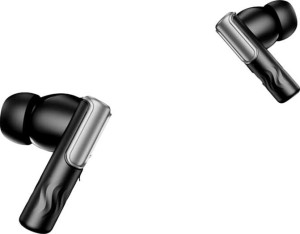
boAt Nirvana Ivy Pro
JBL Tune Beam 2

boAt Nirvana Ivy Pro JBL Tune Beam 2

Overview

Welcome to this in-depth specification comparison between the boAt Nirvana Ivy Pro and the JBL Tune Beam 2. Both are feature-rich true wireless earbuds sharing a strong foundation of active noise cancellation, six-microphone arrays, and Bluetooth 5.3 — but they diverge in meaningful ways. From audio codec support and driver size to battery endurance and spatial audio capabilities, this head-to-head breakdown will help you pinpoint which pair is the right fit for your listening needs.

Common Features

  • Both products use an in-ear fit.
  • Both products are sweat resistant.
  • Both products have no wires or cables.
  • Neither product is a neckband earbud style.
  • Neither product includes wingtips.
  • Neither product has RGB lighting.
  • Both products have stereo speakers.
  • Neither product has a UV light.
  • Both products have active noise cancellation (ANC).
  • Both products have passive noise reduction.
  • Both products share a lowest frequency of 20 Hz and a highest frequency of 20000 Hz.
  • Neither product has a neodymium magnet.
  • Neither product supports wireless charging.
  • Neither product has a solar power battery.
  • Both products have a battery level indicator.
  • Both products have a rechargeable battery.
  • Both products support fast pairing.
  • Both products have a USB Type-C connector.
  • Both products use Bluetooth version 5.3.
  • Neither product supports LDHC, Bluetooth LE Audio, aptX Adaptive, aptX Low Latency, or aptX HD.
  • Both products have an ambient sound mode.
  • Both products support fast charging.
  • Both products support multipoint connection with 2 devices simultaneously.
  • Neither product can read notifications.
  • Both products have a mute function.
  • Both products can be used as a headset.
  • Both products have a control panel placed on the device.
  • Both products have voice prompts.
  • Both products have 6 microphones.
  • Both products have a noise-canceling microphone.

Main Differences

  • The Ingress Protection rating is IPX4 on the boAt Nirvana Ivy Pro and IP54 on the JBL Tune Beam 2.
  • The driver unit size is 11 mm on the boAt Nirvana Ivy Pro and 10 mm on the JBL Tune Beam 2.
  • Spatial audio support is present on the JBL Tune Beam 2 but not available on the boAt Nirvana Ivy Pro.
  • Dolby Atmos support is present on the boAt Nirvana Ivy Pro but not available on the JBL Tune Beam 2.
  • Battery life of the earbuds is 8 hours on the boAt Nirvana Ivy Pro and 12 hours on the JBL Tune Beam 2.
  • Battery life of the charging case is 42 hours on the boAt Nirvana Ivy Pro and 36 hours on the JBL Tune Beam 2.
  • Charge time is 1.5 hours on the boAt Nirvana Ivy Pro and 2 hours on the JBL Tune Beam 2.
  • LDAC support is present on the boAt Nirvana Ivy Pro but not available on the JBL Tune Beam 2.
  • AAC support is present on the boAt Nirvana Ivy Pro but not available on the JBL Tune Beam 2.
  • In/on-ear detection is present on the boAt Nirvana Ivy Pro but not available on the JBL Tune Beam 2.
Specs Comparison
boAt Nirvana Ivy Pro

boAt Nirvana Ivy Pro

JBL Tune Beam 2

JBL Tune Beam 2

Design:
Fit In-ear In-ear
Ingress Protection (IP) rating IPX4 IP54
water resistance Sweat resistant Sweat resistant
has no wires or cables
are neckband earbuds
wingtips included
has RGB lighting
has stereo speakers
has UV light
Has a display

Both the boAt Nirvana Ivy Pro and the JBL Tune Beam 2 share the same fundamental design DNA: fully wireless, in-ear earbuds with no neckband, no wingtips, no RGB lighting, and no display. For users, this means a clean, minimalist form factor on both sides with no meaningful structural difference to consider.

The one area where these two diverge is water and dust protection. The Nirvana Ivy Pro carries an IPX4 rating, which certifies resistance to sweat and light splashes from any direction — adequate for workouts and everyday use, but offering no dust protection. The Tune Beam 2 steps up to IP54, adding a ″5″ dust-resistance rating alongside the same level of water protection. In practice, this means the JBL is better suited for outdoor environments where fine particles, sand, or dust are a concern, not just moisture.

JBL Tune Beam 2 has a clear edge in this group solely due to its superior IP54 rating. For gym-only use the difference is negligible, but for commuters, travelers, or anyone frequently outdoors, the added dust resistance of the Tune Beam 2 translates to a meaningfully more durable and versatile earbud.

Sound quality:
has active noise cancellation (ANC)
has passive noise reduction
driver unit size 11 mm 10 mm
lowest frequency 20 Hz 20 Hz
highest frequency 20000 Hz 20000 Hz
supports spatial audio
has Dolby Atmos
has Dirac Virtuo
has a neodymium magnet

At the foundation, both earbuds are well-matched: each delivers the standard 20 Hz–20,000 Hz frequency range covering the full spectrum of human hearing, and both combine active noise cancellation with passive noise reduction for a layered approach to blocking out the outside world. Neither uses a neodymium magnet, so that particular driver advantage is absent from both sides.

Where things diverge is in the driver size and immersive audio support. The Nirvana Ivy Pro uses a slightly larger 11 mm driver compared to the Tune Beam 2's 10 mm driver — a marginal difference that can, in theory, contribute to a fuller low-end response, though real-world perception depends heavily on tuning. More meaningfully, the two products take opposite paths on spatial audio: the Ivy Pro includes Dolby Atmos support, a widely adopted standard that enhances perceived depth and surround-like staging on compatible content, while the Tune Beam 2 offers spatial audio — a broader, platform-level feature that can dynamically adapt to head movement and content type depending on the paired device.

This group is genuinely close, but the edge tips slightly toward the JBL Tune Beam 2 for users invested in a modern spatial audio ecosystem, as its spatial audio support tends to be more versatile across devices and use cases. The Ivy Pro's Dolby Atmos support is a meaningful perk for Atmos-encoded content specifically, making it the stronger pick for dedicated movie or music listeners on compatible platforms.

Power:
Battery life 8 hours 12 hours
Battery life of charging case 42 hours 36 hours
charge time 1.5 hours 2 hours
has wireless charging
Has a solar power battery
has a battery level indicator
has a rechargeable battery

The headline difference here is per-charge earbud endurance: the JBL Tune Beam 2 delivers 12 hours of playback on a single charge versus 8 hours for the Nirvana Ivy Pro — a 50% gap that is genuinely significant in daily use. For commuters, travelers, or anyone who forgets to charge their case regularly, that extra four hours per session can be the difference between making it through a long-haul flight or a full workday without interruption.

The Nirvana Ivy Pro partially compensates through its charging case, which holds 42 total hours compared to the Tune Beam 2's 36 hours. So while the JBL earbuds last longer per session, the boAt case can sustain more cumulative top-ups before needing a wall charge itself — roughly 4.25 full charges versus 3 for the Tune Beam 2. The Ivy Pro also charges faster at 1.5 hours versus 2 hours, a handy advantage when you need a quick turnaround. Neither supports wireless charging, so both require a cable when topping up the case.

On balance, the Tune Beam 2 holds the edge for most users. Superior per-session battery life is a more practical day-to-day advantage than a larger case reserve — most people charge their case nightly anyway. The Ivy Pro's faster charge time and higher total case capacity are meaningful consolations, but they don't fully offset a 4-hour shortfall in earbud endurance.

Connectivity:
has fast pairing
Has USB Type-C
Bluetooth version 5.3 5.3
has LDAC
has LDHC
has Bluetooth LE Audio
has aptX Adaptive
has aptX Low Latency
has aptX HD
has aptX
has aptX Lossless
has aptX Voice
has Auracast
maximum Bluetooth range 10 m 10 m
supports Bluetooth pairing using NFC
Can be used wirelessly
has AAC

Across the core connectivity framework, these two are essentially identical: both run on Bluetooth 5.3, cap out at a 10 m wireless range, support fast pairing, use USB-C for charging, and skip NFC pairing. For everyday use, neither has a structural advantage in how they connect or stay connected to a device.

The meaningful split is in audio codec support. The boAt Nirvana Ivy Pro supports both LDAC and AAC, while the JBL Tune Beam 2 supports neither. LDAC is Sony's high-resolution wireless codec, capable of transmitting up to three times more data than standard SBC — on a compatible source device, this translates to audibly richer detail and less compression artifacting. AAC, meanwhile, is the preferred codec for Apple devices, ensuring efficient, low-latency streaming on iPhones and iPads. The Tune Beam 2 falling back to SBC by default means it cannot take full advantage of high-quality source files regardless of the playback device.

The Nirvana Ivy Pro has a clear and significant edge in this group. Codec support is one of the most underappreciated factors in wireless audio quality, and offering both LDAC for Android audiophiles and AAC for Apple users gives the boAt earbuds a versatility that the Tune Beam 2 simply cannot match on connectivity alone.

Features:
release date July 2025 March 2025
has ambient sound mode
has in/on-ear detection
Supports fast charging
multipoint count 2 2
can read notifications
has a mute function
can be used as a headset
control panel placed on a device
Has voice prompts
travel bag is included
Has an in-line control panel
Has a temperature sensor
Has a built-in camera remote control function

Across the features category, these two earbuds are remarkably well-matched. Both offer ambient sound mode, fast charging, 2-device multipoint connectivity, on-device controls, voice prompts, a mute function, call headset capability, and even a travel bag in the box. For the vast majority of users, the day-to-day feature experience will feel functionally identical.

The single differentiator in this group is in/on-ear detection, which the Nirvana Ivy Pro supports and the Tune Beam 2 does not. This sensor automatically pauses playback when an earbud is removed and resumes when it is reinserted — a small but genuinely useful quality-of-life feature that reduces the need to manually interact with your phone every time you take out an earbud to have a quick conversation.

The Nirvana Ivy Pro edges ahead in this group, but narrowly. In/on-ear detection is a convenience feature rather than a core capability, so its absence on the Tune Beam 2 is a minor omission rather than a serious shortcoming. Users who frequently switch between listening and real-world conversations will appreciate it; those who rarely remove their earbuds mid-session will barely notice the difference.

Microphone:
number of microphones 6 6
has a noise-canceling microphone

There is nothing to separate these two on paper: both the boAt Nirvana Ivy Pro and the JBL Tune Beam 2 feature 6 microphones and noise-canceling mic technology. A 6-mic array is a premium configuration for true wireless earbuds, enabling beamforming and multi-point noise suppression that significantly improves voice clarity in windy, crowded, or noisy environments during calls.

This group is a complete tie. Based strictly on the provided specifications, neither product holds any advantage over the other in microphone hardware or capability.

Comparison Summary & Verdict

After examining all the specifications, both earbuds prove to be well-equipped options with notably shared strengths: ANC, fast charging, dual-device multipoint, and a six-microphone noise-canceling setup. However, key differences set them apart. The boAt Nirvana Ivy Pro stands out with LDAC and AAC codec support, Dolby Atmos, a larger 11 mm driver, a longer combined case battery life of 42 hours, faster 1.5-hour charge time, and in/on-ear detection — making it ideal for audiophiles and users who demand high-resolution audio and smarter wear detection. The JBL Tune Beam 2 counters with a superior 12-hour earbud battery life, a higher IP54 dust-and-sweat rating, and spatial audio support, making it the better pick for active users and those who prioritize longer listening sessions and immersive soundscapes.

boAt Nirvana Ivy Pro
Buy boAt Nirvana Ivy Pro if...

Buy the boAt Nirvana Ivy Pro if you want high-resolution audio codec support with LDAC and AAC, Dolby Atmos, faster charging, and in/on-ear detection in a feature-packed ANC earbud.

JBL Tune Beam 2
Buy JBL Tune Beam 2 if...

Buy the JBL Tune Beam 2 if you prioritize a longer 12-hour earbud battery life, a more robust IP54 dust and sweat resistance rating, and spatial audio support for an immersive listening experience.