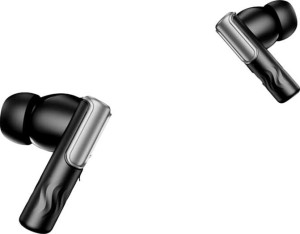
At the foundation, these two earbuds are well-matched: both offer ANC, passive noise reduction, and an identical frequency range of 20 Hz – 20,000 Hz, covering the full extent of human hearing. Neither has a neodymium magnet listed, so neither holds a driver-material advantage on paper.
The divergence comes in two notable areas. First, driver size: the boAt Nirvana Ivy Pro uses an 11 mm driver versus the JBL's 10 mm. A larger driver can move more air, which sometimes translates to stronger bass presence — but driver size alone is not a reliable predictor of sound quality without knowing tuning and driver quality. Second, and more impactful from a feature standpoint, the JBL Tune Buds 2 supports spatial audio, which creates a wider, more immersive soundstage particularly useful for movies, gaming, and certain music genres. The boAt counters with Dolby Atmos support, which similarly enhances three-dimensional audio but depends heavily on Dolby Atmos-encoded content being available through the source device or streaming service.
This group is genuinely close, but the edge depends on use case. If your listening is content-driven — streaming platforms, movies, or gaming — the JBL Tune Buds 2 has a slight advantage through spatial audio compatibility. For general music listening where Dolby Atmos content is accessible, the boAt is a competitive alternative. Neither product has a commanding lead, but the JBL's spatial audio support is the more broadly applicable feature for most users.