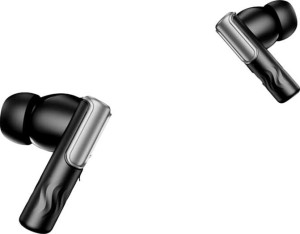
boAt Nirvana Ivy Pro
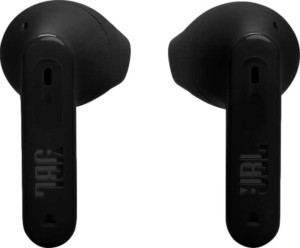
JBL Tune Flex 2

boAt Nirvana Ivy Pro JBL Tune Flex 2

Common Features

  • Both products are wireless with no wires or cables.
  • Neither product is a neckband earbud style.
  • Neither product includes wingtips.
  • Neither product has RGB lighting.
  • Both products have stereo speakers.
  • Neither product has a UV light.
  • Neither product has a display.
  • Both products have active noise cancellation (ANC).
  • Both products share a frequency range of 20 Hz to 20000 Hz.
  • Neither product has a Dirac Virtuo feature.
  • Neither product uses a neodymium magnet.
  • Neither product supports wireless charging.
  • Neither product has a solar power battery.
  • Both products have a battery level indicator.
  • Both products have a rechargeable battery.
  • Both products support fast pairing.
  • Both products have USB Type-C connectivity.
  • Both products use Bluetooth version 5.3.
  • Neither product supports LDHC, Bluetooth LE Audio, aptX Adaptive, aptX Low Latency, or aptX HD.
  • Both products have an ambient sound mode.
  • Both products support fast charging.
  • Both products support multipoint connection with up to 2 devices simultaneously.
  • Neither product can read notifications.
  • Both products have a mute function.
  • Both products can be used as a headset.
  • Both products have a control panel placed on the device.
  • Both products have voice prompts.
  • Both products have 6 microphones.
  • Both products have a noise-canceling microphone.

Main Differences

  • The fit style is in-ear on boAt Nirvana Ivy Pro and earbud on JBL Tune Flex 2.
  • The Ingress Protection rating is IPX4 on boAt Nirvana Ivy Pro and IP54 on JBL Tune Flex 2.
  • Water resistance is sweat resistant on boAt Nirvana Ivy Pro and water resistant on JBL Tune Flex 2.
  • Passive noise reduction is present on boAt Nirvana Ivy Pro but not available on JBL Tune Flex 2.
  • The driver unit size is 11 mm on boAt Nirvana Ivy Pro and 12 mm on JBL Tune Flex 2.
  • Spatial audio support is available on JBL Tune Flex 2 but not on boAt Nirvana Ivy Pro.
  • Dolby Atmos support is present on boAt Nirvana Ivy Pro but not available on JBL Tune Flex 2.
  • Battery life is 8 hours on boAt Nirvana Ivy Pro and 12 hours on JBL Tune Flex 2.
  • Battery life of the charging case is 42 hours on boAt Nirvana Ivy Pro and 36 hours on JBL Tune Flex 2.
  • Charge time is 1.5 hours on boAt Nirvana Ivy Pro and 2 hours on JBL Tune Flex 2.
  • LDAC support is present on boAt Nirvana Ivy Pro but not available on JBL Tune Flex 2.
  • AAC support is present on boAt Nirvana Ivy Pro but not available on JBL Tune Flex 2.
  • In/on-ear detection is present on boAt Nirvana Ivy Pro but not available on JBL Tune Flex 2.
  • A find device feature is available on JBL Tune Flex 2 but not on boAt Nirvana Ivy Pro.
Specs Comparison
boAt Nirvana Ivy Pro

boAt Nirvana Ivy Pro

JBL Tune Flex 2

JBL Tune Flex 2

Design:
Fit In-ear Earbud
Ingress Protection (IP) rating IPX4 IP54
water resistance Sweat resistant Water resistant
has no wires or cables
are neckband earbuds
wingtips included
has RGB lighting
has stereo speakers
has UV light
Has a display

Both the boAt Nirvana Ivy Pro and the JBL Tune Flex 2 are fully wireless, with no cables or neckbands, and share a clean, no-frills aesthetic — no RGB lighting, no display, no UV novelties. For users who want straightforward, distraction-free earbuds, neither product adds unnecessary complexity to the design.

The most meaningful design difference lies in two related areas: fit and weather protection. The Nirvana Ivy Pro uses an in-ear fit, meaning the eartips create a seal inside the ear canal, which typically delivers better passive noise isolation and a more secure hold during movement. The Tune Flex 2, by contrast, uses an open earbud fit that rests in the outer ear without a deep seal — a style that many users find more comfortable for extended wear but which sacrifices isolation. On protection, the Tune Flex 2 carries an IP54 rating, meaning it is shielded against both dust ingress and water splashes from any direction, qualifying it as genuinely water resistant. The Nirvana Ivy Pro's IPX4 rating covers sweat and splash resistance but offers no certified dust protection — the ″X″ in IPX4 means dust resistance was simply not tested.

For design, the JBL Tune Flex 2 holds a clear edge: its superior IP54 rating makes it better suited for outdoor and gym use where dust and heavier moisture exposure are realistic concerns. The boAt's in-ear fit may appeal to users who prioritize passive isolation and a snug seal, but on the dimension of physical durability and environmental protection, the Tune Flex 2 is the more robust choice.
Sound quality:
has active noise cancellation (ANC)
has passive noise reduction
driver unit size 11 mm 12 mm
lowest frequency 20 Hz 20 Hz
highest frequency 20000 Hz 20000 Hz
supports spatial audio
has Dolby Atmos
has Dirac Virtuo
has a neodymium magnet

Both earbuds cover the full audible frequency range of 20 Hz to 20,000 Hz and include active noise cancellation (ANC), so the baseline sound-blocking and frequency reproduction capability is identical on paper. The driver size difference — 11 mm on the Nirvana Ivy Pro versus 12 mm on the Tune Flex 2 — is marginal and unlikely to produce a perceptible difference in real-world listening; driver diameter alone is a poor predictor of sound quality without accompanying tuning data.

The more consequential split comes from how each product layers its noise management and spatial audio features. The Nirvana Ivy Pro pairs its ANC with passive noise reduction — a natural benefit of its in-ear sealed fit — meaning it attacks ambient noise on two fronts simultaneously, which can meaningfully improve quiet in noisy environments like commutes or offices. It also adds Dolby Atmos support, a widely adopted format that enables a three-dimensional soundstage on compatible content from streaming platforms. The Tune Flex 2, by contrast, forgoes passive isolation entirely due to its open earbud design, relying solely on ANC for noise management — a structural limitation given that ANC alone is less effective at blocking mid-to-high frequency sounds like voices. However, the Tune Flex 2 counters with spatial audio support, which can offer a more immersive, head-tracked listening experience on supported devices, going a step beyond standard Dolby Atmos processing.

On sound quality features, the boAt Nirvana Ivy Pro has the practical edge for most users: its dual-layer noise management (ANC plus passive isolation) and Dolby Atmos support deliver stronger real-world noise blocking and widely compatible immersive audio. The Tune Flex 2's spatial audio is a compelling differentiator for users who prioritize that experience, but its lack of passive noise reduction is a tangible gap that ANC alone cannot fully bridge.

Power:
Battery life 8 hours 12 hours
Battery life of charging case 42 hours 36 hours
charge time 1.5 hours 2 hours
has wireless charging
Has a solar power battery
has a battery level indicator
has a rechargeable battery

The power story here is a classic trade-off between per-session endurance and recharge speed. The JBL Tune Flex 2 lasts significantly longer on a single charge at 12 hours, compared to 8 hours for the boAt Nirvana Ivy Pro — a 50% gap that is genuinely meaningful for long-haul travelers, all-day office listeners, or anyone who dislikes reaching for the case mid-day. For most use cases, 8 hours is adequate, but the JBL's advantage here is hard to dismiss.

Flip to the case, and the picture reverses. The Nirvana Ivy Pro's charging case holds 42 hours of additional battery, versus 36 hours for the Tune Flex 2. Interestingly, this nearly equalizes total combined endurance — roughly 50 hours versus 48 hours — so over a multi-day trip without access to a power outlet, the gap shrinks considerably. The Nirvana Ivy Pro also charges faster at 1.5 hours versus 2 hours for the Tune Flex 2, which matters when you need a quick top-up before heading out. Neither product supports wireless charging, so both require a cable regardless.

Overall, the JBL Tune Flex 2 holds the edge for users who prioritize going longer between case trips — its 12-hour earbud life is the single most practical power metric for daily use. The Nirvana Ivy Pro compensates with a roomier case and faster charge times, making it the stronger choice for those who are comfortable charging more frequently but want quicker turnaround when they do.

Connectivity:
has fast pairing
Has USB Type-C
Bluetooth version 5.3 5.3
has LDAC
has LDHC
has Bluetooth LE Audio
has aptX Adaptive
has aptX Low Latency
has aptX HD
has aptX
has aptX Lossless
has aptX Voice
has Auracast
maximum Bluetooth range 10 m 10 m
supports Bluetooth pairing using NFC
Can be used wirelessly
has AAC

In terms of connectivity, both the boAt Nirvana Ivy Pro and JBL Tune Flex 2 offer fast pairing and support USB Type-C for charging. They also both use Bluetooth 5.3 and have a maximum Bluetooth range of 10 meters. Neither model supports Bluetooth pairing using NFC or has Auracast support.

When it comes to audio codecs, the Nirvana Ivy Pro supports LDAC and AAC, but the Tune Flex 2 does not support LDAC and lacks AAC support. Both products have Bluetooth LE Audio and various aptX technologies like aptX Adaptive, aptX Low Latency, and aptX HD, but none of these are available on either model.

In summary, the main difference between the two models is that the boAt Nirvana Ivy Pro supports both LDAC and AAC, while the JBL Tune Flex 2 only supports fast pairing, USB Type-C, and Bluetooth 5.3 without additional codec support like AAC.

Features:
release date July 2025 March 2025
has ambient sound mode
has in/on-ear detection
has find device feature
Supports fast charging
multipoint count 2 2
can read notifications
has a mute function
can be used as a headset
control panel placed on a device
Has voice prompts
travel bag is included
Has an in-line control panel
Has a temperature sensor
Has a built-in camera remote control function

Both the boAt Nirvana Ivy Pro and JBL Tune Flex 2 feature ambient sound mode, mute functions, and the ability to be used as a headset. They also both support fast charging, have multipoint connectivity for up to 2 devices, a control panel placed on a device, and voice prompts. Additionally, both products come with a travel bag and lack an in-line control panel, temperature sensor, or built-in camera remote control function.

Where the two models differ is in the in/on-ear detection and find device feature. The Nirvana Ivy Pro has in/on-ear detection, while the Tune Flex 2 does not. Conversely, the JBL model has a find device feature, which the boAt model lacks.

In summary, the main differences are that the boAt Nirvana Ivy Pro includes in/on-ear detection, while the JBL Tune Flex 2 offers the find device feature, but otherwise, the two products have a very similar set of features.

Microphone:
number of microphones 6 6
has a noise-canceling microphone

Both the boAt Nirvana Ivy Pro and JBL Tune Flex 2 feature 6 microphones and include a noise-canceling microphone for improved call quality. The specifications for the microphones are identical between the two products, meaning there are no differences in this aspect of their design.

In summary, both the Nirvana Ivy Pro and Tune Flex 2 are equipped with the same number of microphones and both include noise-canceling technology for clear voice capture.

Comparison Summary & Verdict

This is a specification comparison between boAt Nirvana Ivy Pro and JBL Tune Flex 2. Both products have no wires or cables, active noise cancellation, and Bluetooth version 5.3. However, the boAt Nirvana Ivy Pro has an in-ear fit, while the JBL Tune Flex 2 has an earbud fit. The boAt model also offers LDAC support and a longer battery life of 42 hours from the charging case, while the JBL Tune Flex 2 features water resistance and a find device feature. Additionally, the JBL model supports spatial audio, while the boAt model does not.