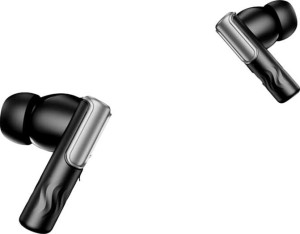
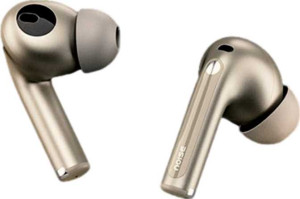
At the foundation, both earbuds are well-matched: they share the same 20 Hz–20,000 Hz frequency range, offer both active and passive noise cancellation, and forgo a neodymium magnet. The noise isolation stack — ANC layered on top of passive reduction — is a genuine strength common to both, making either a capable choice for blocking out ambient noise in commutes or busy environments.
Where they diverge is in driver size and audio processing features. The Noise Master Buds uses a larger 12.4 mm driver compared to the Ivy Pro's 11 mm unit. A bigger driver generally moves more air, which can translate to fuller bass response and greater overall soundstage — though driver size alone does not guarantee better tuning. More notably, the Master Buds supports spatial audio, adding a three-dimensional sound field that enhances immersion for movies, gaming, and certain music formats. The Ivy Pro counters with Dolby Atmos support, a content-dependent feature that delivers height and depth cues when playing Atmos-encoded material — a meaningful advantage for streaming platforms that support it.
The edge here depends on use case. For a broader, more universally applicable spatial experience, the Noise Master Buds has the advantage. If your listening is tied to Dolby Atmos content specifically, the Ivy Pro holds its own — but the combination of a larger driver and native spatial audio gives the Master Buds a slight overall lead in sound quality potential based on these specs.