boAt Rockerz 301 ANC
Realme Buds T200x

boAt Rockerz 301 ANC Realme Buds T200x

Overview

Welcome to our in-depth comparison of the boAt Rockerz 301 ANC and the Realme Buds T200x — two budget-friendly earphones that share a surprising number of features yet take very different approaches in key areas. From form factor and battery endurance to audio latency and microphone setup, this comparison breaks down exactly where each product stands so you can make a truly informed decision.

Common Features

  • Both products have an in-ear fit.
  • Both products are water resistant.
  • Neither product includes wingtips.
  • Neither product has RGB lighting.
  • Both products have stereo speakers.
  • Neither product has a UV light.
  • Neither product has a display.
  • Both products support active noise cancellation (ANC).
  • Both products have passive noise reduction.
  • The lowest frequency on both products is 20 Hz.
  • The highest frequency on both products is 20000 Hz.
  • Spatial audio is not supported on either product.
  • Dolby Atmos is not available on either product.
  • Neither product has a neodymium magnet.
  • Wireless charging is not available on either product.
  • Neither product has a solar power battery.
  • Both products have a battery level indicator.
  • Both products have a rechargeable battery.
  • Fast pairing is not available on either product.
  • Both products have USB Type-C.
  • The Bluetooth version on both products is 5.4.
  • LDAC is not supported on either product.
  • Bluetooth LE Audio is not supported on either product.
  • aptX Adaptive is not supported on either product.
  • aptX Low Latency is not supported on either product.
  • Both products have an ambient sound mode.
  • Both products support fast charging.
  • Neither product can read notifications.
  • Neither product has a built-in translator.
  • Both products have a mute function.
  • Both products can be used as a headset.
  • Both products have a control panel placed on the device.
  • Both products have voice prompts.
  • Both products have a noise-canceling microphone.

Main Differences

  • The Ingress Protection rating is IPX5 on boAt Rockerz 301 ANC and IP55 on Realme Buds T200x.
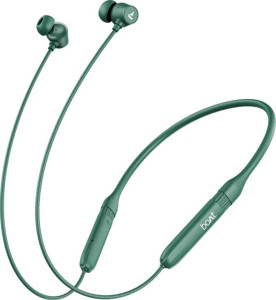
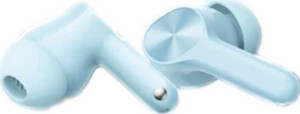
  • The boAt Rockerz 301 ANC has wires or cables as it is a neckband design, while the Realme Buds T200x is fully wireless with no cables.
  • The boAt Rockerz 301 ANC is a neckband earbud, whereas the Realme Buds T200x is not.
  • The driver unit size is 13 mm on boAt Rockerz 301 ANC and 12.4 mm on Realme Buds T200x.
  • Battery life is 40 hours on boAt Rockerz 301 ANC and 7 hours on Realme Buds T200x.
  • Charge time is 0.85 hours on boAt Rockerz 301 ANC and 1.5 hours on Realme Buds T200x.
  • Audio latency is 40 ms on boAt Rockerz 301 ANC and 5 ms on Realme Buds T200x.
  • AAC support is present on Realme Buds T200x but not available on boAt Rockerz 301 ANC.
  • A travel bag is included with Realme Buds T200x but not with boAt Rockerz 301 ANC.
  • An in-line control panel is present on boAt Rockerz 301 ANC but not on Realme Buds T200x.
  • The number of microphones is 1 on boAt Rockerz 301 ANC and 4 on Realme Buds T200x.
Specs Comparison
boAt Rockerz 301 ANC

boAt Rockerz 301 ANC

Realme Buds T200x

Realme Buds T200x

Design:
Fit In-ear In-ear
Ingress Protection (IP) rating IPX5 IP55
water resistance Water resistant Water resistant
has no wires or cables
are neckband earbuds
wingtips included
has RGB lighting
has stereo speakers
has UV light
Has a display

The most fundamental design difference here is form factor. The boAt Rockerz 301 ANC is a neckband-style earphone — the two earbuds are connected by a cable that rests around your neck. The Realme Buds T200x, by contrast, is a true wireless design with no cables or wires at all. In practice, this means the Realme offers a cleaner, more untethered experience ideal for workouts or commutes, while the boAt's neckband can actually be an advantage for users who prefer not to worry about losing individual earbuds or running out of battery on small cases.

On water resistance, both are rated for protection against water jets, but the Realme edges ahead with a full IP55 rating versus the boAt's IPX5. The critical distinction is the first digit: the ″5″ in IP55 means the Realme also carries a dust-resistance rating, whereas the ″X″ in IPX5 means the boAt has no certified dust protection whatsoever. For everyday gym or commute use this may rarely matter, but in dusty or sandy environments, the Realme's rating is meaningfully broader coverage.

Beyond these two differentiators, the products share the same in-ear fit, stereo audio output, and absence of extras like RGB lighting, a display, or UV light — keeping both designs practical and uncluttered. Overall, the Realme Buds T200x holds a clear design edge: its true wireless form factor is more modern, and its IP55 rating offers more comprehensive environmental protection than the boAt's neckband build and IPX5 certification.
Sound quality:
has active noise cancellation (ANC)
has passive noise reduction
driver unit size 13 mm 12.4 mm
lowest frequency 20 Hz 20 Hz
highest frequency 20000 Hz 20000 Hz
supports spatial audio
has Dolby Atmos
has Dirac Virtuo
has a neodymium magnet

At a high level, these two earphones are remarkably well-matched on paper. Both feature active noise cancellation (ANC) combined with passive noise reduction — a dual-layer approach that tackles background noise both electronically and through physical ear seal. Both also cover the standard human hearing range of 20 Hz to 20,000 Hz, meaning neither product claims an extended frequency response that would differentiate it on paper.

The only hardware differentiator within this group is driver size: the boAt Rockerz 301 ANC uses a 13 mm driver versus the Realme Buds T200x's 12.4 mm unit. A larger driver can theoretically move more air and reproduce bass with greater authority, but the real-world audible difference of just 0.6 mm is negligible without controlled listening tests — driver tuning, diaphragm material, and acoustic chamber design ultimately matter far more than raw diameter alone. Neither product lists a neodymium magnet, spatial audio, Dolby Atmos, or Dirac Virtuo, so there are no premium audio processing advantages on either side.

On balance, this group is effectively a tie. The marginally larger driver in the boAt gives it a very slight theoretical edge in low-end reproduction, but the gap is too small to be a deciding factor. Buyers should weigh real-world ANC performance and tuning — neither of which can be determined from the specs provided here — rather than fixating on the driver size difference.

Power:
Battery life 40 hours 7 hours
charge time 0.85 hours 1.5 hours
has wireless charging
Has a solar power battery
has a battery level indicator
has a rechargeable battery

Battery life is where these two products diverge most dramatically. The boAt Rockerz 301 ANC delivers a rated 40 hours of playback, while the Realme Buds T200x offers just 7 hours — a difference of nearly 6x. For practical purposes, the boAt could last through an entire multi-day work trip without a recharge, whereas the Realme would need to be topped up every day under typical listening habits of a few hours.

Charging speed compounds this gap further. The boAt replenishes in approximately 51 minutes (0.85 hours), making it one of the faster-charging options in its class. The Realme takes 1.5 hours to charge fully — nearly twice as long, despite having a far smaller battery to fill. Neither product supports wireless charging, so both require a cable for every top-up session.

The verdict in this category is unambiguous: the boAt Rockerz 301 ANC holds a decisive power advantage. It lasts dramatically longer on a single charge and refills faster, making it the clear choice for users who prioritize not being tethered to a charger. The Realme's power profile is more typical of compact true wireless earbuds, but the numbers put it at a significant disadvantage in this direct comparison.

Connectivity:
has fast pairing
Has USB Type-C
Bluetooth version 5.4 5.4
has LDAC
has LDHC
has Bluetooth LE Audio
has aptX Adaptive
has aptX Low Latency
has aptX HD
has aptX
has aptX Lossless
audio latency 40 ms 5 ms
has aptX Voice
has Auracast
maximum Bluetooth range 10 m 10 m
supports Bluetooth pairing using NFC
Can be used wirelessly
has AAC

Shared foundations first: both earphones run on Bluetooth 5.4 with a 10 m maximum range and charge via USB-C — a modern, consistent baseline that gives neither product a structural advantage in connection stability or physical convenience. Neither supports fast pairing, NFC pairing, or any of the premium high-resolution codecs (LDAC, aptX HD, Bluetooth LE Audio), so the wireless audio pipeline is broadly similar at the platform level.

Where things diverge meaningfully is latency and codec support. The Realme Buds T200x posts an audio latency of just 5 ms, compared to the boAt Rockerz 301 ANC's 40 ms. For music listening, 40 ms is unlikely to be perceived, but for gaming or video content, even modest delays between on-screen action and audio can break immersion — making the Realme's figure a tangible real-world advantage. Additionally, the Realme supports the AAC codec, which delivers higher audio quality over Bluetooth when paired with Apple devices or AAC-capable Android phones, whereas the boAt offers no codec beyond the standard SBC baseline.

The Realme Buds T200x holds a clear edge in this category. Its dramatically lower latency makes it better suited for video and gaming use cases, and AAC support adds a meaningful audio quality option that the boAt simply lacks. For users who primarily stream music on compatible devices or play mobile games, these two factors meaningfully tip the scales toward the Realme.

Features:
release date September 2025 May 2025
has ambient sound mode
Supports fast charging
can read notifications
Has a built-in translator
has a mute function
can be used as a headset
control panel placed on a device
Has voice prompts
travel bag is included
Has an in-line control panel
Has a temperature sensor
Has a built-in camera remote control function

Feature parity is remarkably high between these two earphones. Both support ambient sound mode, fast charging, mute, voice prompts, and on-device controls — covering all the essentials a daily user would expect. Neither can read notifications or act as a camera remote, so there are no smart peripheral tricks on either side to speak of.

Two spec-level differences are worth unpacking. The boAt Rockerz 301 ANC includes an in-line control panel — a physical remote on the neckband cable itself — which is a natural fit for its form factor and allows quick playback and call controls without reaching for a phone. The Realme Buds T200x, being truly wireless, has no cable to host such a panel and relies entirely on touch controls on the earbuds. On the other side, the Realme ships with a travel bag, a small but practical inclusion for users who want to store or carry their earbuds safely on the go — something the boAt omits entirely.

This category is effectively a near-tie, with each product holding one minor exclusive advantage. The boAt's in-line remote is a convenience rooted in its neckband design, while the Realme's bundled travel bag adds tangible out-of-box value. Neither difference is significant enough to decisively tip the scales — the choice here comes down to which perk aligns better with individual usage habits.

Microphone:
number of microphones 1 4
has a noise-canceling microphone

Both earphones feature noise-canceling microphones, but the hardware behind that shared label is very different. The boAt Rockerz 301 ANC relies on a single microphone, while the Realme Buds T200x deploys a 4-microphone array. More microphones enable more sophisticated beamforming and environmental noise rejection — the system can sample audio from multiple points, isolate the speaker's voice, and subtract ambient sound more precisely than a single mic ever could.

In practical terms, this gap matters most during calls. A one-mic setup can apply basic noise reduction, but it has limited ability to distinguish between the user's voice and surrounding noise in dynamic environments like busy streets or cafés. A four-mic array can triangulate voice direction, handle wind noise more effectively, and deliver cleaner call audio to the person on the other end — all of which add up to a meaningfully better headset experience in challenging conditions.

The Realme Buds T200x holds a clear and unambiguous advantage here. Four microphones versus one is not a marginal difference — it represents a fundamentally more capable architecture for voice pickup and call quality. For users who take frequent calls or participate in voice meetings, this spec alone makes the Realme the stronger choice in this category.

Comparison Summary & Verdict

Both the boAt Rockerz 301 ANC and the Realme Buds T200x deliver active noise cancellation, fast charging, and Bluetooth 5.4 at an accessible price point, but they cater to notably different users. The boAt Rockerz 301 ANC is the clear pick for those who need exceptional battery life at 40 hours and a faster 51-minute charge time — ideal for frequent travelers or long workdays. Its neckband design also suits users who prefer a secure, wired connection between earbuds. The Realme Buds T200x, on the other hand, wins on true wireless freedom, a superior 5 ms audio latency for gaming and media, a higher-grade IP55 rating, four microphones for clearer calls, and AAC codec support — making it the stronger daily driver for on-the-go users who value call quality and low-latency performance.

boAt Rockerz 301 ANC
Buy boAt Rockerz 301 ANC if...

Buy the boAt Rockerz 301 ANC if you need an extraordinary 40-hour battery life and a rapid charge time, and do not mind a neckband form factor for all-day extended use.

Realme Buds T200x
Buy Realme Buds T200x if...

Buy the Realme Buds T200x if you prefer a true wireless design with ultra-low 5 ms latency, a stronger IP55 rating, four microphones for clearer calls, and AAC codec support.