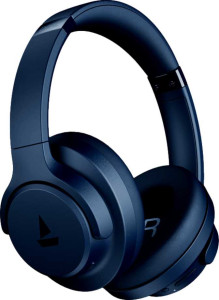
boAt Rockerz 512 ANC
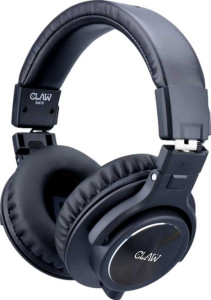
Claw SM70

boAt Rockerz 512 ANC Claw SM70

Overview

Welcome to our detailed specification comparison between the boAt Rockerz 512 ANC and the Claw SM70. Both headphones share an over-ear design and passive noise reduction, yet they take remarkably different approaches when it comes to connectivity, noise cancellation, and frequency response. Whether you value wireless freedom and active features or a straightforward wired audio experience, this side-by-side breakdown will help you find the right fit for your needs.

Common Features

  • Both products have an over-ear fit.
  • Neither product is designed for kids.
  • Both products include a travel bag.
  • Neither product has an open-back design.
  • Both products have stereo speakers.
  • Both products use a 40 mm driver unit size.
  • Neither product supports spatial audio.
  • Neither product has a neodymium magnet.
  • Both products have passive noise reduction.
  • Neither product has a solar power battery.
  • Neither product has in/on-ear detection.
  • Both products have a control panel placed on the device.
  • Both products can be used as a headset.
  • Neither product has an in-line control panel.

Main Differences

  • Water resistance is sweat resistant on boAt Rockerz 512 ANC but not available on Claw SM70.
  • The boAt Rockerz 512 ANC can be folded, while the Claw SM70 cannot.
  • Active noise cancellation is present on boAt Rockerz 512 ANC but not available on Claw SM70.
  • The lowest frequency is 20 Hz on boAt Rockerz 512 ANC and 18 Hz on Claw SM70.
  • The highest frequency is 20000 Hz on boAt Rockerz 512 ANC and 28000 Hz on Claw SM70.
  • USB Type-C charging is supported on boAt Rockerz 512 ANC but not on Claw SM70.
  • The boAt Rockerz 512 ANC uses wireless connectivity, while the Claw SM70 uses wired connectivity.
  • Ambient sound mode is present on boAt Rockerz 512 ANC but not available on Claw SM70.
Specs Comparison
boAt Rockerz 512 ANC

boAt Rockerz 512 ANC

Claw SM70

Claw SM70

Design:
Fit Over-ear Over-ear
water resistance Sweat resistant None
can be folded
is designed for kids
travel bag is included
has an open-back design
has stereo speakers

Both the boAt Rockerz 512 ANC and the Claw SM70 share the same over-ear fit, a closed-back design, stereo speakers, and even include a travel bag — making them structurally similar on the surface. For users who want a packaged, ready-to-travel experience, both deliver that baseline equally.

Where they diverge meaningfully is portability and durability. The boAt Rockerz 512 ANC supports folding and offers sweat resistance, a combination that makes it noticeably more practical for active or on-the-go users. A foldable form factor reduces bulk in a bag, while sweat resistance adds a layer of protection during workouts or commutes in humid conditions. The Claw SM70, by contrast, is neither foldable nor sweat resistant — which limits its versatility outside of stationary, controlled environments like a desk setup.

For design, the boAt Rockerz 512 ANC holds a clear edge: its foldability and sweat resistance make it the more adaptable and durable choice for everyday mobile use, while the Claw SM70 is better suited to users who will primarily use it in one place and prioritize other factors over portability.

Sound quality:
has active noise cancellation (ANC)
lowest frequency 20 Hz 18 Hz
highest frequency 20000 Hz 28000 Hz
driver unit size 40 mm 40 mm
supports spatial audio
has a neodymium magnet
has passive noise reduction

Both headphones use a 40 mm driver and share passive noise reduction, giving them a common technical foundation. The frequency ranges, however, tell different stories. The boAt Rockerz 512 ANC covers the standard 20 Hz–20,000 Hz range — essentially the full spectrum of human hearing — while the Claw SM70 extends further, from 18 Hz to 28,000 Hz. The lower floor adds marginally deeper sub-bass presence, and the higher ceiling reaches into the ultrasonic range, though neither extension is perceptible to most human ears in everyday listening.

The more consequential differentiator is noise isolation. The boAt Rockerz 512 ANC includes Active Noise Cancellation, which uses microphones and counter-sound signals to actively suppress ambient noise — a meaningful advantage in noisy environments like commutes, offices, or flights. The Claw SM70 relies solely on passive noise reduction, which depends entirely on the physical seal of the ear cups. For users in quiet or semi-quiet settings this gap may be negligible, but in louder environments the ANC advantage becomes significant.

On sound quality specs, the boAt Rockerz 512 ANC has the practical edge. The Claw SM70's extended frequency range is technically wider but offers limited real-world audible benefit, whereas active noise cancellation directly and tangibly improves the listening experience in the environments where headphones are most commonly used.

Power:
Has USB Type-C
Has a solar power battery

The power specs here are minimal, but one difference carries real practical weight. The boAt Rockerz 512 ANC charges via USB Type-C, while the Claw SM70 does not. USB-C has become the universal standard across modern smartphones, laptops, and accessories, meaning most users will already own a compatible cable. Not having it — as is the case with the Claw SM70 — typically means relying on an older Micro-USB connection or a proprietary cable, which is increasingly inconvenient in a USB-C dominated ecosystem.

Neither headphone includes solar charging, so that distinction is a non-factor. The sole but meaningful differentiator here is the charging port, and its impact is everyday rather than occasional — every time the battery needs topping up, the charging standard either simplifies or complicates the experience.

The boAt Rockerz 512 ANC holds a clear advantage in this category. USB-C compatibility is a quality-of-life feature that reduces cable clutter and increases convenience, particularly for users who already carry USB-C chargers for other devices.

Connectivity:
connectivity Wireless Wired

This is a fundamental architectural difference that shapes the entire use case of each headphone. The boAt Rockerz 512 ANC connects wirelessly, while the Claw SM70 is a wired headphone. This single distinction affects freedom of movement, device compatibility, latency, and how each product fits into a user's daily workflow.

Wireless connectivity means the Rockerz 512 ANC works without a physical tether — ideal for commuting, exercising, or general mobility. The trade-off is reliance on a battery that must be charged. The Claw SM70, being wired, draws no power from its own battery and introduces no wireless latency, which can make it preferable for gaming or studio monitoring where audio sync matters. However, wired connectivity also means being physically bound to a source device, and on modern smartphones and laptops that increasingly omit headphone jacks, it can require an adapter.

There is no universal winner here — the right choice depends entirely on intended use. For mobile, everyday listening, the boAt Rockerz 512 ANC's wireless design offers greater flexibility. For stationary, low-latency use cases like PC gaming or audio work, the Claw SM70's wired connection has inherent advantages. Users should treat this spec as a primary filter based on their specific needs.

Features:
release date August 2025 August 2025
has ambient sound mode
has in/on-ear detection
control panel placed on a device
can be used as a headset
Has an in-line control panel

Across most feature specs, these two headphones are evenly matched — both include on-device controls, both support headset use with a microphone, and neither offers in-ear detection or an in-line control panel. The functional parity here means neither product has a structural advantage in how users interact with or control them day-to-day.

The one meaningful differentiator is ambient sound mode, which the boAt Rockerz 512 ANC supports and the Claw SM70 does not. Ambient mode uses external microphones to pipe in surrounding environmental sounds, allowing the user to stay aware of their environment — hear a conversation, a public announcement, or approaching traffic — without removing the headphones. For a wireless headphone already equipped with ANC, having ambient mode as a complement creates a versatile noise management toolkit: full isolation when needed, full awareness when not.

The boAt Rockerz 512 ANC takes the edge in this category. Ambient sound mode is a genuinely useful feature that adds situational flexibility, and its absence on the Claw SM70 is a gap worth noting for users who frequently navigate between focused listening and environmental awareness.

Comparison Summary & Verdict

After examining every specification, it is clear that these two headphones serve distinct audiences. The boAt Rockerz 512 ANC stands out with its wireless connectivity, active noise cancellation, ambient sound mode, USB Type-C charging, and foldable design with sweat resistance, making it ideal for commuters, travelers, and active users who need versatility on the go. The Claw SM70, on the other hand, appeals to users who prioritize raw audio range, offering a wider frequency response of 18 Hz to 28000 Hz through a reliable wired connection, with no need to worry about battery life. Choose the boAt Rockerz 512 ANC for feature-rich, cable-free convenience, and opt for the Claw SM70 if extended frequency coverage and plug-and-play simplicity are your top priorities.

boAt Rockerz 512 ANC
Buy boAt Rockerz 512 ANC if...

Buy the boAt Rockerz 512 ANC if you want wireless freedom paired with active noise cancellation, an ambient sound mode, and a foldable, sweat-resistant build perfect for everyday use and travel.

Claw SM70
Buy Claw SM70 if...

Buy the Claw SM70 if you prefer a simple wired connection with a wider frequency range of 18 Hz to 28000 Hz and have no need for battery-dependent features.