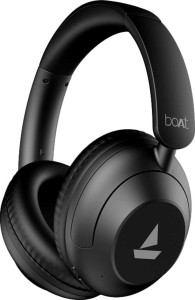
boAt Rockerz 650 Pro
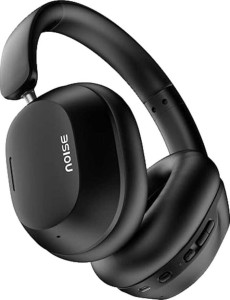
Noise Airwave Max 5

boAt Rockerz 650 Pro Noise Airwave Max 5

Overview

Welcome to our in-depth spec comparison between the boAt Rockerz 650 Pro and the Noise Airwave Max 5, two over-ear wireless headphones competing in a crowded mid-range market. Both share a strong foundation — including an impressive 80-hour battery life, foldable builds, and dual-device multipoint connectivity — but they diverge sharply on features like active noise cancellation, audio latency, and water resistance. Read on to see which headphone best matches your listening needs and lifestyle.

Common Features

  • Both products use an over-ear fit design.
  • Both products come with a detachable cable.
  • Both products can be folded for storage.
  • Neither product is designed for kids.
  • Both products include a tangle-free cable.
  • Neither product includes a travel bag.
  • Neither product uses an open-back design.
  • Both products feature stereo speakers.
  • Both products have a lowest frequency of 20 Hz and a highest frequency of 20000 Hz.
  • Both products use a 40 mm driver unit size.
  • Neither product has a neodymium magnet.
  • Both products offer passive noise reduction.
  • Both products provide 80 hours of battery life.
  • Both products support USB Type-C charging.
  • Both products include a battery level indicator.
  • Neither product supports wireless charging.
  • Neither product has a solar power battery.
  • Both products have a rechargeable battery that is not removable.
  • Both products support wireless and wired connectivity.
  • Neither product supports aptX Adaptive, aptX, LDAC, LDHC, Bluetooth LE Audio, aptX Low Latency, or aptX HD.
  • Both products include a noise-canceling microphone.
  • Neither product has in/on-ear detection.
  • Neither product has a mute function.
  • Both products support multipoint connection for up to 2 devices.
  • Both products have a control panel placed on the device.
  • Both products can be used as a headset.
  • Neither product has an in-line control panel.

Main Differences

  • Water resistance is present on Noise Airwave Max 5 but not available on boAt Rockerz 650 Pro.
  • Active noise cancellation (ANC) is present on Noise Airwave Max 5 but not available on boAt Rockerz 650 Pro.
  • Spatial audio support is present on Noise Airwave Max 5 but not available on boAt Rockerz 650 Pro.
  • Charge time is 1 hour on boAt Rockerz 650 Pro and 1.5 hours on Noise Airwave Max 5.
  • Bluetooth version is 5.3 on boAt Rockerz 650 Pro and 5.4 on Noise Airwave Max 5.
  • Audio latency is 60 ms on boAt Rockerz 650 Pro and 30 ms on Noise Airwave Max 5.
  • Ambient sound mode is present on Noise Airwave Max 5 but not available on boAt Rockerz 650 Pro.
Specs Comparison
boAt Rockerz 650 Pro

boAt Rockerz 650 Pro

Noise Airwave Max 5

Noise Airwave Max 5

Design:
Fit Over-ear Over-ear
has a detachable cable
water resistance None Water resistant
can be folded
is designed for kids
has a tangle free cable
travel bag is included
has an open-back design
has stereo speakers

In terms of design fundamentals, the boAt Rockerz 650 Pro and the Noise Airwave Max 5 are nearly identical on paper: both are over-ear, foldable headphones with detachable, tangle-free cables, stereo speakers, and a closed-back design — and neither includes a travel bag. For the vast majority of design-related use cases, these two headphones are evenly matched.

The one meaningful differentiator is water resistance. The Noise Airwave Max 5 is rated as water resistant, while the Rockerz 650 Pro offers no water resistance whatsoever. In real-world terms, this means the Airwave Max 5 can better withstand light rain, sweat during workouts, or accidental splashes — making it the more durable choice for active or outdoor use.

Overall, the Noise Airwave Max 5 holds a clear design edge strictly due to its water resistance rating. If you plan to use your headphones primarily indoors in controlled environments, the Rockerz 650 Pro's design is equally capable; but for anyone with an active lifestyle or unpredictable conditions, the Airwave Max 5 is the safer long-term investment from a build durability standpoint.

Sound quality:
has active noise cancellation (ANC)
lowest frequency 20 Hz 20 Hz
highest frequency 20000 Hz 20000 Hz
driver unit size 40 mm 40 mm
supports spatial audio
has a neodymium magnet
has passive noise reduction

Both headphones share an identical frequency range of 20 Hz to 20000 Hz and the same 40 mm driver unit — meaning their raw acoustic hardware is on equal footing. Neither features a neodymium magnet, and both offer passive noise reduction, which provides a baseline level of ambient sound isolation simply through their over-ear physical seal.

Where the two diverge significantly is in noise management and immersive audio capabilities. The Noise Airwave Max 5 adds Active Noise Cancellation (ANC), which uses microphones and processing to actively suppress external sounds — a major advantage in noisy environments like commutes, offices, or flights. On top of that, it supports spatial audio, which creates a more three-dimensional, immersive soundstage — particularly valuable for movies, gaming, and certain music genres. The Rockerz 650 Pro offers neither of these features.

The Noise Airwave Max 5 has a clear and decisive edge in sound quality features. With ANC and spatial audio on top of an otherwise equivalent hardware baseline, it offers a meaningfully richer listening experience — especially in real-world environments where ambient noise and content immersion matter. The Rockerz 650 Pro is adequate for casual listening in quiet settings, but falls noticeably short for users who prioritize audio depth and noise control.

Power:
Battery life 80 hours 80 hours
charge time 1 hours 1.5 hours
Has USB Type-C
has a battery level indicator
has wireless charging
Has a solar power battery
has a rechargeable battery
has a removable battery

At first glance, these two headphones are nearly carbon copies in the power department — both deliver an impressive 80 hours of battery life, charge via USB Type-C, include a battery level indicator, and share the same limitations: no wireless charging, no removable battery. For day-to-day endurance, 80 hours is genuinely exceptional and means most users will only need to charge once or twice a week at most.

The single differentiator here is charge time. The boAt Rockerz 650 Pro fully charges in just 1 hour, while the Noise Airwave Max 5 takes 1.5 hours — a 30-minute difference. In isolation this gap is minor, but it does mean the Rockerz 650 Pro gets you back to full capacity faster when you do need a top-up. Given that the Airwave Max 5 also runs ANC (which typically draws more power), the fact that both still achieve the same 80-hour rating is worth noting — though it cannot be fully analyzed from this data alone.

The Rockerz 650 Pro holds a narrow edge in this category purely on the strength of its faster charge time. That said, with identical battery life and an otherwise matching power feature set, this is one of the closest calls in the comparison — the advantage is real but unlikely to be a deciding factor for most buyers.

Connectivity:
connectivity Wireless & wired Wireless & wired
Bluetooth version 5.3 5.4
has aptX Adaptive
has aptX
has LDAC
has LDHC
has Bluetooth LE Audio
has aptX Low Latency
has aptX HD
has aptX Lossless
has AAC
has Auracast
audio latency 60 ms 30 ms
maximum Bluetooth range 10 m 10 m
has fast pairing
supports Bluetooth pairing using NFC

Strip away the codec support list — which is uniformly empty for both headphones — and two meaningful differentiators emerge. The Noise Airwave Max 5 runs on Bluetooth 5.4 versus the Rockerz 650 Pro's Bluetooth 5.3. While both are modern versions with strong connection stability and identical maximum ranges of 10 m, 5.4 brings incremental improvements in connection efficiency and reliability, particularly in crowded wireless environments.

The more impactful difference is audio latency. The Airwave Max 5 clocks in at 30 ms, exactly half the Rockerz 650 Pro's 60 ms. In practical terms, lower latency means tighter audio-to-visual sync — 30 ms is close to imperceptible for most users during video playback or casual gaming, while 60 ms can occasionally feel slightly off, particularly in fast-paced content. Neither headphone supports advanced codecs like aptX Low Latency, LDAC, or AAC, so both rely on standard SBC transmission — which makes the raw latency figure an even more direct indicator of real-world responsiveness.

The Noise Airwave Max 5 has a clear connectivity edge, driven primarily by its significantly lower latency and marginally newer Bluetooth version. For music-only listeners the gap is subtle, but for anyone who watches video or games wirelessly, the Airwave Max 5's 30 ms latency makes it the more capable and future-leaning choice in this category.

Features:
release date March 2025 January 2025
has a noise-canceling microphone
has ambient sound mode
has in/on-ear detection
has a mute function
multipoint count 2 2
control panel placed on a device
can be used as a headset
Has an in-line control panel

Functionally, these two headphones share a solid common baseline: both support multipoint connection to 2 devices simultaneously, feature on-device controls, include a noise-canceling microphone, and can double as a headset for calls. For the everyday user, multipoint pairing is a particularly practical feature — it means you can stay connected to a laptop and phone at once without manually switching.

The one feature that separates them is ambient sound mode, available exclusively on the Noise Airwave Max 5. This allows the headphones to pipe in external audio intentionally — letting users hear their surroundings without removing the headphones. When paired with the ANC already noted in the sound quality group, the Airwave Max 5 effectively offers a full three-mode listening experience: full noise cancellation, ambient passthrough, and standard passive isolation. The Rockerz 650 Pro offers no such toggle, which can feel limiting in situations where situational awareness matters, such as commuting or working in a shared space.

The Noise Airwave Max 5 takes the edge here, and it is not particularly close. Ambient sound mode is a genuinely useful quality-of-life feature that adds meaningful versatility to daily use. Everything else being equal between the two, its absence on the Rockerz 650 Pro is a tangible functional gap rather than a minor omission.

Comparison Summary & Verdict

After a thorough side-by-side analysis, the two headphones cater to clearly different audiences. The boAt Rockerz 650 Pro stands out for users who value a faster 1-hour charge time and a straightforward, no-frills wireless audio experience — it is a reliable everyday companion for those who do not require advanced sound processing. The Noise Airwave Max 5, on the other hand, is the more feature-rich option, offering active noise cancellation, an ambient sound mode, spatial audio, water resistance, a lower 30 ms audio latency, and a newer Bluetooth 5.4 chip — making it the stronger pick for commuters, travelers, and users who demand immersive, versatile sound. Both deliver the same 80-hour battery life and 40 mm drivers, so the decision ultimately comes down to how much you value premium features over simplicity.

boAt Rockerz 650 Pro
Buy boAt Rockerz 650 Pro if...

Buy the boAt Rockerz 650 Pro if you want a capable over-ear headphone with a faster 1-hour charge time and do not need active noise cancellation or an ambient sound mode.

Noise Airwave Max 5
Buy Noise Airwave Max 5 if...

Buy the Noise Airwave Max 5 if you want active noise cancellation, spatial audio, ambient sound mode, water resistance, and a significantly lower audio latency of 30 ms for a more premium listening experience.