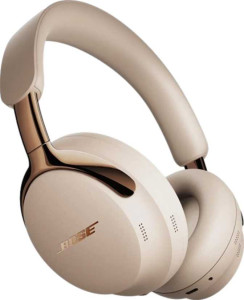
Bose QuietComfort Ultra Headphones (2nd Gen)
Bowers & Wilkins Px7 S3

Bose QuietComfort Ultra Headphones (2nd Gen) Bowers & Wilkins Px7 S3

Common Features

  • Both headphones are over-ear models.
  • Both headphones have a detachable cable.
  • Both headphones do not have water resistance.
  • Both headphones can be folded.
  • Both headphones have a tangle-free cable.
  • Both headphones do not have an open-back design.
  • Both headphones are designed with stereo speakers.
  • Both headphones feature active noise cancellation (ANC).
  • Both headphones have a 40 mm driver unit size.
  • Both headphones have passive noise reduction.
  • Both headphones offer a battery life of 30 hours.
  • Both headphones have USB Type-C connectivity.
  • Both headphones have a battery level indicator.
  • Both headphones do not support wireless charging.
  • Both headphones have a rechargeable battery.
  • Both headphones do not have a removable battery.
  • Both headphones support wireless and wired connectivity.
  • Both headphones support aptX Adaptive.
  • Both headphones have a maximum Bluetooth range of 10 m.
  • Both headphones feature a noise-canceling microphone.

Main Differences

  • Bose QuietComfort Ultra Headphones (2nd Gen) weigh 265 g, while Bowers & Wilkins Px7 S3 weighs 300 g.
  • Bose QuietComfort Ultra Headphones (2nd Gen) has Bluetooth version 5.4, while Bowers & Wilkins Px7 S3 has Bluetooth version 5.3.
  • Bose QuietComfort Ultra Headphones (2nd Gen) does not support aptX, while Bowers & Wilkins Px7 S3 supports aptX.
  • Bose QuietComfort Ultra Headphones (2nd Gen) does not support LDAC, while Bowers & Wilkins Px7 S3 supports LDAC.
  • Bose QuietComfort Ultra Headphones (2nd Gen) does not support aptX HD, while Bowers & Wilkins Px7 S3 supports aptX HD.
  • Bose QuietComfort Ultra Headphones (2nd Gen) does not support aptX Lossless, while Bowers & Wilkins Px7 S3 supports aptX Lossless.
  • Bose QuietComfort Ultra Headphones (2nd Gen) has in/on-ear detection, while Bowers & Wilkins Px7 S3 does not.
  • Bose QuietComfort Ultra Headphones (2nd Gen) has a 40 mm driver unit size, while Bowers & Wilkins Px7 S3 also has a 40 mm driver unit size but with differences in sound quality characteristics.
Specs Comparison
Bose QuietComfort Ultra Headphones (2nd Gen)

Bose QuietComfort Ultra Headphones (2nd Gen)

Bowers & Wilkins Px7 S3

Bowers & Wilkins Px7 S3

Design:
Fit Over-ear Over-ear
weight 265 g 300 g
has a detachable cable
water resistance None None
can be folded
is designed for kids
has a tangle free cable
has an open-back design
has stereo speakers

The Bose QuietComfort Ultra Headphones (2nd Gen) and Bowers & Wilkins Px7 S3 are both over-ear headphones, offering a similar fit that surrounds the ears for comfort during extended use. The Bose headphones weigh 265 g, which is lighter compared to the Bowers & Wilkins Px7 S3, which weighs 300 g, making the latter a bit heavier.

Both headphones feature a detachable cable, a tangle-free cable, and can be folded for easier storage. The Bose model includes stereo speakers, as does the Bowers & Wilkins model, ensuring high-quality sound in both cases. Neither product offers water resistance, nor do they have an open-back design, keeping sound isolation intact.

Neither product is designed specifically for kids, and both offer the same basic features regarding cable management and portability. The specifications for both products are closely aligned, with only the weight differing between the two models.

Sound quality:
has active noise cancellation (ANC)
driver unit size 40 mm 40 mm
has passive noise reduction

Both the Bose QuietComfort Ultra Headphones (2nd Gen) and the Bowers & Wilkins Px7 S3 feature active noise cancellation (ANC), helping to reduce external sounds and improve the listening experience. Additionally, both models include passive noise reduction to further isolate sound.

When it comes to driver size, both headphones are equipped with 40 mm drivers, which suggests a similar approach to delivering clear and powerful audio in both models.

Overall, the sound quality features of the Bose and Bowers & Wilkins models are nearly identical, offering the same driver size and noise-canceling technology, making them comparable in terms of sound performance.

Power:
Battery life 30 hours 30 hours
Has USB Type-C
has a battery level indicator
has wireless charging
Has a solar power battery
has a rechargeable battery
has a removable battery

Both the Bose QuietComfort Ultra Headphones (2nd Gen) and the Bowers & Wilkins Px7 S3 offer the same battery life of 30 hours, ensuring extended use on a single charge. Both models are equipped with USB Type-C for charging, providing a modern and efficient connection. Additionally, both headphones have a battery level indicator to keep track of remaining charge.

Neither product supports wireless charging, and both have rechargeable batteries. Neither offers solar power battery options, nor do they feature removable batteries, which means you’ll rely on the built-in rechargeable battery for their lifespan.

In terms of power features, the Bose and Bowers & Wilkins models are very similar, with identical battery life and charging capabilities, making them comparable in this area.

Connectivity:
connectivity Wireless & wired Wireless & wired
Bluetooth version 5.4 5.3
has aptX Adaptive
has aptX
has LDAC
has LDHC
has Bluetooth LE Audio
has aptX Low Latency
has aptX HD
has aptX Lossless
has AAC
has Auracast
maximum Bluetooth range 10 m 10 m
supports Bluetooth pairing using NFC

Both the Bose QuietComfort Ultra Headphones (2nd Gen) and the Bowers & Wilkins Px7 S3 offer wireless and wired connectivity options, providing flexibility depending on your preference. The Bose headphones use Bluetooth version 5.4, while the Bowers & Wilkins model uses Bluetooth 5.3, meaning the Bose model supports a slightly newer version of Bluetooth technology.

Both headphones support aptX Adaptive, but only the Bowers & Wilkins model supports additional Bluetooth audio technologies such as aptX, LDAC, aptX HD, and aptX Lossless. In contrast, the Bose headphones do not include support for these codecs, which could affect the overall audio quality when streaming via Bluetooth.

Both products have the same maximum Bluetooth range of 10 m and do not support NFC for Bluetooth pairing. Neither model supports Bluetooth LE Audio or Auracast, which are features that could enhance audio performance and sharing capabilities.

Features:
release date September 2025 April 2025
has a noise-canceling microphone
has ambient sound mode
has in/on-ear detection
has a mute function
control panel placed on a device
can be used as a headset
Has an in-line control panel

Both the Bose QuietComfort Ultra Headphones (2nd Gen) and the Bowers & Wilkins Px7 S3 come with a noise-canceling microphone and an ambient sound mode, which enhance the audio experience by blocking unwanted noise and allowing external sounds when needed. Both models can also be used as a headset for calls or communication, with control panels placed on a device for easier operation.

The Bose headphones include in/on-ear detection, allowing the headphones to automatically pause or play audio based on whether they are being worn. This feature is not available in the Bowers & Wilkins Px7 S3.

Neither model features a mute function or an in-line control panel, but both provide the flexibility of controlling audio and settings through external device interfaces.

Comparison Summary

This is a specification comparison between Bose QuietComfort Ultra Headphones (2nd Gen) and Bowers & Wilkins Px7 S3. Both headphones feature over-ear fit, detachable cables, and 30-hour battery life, with active noise cancellation and 40 mm driver unit size. However, the Bose model is lighter at 265 g, while the Bowers & Wilkins model weighs 300 g. The Bose model supports Bluetooth 5.4, while the Bowers & Wilkins model uses Bluetooth 5.3. The Bose model does not support aptX, LDAC, or aptX HD, which are available on the Bowers & Wilkins Px7 S3. Additionally, the Bose model includes in/on-ear detection, while the Bowers & Wilkins model does not.