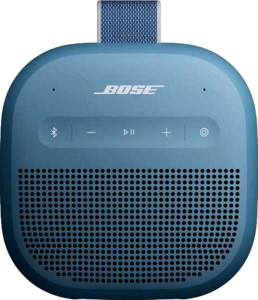
Bose SoundLink Micro (2nd Gen)
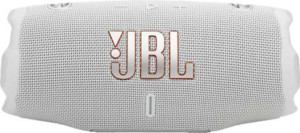
JBL Charge 6

Bose SoundLink Micro (2nd Gen) JBL Charge 6

Overview

Welcome to our in-depth specification comparison between the Bose SoundLink Micro (2nd Gen) and the JBL Charge 6. Both portable Bluetooth speakers share a robust IP68 waterproof rating and Bluetooth 5.4 connectivity, yet they take very different approaches when it comes to size and portability, battery endurance, and audio codec support. Whether you are prioritizing an ultra-compact companion for outdoor adventures or a feature-packed powerhouse for longer listening sessions, this comparison will help you find the right fit.

Common Features

  • Both products have an IP68 ingress protection rating.
  • Both products have a control panel placed on the device.
  • Both products are waterproof.
  • Neither product includes a travel bag.
  • Neither product has a touch screen.
  • Neither product has RGB lighting.
  • Neither product is a neckband speaker.
  • Neither product has a remote control.
  • Neither product has a noise-canceling microphone.
  • Both products have a battery level indicator.
  • Both products have a rechargeable battery.
  • Neither product has a removable battery.
  • Neither product supports wireless charging.
  • Both products use Bluetooth version 5.4.
  • Neither product supports Bluetooth pairing using NFC.
  • Neither product has a socket for a 3.5 mm audio jack.
  • Neither product has an AUX input.
  • Neither product supports aptX Lossless, LDAC, aptX Adaptive, or aptX HD.
  • Both products can be used wirelessly and support remote smartphone control.
  • Neither product has voice commands or a radio.
  • Both products have voice prompts and a sleep timer.
  • Both products support pairing for stereo sound.

Main Differences

  • Volume is 415.98 cm³ on Bose SoundLink Micro (2nd Gen) and 2118.46 cm³ on JBL Charge 6.
  • Driver count is 1 on Bose SoundLink Micro (2nd Gen) and 2 on JBL Charge 6.
  • A neodymium magnet is present on JBL Charge 6 but not on Bose SoundLink Micro (2nd Gen).
  • A detachable cable is available on JBL Charge 6 but not on Bose SoundLink Micro (2nd Gen).
  • Height is 103.124 mm on Bose SoundLink Micro (2nd Gen) and 98.5 mm on JBL Charge 6.
  • Width is 103.124 mm on Bose SoundLink Micro (2nd Gen) and 228.8 mm on JBL Charge 6.
  • Thickness is 39.116 mm on Bose SoundLink Micro (2nd Gen) and 94 mm on JBL Charge 6.
  • A passive radiator is present on JBL Charge 6 but not on Bose SoundLink Micro (2nd Gen).
  • Battery life is 12 hours on Bose SoundLink Micro (2nd Gen) and 28 hours on JBL Charge 6.
  • aptX support is available on Bose SoundLink Micro (2nd Gen) but not on JBL Charge 6.
  • AAC support is available on Bose SoundLink Micro (2nd Gen) but not on JBL Charge 6.
  • Auracast support is present on JBL Charge 6 but not on Bose SoundLink Micro (2nd Gen).
  • Fast pairing is supported on Bose SoundLink Micro (2nd Gen) but not on JBL Charge 6.
  • The ability to work as a power bank is present on JBL Charge 6 but not on Bose SoundLink Micro (2nd Gen).
Specs Comparison
Bose SoundLink Micro (2nd Gen)

Bose SoundLink Micro (2nd Gen)

JBL Charge 6

JBL Charge 6

Design:
Ingress Protection (IP) rating IP68 IP68
volume 415.98142455162 cm³ 2118.4592 cm³
drivers count 1 2
has a neodymium magnet
control panel placed on a device
water resistance Waterproof Waterproof
travel bag is included
has a touch screen
has RGB lighting
has a detachable cable
is a neckband speaker
has a remote control
height 103.124 mm 98.5 mm
width 103.124 mm 228.8 mm
thickness 39.116 mm 94 mm

The most fundamental design difference here is sheer size. The Bose SoundLink Micro (2nd Gen) has a volume of just 415.98 cm³ with a nearly square footprint of 103 × 103 × 39 mm, making it a genuinely pocketable, clip-and-go device. The JBL Charge 6, at 2118.46 cm³ and dimensions of 228.8 × 98.5 × 94 mm, is roughly five times larger — a traditional cylindrical bar form factor intended for a bag or tabletop, not a pocket. This isn't a subtle gap; it defines how and where each speaker fits into your life.

Both share an IP68 waterproof rating and on-device control panels, so neither has an edge on weather resistance or basic usability controls. Where they diverge beyond size: the Charge 6 features 2 drivers versus the Micro's single driver, and it uses a neodymium magnet — both design choices that typically support greater acoustic output and efficiency. The Charge 6 also includes a detachable cable, adding flexibility for charging or audio passthrough scenarios the Micro doesn't offer.

For design, the choice is driven entirely by your portability priority. If ultra-compact, wearable form is the goal, the SoundLink Micro has a clear and decisive edge. If you're willing to carry a larger device and want a more traditional, feature-rich physical design — with dual drivers and a detachable cable — the Charge 6 is the more capable package. Neither is objectively better in an absolute sense, but they target fundamentally different use cases.

Sound quality:
Has a passive radiator
has a noise-canceling microphone

With only two specs available in this group, the data is limited — but one of them is meaningful. The JBL Charge 6 includes a passive radiator, while the SoundLink Micro does not. A passive radiator is a tuned, unpowered membrane that reinforces low-frequency reproduction, effectively allowing a speaker to produce deeper, more impactful bass from a compact enclosure without requiring a large port. In practice, this is a well-established technique for extracting more bottom-end presence out of constrained physical designs.

Both speakers lack a noise-canceling microphone, so call quality is on equal footing from a spec standpoint. The passive radiator remains the sole differentiator here, and it points in one direction: the Charge 6 has a structural acoustic advantage for bass extension that the Micro's design simply doesn't replicate.

Based strictly on this spec group, the Charge 6 holds the edge. The passive radiator is a genuine sound-quality feature — not a marketing checkbox — and its absence in the Micro is a real limitation for users who prioritize low-frequency depth. That said, the data here is sparse, so this conclusion is narrow in scope.

Power:
Battery life 12 hours 28 hours
has a battery level indicator
has a rechargeable battery
has a removable battery
has wireless charging

Battery life is where the gap between these two speakers becomes especially stark. The JBL Charge 6 is rated for 28 hours of playback, while the Bose SoundLink Micro (2nd Gen) tops out at 12 hours. That's more than twice the runtime — a difference that translates directly into multi-day use without a charge versus needing to recharge after a single long session. For weekend camping trips or extended outdoor use, this is a material consideration, not just a spec sheet footnote.

On shared ground, both speakers include a battery level indicator and a non-removable rechargeable battery, with no wireless charging on either. The parity here is complete — neither offers any convenience advantage in how power is managed or monitored day-to-day.

The Charge 6 has a commanding and clear edge in this category. The 16-hour runtime advantage is large enough to change usage patterns — fewer interruptions, less planning around outlet access. The Micro's 12 hours is respectable for its size class, but against the Charge 6 specifically, there is no contest on endurance.

Connectivity:
Bluetooth version 5.4 5.4
supports Bluetooth pairing using NFC
has a socket for a 3.5 mm audio jack
has an AUX input
has aptX Lossless
has LDAC
has aptX Adaptive
has aptX HD
has aptX
has aptX Low Latency
has AAC
has AirPlay
has Chromecast built-in
has Auracast
has Bluetooth LE Audio
maximum Bluetooth range 10 m 10 m
supports Wi-Fi
USB ports 1 1
Has USB Type-C
has a 3.5mm male connector
has an external memory slot
is DLNA-certified
supports Ethernet
has a microphone input

Connectivity between these two is nearly a mirror image — identical Bluetooth 5.4, the same 10 m maximum range, USB-C on both, and a matching absence of AUX, Wi-Fi, NFC pairing, and wired audio input. The meaningful divergence comes down to two codec-level differences that pull in opposite directions depending on your ecosystem and use case.

The SoundLink Micro supports aptX and AAC, giving it a practical advantage for users streaming from Android devices (aptX) or Apple devices (AAC), where these codecs deliver more efficient, higher-quality wireless audio transmission than the standard SBC fallback. The Charge 6 supports neither, which is a notable omission for a speaker at its size and price tier. However, the Charge 6 counters with Auracast — Bluetooth broadcast audio technology that allows a single source to stream simultaneously to multiple receivers, or lets users tune into public broadcast streams. This is a forward-looking feature, but its real-world utility today remains limited by ecosystem adoption.

For most users right now, the SoundLink Micro holds the more immediately practical connectivity edge: aptX and AAC support meaningfully improves day-to-day streaming quality across the two most common mobile platforms. The Charge 6's Auracast support is genuinely interesting but primarily future-facing, making the Micro the stronger choice for present-day connectivity needs.

Features:
release date June 2025 March 2025
Can be used wirelessly
supports a remote smartphone
has fast pairing
has voice commands
Has a radio
Has voice prompts
has a mute function
works as a power bank
has a sleep timer

Much of the feature set here is shared: both speakers work wirelessly, support smartphone remote control, include voice prompts, and offer a sleep timer. These are table-stakes conveniences that neither product uses to differentiate itself. The interesting split is in two features — one per product — that reflect genuinely different design priorities.

The SoundLink Micro supports fast pairing, which streamlines the initial Bluetooth connection process and reduces friction when switching between devices. It's a small but appreciated quality-of-life feature for users who regularly reconnect on the go. The Charge 6, meanwhile, forgoes fast pairing but adds the ability to function as a power bank — meaning it can charge your phone or other USB devices directly from its own battery. Given the Charge 6's substantially larger battery (as established in the Power group), this is a credible and useful capability, not just a nominal one.

Which feature matters more is squarely a use-case question. For pure speaker convenience, the Micro's fast pairing is a daily-use benefit. For multi-day outdoor scenarios where outlet access is limited, the Charge 6's power bank function is a more impactful differentiator. On balance, the Charge 6 holds a slight edge here — the ability to charge other devices is a more consequential real-world capability than faster initial pairing.

Miscellaneous:
supports pairing for stereo sound

This group contains a single spec, and both products match exactly: each supports stereo pairing, the ability to link two units of the same speaker together to create a dedicated left/right channel setup. For listeners who want a more spatially immersive soundstage than a single mono or mixed-stereo unit can deliver, this is a worthwhile capability — provided you own two of the same device.

With identical support on both sides and no further differentiating data in this group, this is a straightforward tie. Neither the SoundLink Micro nor the Charge 6 holds any advantage here.

Comparison Summary & Verdict

After reviewing all the specifications, a clear picture emerges for each product. The Bose SoundLink Micro (2nd Gen) is the obvious choice for those who value ultra-compact portability, as its dramatically smaller footprint and lighter volume make it ideal for on-the-go use. It also supports aptX and AAC codecs alongside fast pairing, appealing to listeners who care about wireless audio quality and quick connectivity. The JBL Charge 6, on the other hand, dominates in endurance and versatility: its 28-hour battery life nearly doubles that of the Bose, and its ability to function as a power bank, combined with a passive radiator, two drivers, and Auracast support, makes it the stronger pick for extended outdoor sessions or group use where runtime and extra features matter most.

Bose SoundLink Micro (2nd Gen)
Buy Bose SoundLink Micro (2nd Gen) if...

Buy the Bose SoundLink Micro (2nd Gen) if you want an ultra-compact, pocketable speaker with aptX and AAC codec support and fast Bluetooth pairing for everyday portability.

JBL Charge 6
Buy JBL Charge 6 if...

Buy the JBL Charge 6 if you need a longer-lasting speaker with up to 28 hours of battery life, the ability to charge your devices as a power bank, and Auracast connectivity for extended outdoor use.