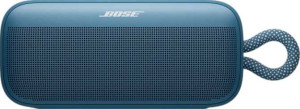
Bose SoundLink Plus
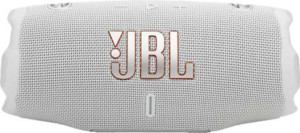
JBL Charge 6

Bose SoundLink Plus JBL Charge 6

Overview

When shopping for a premium portable Bluetooth speaker, the Bose SoundLink Plus and the JBL Charge 6 are two compelling options that share a solid foundation but diverge in meaningful ways. Both are waterproof, feature Bluetooth 5.4, and support wireless playback, yet they take notably different approaches to battery performance, build design, and extra functionality. Read on to explore how these two speakers stack up across every key specification.

Common Features

  • Both products have a control panel placed on the device.
  • Both products are waterproof.
  • Neither product includes a travel bag.
  • Neither product has a touch screen.
  • Neither product has RGB lighting.
  • Neither product is a neckband speaker.
  • Neither product has a remote control.
  • Neither product has a noise-canceling microphone.
  • Both products have a battery level indicator.
  • Both products have a rechargeable battery.
  • Neither product has a removable battery.
  • Neither product supports wireless charging.
  • Both products use Bluetooth version 5.4.
  • Neither product supports Bluetooth pairing using NFC.
  • Neither product has a socket for a 3.5 mm audio jack.
  • Neither product has an AUX input.
  • Neither product supports aptX Lossless, LDAC, aptX Adaptive, or aptX HD.
  • Both products can be used wirelessly.
  • Both products support remote smartphone control.
  • Neither product has fast pairing.
  • Neither product has voice commands.
  • Neither product has a radio.
  • Both products have voice prompts.
  • Neither product has a mute function.
  • Both products have a sleep timer.

Main Differences

  • IP rating is IP67 on Bose SoundLink Plus and IP68 on JBL Charge 6.
  • Volume is 1997.64 cm³ on Bose SoundLink Plus and 2118.46 cm³ on JBL Charge 6.
  • A neodymium magnet is present on JBL Charge 6 but not available on Bose SoundLink Plus.
  • A detachable cable is available on JBL Charge 6 but not on Bose SoundLink Plus.
  • Weight is 1492.32 g on Bose SoundLink Plus and 960 g on JBL Charge 6.
  • Height is 100.08 mm on Bose SoundLink Plus and 98.5 mm on JBL Charge 6.
  • Width is 231.14 mm on Bose SoundLink Plus and 228.8 mm on JBL Charge 6.
  • Thickness is 86.36 mm on Bose SoundLink Plus and 94 mm on JBL Charge 6.
  • A passive radiator is present on JBL Charge 6 but not on Bose SoundLink Plus.
  • Battery life is 20 hours on Bose SoundLink Plus and 28 hours on JBL Charge 6.
  • Charge time is 5 hours on Bose SoundLink Plus and 3 hours on JBL Charge 6.
  • Auracast support is present on JBL Charge 6 but not available on Bose SoundLink Plus.
  • Power bank functionality is available on JBL Charge 6 but not on Bose SoundLink Plus.
  • Stereo sound pairing is supported on JBL Charge 6 but not on Bose SoundLink Plus.
Specs Comparison
Bose SoundLink Plus

Bose SoundLink Plus

JBL Charge 6

JBL Charge 6

Design:
Ingress Protection (IP) rating IP67 IP68
volume 1997.6420950304 cm³ 2118.4592 cm³
has a neodymium magnet
control panel placed on a device
water resistance Waterproof Waterproof
travel bag is included
has a touch screen
has RGB lighting
has a detachable cable
is a neckband speaker
has a remote control
weight 1492.32 g 960 g
height 100.076 mm 98.5 mm
width 231.14 mm 228.8 mm
thickness 86.36 mm 94 mm

Both speakers share a waterproof rating and a similar footprint, but there are meaningful differences beneath the surface. The JBL Charge 6 holds an IP68 certification versus the Bose SoundLink Plus's IP67, which translates to a higher tolerance for sustained submersion — IP68 devices can typically withstand deeper and longer water exposure, making the Charge 6 the stronger choice for poolside or kayaking use cases where accidental dunking is a real risk.

The most striking differentiator, however, is weight. The Charge 6 comes in at 960 g, while the SoundLink Plus is a considerably heftier 1492 g — over 500 grams more. For a portable Bluetooth speaker, that gap is significant in practice: it affects how comfortable the speaker is to carry in a bag, hang from a strap, or move around a campsite. The two are dimensionally similar (both hover around 229–231 mm wide and 98–100 mm tall), so the weight difference is not about raw bulk but rather internal construction choices. The Charge 6 also includes a detachable cable and a neodymium magnet, adding a degree of flexibility and component quality that the SoundLink Plus lacks.

On balance, the JBL Charge 6 holds a clear design edge in this group: it is significantly lighter, carries a stronger IP rating, and offers a detachable cable — all without being meaningfully larger than the Bose. The SoundLink Plus has no design-spec advantage to offset its weight penalty, making portability-focused buyers lean toward the Charge 6.

Sound quality:
Has a passive radiator
has a noise-canceling microphone

The sound quality spec group is lean here, but the one differentiator that exists is worth understanding. The JBL Charge 6 includes a passive radiator, while the Bose SoundLink Plus does not. A passive radiator is an unpowered driver — essentially a tuned, flexible membrane — that works in tandem with the active woofer to reinforce low-frequency output without requiring a port or additional amplification. In compact enclosures, this design typically yields deeper, more controlled bass extension than a similarly sized speaker relying solely on active drivers.

For the end user, this means the Charge 6 is engineered to produce more pronounced low-end presence for its size — an advantage that becomes most noticeable with bass-heavy genres like hip-hop or electronic music, or in outdoor environments where low frequencies dissipate quickly. Neither speaker offers a noise-canceling microphone, so call quality is on equal footing from a spec standpoint.

The JBL Charge 6 takes the edge in this group purely on the strength of its passive radiator. It is the only structural sound-quality differentiator available in the provided data, and it favors the Charge 6 for listeners who prioritize bass performance from a portable speaker.

Power:
Battery life 20 hours 28 hours
charge time 5 hours 3 hours
has a battery level indicator
has a rechargeable battery
has a removable battery
has wireless charging

When it comes to power, the JBL Charge 6 outperforms the Bose SoundLink Plus on both key metrics. Its rated battery life of 28 hours versus the SoundLink Plus's 20 hours represents a 40% advantage — a gap that is genuinely felt over a weekend trip or a full day of outdoor use without access to a power source. That extra eight hours can be the difference between a speaker that lasts through an entire camping trip on a single charge and one that needs a top-up mid-way.

Equally important is how quickly each speaker recovers. The Charge 6 charges in 3 hours compared to 5 hours for the SoundLink Plus — so not only does it last longer, it gets back to full capacity in notably less time. For users who do remember to plug in the night before, the SoundLink Plus's slower charge time is a minor inconvenience; for those who charge opportunistically during a lunch break or a short drive, the difference is much more meaningful. Both speakers share the same limitations: no wireless charging and no removable battery, so the charging speed gap carries extra weight given there are no alternative power options.

The JBL Charge 6 holds an unambiguous advantage in this group. It lasts longer and recharges faster — a double win that strongly favors extended or off-grid use scenarios.

Connectivity:
Bluetooth version 5.4 5.4
supports Bluetooth pairing using NFC
has a socket for a 3.5 mm audio jack
has an AUX input
has aptX Lossless
has LDAC
has aptX Adaptive
has aptX HD
has aptX
has aptX Low Latency
has AAC
has AirPlay
has Chromecast built-in
has Auracast
has Bluetooth LE Audio
maximum Bluetooth range 10 m 10 m
supports Wi-Fi
USB ports 1 1
Has USB Type-C
has a 3.5mm male connector
has an external memory slot
is DLNA-certified
supports Ethernet
has a microphone input

Across nearly the entire connectivity spec sheet, these two speakers are identical — same Bluetooth 5.4 version, same 10 m maximum range, one USB-C port each, and a shared absence of Wi-Fi, AUX input, NFC pairing, AirPlay, Chromecast, and every major high-resolution audio codec including LDAC, aptX, and AAC. For most users, this means the day-to-day wireless experience will be effectively indistinguishable between the two.

The sole differentiator is Auracast support on the JBL Charge 6. Auracast is a Bluetooth broadcast standard that allows a single audio source to stream simultaneously to an unlimited number of nearby receivers — think syncing multiple speakers in a space, or sharing audio in public settings without pairing. It is a forward-looking feature that is still gaining ecosystem traction, so its practical value depends heavily on whether other Auracast-compatible devices are in the user's setup. For those who own or plan to own multiple compatible speakers, it opens up genuinely useful multi-room or party scenarios without proprietary app ecosystems.

The JBL Charge 6 takes a narrow edge here on the strength of Auracast alone. It is not a difference that will matter to every buyer, but for users interested in scalable multi-speaker audio, it is the only connectivity advantage either product holds over the other.

Features:
release date June 2025 March 2025
Can be used wirelessly
supports a remote smartphone
has fast pairing
has voice commands
Has a radio
Has voice prompts
has a mute function
works as a power bank
has a sleep timer

Feature parity is high between these two speakers. Both support wireless playback, smartphone remote control, voice prompts, and a sleep timer — a solid baseline that covers the practical needs of most users without any gaps on either side.

The one meaningful distinction is the JBL Charge 6's ability to function as a power bank. This allows it to charge other devices — phones, earbuds, or small accessories — directly from the speaker's battery. On a camping trip, a beach day, or any outing where outlets are scarce, this doubles the Charge 6's utility beyond just audio. The Bose SoundLink Plus offers no equivalent capability, meaning it draws from the environment but gives nothing back in terms of power sharing.

Given how closely matched the rest of the feature set is, the power bank function is the deciding factor here, and it gives the JBL Charge 6 a clear practical edge — especially for users who already gravitate toward it for its longer battery life and faster charging.

Miscellaneous:
supports pairing for stereo sound

This group comes down to a single spec with a tangible real-world implication: stereo pairing. The JBL Charge 6 supports linking two units together to create a dedicated left/right stereo setup, while the Bose SoundLink Plus does not offer this capability at all.

For users who own — or plan to own — two of the same speaker, stereo pairing unlocks a fundamentally different listening experience. True stereo separation widens the soundstage significantly compared to a single mono or pseudo-stereo unit, making it particularly impactful for music listening in a fixed location like a backyard, hotel room, or living space. Without this feature, the SoundLink Plus is permanently limited to single-speaker playback regardless of how many units are available.

The JBL Charge 6 holds a clear advantage here. Stereo pairing is not an everyday necessity for all users, but for those who value audio immersion or already use multiple speakers, its absence on the Bose is a meaningful limitation that cannot be worked around.

Comparison Summary & Verdict

After examining the full spec sheet, both speakers impress in their own right. The Bose SoundLink Plus stands out with its more compact form factor in terms of weight, tipping the scales at 1492.32 g versus the JBL's 960 g — actually making the JBL the lighter choice — and it carries an IP67 waterproof rating. The JBL Charge 6, however, pulls ahead with a superior IP68 rating, a remarkable 28-hour battery life (versus 20 hours), a much faster 3-hour charge time, and added versatility through its power bank function and Auracast support. If portability, raw endurance, and feature richness are priorities, the JBL Charge 6 is the stronger all-rounder. The Bose SoundLink Plus will appeal to those already invested in the Bose ecosystem who value brand reliability over extended battery and bonus features.

Bose SoundLink Plus
Buy Bose SoundLink Plus if...

Buy the Bose SoundLink Plus if you prefer a trusted brand experience and a slightly slimmer profile, and do not need extended battery life or power bank functionality.

JBL Charge 6
Buy JBL Charge 6 if...

Buy the JBL Charge 6 if you want longer battery life, faster charging, a higher IP68 waterproof rating, and the added bonus of being able to charge other devices on the go.